Quick Verdict: The BMW i4 at a Glance
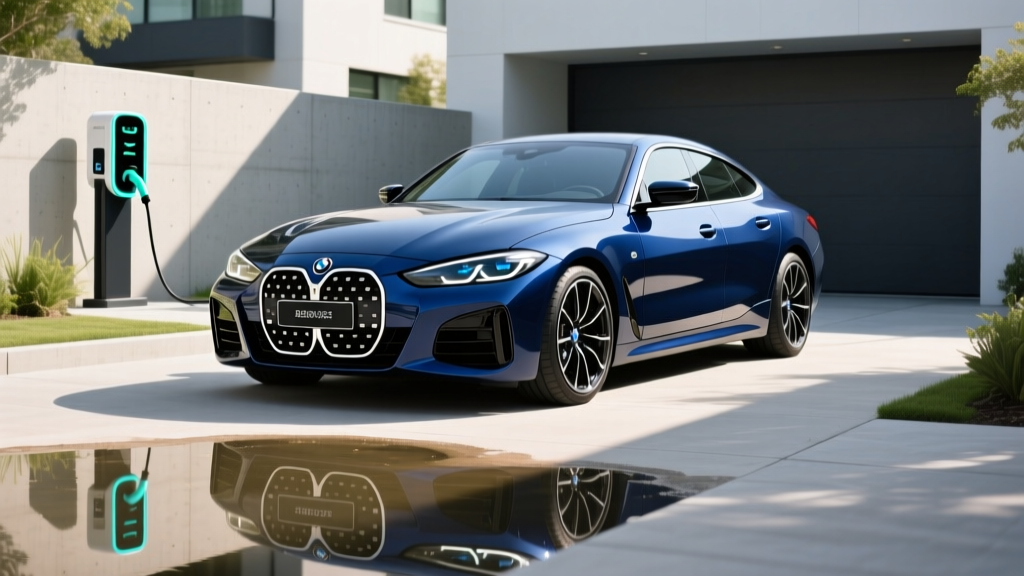
The BMW i4 remains one of the most convincing luxury electric sedans on the market — a car that drives like a proper BMW first and happens to be electric second. For 2026, the i4 lineup spans from the efficient eDrive40 to the thunderous M50, with pricing that climbs steeply once you start optioning. If you're researching the BMW i4 MSRP, know that the base sticker is only the starting point: BMW's options structure can add $10,000–$15,000 before you leave the configurator.
The i4's 81.5 kWh battery (NMC chemistry) delivers competitive range, class-leading DC fast-charging speeds, and a driving experience that outshines most EV rivals in the $55K–$75K bracket. The trade-off? A rear seat that's tighter than you'd expect for the price, and a tax credit situation that requires careful navigation of IRS §30D sourcing rules.
| Spec | eDrive40 | xDrive40 | M50 |
|---|---|---|---|
| EPA Range | 307 mi | 287 mi | 269 mi |
| Battery (usable) | 81.5 kWh (NMC) | 81.5 kWh (NMC) | 81.5 kWh (NMC) |
| Horsepower | 335 hp | 402 hp | 536 hp |
| 0–60 mph | 5.5 sec | 4.6 sec | 3.7 sec |
| Drivetrain | RWD (single motor) | AWD (dual motor) | AWD (dual motor) |
| Max DC Charge Rate | 205 kW | 205 kW | 205 kW |
| 10–80% DC Time | ~31 min | ~31 min | ~31 min |
| Level 2 Rate | 11 kW (AC) | 11 kW (AC) | 11 kW (AC) |
| MPGe (combined) | 97 MPGe | 91 MPGe | 86 MPGe |
| Base MSRP | $57,900 | $62,900 | $70,700 |
BMW i4 MSRP Breakdown: What Each Trim Actually Costs
Understanding the BMW i4 MSRP requires looking at all three trims and factoring in the destination charge ($995) and the options packages BMW bundles. Here's where the 2026 lineup stands before any incentives:
- eDrive40: $57,900 — Rear-wheel drive, 335 hp, 307 miles EPA range. The efficiency and value pick.
- xDrive40: $62,900 — Dual-motor AWD, 402 hp, 287 miles EPA range. Adds all-weather traction and a meaningful power bump.
- M50: $70,700 — Performance-tuned dual-motor AWD, 536 hp, 269 miles EPA range. M division chassis, brakes, and styling.
Destination adds $995 across the board. Popular packages — the Premium Package ($2,550), Driving Assistance Professional ($1,700), and larger 19- or 20-inch wheels — can push a well-equipped eDrive40 past $67,000 and an M50 beyond $82,000.
| Trim | Base MSRP | + Destination | Typical As-Tested | §30D Credit Eligible? |
|---|---|---|---|---|
| eDrive40 | $57,900 | $58,895 | $64,000–$68,000 | Partial — see sourcing rules |
| xDrive40 | $62,900 | $63,895 | $69,000–$74,000 | Partial — see sourcing rules |
| M50 | $70,700 | $71,695 | $77,000–$84,000 | Partial — see sourcing rules |
Tax credit reality check: Under IRS §30D rules, the BMW i4 qualifies as a sedan under the $55,000 MSRP cap only if the base eDrive40 is configured without options that push it above that threshold — and the MSRP cap applies to the manufacturer's suggested retail price of the specific trim, not the as-tested price. However, the xDrive40 and M50 both exceed the $55,000 sedan cap at base MSRP, making them ineligible for the full new-vehicle credit. Additionally, buyer income caps apply ($150,000 single / $300,000 joint AGI), and the battery must meet critical-mineral and battery-component sourcing requirements that shift annually. BMW's battery supply chain has been gradually re-shoring, but confirm current-year eligibility with your dealer and a tax professional before counting on the credit. The point-of-sale transfer option allows eligible buyers to apply the credit as a down payment reduction at purchase.
Real-World Range: What the EPA Numbers Don't Tell You
EPA Range vs. Real-World Expectations
eDrive40: EPA 307 mi → Expect 270–290 mi on mixed highway/city driving; 240–260 mi at sustained 75+ mph; ~210–230 mi in freezing temperatures with cabin heat.
xDrive40: EPA 287 mi → Expect 250–270 mi mixed; 225–245 mi highway; ~195–215 mi in deep cold.
M50: EPA 269 mi → Expect 230–250 mi mixed; 200–220 mi highway at speed; ~175–200 mi in freezing weather.
The i4's NMC (nickel-manganese-cobalt) battery pack holds 81.5 kWh of usable energy — slightly less than the Tesla Model 3 Long Range but comparable to the Hyundai Ioniq 6. BMW's thermal management system is effective: in our experience, the i4 holds range predictably in moderate climates, but like all NMC packs, it loses 20–30% in sub-freezing conditions when the cabin heater is working hard.
The eDrive40's single-motor RWD layout gives it a clear efficiency advantage, achieving roughly 97 MPGe combined per EPA data at fueleconomy.gov. That translates to approximately 34–36 kWh per 100 miles in mixed driving. The M50, with its performance-oriented tuning and wider tires, drops to 86 MPGe — a meaningful gap if you commute long distances.
One practical note: the i4's regenerative braking system offers adjustable levels but does not provide true one-pedal driving in the way a Nissan Leaf or Chevrolet Bolt does. You'll still use the brake pedal regularly, which some drivers prefer for a more natural feel.
Charging Speed: DC Fast, Level 2, and the Curve Reality
Charging is where the i4 earns strong marks, particularly on DC fast chargers. All three trims share the same charging hardware:
| Charging Level | Power (kW) | Speed | Notes |
|---|---|---|---|
| Level 1 (120V) | ~1.4 kW | ~4 mi/hr | Emergency/top-up only |
| Level 2 (240V) | 11 kW | ~30–33 mi/hr | Full charge in ~8.5 hours |
| DC Fast Charge | 205 kW peak | 10–80% in ~31 min | CCS connector; NACS via adapter |
The charging curve matters more than the peak number. The i4 hits its 205 kW peak between roughly 10–30% state of charge, then tapers progressively. From 50–80%, expect sustained rates closer to 100–130 kW. This means the advertised 31-minute 10–80% time is achievable at a properly rated 350 kW charger (like Electrify America or EVgo stations), but at a 150 kW station, plan for 40–45 minutes for the same session.
At home on an 11 kW Level 2 charger (a 48-amp hardwired unit on a 60-amp circuit), the i4 replenishes from empty in about 8.5 hours — easily an overnight charge. If your home setup only supports a 32-amp (7.7 kW) circuit, expect closer to 12 hours. BMW includes a portable Level 1/2 charging cable, but most owners will want a dedicated home Level 2 installation.
The i4 uses a CCS1 connector natively. BMW offers a NACS adapter for Tesla Supercharger access, which significantly expands the public charging network available to i4 owners — a practical advantage as Tesla opens its network to non-Tesla vehicles.
Performance, Handling, and Daily Drivability
The eDrive40's 335 hp and 5.5-second 0–60 time are more than adequate for daily driving, with the instant torque of its rear-mounted motor making highway merging effortless. The RWD layout gives it a balanced, engaging feel that's rare among electric sedans in this price range.
The xDrive40 adds a front motor for 402 hp and AWD traction, cutting the 0–60 to 4.6 seconds. This is the sweet spot for buyers in snow-belt states who want performance without sacrificing too much range.
The M50 is a different animal entirely: 536 hp, 3.7-second 0–60, adaptive M suspension, and M Sport brakes. It's genuinely quick — faster than most V8 sports sedans from five years ago. But the performance comes at the cost of ride comfort (firm, especially on 20-inch wheels) and roughly 40 miles of EPA range compared to the eDrive40.
All trims share BMW's latest iDrive 8.5 infotainment system on a curved display (12.3-inch instrument cluster + 14.9-inch touchscreen). Wireless Apple CarPlay and Android Auto are standard. The Driving Assistance Professional package adds highway assist with lane-centering and adaptive cruise — this is a SAE Level 2 system, meaning the driver must remain engaged and hands on or near the wheel at all times. It is not autonomous driving.
Interior Space, Cargo, and Practicality
The i4 is built on BMW's CLAR platform — shared with the 4 Series Gran Coupe — which means it's a liftback, not a traditional sedan. The rear hatch opens to reveal 13.0 cubic feet of cargo space behind the rear seats, expanding to 45.6 cu ft with the 40/20/40 rear seats folded. That's competitive with the Tesla Model 3's trunk (15.0 cu ft trunk + 3.0 cu ft frunk) when you account for the i4's hatchback versatility, though the Model 3 edges ahead in total enclosed volume.
Rear-seat legroom measures 35.1 inches — adequate for adults under six feet but noticeably tighter than a BMW 5 Series or a Mercedes EQE. Headroom is compromised by the sloping roofline, especially for taller passengers. This is a car designed primarily as a driver's machine, not a family hauler.
There is no front trunk (frunk) — the space under the hood is occupied by power electronics and the HVAC system. This is a common compromise in EVs adapted from ICE platforms.
Who the i4 suits best: Solo drivers or couples who prioritize driving dynamics, want a premium interior, and need enough range for a 250-mile commute or weekend road trip. It's not ideal for families needing frequent rear-seat access or anyone who regularly hauls bulky cargo.
Warranty, Battery Longevity, and Ownership Costs
BMW backs the i4 with the following warranty coverage:
- Limited vehicle warranty: 4 years / 50,000 miles
- Battery & powertrain: 8 years / 100,000 miles (covers battery degradation below 70% of original capacity)
- Corrosion protection: 12 years / unlimited miles
- Complimentary maintenance: 3 years / 36,000 miles
The 70% capacity retention threshold is industry-standard, matching what Tesla, Hyundai, and Ford offer. Real-world NMC degradation data from early i4 owners suggests roughly 5–8% capacity loss over the first 60,000 miles, with the curve flattening significantly afterward. BMW's liquid-cooled thermal management helps minimize calendar degradation, but as with all EVs, frequent DC fast charging to 100% and prolonged storage at high state of charge will accelerate wear.
Insurance costs tend to run 15–25% higher than comparable gas-powered 4 Series models, according to industry averages — a factor worth budgeting for. Electricity costs for charging vary enormously by region: at the national average of $0.16/kWh, charging the i4's 81.5 kWh battery from empty costs roughly $13.00, translating to about $0.04–0.05 per mile. Compare that to $0.12–0.15/mile for a gas-powered 4 Series at $3.50/gallon.
Pros, Cons, and How It Stacks Up
Pros
- Genuine BMW driving dynamics — steering feel, chassis balance, and ride quality exceed most EV rivals
- 205 kW DC fast charging is among the fastest in the luxury sedan class
- Liftback cargo versatility (45.6 cu ft max) outperforms traditional sedans
- iDrive 8.5 is responsive, well-organized, and includes wireless phone integration
- eDrive40 offers 307 mi EPA range at a relatively accessible price point
- NACS adapter unlocks Tesla Supercharger network
Cons
- Rear seat legroom (35.1 in) and headroom are tight for the class
- No frunk — lost cargo opportunity
- Options packages add up quickly; as-tested prices often exceed $70K
- Federal tax credit eligibility is limited by MSRP cap on xDrive40 and M50
- No true one-pedal driving mode
- M50 ride quality is firm on rough pavement
Key competitors: The Tesla Model 3 Long Range ($47,740, 341 mi EPA) undercuts the i4 on price and range but can't match interior quality or ride refinement. The Hyundai Ioniq 6 ($42,715, 361 mi EPA) is a value and efficiency standout but feels a segment below in luxury. The Mercedes EQB and Audi Q4 e-tron are SUVs, so they serve different use cases. The i4's closest rival is the Polestar 2 ($51,300, 276 mi EPA), which matches the BMW on driving feel but trails on range and charging speed.
Frequently Asked Questions
What is the real-world range of the BMW i4?
The EPA rates the eDrive40 at 307 miles, but expect 270–290 miles in mixed real-world driving, dropping to 240–260 at sustained highway speeds above 75 mph, and roughly 210–230 miles in freezing weather with cabin heat. The M50 delivers about 230–250 miles in practice.
How fast does the BMW i4 charge?
On a DC fast charger rated at 350 kW, the i4 peaks at 205 kW and charges from 10–80% in approximately 31 minutes. At home on an 11 kW Level 2 charger, a full charge takes about 8.5 hours. Level 1 (120V) adds roughly 4 miles per hour — suitable only for overnight top-ups.
How much does the BMW i4 cost after tax credits?
The eDrive40 starts at $58,895 (with destination). Federal §30D tax credit eligibility depends on the buyer's AGI, the vehicle's MSRP relative to the $55,000 sedan cap, and battery-sourcing requirements that change annually. The xDrive40 and M50 exceed the sedan MSRP cap at base and are generally ineligible for the new-vehicle credit. Consult a tax professional and confirm with your dealer before purchase.
Does the BMW i4 qualify for the federal EV tax credit?
It depends on the trim, your income, and current-year battery-sourcing rules. The eDrive40 at $57,900 base MSRP exceeds the $55,000 sedan cap set by §30D, which may disqualify it for the full $7,500 credit. Buyer income limits ($150K single / $300K joint) also apply. Always verify on IRS.gov for the current tax year's requirements.
Is the BMW i4 worth buying vs. the Tesla Model 3 or Ioniq 6?
Choose the i4 if you prioritize driving dynamics, interior luxury, and build quality over maximum range or lowest price. The Model 3 wins on range, Supercharger access (though the i4's NACS adapter narrows this gap), and software. The Ioniq 6 wins on value and efficiency. The i4 is the driver's choice in this segment.
What are the biggest drawbacks of the BMW i4?
Rear-seat space is tight, there's no frunk, options inflate the price quickly, and the federal tax credit is difficult to claim on most trims. The M50's ride can also be harsh on imperfect roads.