Quick Verdict: A Driver's EV Wrapped in Gran Coupe Practicality
The BMW i4 M50 occupies a rare position in the EV market: it's a dual-motor performance sedan that actually feels like a BMW first and an electric car second. For 2026, the i4 M50 continues on the CLAR platform with an 81.5 kWh usable battery, 536 horsepower, and a chassis tuned for people who still care about steering feedback. It isn't the longest-range EV in its class, and it won't win a cargo-space contest against a crossover, but if your priority is an electric daily driver that rewards you on a back road without punishing you at the charging station, the i4 M50 deserves a serious look.
This review breaks down every spec that matters — from real-world highway range to the nuances of its DC fast-charging curve — so you can decide whether the M50 trim is worth the premium over the eDrive40, or whether a Tesla Model 3 Performance or Hyundai Ioniq 6 serves you better.
2026 BMW i4 M50 Full Spec Sheet
| Specification | Value |
|---|---|
| EPA Range | 267 miles (19" wheels) / 227 miles (20" wheels) |
| Battery (Usable Capacity) | 81.5 kWh (NMC chemistry, gross ~83.9 kWh) |
| Drivetrain | Dual-motor AWD (xDrive) |
| Horsepower | 536 hp (combined, with Launch Control) |
| Torque | 586 lb-ft |
| 0–60 mph | 3.7 seconds (manufacturer, with Launch Control) |
| Top Speed | 130 mph (electronically limited) |
| Max DC Fast Charge Rate | 205 kW peak (CCS1 connector) |
| 10–80% DC Fast Charge Time | ~31 minutes (optimal conditions) |
| Level 2 AC Charge Rate | 11 kW (up to ~33 miles/hr added) |
| EPA Efficiency (Combined) | 89 MPGe / 37 kWh/100 mi |
| Cargo Volume | 10.3 cu ft (rear seats up) / 45.6 cu ft (seats folded) |
| Rear Legroom | 34.5 inches |
| Battery Warranty | 8 years / 100,000 miles (min 70% capacity retention) |
| Base MSRP (M50) | $69,700 (before destination) |
| Destination Charge | $995 |
Real-World Range: What the EPA Sticker Doesn't Tell You
Real-World Expectation: 220–240 miles highway; 250–265 miles mixed driving; 170–200 miles in sustained sub-30°F weather at highway speeds.
The 267-mile EPA figure applies specifically to the i4 M50 equipped with the standard 19-inch aero wheels. Opt for the 20-inch M Performance wheels, and that number drops to 227 miles — a 40-mile penalty that matters on road trips. This is one of the more dramatic wheel-size range penalties in the EV segment, driven by the wider, stickier summer rubber on the 20s and the less aerodynamic wheel face.
In real-world mixed driving at moderate temperatures (55–75°F), expect the M50 to deliver roughly 250 miles before you're hunting for a charger. Highway driving at 75–80 mph pushes consumption closer to 39–42 kWh/100 mi, which translates to 220–230 miles of range. The i4's NMC battery chemistry and BMW's thermal management system handle heat well, but cold weather remains the great equalizer: at 20°F with the cabin heated and no preconditioning, range can fall to 170–200 miles. The i4 M50 does include a heat pump as standard equipment, which mitigates cold-weather cabin-heating losses compared to resistive heaters, but physics still wins in deep winter.
For context, fueleconomy.gov lists the i4 M50 at 89 MPGe combined (37 kWh/100 mi) with 19-inch wheels. That's competitive with the Audi e-tron GT but trails the Hyundai Ioniq 6 (140 MPGe combined, Long Range RWD) by a wide margin on efficiency.
Charging Performance: DC Fast, Level 2, and the Curve Reality
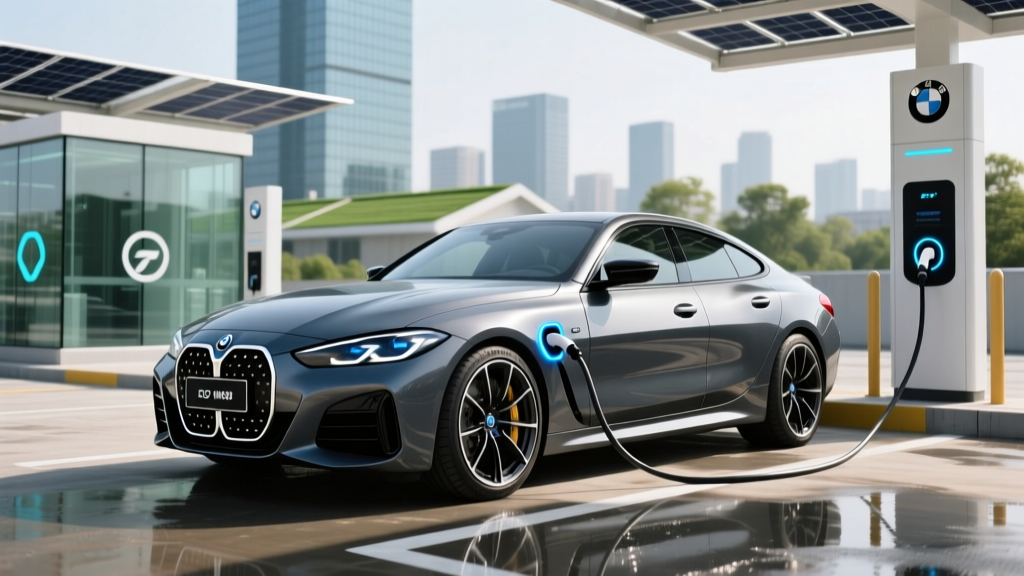
The i4 M50 charges via CCS1 (Combo connector) for DC fast charging and J1772 for AC Level 2. BMW has not adopted NACS natively on the 2026 i4, though a Tesla Supercharger adapter is available through BMW dealerships for access to Tesla's V3 and V4 Supercharger network (capped at ~150 kW on V3 stalls).
| Charging Level | Power / Rate | Miles of Range Added per Hour | Notes |
|---|---|---|---|
| Level 1 (120V household) | ~1.4 kW | ~4 mi/hr | Emergency/trickle only; ~65+ hours for full charge |
| Level 2 (240V home/public) | Up to 11 kW | ~33 mi/hr | Full charge in ~8 hours on a 48A circuit |
| DC Fast Charge (CCS1) | Up to 205 kW peak | ~150+ mi/hr at peak | 10–80% in ~31 min; tapers sharply above 80% |
Understanding the DC Fast-Charging Curve
The 205 kW peak figure requires context. The i4 M50 reaches its peak charge rate only at a low state of charge (typically 5–15% SoC) and at an optimal battery temperature (achieved through preconditioning via the iDrive navigation system). The charge curve holds roughly 175–205 kW from 10% to about 40% SoC, then progressively tapers. By 60% SoC, you're seeing roughly 120–140 kW; by 80%, it drops to around 50–65 kW.
This means the published 10–80% time of ~31 minutes is achievable at a high-power Electrify America or EVgo station under good conditions, but plan for 35–40 minutes in cooler weather or if the battery hasn't been preconditioned. Charging from 80% to 100% on DC fast charging is painfully slow — roughly another 25–30 minutes — so treat 80% as your practical ceiling on road trips.
For home charging, the 11 kW onboard charger is a strong point. On a properly installed 48-amp, 240V Level 2 circuit (such as a BMW Wallbox or ChargePoint Home Flex), you'll add approximately 33 miles of range per hour, meaning a full charge from near-empty takes about 8 hours overnight. This is adequate for daily use; most owners will plug in each evening and wake up with a full battery.
Performance and Driving Dynamics
The M50 is the performance flagship of the i4 lineup, and the numbers reflect it. Two BMW fifth-generation eDrive motors — one on each axle — produce a combined 536 hp and 586 lb-ft of torque when Launch Control is engaged (standard Sport mode yields slightly less). The result is a 3.7-second 0–60 mph sprint that pins you back in the sport seats and makes merging onto highways effortless.
But the M50's story isn't just straight-line speed. BMW tuned the adaptive M suspension, variable sport steering, and rear-biased torque distribution to deliver genuine engagement. The steering has more weight and feedback than most EVs in this segment, and the chassis communicates grip levels through the seat. The M50's curb weight of approximately 4,900 lbs is noticeable in tight transitions, but the low center of gravity from the underfloor battery keeps body roll well-controlled.
Regenerative braking offers multiple modes: adaptive (which uses radar and navigation data to modulate regen based on traffic and upcoming curves), high (for near one-pedal driving in city traffic), and low (for coasting on highways). Unlike some competitors, BMW does not offer true one-pedal driving that brings the car to a complete stop without touching the brake pedal — the regen blends into friction braking at very low speeds, which some drivers find less predictable.
Interior, Tech, and Daily Practicality
The i4 M50 uses BMW's Curved Display layout: a 12.3-inch instrument cluster flows into a 14.9-inch central touchscreen running iDrive 8.5 (on 2026 models). The system supports wireless Apple CarPlay and Android Auto, over-the-air updates, and BMW's Intelligent Personal Assistant voice control. The M50-specific additions include M Sport seats with Vernasca leather, an M leather steering wheel, aluminum Rhombicle interior trim, and the IconicSounds Electric cabin sound profile (composed by Hans Zimmer — love it or disable it).
Driver-assistance features come via BMW's Driving Assistant Professional package (standard or available depending on market), which includes:
- Adaptive cruise control with stop-and-go
- Lane-keeping assist with side-collision warning
- Automatic emergency braking with pedestrian detection
- Parking Assistant Plus with 360-degree camera and Reversing Assistant
Cargo and Passenger Space
The i4's gran coupe body style gives it a liftback rear hatch, which provides a wider opening than a traditional sedan trunk. Cargo volume is 10.3 cubic feet behind the rear seats — tight compared to a Tesla Model 3 (23 cu ft trunk) but more usable thanks to the hatch opening. Fold the 40/20/40 rear seats and you get 45.6 cu ft, enough for luggage or a week's groceries for a family of two.
Rear legroom at 34.5 inches is the i4's weakest practicality point. Adults over 6 feet will find the rear seat cramped on longer trips, and the transmission tunnel hump (a vestige of the shared CLAR platform with ICE 4 Series Gran Coupe) intrudes on the center-rear passenger's foot space. This is a four-person car in practice, not a five-person family hauler.
Pricing, Trims, and Federal Tax Credit Eligibility
| Trim | Base MSRP | As-Tested (Typical Options) | §30D Federal Credit Eligibility |
|---|---|---|---|
| i4 eDrive40 | $57,900 | $62,000–$66,000 | Eligible for up to $7,500 (subject to sourcing/income rules) |
| i4 xDrive40 | $61,900 | $66,000–$70,000 | Eligible for up to $7,500 (subject to sourcing/income rules) |
| i4 M50 | $69,700 | $74,000–$82,000 | Eligible for up to $7,500 (subject to sourcing/income rules) |
The i4 M50 starts at $69,700 before the $995 destination charge. A typical M50 with the Premium Package, M Sport Package, and 20-inch wheels lands between $74,000 and $82,000. The i4 qualifies as a sedan under IRS §30D rules, meaning the MSRP cap for eligibility is $55,000 — which puts the M50 above the federal tax credit ceiling for new vehicles.
- MSRP Cap: $55,000 for sedans; $80,000 for SUVs, vans, and trucks. The i4 M50 ($69,700 base) exceeds the sedan cap and does NOT qualify for the new-vehicle credit.
- Buyer Income Limits: AGI must not exceed $150,000 (single), $225,000 (head of household), or $300,000 (married filing jointly).
- Battery Sourcing: Critical minerals and battery components must meet phased-in domestic/free-trade sourcing requirements.
- Point-of-Sale Transfer: Eligible credits can be transferred to the dealer at purchase for an immediate price reduction.
- Used EV Credit (§25E): A used i4 M50 may qualify for up to $4,000 (30% of sale price, capped) if the sale price is $25,000 or less — unlikely for this model in the near term.
Always verify current eligibility with a tax professional and the IRS. Rules and battery-sourcing requirements change annually.
This is a critical point many shoppers miss: despite being an EV, the i4 M50's MSRP disqualifies it from the new-vehicle federal tax credit because BMW classifies it as a sedan (not an SUV) and the sedan cap is $55,000. The eDrive40, starting at $57,900, also exceeds this cap. State-level incentives may still apply — check your local DMV and energy office — but do not budget around the $7,500 federal credit for any i4 variant.
Battery Warranty, Longevity, and Ownership Costs
BMW covers the i4 M50's high-voltage battery for 8 years or 100,000 miles, whichever comes first, guaranteeing a minimum of 70% capacity retention. The broader powertrain warranty is 4 years/50,000 miles, matching BMW's standard new-vehicle coverage. Complimentary scheduled maintenance is included for 3 years/36,000 miles.
NMC (nickel manganese cobalt) battery chemistry, which the i4 M50 uses, offers higher energy density than LFP but typically degrades slightly faster over very high cycle counts. In practice, BMW's thermal management system — which actively heats and cools the battery pack — has proven effective at limiting degradation. Real-world data from European i4 owners at high mileages (80,000+ km) shows capacity retention in the 90–94% range, which is encouraging. For maximum longevity, avoid habitual DC fast-charging to 100% and try to keep daily SoC between 20% and 80%.
Insurance costs for the i4 M50 tend to run 15–25% higher than a comparable gas-powered 4 Series M440i xDrive, reflecting the higher repair costs associated with EV battery proximity and aluminum body panels. Get quotes before committing.
How It Compares: i4 M50 vs. Key Rivals
| Spec | BMW i4 M50 | Tesla Model 3 Performance | Hyundai Ioniq 6 Limited AWD | Polestar 2 Long Range Dual Motor |
|---|---|---|---|---|
| EPA Range | 267 mi | 315 mi | 270 mi | 276 mi |
| Battery (Usable) | 81.5 kWh (NMC) | ~79 kWh (NMC) | 77.4 kWh (NMC) | 78 kWh (NMC) |
| 0–60 mph | 3.7 sec | 2.9 sec | 5.1 sec | 4.1 sec |
| Peak DC Charge | 205 kW | ~250 kW | ~240 kW | 205 kW |
| Base MSRP | $69,700 | $54,990 | $52,600 | $54,300 |
| Federal Tax Credit | Not eligible (MSRP cap) | Up to $7,500 | Up to $7,500 | Not eligible (made in China for prior years; verify 2026) |
| Rear Legroom | 34.5 in | 35.3 in | 35.8 in | 33.4 in |
The Tesla Model 3 Performance is faster, goes farther, charges faster, costs $15,000 less, and qualifies for the tax credit. On paper, it wins nearly every spec comparison. But the i4 M50 wins on build quality, cabin materials, steering feel, and the dealership/service experience that BMW owners expect. The Hyundai Ioniq 6 is the efficiency champion but lacks the M50's performance punch and premium badge. The Polestar 2 is the closest spiritual competitor but offers less range and less power.
- You value driving dynamics, steering feedback, and cabin quality over maximum range
- You want BMW's dealer network and service experience
- Your daily commute is under 150 miles round-trip and you charge at home
- You prefer a traditional luxury-brand ownership experience over Tesla's direct model
- Maximum range and lowest cost-per-mile are your top priorities (Tesla Model 3, Ioniq 6)
- You need the $7,500 federal tax credit to make the math work
- You regularly carry rear-seat adults on longer trips
- You want the fastest possible DC charging for frequent road trips
Pros and Cons at a Glance
- Genuine sports-sedan driving dynamics with precise steering and adaptive suspension
- Premium interior materials and build quality that rivals can't match at this price
- Strong 11 kW Level 2 onboard charger for fast home charging
- Liftback cargo opening is more practical than a traditional sedan trunk
- Heat pump standard for better cold-weather efficiency
- iDrive 8.5 is responsive, well-organized, and supports wireless CarPlay/Android Auto
- Does NOT qualify for the $7,500 federal tax credit due to MSRP exceeding the $55K sedan cap
- 267-mile EPA range (227 on 20" wheels) trails key competitors
- 205 kW peak DC charging is slower than Tesla, Hyundai, and Kia rivals
- Rear seat is tight for adults — 34.5" legroom and a center tunnel hump
- Center-rear passenger footwell compromised by CLAR platform tunnel
- No true one-pedal driving mode (regen doesn't hold to a complete stop)
- Insurance premiums run higher than gas 4 Series equivalents
Frequently Asked Questions
What is the real-world range of the BMW i4 M50?
The EPA rates the i4 M50 at 267 miles with 19-inch wheels and 227 miles with 20-inch wheels. In real-world mixed driving, expect 220–250 miles depending on speed, temperature, and terrain. Highway driving at 75+ mph in cold weather can reduce range to 170–200 miles.
How fast does the BMW i4 M50 charge?
On a DC fast charger, the i4 M50 peaks at 205 kW and charges from 10% to 80% in approximately 31 minutes under optimal conditions (preconditioned battery, high-power station). At home on a 240V Level 2 charger (11 kW), a full charge takes about 8 hours, adding roughly 33 miles of range per hour.
Does the BMW i4 M50 qualify for the federal EV tax credit?
No. The i4 M50's base MSRP of $69,700 exceeds the IRS §30D sedan cap of $55,000. It is not eligible for the $7,500 new-vehicle federal tax credit. State and local incentives may still apply — check your jurisdiction.
How much does the i4 M50 cost after incentives?
The base MSRP is $69,700 plus $995 destination. Most buyers add $5,000–$12,000 in options, landing between $74,000 and $82,000 out the door before any state incentives. Since the federal credit does not apply, budget accordingly.
Is the BMW i4 M50 worth buying over a Tesla Model 3 Performance?
It depends on your priorities. The Model 3 Performance is faster, cheaper, longer-range, and tax-credit eligible. The i4 M50 offers superior interior quality, better steering feel, a traditional dealership experience, and a more refined cabin. If driving engagement and luxury ambiance matter more than spec-sheet dominance, the M50 earns its premium.
What battery chemistry does the i4 M50 use?
The i4 M50 uses NMC (nickel manganese cobalt) lithium-ion cells supplied by Samsung SDI and CATL, depending on production batch. NMC offers higher energy density than LFP but benefits from being kept between 20–80% SoC for daily use to maximize long-term health.
Does the i4 M50 have a frunk (front trunk)?
No. Because the i4 shares its CLAR platform with the gasoline 4 Series Gran Coupe, there is no front trunk. The space under the hood is occupied by drive electronics and the front electric motor. All cargo goes in the rear liftback area.