The BMW i4 M50: A 536-HP Electric Gran Coupe That Doesn't Drive Like a Compromise
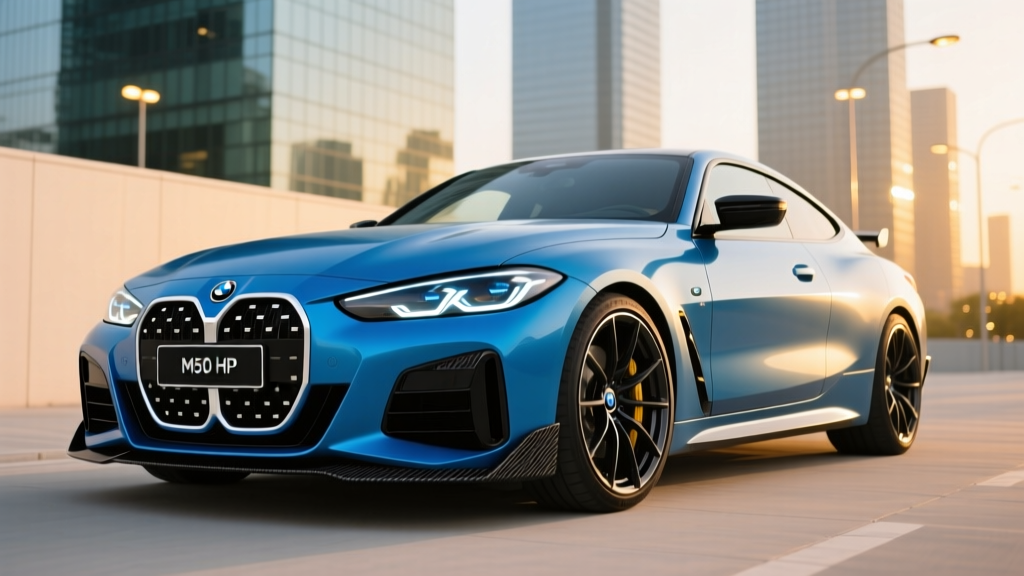
The BMW i4 M50 occupies a specific niche in the EV market: it's the electric sports sedan for buyers who want genuine M-car performance without sacrificing daily-driver practicality. With 536 horsepower, a dual-motor all-wheel-drive powertrain, and a starting price near $67,000, the i4 M50 competes directly with the Tesla Model 3 Performance, Polestar 2 BST, and Audi e-tron GT — but does so wearing a conventional BMW body that doesn't scream "electric."
After spending time with the 2026 model year i4 M50, analyzing its EPA data, and cross-referencing owner-reported charging and range figures, here's what the numbers actually look like — not just the brochure highlights, but the real-world ownership picture including cold-weather range loss, charging-curve behavior, and whether it qualifies for the federal tax credit.
| Spec | Value |
|---|---|
| Drivetrain | Dual-motor AWD (xDrive) |
| Horsepower | 536 hp (combined) |
| Torque | 586 lb-ft |
| 0–60 mph | 3.7 seconds (BMW est.) |
| Battery (gross / usable) | 83.9 kWh / ~81.5 kWh (NMC) |
| EPA Range | 244 mi (20" wheels) / 271 mi (19" wheels) |
| EPA Efficiency | 97 MPGe combined / 35 kWh/100 mi |
| Max DC Fast Charge | 205 kW (CCS) / 250+ kW (NACS w/ adapter) |
| 10–80% DC Charge Time | ~31 minutes (peak conditions) |
| Level 2 Home Charging | 11 kW onboard (~30 mi/hr at 48A) |
| Cargo Volume | 10.0 cu ft (trunk) + rear seat fold-down |
| Rear Legroom | 32.7 inches |
| Base MSRP | $67,100 (before destination) |
| Battery Warranty | 8 years / 100,000 miles (70% capacity retention) |
Range and Efficiency: What the EPA Number Doesn't Tell You
The EPA rates the 2026 BMW i4 M50 at 271 miles with the standard 19-inch aero wheels and 244 miles when equipped with the optional 20-inch M sport wheels. That 27-mile gap between wheel options is one of the largest we see in the segment — a direct consequence of the wider, stickier 20-inch rubber increasing rolling resistance and aerodynamic drag.
EPA sticker: 271 mi (19" wheels) / 244 mi (20" wheels)
Expect on highway road trips (70–80 mph, 70°F): ~230–250 mi (19") / ~210–225 mi (20")
Cold weather (below 32°F, mixed driving): ~185–215 mi depending on cabin heating demand
City / moderate-speed commuting: Close to or slightly above EPA figure thanks to regen braking
The i4 M50's efficiency of 35 kWh/100 mi is respectable for a 536-hp AWD performance sedan, but it's not class-leading. The Tesla Model 3 Performance achieves roughly 28 kWh/100 mi, translating to more miles from a smaller battery. Where the BMW wins is in ride quality and noise isolation at speed — you trade a bit of efficiency for noticeably better refinement.
The 83.9 kWh gross battery pack uses NMC (nickel manganese cobalt) chemistry, which provides higher energy density than LFP alternatives. BMW manages thermal conditions via a liquid cooling system with a heat pump as standard equipment — this helps preserve range in cold weather and precondition the battery for DC fast charging. The usable capacity sits around 81.5 kWh, with the remaining ~2.4 kWh reserved as a top/bottom buffer to protect long-term cell health.
According to fueleconomy.gov, the i4 M50 with 19-inch wheels returns 100 MPGe city / 94 MPGe highway / 97 MPGe combined. Those numbers position it as moderately efficient among performance EVs — better than the Audi e-tron GT but behind the Tesla Model 3 Performance and Porsche Taycan (with its 800V architecture advantage).
Charging Speed: DC Fast Charging and Home Level 2 Setup
Charging is where the i4 M50's 400-volt architecture shows its age relative to 800V competitors like the Hyundai Ioniq 5 and Porsche Taycan. The BMW peaks at 205 kW on DC fast chargers using the native CCS1 connector, and can accept up to 250+ kW when using a NACS adapter at Tesla Superchargers (BMW began supporting NACS access via adapter for the 2025+ model years).
| Charging Level | Power (kW) | Speed / Time | Notes |
|---|---|---|---|
| Level 1 (120V household) | ~1.4 kW | ~3–4 mi/hr | Emergency/trickle only; 80+ hours for full charge |
| Level 2 (240V, 48A home charger) | 11 kW | ~30 mi/hr / ~8.5 hrs (0–100%) | Overnight charge; requires 60A circuit |
| Level 2 (240V, 32A) | 7.7 kW | ~21 mi/hr / ~12 hrs (0–100%) | Common portable or lower-amperage wallbox |
| DC Fast (CCS, peak) | 205 kW | 10–80% in ~31 min | Charge curve tapers sharply above 80% |
| DC Fast (NACS adapter at Supercharger) | Up to ~250 kW | 10–80% in ~28 min (conditions vary) | Adapter required; V4 Superchargers preferred |
The charging-curve reality: Like most 400V NMC-pack EVs, the i4 M50 does not sustain its peak 205 kW rate for long. You'll see peak speeds between roughly 10–30% state of charge, after which the rate steps down progressively. From 50–80%, expect an average of roughly 120–140 kW. This means the advertised 31-minute 10–80% time assumes ideal battery temperature and a capable charger ( Electrify America 350 kW stations or Tesla V3/V4 Superchargers). On a 50 kW DC charger, plan for roughly 70–80 minutes for the same 10–80% session.
Home charging setup: The 11 kW onboard charger is one of the i4 M50's strengths. Most competitors offer 9.6–11.5 kW, so the BMW is squarely in the middle. To achieve the full 11 kW / 30 mi/hr rate, you'll need a 48-amp Level 2 wallbox hardwired to a 60-amp breaker. A typical home installation with a ChargePoint Home Flex or BMW-branded wallbox runs $800–$1,500 for the equipment and $500–$2,000 for electrician labor depending on panel proximity and local permit requirements. If your home has a 200-amp electrical panel with spare capacity, the total job usually lands around $1,500–$2,500 all-in.
Preconditioning tip: Always use the BMW app or iDrive navigation to set a departure time or navigate to a DC fast charger before arriving. The i4 M50's thermal management system will warm the battery to optimal temperature, which can shave 5–10 minutes off your charging session in cold weather.
Performance: 536 HP That Feels Effortless
The dual-motor xDrive powertrain produces 536 horsepower and 586 lb-ft of torque, launching the i4 M50 from 0 to 60 mph in an estimated 3.7 seconds. Independent testing by various automotive outlets has clocked it in the 3.5–3.9 second range depending on surface conditions, tire temperature, and launch technique.
What the numbers don't fully convey is the delivery. Unlike a turbocharged gas engine that builds boost and hits a power band, the i4 M50's electric motors deliver maximum torque from 0 RPM. The result is an instant, linear shove that makes highway merging and passing effortless. The rear motor is a BMW-developed electrically excited synchronous motor (EESM) that avoids permanent rare-earth magnets — a design choice that differentiates BMW from most competitors using permanent-magnet synchronous motors.
The adaptive M suspension with electronically controlled dampers is standard on the M50, and it manages the 4,800+ lb curb weight surprisingly well. Body roll is controlled, the steering is communicative by EV standards, and the M-specific drive modes (Sport and Sport Boost) sharpen throttle response and firm up the dampers. The Sport Boost function temporarily increases output for 10-second bursts, adding a visceral element to the driving experience.
Regenerative braking offers three levels (low, medium, high) plus an adaptive mode that uses radar and navigation data to modulate regen based on traffic and upcoming curves. There's no true one-pedal driving mode that brings the car to a complete stop, which frustrates some EV converts accustomed to the Chevrolet Bolt or Tesla approach. BMW's philosophy is that the driver should confirm stops with the brake pedal — a choice that mirrors traditional driving habits.
Pricing, Trims, and Federal Tax Credit Eligibility
The 2026 BMW i4 M50 starts at a base MSRP of $67,100 (plus $995 destination), putting it in a competitive position against the Tesla Model 3 Performance (~$55,000) and the Audi e-tron GT (~$107,000). The i4 M50 effectively bridges the gap — more premium and refined than the Tesla, significantly less expensive than the Audi.
| Item | Amount |
|---|---|
| Base MSRP (i4 M50 xDrive) | $67,100 |
| Destination charge | $995 |
| Typical as-tested (w/ Premium + 20" wheels + Driver Assist) | $74,000–$78,000 |
| Federal §30D tax credit (if eligible) | Up to $7,500 |
| Estimated net price after max credit | ~$59,600–$70,500 |
Federal tax credit eligibility (§30D): The BMW i4 M50's eligibility for the $7,500 federal tax credit is not guaranteed and depends on multiple factors that change periodically. Under current IRS rules, the vehicle must meet:
- MSRP cap: Sedans must have an MSRP at or below $55,000 to qualify. The i4 M50 at $67,100 base exceeds this cap, meaning it likely does not qualify for the new-vehicle §30D credit as a sedan.
- Buyer income limits: Modified AGI must not exceed $150,000 (single), $225,000 (head of household), or $300,000 (joint filers).
- Battery sourcing: Critical minerals and battery components must meet escalating domestic/free-trade-agreement percentages each year.
The MSRP cap for sedans ($55,000) is the primary barrier for the i4 M50. Buyers should verify current eligibility on the official fueleconomy.gov tax credit page and consult a tax professional before counting on the credit. Point-of-sale transfer is available for qualifying vehicles, but the i4 M50's sedan price cap is a structural disadvantage versus SUVs (capped at $80,000) like the BMW iX. See IRS.gov §30D guidelines for the latest rules.
Interior, Tech, and Daily Practicality
The i4 M50's cabin is where BMW's traditional luxury strengths shine. The curved display setup pairs a 12.3-inch digital instrument cluster with a 14.9-inch infotainment touchscreen running BMW's iDrive 8.5 operating system. Wireless Apple CarPlay and Android Auto are standard, and the native navigation system integrates EV-specific route planning with automatic charging-stop suggestions based on remaining range and charger availability.
Cargo and passenger space: The i4 is built on BMW's CLAR platform (shared with the 4 Series Gran Coupe), which means it retains a traditional trunk rather than a hatchback or liftback. Cargo volume is 10.0 cubic feet — adequate for a week's groceries or two carry-on suitcases but noticeably smaller than the Tesla Model 3's trunk + frunk combination. The rear seats fold 40/20/40 for longer items. Rear legroom measures 32.7 inches, which is tight for adults over six feet on longer trips. This is a driver-focused grand tourer, not a family hauler.
Driver assistance: The i4 M50 comes with BMW's Driving Assistant Professional, which includes adaptive cruise control with stop-and-go, lane-keeping assist, and semi-autonomous lane-change capability. This is an SAE Level 2 system — the driver must remain attentive and keep hands near the wheel. It is not a self-driving system. The available Parking Assistant Plus with surround-view cameras and remote-control parking is genuinely useful in tight urban garages.
Notable drawbacks: The lack of a front trunk (frunk) is a missed opportunity for additional storage. The trunk opening is relatively narrow. Rear-seat headroom is compromised by the sloping roofline. And while iDrive 8.5 is feature-rich, the menu hierarchy has a learning curve compared to Tesla's minimalist interface or Hyundai/Kia's more intuitive layout.
Pros and Cons at a Glance
- 536 hp with refined, linear delivery and excellent composure at speed
- Premium interior quality that outclasses Tesla and rivals Audi/Porsche fit and finish
- 11 kW onboard charger enables fast overnight Level 2 replenishment
- Heat pump standard — better cold-weather range preservation
- Adaptive M suspension balances sport handling with daily comfort
- NACS adapter access to Tesla Supercharger network
- EPA range (244–271 mi) trails key competitors like Model 3 Performance
- 400V architecture limits peak DC charging vs. 800V rivals
- No frunk; trunk-only cargo limits practicality
- Tight rear legroom (32.7") for a car at this price point
- Does not qualify for §30D federal credit due to sedan MSRP cap
- No true one-pedal driving mode to a full stop
Who Should Buy the BMW i4 M50 — And Who Shouldn't
Choose the i4 M50 if: You want a performance sedan that looks and feels like a traditional BMW, you value cabin refinement and build quality over maximum range, and your daily commute falls within 200 miles round-trip with reliable home charging. It's ideal for the enthusiast who wants electric performance without the "tech-bro" image of a Tesla or the six-figure price of a Porsche Taycan.
Look elsewhere if: Maximum range is your priority (the Tesla Model 3 Long Range delivers 350+ miles), you need rear-seat space for adults regularly, you rely exclusively on public DC fast charging and want the shortest possible stops (800V vehicles like the Ioniq 5 or Taycan charge significantly faster), or you were counting on the federal tax credit to bring the price down.
For road-trippers who frequently drive 300+ miles between stops, the i4 M50's 244–271 mile range and ~31-minute charging stops are manageable but not best-in-class. Plan your routes around high-speed chargers and you'll be fine; venture into charging deserts and you'll feel the range limitation more acutely than in a larger-battery SUV.
What is the real-world highway range of the BMW i4 M50?
Expect roughly 230–250 miles on 19-inch wheels and 210–225 miles on 20-inch wheels at highway speeds of 70–80 mph in moderate temperatures. In cold weather (below freezing), plan for 185–215 miles depending on heating use and driving style. The EPA's 271/244-mile figures assume a mix of city and highway driving at moderate speeds.
How fast does the i4 M50 charge at home and on DC fast chargers?
On a 48-amp Level 2 home charger (11 kW), the i4 M50 gains about 30 miles of range per hour and charges from 0–100% in roughly 8.5 hours. On DC fast chargers, it peaks at 205 kW (CCS) or up to ~250 kW via NACS adapter, achieving a 10–80% charge in approximately 28–31 minutes under ideal thermal conditions.
Does the BMW i4 M50 qualify for the $7,500 federal EV tax credit?
Likely not. The §30D credit caps sedan MSRPs at $55,000, and the i4 M50 starts at $67,100. Even before accounting for buyer income limits and battery-sourcing requirements, the MSRP cap is the primary disqualifier. Always verify on fueleconomy.gov and consult a tax professional for your specific situation.
Is the BMW i4 M50 worth buying over the Tesla Model 3 Performance?
It depends on your priorities. The Model 3 Performance costs roughly $12,000 less, offers more range (~350 mi EPA), charges faster on the Supercharger network natively, and has more cargo space with its frunk. The i4 M50 counters with superior interior materials, a quieter cabin, more traditional styling, adaptive M suspension tuning, and BMW's dealer/service network. If build quality and driving refinement matter more than range-per-dollar, the BMW makes a compelling case.
What is the BMW i4 M50 battery warranty?
BMW covers the high-voltage battery for 8 years or 100,000 miles (whichever comes first), guaranteeing a minimum of 70% capacity retention. If the battery degrades below 70% of its original usable capacity within that window, BMW will repair or replace it. This is the industry-standard warranty term mandated by CARB-emissions states and adopted nationally.
How many horsepower does the BMW i4 M50 produce?
The 2026 BMW i4 M50 produces 536 horsepower and 586 lb-ft of torque from its dual-motor xDrive all-wheel-drive system. The Sport Boost function can temporarily increase output for short bursts during hard acceleration.