Quick Verdict: The Electric M Car That Makes Sense
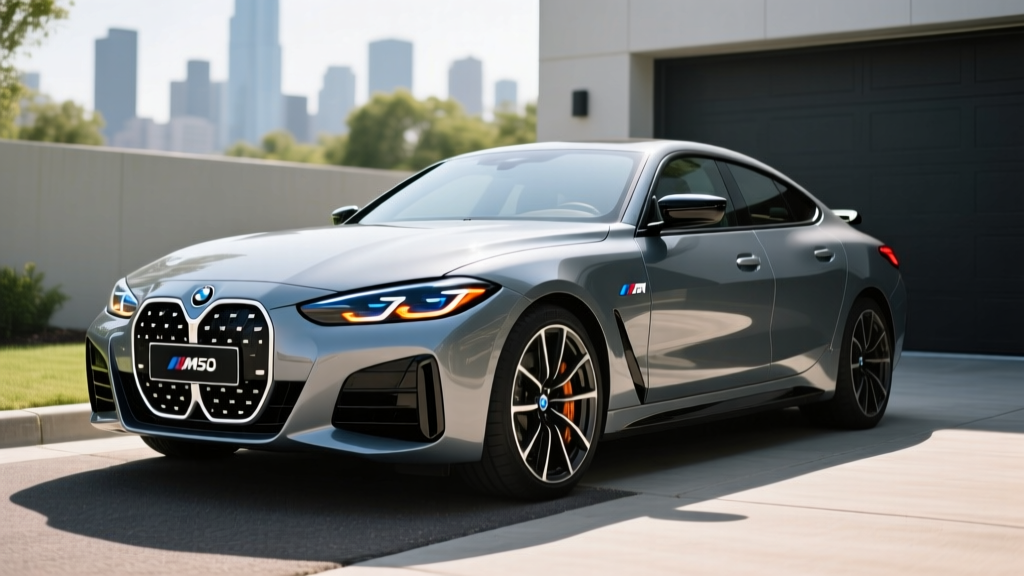
The BMW i4 M50 occupies a rare position in the EV market: it's a genuine performance sedan that doesn't ask you to compromise on daily usability. With dual motors producing a combined 536 horsepower, this is the first all-electric vehicle to wear BMW's M Performance badge — and it earns it. But beyond the headline acceleration figures, the i4 M50 is also a practical 4-door gran coupe with competitive range, solid DC fast-charging capability, and a cabin that feels genuinely premium. For 2025, it remains one of the most well-rounded electric sports sedans you can buy, even as competition from the Tesla Model 3 Performance, Hyundai Ioniq 6 N, and Porsche Taycan intensifies.
| Spec | Value |
|---|---|
| Drivetrain | Dual-motor AWD (xDrive) |
| Horsepower | 536 hp (400 kW) |
| Torque | 586 lb-ft |
| 0–60 mph | 3.7 seconds (manufacturer) |
| Battery (gross / usable) | 83.9 kWh gross / ~81.5 kWh usable |
| Battery chemistry | NMC (Nickel Manganese Cobalt) |
| EPA range | 271 miles (with 19" wheels) |
| Efficiency | 97 MPGe combined / 35 kWh/100 mi |
| Max DC fast charge | 205 kW (CCS1) |
| 10–80% DC time | ~31 minutes |
| Level 2 onboard charger | 11 kW (AC) |
| Cargo volume | 10.0 cu ft (rear seats up), 45.6 cu ft (folded) |
| Rear legroom | 34.0 inches |
| Base MSRP | $69,700 (before destination) |
| Battery warranty | 8 years / 100,000 miles |
BMW i4 M50 Horsepower and Performance: What 536 HP Feels Like
The headline number is 536 horsepower and 586 lb-ft of torque, available through BMW's xDrive dual-motor all-wheel-drive system. The front motor contributes 255 hp while the rear delivers 312 hp, with torque distributed dynamically based on traction and driving mode. BMW quotes a 3.7-second 0–60 mph time, though independent testing by outlets like Car and Driver has recorded times in the 3.3–3.5 second range — typical of BMW's conservative factory claims.
What makes the M50's powertrain distinctive is how it deploys that power. In Sport mode, BMW's IconicSounds Electric (composed by Hans Zimmer) adds synthetic engine noise through the speakers — divisive among enthusiasts, but effective at providing speed feedback that EVs otherwise lack. The adaptive M suspension is standard, with electronically controlled dampers that stiffen noticeably in Sport but remain compliant in Comfort. This isn't a track car like the upcoming i4 M3, but it's a remarkably capable grand tourer that can dispatch mountain roads with genuine confidence.
The M50 also features M Sport brakes (4-piston front calipers), a variable sport steering rack, and an M-specific rear axle setup. Regenerative braking offers multiple levels, including a one-pedal-driving mode via the adaptive regen setting, though BMW doesn't force it — you can still coast freely in the default "B" mode by selecting the lowest regen level.
Range and Efficiency: EPA vs. Real-World Expectations
EPA Range: 271 miles (19" wheels) / 245 miles (20" M Sport wheels)
Real-World Expectation: Expect 240–260 miles in mixed driving, 220–240 miles on sustained 75+ mph highway runs, and as low as 190–210 miles in sub-freezing winter conditions.
The BMW i4 M50 uses an 83.9 kWh gross battery pack (~81.5 kWh usable) with NMC (nickel manganese cobalt) chemistry. BMW chose NMC over LFP for the M50 because of its higher energy density and better performance in cold temperatures — important for a performance sedan expected to deliver full power in varied conditions.
The EPA rates the M50 at 271 miles with the standard 19-inch aerodynamic wheels, dropping to 245 miles with the optional 20-inch M Sport wheels. The efficiency figure of 97 MPGe combined (35 kWh per 100 miles) is competitive with the Tesla Model 3 Performance (315 miles EPA, 125 MPGe) when you account for the BMW's heavier curb weight of ~4,900 lbs.
In real-world testing, the i4 M50's range holds up reasonably well in city and suburban driving thanks to strong regenerative braking. Highway efficiency suffers more — at 80 mph, expect consumption to climb to 38–42 kWh/100 mi, bringing effective range closer to 220 miles. Cold weather (below 32°F) can reduce range by 20–30%, primarily due to cabin heating demands and battery thermal management. The i4 M50 does not come standard with a heat pump in all markets — in the U.S., the heat pump is included as part of the available Premium Package or as a standalone option, and it meaningfully reduces winter range loss by scavenging waste heat from the drivetrain.
For context on official efficiency data, see the EPA's fueleconomy.gov listing for the i4 M50.
Charging Speed: DC Fast Charging and Home Setup
The i4 M50 supports DC fast charging at up to 205 kW via its CCS1 connector. On a 350 kW Electrify America or compatible station, you can expect the battery to charge from 10% to 80% in approximately 31 minutes. However, as with all EVs, the peak 205 kW rate is not sustained throughout the session. The charging curve is strong through about 50% state of charge (SoC), then tapers progressively — from roughly 150 kW at 60% SoC down to under 50 kW past 80%. This is standard behavior for NMC packs managed for longevity.
| Charging Level | Power / Rate | Miles of Range Added per Hour |
|---|---|---|
| Level 1 (120V, 12A) | ~1.4 kW | ~3–4 miles/hour |
| Level 2 (240V, 48A) | 11 kW (onboard charger max) | ~28–32 miles/hour |
| DC Fast Charge (peak) | 205 kW (CCS1) | ~164 miles in 10 minutes (10–50% SoC) |
For home charging, the i4 M50's 11 kW onboard AC charger is among the faster units available in its class. On a 48-amp Level 2 wallbox (like a ChargePoint Home Flex or BMW's own Wallbox), a full charge from empty takes roughly 8.5 hours — easily achievable overnight. If your home charger is limited to 32 amps (7.7 kW), plan for about 12 hours. Most owners who charge nightly will never wake up to an incomplete charge.
One practical note: BMW includes the Flexible Fast Charger (a portable cord) with the vehicle, which can handle both 120V and 240V outlets, though at reduced rates compared to a hardwired wallbox. For a proper Level 2 installation, budget $500–$2,000 depending on your electrical panel capacity and the distance from your panel to the charging location.
Pricing, Trims, and Federal Tax Credit Eligibility
The 2025 BMW i4 M50 starts at $69,700 before a $995 destination charge, bringing the total to $70,695. This positions it between the Tesla Model 3 Performance (~$54,990) and the Porsche Taycan 4S (~$105,000). Popular options include the Premium Package ($3,400, adds heat pump, heated steering, lumbar support), the M Sport Package ($2,500, larger wheels and aero), and individual colors and interior trims that can push a well-equipped M50 past $80,000.
| Item | Amount |
|---|---|
| Base MSRP (i4 M50) | $69,700 |
| Destination charge | $995 |
| As-tested (typical options) | $76,000–$82,000 |
| Federal §30D tax credit | $0–$7,500 (see eligibility below) |
| Estimated out-of-pocket (after credit) | $63,195–$82,000+ |
Federal tax credit eligibility (§30D): The BMW i4 M50's eligibility for the full $7,500 federal tax credit is not guaranteed and depends on several IRS rules that have tightened significantly under the Inflation Reduction Act:
- MSRP cap: Sedans must have an MSRP at or below $55,000. The i4 M50's $69,700 base price exceeds this cap, which means it does not qualify for the §30D new-vehicle credit.
- Income caps: Even if the price qualified, buyer AGI must be ≤$150,000 (single) or ≤$300,000 (joint).
- Battery sourcing: Critical minerals and battery component requirements phase in progressively through 2030.
- Point-of-sale transfer: For qualifying vehicles, the credit can be transferred to the dealer at purchase for an immediate price reduction — but only if the vehicle itself qualifies.
The i4 M50's pricing places it firmly above the §30D sedan cap. Buyers should not expect the federal credit on this model. Some states offer additional incentives that may apply — check your state's energy office or the IRS §30D guidance page for current rules. A tax professional can confirm your personal eligibility.
Interior, Tech, and Daily Livability
The i4 M50 shares its cabin architecture with the 4 Series Gran Coupe, which means a driver-focused layout with BMW's Curved Display — a 12.3-inch instrument cluster merged with a 14.9-inch central touchscreen running BMW's iDrive 8.5 operating system. The system supports wireless Apple CarPlay and Android Auto, over-the-air updates, and BMW's Digital Key Plus (using your smartphone as a key via UWB).
Interior materials are solidly premium: SensaTec synthetic leather is standard, with Vernasca leather and Merino leather available as upgrades. The M-specific sport seats offer good bolstering without being overly aggressive. Build quality is typical BMW — tight panel gaps, soft-touch surfaces on the upper dash and door panels, and satisfying switchgear.
Practicality is a mixed bag. The rear seat offers 34.0 inches of legroom, which is adequate for adults on shorter trips but tighter than a Tesla Model 3 (35.3 inches) or Hyundai Ioniq 6 (37.4 inches). The sloping roofline cuts into rear headroom, making the i4 M50 less ideal for tall rear passengers. Cargo space is 10.0 cubic feet with the rear seats up — modest for a sedan but aided by a practical liftback-style hatch that opens the entire rear glass. Fold the 40/20/40 rear seats and you get 45.6 cubic feet, enough for a weekend's worth of gear for four people.
There is no frunk (front trunk). The space under the hood is occupied by power electronics and the front motor, which is a common trade-off in AWD EVs built on adapted ICE platforms (the i4 shares BMW's CLAR architecture with the gas 4 Series).
Driver Assistance and Safety
The i4 M50 comes with BMW's Driving Assistant as standard, which includes forward collision warning, automatic emergency braking, lane departure warning, and speed limit info. The available Driving Assistant Professional Package ($1,700) adds adaptive cruise control with stop-and-go, lane-keeping assist with active side collision avoidance, and BMW's Highway Assistant — which permits hands-off driving at speeds up to 85 mph on divided highways, provided the driver keeps their eyes on the road (verified by an interior camera).
This is an SAE Level 2 system. The driver must remain engaged and ready to take over at any time. It is not autonomous driving and should not be confused with Level 4 systems like Waymo's driverless service.
The i4 earned strong safety ratings, with the NHTSA awarding it a 5-star overall rating and the IIHS naming it a Top Safety Pick+ when equipped with the appropriate headlights.
Pros and Cons
Pros
- 536 hp with genuinely thrilling acceleration and M-tuned handling
- Premium cabin quality that exceeds Tesla and most Korean competitors
- 205 kW DC fast charging is competitive for the segment
- Liftback hatch adds cargo versatility unusual in sport sedans
- Quiet, refined ride in Comfort mode — a real grand tourer
- iDrive 8.5 is responsive, well-organized, and supports wireless CarPlay/Android Auto
Cons
- $69,700 MSRP disqualifies it from the $7,500 federal tax credit
- 271-mile EPA range trails Tesla Model 3 Performance (315 mi) and Hyundai Ioniq 6 (361 mi)
- Rear seat is tight for tall adults — headroom and legroom are compromises
- No frunk; cargo space is 10 cu ft behind the rear seats
- Built on an adapted ICE platform — not a dedicated EV architecture
- Heat pump is optional, not standard — affects cold-weather efficiency
Who Should Buy the BMW i4 M50?
The i4 M50 is best suited for the performance-oriented commuter who values driving dynamics, cabin refinement, and brand prestige over maximizing range or minimizing cost. If you're coming from a BMW M340i, Audi S5, or Mercedes-AMG C43 and want to go electric without sacrificing the feel of a German sport sedan, the i4 M50 is arguably the best current option in its price bracket.
It's less ideal for: families needing generous rear-seat space (consider the iX or Model Y), buyers prioritizing maximum range per dollar (the Ioniq 6 or Model 3 Long Range deliver more miles for less money), or those who need the federal tax credit to make the math work.
For road trips, the 271-mile range and 205 kW charging mean you'll stop roughly every 200–230 miles for 25–35 minutes — manageable on the Electrify America or EVgo networks, though the Tesla Supercharger network (via Ford/GM's NACS adapter, not natively supported on the i4) remains more reliable in many corridors.
Frequently Asked Questions
What is the real-world range of the BMW i4 M50?
The EPA rates it at 271 miles (19" wheels) or 245 miles (20" wheels). In real-world mixed driving, expect 240–260 miles. Sustained highway driving at 75–80 mph reduces this to 220–240 miles, and cold weather below freezing can drop it to 190–210 miles without a heat pump. Adding the optional heat pump recovers some of that winter loss.
How fast does the BMW i4 M50 charge?
On a DC fast charger rated at 205 kW or higher, the i4 M50 charges from 10% to 80% in approximately 31 minutes. At home on a 48-amp Level 2 charger (11 kW), a full charge takes about 8.5 hours. On a standard 120V outlet (Level 1), expect roughly 3–4 miles of range per hour — suitable only for emergency top-ups.
Does the BMW i4 M50 qualify for the federal EV tax credit?
No. The §30D new clean vehicle credit has a $55,000 MSRP cap for sedans, and the i4 M50 starts at $69,700. It does not qualify for the federal credit. State-level incentives may still apply depending on where you live. Always verify current rules at irs.gov and consult a tax professional.
Is the BMW i4 M50 worth buying over the Tesla Model 3 Performance?
It depends on priorities. The Model 3 Performance offers more range (315 mi EPA), faster Supercharger network access, a lower price (~$54,990), and better rear-seat space — but a less refined cabin, firmer ride, and less prestige. The i4 M50 wins on build quality, ride comfort, driving dynamics, and the BMW ownership experience. If you value premium feel and handling over raw efficiency and price, the i4 M50 justifies its premium.
What are the biggest drawbacks of the i4 M50?
The main compromises are range (271 mi trails key rivals), no federal tax credit eligibility due to price, a tight rear seat, lack of a frunk, and the fact that it's built on an adapted ICE platform rather than a dedicated EV architecture. These are real trade-offs, not deal-breakers — but they matter if you're cross-shopping against EV-native competitors.
How long will the i4 M50 battery last?
BMW warranties the high-voltage battery for 8 years or 100,000 miles against defects and capacity loss below 70% of original capacity. NMC batteries in BMW's Gen5 eDrive system have shown strong longevity in real-world use, with typical degradation of 5–10% over the first 100,000 miles based on owner reports from earlier i4 and iX models. Keeping charge between 20–80% for daily use and avoiding frequent DC fast charging will maximize long-term health.