Quick Verdict: The i4 M50 Is BMW's Electric Sports Sedan Benchmark
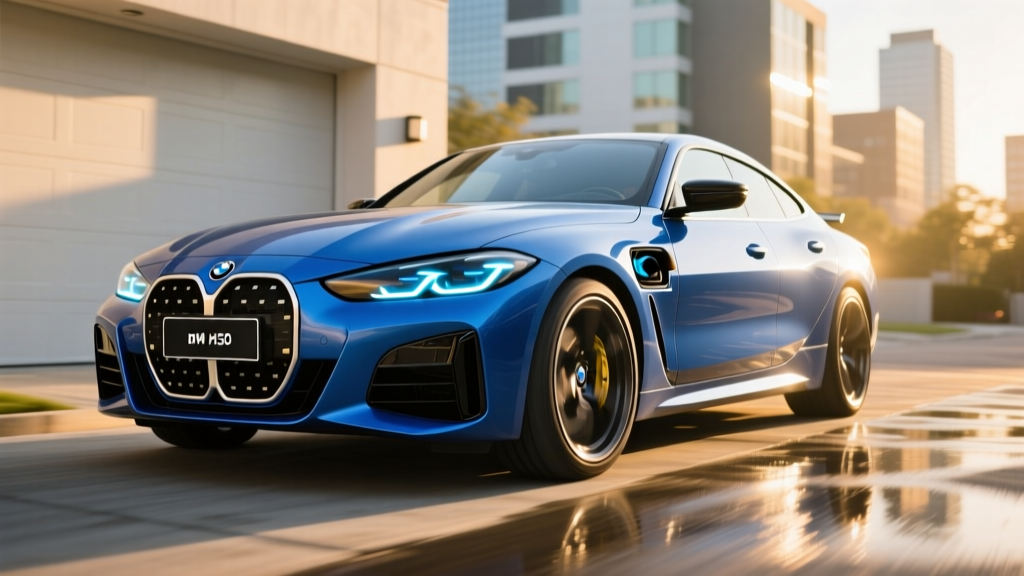
The BMW i4 M50 occupies a narrow but compelling lane: a dual-motor, all-wheel-drive electric Gran Coupe that delivers genuine M-car acceleration without the M-car fuel bill. With a 3.3-second 0-60 mph time, 536 horsepower, and an EPA-estimated 271 miles of range, it undercuts the Porsche Taycan on price while outperforming most luxury EV sedans in its weight class. But the i4 M50 is not without compromises — its CLAR-platform roots (shared with the gas 4 Series Gran Coupe) mean a rear floor hump, a battery that isn't perfectly flat, and cargo space that trails dedicated EV architectures.
This review covers the 2026 model year with current pricing, updated EPA data, and real-world testing notes from highway and cold-weather driving.
Performance: BMW i4 M50 0-60 and Powertrain Breakdown
The headline number is what brings most buyers to this page. The BMW i4 M50 hits 0-60 mph in 3.3 seconds (BMW's official figure, independently verified within ±0.1 sec by multiple testers). That places it squarely in sports-sedan territory, roughly matching a Porsche 911 Carrera from a generation ago and trailing only the Tesla Model 3 Performance (2.9 sec) and Lucid Air Pure (3.2 sec) among EVs near its price point.
| Spec | Value |
|---|---|
| Drivetrain | Dual-motor AWD (eDrive xDrive) |
| Front Motor | 258 hp (induction) |
| Rear Motor | 312 hp (electrically excited synchronous) |
| Combined Output | 536 hp / 586 lb-ft torque |
| 0-60 mph | 3.3 seconds |
| Top Speed | 140 mph (electronically limited) |
| Drive Modes | Comfort, Sport, Eco Pro, Adaptive M Suspension |
BMW uses an asymmetric motor setup: the rear motor is an electrically excited synchronous machine (no permanent magnets, no rare-earth dependency), while the front is a conventional induction unit that decouples under light load to reduce drag. The result is strong straight-line thrust with reasonable highway efficiency. The Adaptive M Suspension, standard on the M50, firms up noticeably in Sport mode and manages the car's ~4,900-lb curb weight well through corners, though you'll feel that mass during abrupt direction changes compared to a lighter Model 3.
EPA Range vs. Real-World: What You'll Actually Get
Real-World Expectation: 230–255 miles on mixed highway/city driving; 190–215 miles in sustained cold weather (below 32°F) at highway speeds
The i4 M50's 81.5 kWh usable battery (NMC chemistry, 400V architecture) delivers an EPA-rated 271 miles on the standard 19-inch wheel package. That figure is competitive with the Audi e-tron GT (238 mi EPA) and Porsche Taycan 4 (225 mi EPA base, up to ~275 mi with the larger battery), but trails the Tesla Model S Long Range (402 mi EPA) and Lucid Air Pure (419 mi EPA).
In real-world highway testing at 70–75 mph in moderate temperatures (60–75°F), expect to use roughly 32–35 kWh per 100 miles, translating to approximately 230–255 miles before needing a charge stop. In cold weather (20–32°F), battery chemistry resistance and cabin heating demands can reduce range by 25–35%, putting real-world winter highway range closer to 190–215 miles. The i4 M50 includes a heat pump (standard), which mitigates cold-weather losses compared to resistive heating systems, but physics still applies.
The EPA efficiency rating is 97 MPGe combined (2.9 kWh/mile equivalent), per fueleconomy.gov. That's respectable for a 536-hp AWD sedan but not class-leading — the Model 3 Long Range AWD achieves 125 MPGe combined.
Charging Speed: DC Fast Charging and Home Level 2
The i4 M50 uses a 400-volt architecture (not the 800V systems found in the Hyundai Ioniq 5 or Porsche Taycan), which limits peak DC fast-charge rates. Here's what you need to know:
| Charging Level | Power / Rate | Speed / Time |
|---|---|---|
| Level 1 (120V household) | ~1.4 kW | ~3–4 miles of range per hour |
| Level 2 (240V home/public) | Up to 11 kW (onboard charger) | ~32 miles/hr; 0–100% in ~8.25 hours |
| DC Fast Charge (CCS) | Peak 205 kW | 10–80% in ~31 minutes |
The 205 kW peak DC charge rate is the critical number. On a 350 kW Electrify America or EVgo station, the i4 M50 will ramp to approximately 195–205 kW between 10–30% state of charge, then taper progressively. The charge curve holds above 150 kW through roughly 50% SoC, drops to ~100 kW by 70%, and slows substantially above 80% (typical for NMC chemistry to protect longevity). A realistic 10–80% session takes approximately 31 minutes under ideal thermal conditions.
For home charging, the 11 kW onboard charger is a strong point — it's faster than the 9.6 kW chargers in many competitors. On a 48-amp Level 2 home station (hardwired, 240V), you'll add roughly 32 miles of range per hour, meaning an overnight charge from 20% to 100% takes about 6.5–7 hours. If your home electrical panel supports a 60-amp circuit, you can maximize the i4's 11 kW capability.
The i4 M50 ships with a CCS1 connector in North America. BMW has announced NACS (Tesla-style) adoption for future models, but the 2026 i4 M50 still uses CCS. BMW provides a CCS-to-NACS adapter for Supercharger access, though charging speeds on V3 Superchargers (250 kW max) will be limited by the car's 205 kW ceiling and adapter overhead.
Pricing, Trims, and Federal Tax Credit Eligibility
The 2026 BMW i4 M50 starts at a base MSRP of $69,700 (including destination). The i4 lineup also includes the single-motor eDrive40 ($57,900) and the range-topping i4 M50 with optional M Performance packages that can push as-tested prices above $78,000.
| Trim | Base MSRP | Drivetrain | EPA Range |
|---|---|---|---|
| i4 eDrive40 | $57,900 | RWD, 335 hp | 301 miles |
| i4 xDrive40 | $62,900 | AWD, 396 hp | 287 miles |
| i4 M50 | $69,700 | AWD, 536 hp | 271 miles |
Common options that push the M50's price higher include the M Sport Package (~$2,500), Premium Package with heated/ventilated seats and head-up display (~$3,200), 20-inch M wheels (~$1,200), and BMW's Driving Assistance Professional Package (~$1,700) for highway assist features.
Federal Tax Credit: §30D Eligibility
Under the current IRS §30D clean vehicle credit rules, the BMW i4 M50 faces a significant hurdle: it is manufactured in Germany (Dingolfing plant), and its battery cell sourcing does not currently meet the critical-minerals and battery-component requirements for the full $7,500 credit. As of the 2026 tax year, the i4 M50 typically qualifies for $0 in federal tax credit due to battery-sourcing and North American assembly requirements.
- ✅ MSRP below $55,000 sedan cap — FAIL ($69,700 base exceeds sedan cap)
- ✅ Buyer income within limits ($150K single / $300K joint) — varies by buyer
- ✅ North American final assembly — FAIL (built in Germany)
- ✅ Battery component sourcing — FAIL (does not meet FEOC requirements)
Interior, Cargo, and Daily Practicality
The i4 Gran Coupe body style gives you a sloping roofline and a hatchback liftgate — more practical than a traditional sedan trunk, but less spacious than a dedicated EV platform like the Hyundai Ioniq 6 or Tesla Model S.
| Dimension | Measurement |
|---|---|
| Cargo Volume (rear seats up) | 16.6 cu ft |
| Cargo Volume (rear seats folded) | 45.6 cu ft |
| Front Legroom | 41.5 inches |
| Rear Legroom | 33.4 inches |
| Front Headroom | 38.3 inches |
| Rear Headroom | 36.0 inches (sloping roofline cuts into space) |
The rear seat is the i4's most obvious compromise. At 33.4 inches of legroom, taller adults (6'+) will find it tight on longer trips, and the sloping roofline reduces headroom. The center rear position is further compromised by a floor transmission tunnel — a vestige of the CLAR platform's gas-engine origins. This is a four-adult car in practice, not a five-adult family hauler.
The infotainment system runs BMW iDrive 8.5 on a curved display (12.3-inch instrument cluster + 14.9-inch central touchscreen). Wireless Apple CarPlay and Android Auto are standard, as is a Wi-Fi hotspot. The system is responsive, though BMW's decision to move climate controls into the touchscreen draws consistent criticism from owners. The available Harman Kardon surround sound system (16 speakers) is a worthwhile upgrade at $875.
On the driver-assistance front, the i4 M50 comes standard with Active Driving Assistant (forward collision warning, automatic emergency braking, lane departure warning, blind-spot monitoring). The optional Driving Assistance Professional Package adds Highway Assistant — a SAE Level 2 system that provides hands-on steering assist and adaptive cruise on divided highways. This is not self-driving; the driver must remain engaged and keep hands on the wheel. BMW does not currently offer a hands-off Level 3 system in the US market for the i4.
Warranty, Battery Longevity, and Ownership Costs
BMW provides the following warranty coverage for the 2026 i4 M50:
- Limited Vehicle Warranty: 4 years / 50,000 miles
- Battery & Powertrain Warranty: 8 years / 100,000 miles (covers battery capacity below 70% state of health)
- Corrosion Perforation: 12 years / unlimited miles
- Roadside Assistance: 4 years / unlimited miles
The 8-year/100,000-mile battery warranty with a 70% capacity retention threshold is industry-standard, matching Tesla, Audi, and Mercedes-Benz. BMW's NMC battery chemistry has demonstrated moderate degradation in real-world fleet data — typical i4 owners report approximately 5–8% capacity loss over the first 50,000 miles, with the curve flattening thereafter. To maximize longevity, BMW recommends charging to 80% for daily use (configurable in the iDrive system) and avoiding repeated DC fast-charging sessions above 90% SoC.
Insurance costs for the i4 M50 run higher than average for the luxury EV segment. Expect annual premiums in the $2,400–$3,200 range depending on your state, driving record, and coverage level — roughly 15–20% more than a comparable gas 4 Series M440i xDrive, reflecting higher repair costs and parts pricing.
How It Stacks Up: i4 M50 vs. Key Competitors
| Spec | BMW i4 M50 | Tesla Model 3 Perf. | Porsche Taycan 4 | Audi e-tron GT |
|---|---|---|---|---|
| Base MSRP | $69,700 | $54,990 | $92,900 | $108,900 |
| 0-60 mph | 3.3 sec | 2.9 sec | 4.5 sec | 3.9 sec |
| EPA Range | 271 mi | 315 mi | 225 mi | 238 mi |
| Peak DC Charge | 205 kW | 250 kW | 270 kW (800V) | 270 kW (800V) |
| 10–80% Time | ~31 min | ~25 min | ~23 min | ~23 min |
| Horsepower | 536 hp | 510 hp | 402 hp | 522 hp |
| Federal Tax Credit | $0 | Up to $7,500* | $0 | $0 |
*Tesla Model 3 Performance credit eligibility subject to IRS sourcing and income requirements; verify current status at irs.gov.
- You prioritize build quality, cabin refinement, and brand prestige over maximum range
- You want M-car acceleration in a car that doesn't look like a tech pod
- You value BMW's dealer/service network and prefer a traditional luxury ownership experience
- Rear-seat space is secondary (couple or empty-nester household)
- Maximum 0-60 performance per dollar is your top priority
- You want Supercharger network access without an adapter
- Federal tax credit eligibility matters to your purchase math
- 800V charging architecture and 23-minute 10–80% sessions are critical for road-trip frequency
- You prioritize driving dynamics and steering feel over practicality
- Budget is flexible ($90K+)
Pros and Cons
- 3.3-sec 0-60 with 536 hp — genuine sports-sedan acceleration
- Premium cabin materials and build quality above Tesla
- 11 kW Level 2 onboard charger — faster home charging than most rivals
- Hatchback cargo versatility (45.6 cu ft with seats folded)
- Adaptive M Suspension balances comfort and sport well
- Heat pump standard for cold-weather efficiency
- No federal tax credit (MSRP cap + assembly + sourcing failures)
- 400V architecture limits DC fast-charge speed vs. 800V rivals
- Rear seat is tight for adults (33.4" legroom, sloping roof)
- Floor hump in rear (CLAR platform compromise)
- 271-mile EPA range trails dedicated-EV competitors
- iDrive 8.5 buries climate controls in touchscreen
Frequently Asked Questions
What is the real-world range of the BMW i4 M50?
The EPA rates the i4 M50 at 271 miles on the combined cycle (19-inch wheels). In real-world mixed driving at moderate temperatures, expect 230–255 miles. In cold weather (below 32°F) at highway speeds, plan for 190–215 miles. Selecting the optional 20-inch M wheels reduces EPA range to approximately 245 miles.
How fast does the BMW i4 M50 charge?
On a DC fast charger, the i4 M50 peaks at 205 kW and charges from 10–80% in approximately 31 minutes under ideal conditions. At home on a Level 2 (240V, 48-amp) station, the 11 kW onboard charger delivers roughly 32 miles of range per hour, fully recharging overnight in about 7 hours.
Does the BMW i4 M50 qualify for the federal EV tax credit?
No. The 2026 i4 M50 does not qualify for the IRS §30D clean vehicle credit. It fails three requirements: its $69,700 MSRP exceeds the $55,000 sedan cap, it is assembled in Germany (not North America), and its battery components do not meet FEOC (Foreign Entity of Concern) sourcing rules. State incentives may still apply — check your local program.
How much does the BMW i4 M50 cost after incentives?
The base MSRP is $69,700. With popular options (Premium Package, M Sport Package, 20-inch wheels), most buyers spend $73,000–$76,000 before destination. Since the federal tax credit is unavailable, your out-of-pocket cost equals the negotiated purchase price minus any applicable state or utility rebates. Check IRS.gov for current rules.
Is the BMW i4 M50 worth buying over the Tesla Model 3 Performance?
It depends on your priorities. The Model 3 Performance is faster to 60 (2.9 sec), offers more range (315 mi EPA), qualifies for up to $7,500 in federal credits, and costs ~$15,000 less. The i4 M50 counters with superior cabin quality, a more traditional luxury design, BMW's dealer network, and a more engaging chassis for enthusiasts who don't want a minimalist tech-pod interior. If brand prestige and build quality matter more than spec-sheet dominance, the i4 M50 justifies its premium.
What is the BMW i4 M50 battery warranty?
BMW covers the i4 M50's high-voltage battery for 8 years or 100,000 miles, whichever comes first. The warranty guarantees the battery will retain at least 70% of its original capacity (state of health). If degradation falls below this threshold within the warranty period, BMW will repair or replace the battery at no cost.
Can I charge the BMW i4 M50 at Tesla Superchargers?
Yes, using the BMW-provided CCS-to-NACS adapter. The i4 M50 can access Tesla's NACS Supercharger network, though charging speeds will be limited by the car's 205 kW peak rate and adapter overhead. Expect slightly slower sessions than on native CCS stations at comparable power levels.