The Verdict: Is a BMW i4 Lease Worth It in 2026?
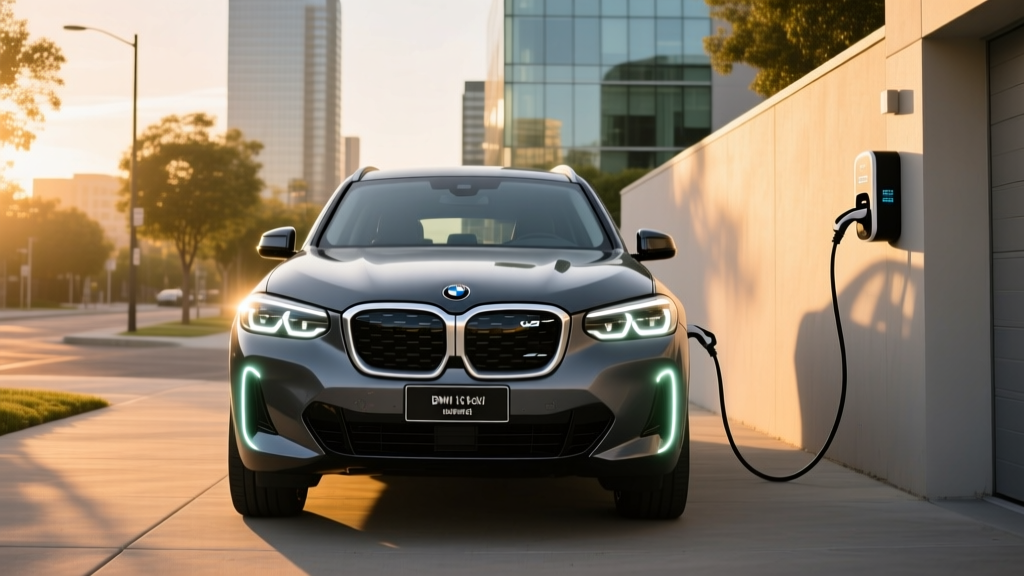
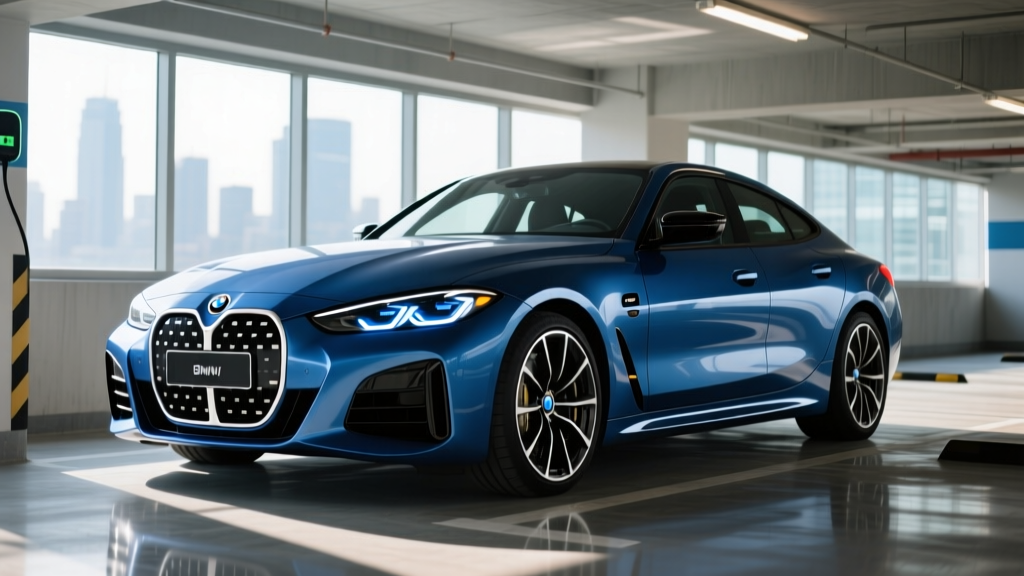
The BMW i4 remains one of the most compelling electric sport sedans on the market, blending the familiar 4 Series Gran Coupe silhouette with a proper electric drivetrain. For 2026, BMW continues to offer the i4 in eDrive40 (RWD), xDrive40 (AWD), and the high-performance M50 trims. But with shifting federal tax-credit rules and aggressive luxury-EV competition from the Tesla Model 3, Hyundai Ioniq 6, and Mercedes EQB, many buyers are asking whether BMW i4 lease deals offer a smarter path to ownership than buying outright.
The short answer: leasing can sidestep the i4's uncertain §30D federal tax-credit eligibility while locking in a competitive monthly payment — but only if the money factor and residual values work in your favor. Below, we dissect every spec, real-world range figure, charging capability, and cost variable you need before signing.
2026 BMW i4 at a Glance: Key Specifications
| Spec | eDrive40 | xDrive40 | M50 |
|---|---|---|---|
| EPA Range | 307 mi | 282 mi | 269 mi |
| Battery (usable) | 81.5 kWh (NMC) | 81.5 kWh (NMC) | 81.5 kWh (NMC) |
| Horsepower | 335 hp | 396 hp | 536 hp |
| 0–60 mph | 5.5 sec | 4.9 sec | 3.7 sec |
| Drivetrain | RWD (single motor) | AWD (dual motor) | AWD (dual motor) |
| Max DC Fast Charge | 205 kW | 205 kW | 205 kW |
| 10–80% DC Time | ~31 min | ~31 min | ~31 min |
| Level 2 Home Charge | 11 kW (~33 mi/hr) | 11 kW (~33 mi/hr) | 11 kW (~33 mi/hr) |
| EPA Efficiency (combined) | 109 MPGe | 99 MPGe | 93 MPGe |
| Base MSRP | $57,900 | $61,900 | $70,700 |
Source: fueleconomy.gov and BMW USA product specifications. All figures for 2026 model year.
Real-World Range: What the EPA Sticker Doesn't Tell You
EPA estimate: 307 mi (eDrive40) / 282 mi (xDrive40) / 269 mi (M50)
Real-world highway (70–80 mph, 70°F): ~250–270 mi (eDrive40), ~230–250 mi (xDrive40)
Cold weather (below 32°F, mixed driving): Expect 20–30% reduction — roughly 190–240 mi depending on cabin heating use and terrain.
The i4's 81.5 kWh usable battery pack uses NMC (nickel manganese cobalt) chemistry, which delivers strong energy density but is more susceptible to cold-weather capacity loss than LFP packs. BMW's thermal management system includes a heat pump (standard on 2026 models), which mitigates some of the winter range penalty by using ambient air heat rather than resistive elements for cabin warming.
On a 300-mile road trip at sustained highway speeds in mild conditions, the eDrive40 will typically require one DC fast-charge stop. At 75 mph, expect consumption around 32–35 kWh/100mi — that's slightly thirstier than the Hyundai Ioniq 6 (which achieves up to 361 mi EPA on a smaller 77.4 kWh pack thanks to its 0.21 drag coefficient). The i4's more traditional sedan profile creates more aerodynamic drag than the Ioniq 6's teardrop shape.
Charging Speed: DC Fast, Level 2, and the Curve Reality
The i4 supports a peak DC fast-charge rate of 205 kW via its CCS1 connector (or NACS with adapter, as BMW began transitioning to NACS ports for 2025+ models). Here's what that actually looks like at the charger:
| Charging Level | Power | Speed (Approx.) | Notes |
|---|---|---|---|
| Level 1 (120V household) | 1.4 kW | ~4 mi/hr | Emergency/trickle only |
| Level 2 (240V home/public) | 11 kW | ~33 mi/hr | Full charge in ~8.5 hours |
| DC Fast (peak) | 205 kW | ~165 mi in 10 min | Only between 10–40% SoC |
| DC Fast (10–80%) | Avg ~130 kW | ~31 minutes | Curve tapers significantly above 60% |
Charge-curve reality: The 205 kW peak only sustains from roughly 10% to 40% state of charge. Above 60%, the rate drops to approximately 80–100 kW, and above 80% it slows to under 50 kW. This is normal for NMC chemistry but worth understanding — if you routinely charge to 90%+ at DC stations, your last 10% will add 10–15 minutes to the session. For daily driving, preconditioning the battery (via the iDrive navigation-based preconditioning feature) before arriving at a fast charger is essential to hitting peak rates.
Pricing, Lease Economics, and Tax-Credit Eligibility
The 2026 BMW i4 starts at $57,900 for the eDrive40, climbing to $70,700 for the M50. After adding the $995 destination charge and typical options (Premium Package, M Sport Package, larger wheels), a well-equipped xDrive40 easily reaches $67,000–$72,000 before incentives.
Federal Tax Credit: The §30D Complication
Here's where leasing gets interesting. Under current IRS §30D rules, the BMW i4 faces challenges qualifying for the full $7,500 federal tax credit when purchased outright:
- MSRP cap: Sedans must be under $55,000 MSRP. The i4 eDrive40 starts at $57,900 — over the cap. No i4 trim qualifies on price alone for the purchase credit.
- Battery sourcing: Critical-mineral and battery-component requirements have tightened annually through 2026, and BMW's supply chain has not consistently met these thresholds for US-market i4 vehicles.
- Income caps: $150,000 single / $300,000 joint modified AGI.
The lease loophole: Under §25D commercial clean-vehicle provisions, leased EVs can pass through a $7,500 credit to the leasing company (BMW Financial Services), which may apply it as a capitalized-cost reduction — effectively lowering your monthly payment. This bypasses the MSRP and income caps that apply to purchases. However, BMW Financial Services is not contractually obligated to pass the full credit to lessees. Always confirm the "lease cash" or incentive amount in writing before signing.
MSRP: $65,000 (with options) | Lease cash applied: $7,500 | Adjusted cap cost: $57,500
36 months / 10,000 mi per year | Money factor: ~0.0022 (equiv. ~5.3% APR)
Residual: 58% | Estimated monthly payment: $680–$780 (before tax, with $4,000 down)
Interior, Tech, and Daily Livability
The i4's interior is one of its strongest selling points versus Tesla's minimalist Model 3. BMW's Curved Display pairs a 12.3-inch instrument cluster with a 14.9-inch infotainment touchscreen running iDrive 8.5 (2026 update). Wireless Apple CarPlay and Android Auto are standard, and the system supports over-the-air updates for navigation, ADAS, and powertrain calibration.
Cargo and Passenger Space
- Rear legroom: 34.5 inches (tight for tall adults on long trips)
- Cargo (rear seats up): 16.6 cu ft (hatchback liftback design aids loading)
- Cargo (rear seats folded): 45.4 cu ft
- Frunk: None — the i4's CLAR-based platform repurposes the 4 Series architecture, and the motor/inverter occupies the front compartment
The hatchback Gran Coupe body style is more practical than a traditional sedan trunk, but the sloping roofline limits vertical cargo space for boxes or dog crates. For families with two child seats, the rear bench is workable but not generous — the Hyundai Ioniq 5 (41.3 inches rear legroom) is significantly more spacious.
Driver-Assistance Technology
BMW's Driving Assistant Professional is available on the i4, offering adaptive cruise control with stop-and-go, lane-centering steering assist, and automatic lane-change capability. This is an SAE Level 2 system — the driver must keep hands on or near the wheel and remain fully engaged. It is not self-driving. The system competes favorably with Tesla Autopilot for smoothness but lacks the route-based automation of Tesla's FSD (Supervised) or GM's Super Cruise on mapped highways.
Pros, Cons, and Who Should Lease the i4
- Premium interior quality rivals Mercedes EQS at a lower price
- 307-mi EPA range (eDrive40) covers most commutes for a week
- 205 kW DC charging is competitive for the class
- Hatchback practicality with sedan styling
- Heat pump standard for cold-climate efficiency
- Lease pathway may unlock $7,500 incentive despite MSRP cap
- No frunk; cargo space trails dedicated EV platforms
- Rear legroom tight at 34.5 inches
- MSRP exceeds $55K purchase-credit cap on all trims
- Higher aerodynamic drag reduces highway efficiency vs Ioniq 6
- No NACS native port on pre-2025 builds (adapter required for Superchargers)
- Insurance premiums 15–25% higher than comparable gas 4 Series
Who the i4 Suits Best
Ideal for: Luxury-sedan buyers who want BMW build quality, a refined ride, and a premium infotainment system without stepping into the iX SUV's price territory. The eDrive40 is the efficiency sweet spot for commuters with home Level 2 charging. The M50 targets enthusiasts who want 536 hp and don't need maximum range.
Look elsewhere if: You need family-hauler rear space (Ioniq 5, Kia EV6), maximum range per dollar (Model 3 Long Range at 341 mi EPA), or you want to buy outright and claim the full §30D credit (very few luxury sedans under $55K qualify).
Warranty and Long-Term Ownership
| Coverage | Term |
|---|---|
| Basic Vehicle | 4 years / 50,000 miles |
| Battery & Powertrain | 8 years / 100,000 miles (retains ≥70% capacity) |
| Corrosion Perforation | 12 years / unlimited miles |
| Roadside Assistance | 4 years / unlimited miles |
BMW guarantees the high-voltage battery will retain at least 70% of its original capacity over the 8-year/100,000-mile warranty period. Real-world degradation data from 2022–2024 i4 owners suggests NMC packs in BMW's thermal-managed system lose roughly 5–8% capacity over the first 60,000 miles — well within the warranty threshold. For lease holders (typically 36 months / 30,000–36,000 miles), battery degradation is essentially a non-issue.
Competitor Comparison: i4 vs the Luxury EV Sedan Field
| Spec | BMW i4 eDrive40 | Tesla Model 3 LR | Hyundai Ioniq 6 SEL | Mercedes EQB 350 |
|---|---|---|---|---|
| EPA Range | 307 mi | 341 mi | 361 mi | 245 mi |
| Base MSRP | $57,900 | $47,740 | $42,450 | $54,350 |
| Max DC Charge | 205 kW | 250 kW | 235 kW | 100 kW |
| 0–60 mph | 5.5 sec | 4.2 sec | 5.1 sec | 6.2 sec |
| Interior Quality | Excellent | Good (minimalist) | Very Good | Very Good |
| Rear Legroom | 34.5 in | 35.3 in | 39.5 in | 36.3 in |
The i4 trades class-leading range and value for superior interior materials, brand cachet, and a driving experience tuned by a legacy automaker. If you prioritize badge prestige and cabin refinement over raw range-per-dollar, the i4's positioning is defensible. If maximizing efficiency and space matters more, the Ioniq 6 or Model 3 are objectively stronger on paper.
Frequently Asked Questions
Does the BMW i4 qualify for the $7,500 federal EV tax credit?
Not when purchased outright — every 2026 i4 trim exceeds the $55,000 MSRP cap for sedans under IRS §30D rules. However, leasing may unlock the credit through the commercial-vehicle loophole (§25D), where BMW Financial Services can apply the $7,500 as a capitalized-cost reduction. Confirm the lease-cash amount with your dealer before signing, as it is not guaranteed.
What is the real-world range of the BMW i4?
The EPA rates the eDrive40 at 307 miles, but expect roughly 250–270 miles at sustained highway speeds in mild weather. In sub-freezing temperatures, range can drop to 190–240 miles depending on cabin heat usage and driving style. The heat pump helps, but NMC chemistry is inherently less cold-resilient than LFP.
How fast does the i4 charge at home and on the road?
At home on a 240V Level 2 charger (11 kW), the i4 adds about 33 miles of range per hour — a full 10–100% charge takes roughly 8.5 hours, ideal for overnight charging. On DC fast chargers, it peaks at 205 kW and reaches 10–80% in approximately 31 minutes, though the charge curve tapers significantly above 60% SoC.
Is leasing the BMW i4 better than buying in 2026?
Leasing is often the smarter financial move for the i4 because it can bypass the purchase tax-credit MSRP cap, shields you from long-term depreciation uncertainty on luxury EVs, and aligns with the typical 36-month ownership horizon where battery degradation is negligible. If you plan to keep the car 6+ years and drive under 10,000 miles annually, buying may still make sense — but you'll likely pay full MSRP without the federal credit.
How does the i4 compare to the Tesla Model 3 for a lease?
The Model 3 Long Range offers 341 miles of EPA range at roughly $10,000 less than the i4 eDrive40, charges faster (250 kW peak), and has access to the Supercharger network natively. The i4 counters with a far more premium interior, hatchback versatility, and a more traditional luxury-dealer service experience. On a pure numbers basis, the Model 3 wins. On subjective quality and brand experience, the i4 holds its ground.
What's the best BMW i4 trim to lease?
For most lessees, the eDrive40 offers the best value: 307 miles of range, the lowest MSRP (keeping lease residuals more favorable), and 335 hp is more than adequate for daily driving. The xDrive40 adds AWD security for snow-belt buyers at a modest range penalty. The M50 is a performance indulgence — fun, but its 269-mile range and $70,700 MSRP make lease payments steep.
Always verify current lease incentives, money factors, and residual values directly with BMW Financial Services or your local dealer. Federal and state incentive rules are subject to change — consult IRS.gov and a tax professional for eligibility specifics.