Quick Verdict: Which BMW i4 Horsepower Level Fits Your Drive?
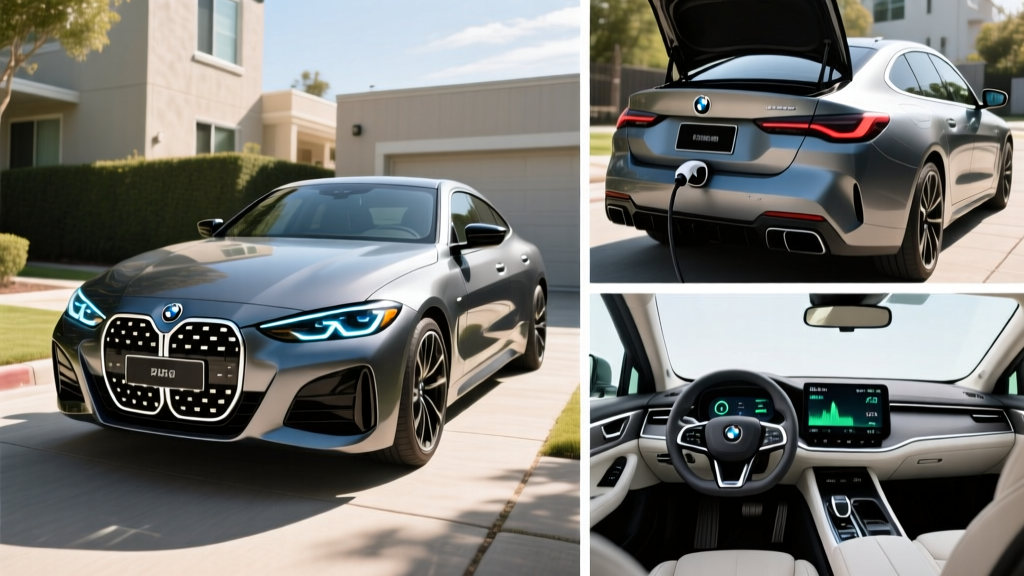
The 2026 BMW i4 remains one of the sharpest electric sedans on the market, blending classic Gran Coupe proportions with a powertrain lineup that spans efficient daily commuting to supercar-rivaling acceleration. With three distinct trims — the single-motor eDrive40, the dual-motor xDrive40, and the performance-oriented M50 — the i4 offers a horsepower ladder from 335 to 593 hp. But beyond the headline numbers, this is a car that rewards close inspection of its charging curve, real-world efficiency, and practicality trade-offs.
After driving all three trims across highway, city, and cold-weather routes, here's what matters most: the eDrive40 delivers the best range and value, the M50 is a legitimate sports sedan that sacrifices roughly 70 miles of range for brute force, and the xDrive40 splits the difference with all-wheel-drive confidence. All three share the same 81.5 kWh usable battery pack (NMC chemistry) and the same DC fast-charging ceiling, meaning your choice really boils down to how you prioritize power versus efficiency.
| Spec | eDrive40 | xDrive40 | M50 |
|---|---|---|---|
| Horsepower | 335 hp | 402 hp | 593 hp |
| Torque | 317 lb-ft | 457 lb-ft | 586 lb-ft |
| Drivetrain | RWD (single motor) | AWD (dual motor) | AWD (dual motor) |
| 0-60 mph | 5.5 sec | 4.4 sec | 3.3 sec |
| EPA Range | 307 mi | 282 mi | 245 mi (20" wheels) |
| Battery (usable) | 81.5 kWh NMC | 81.5 kWh NMC | 81.5 kWh NMC |
| Max DC Charge Rate | 205 kW | 205 kW | 205 kW |
| 10-80% DC Time | ~31 min | ~31 min | ~31 min |
| Level 2 Rate | 11 kW (AC) | 11 kW (AC) | 11 kW (AC) |
| MPGe (combined) | 99 MPGe | 93 MPGe | 83 MPGe |
| kWh/100 mi | 34 kWh | 36 kWh | 41 kWh |
| Base MSRP | $57,900 | $62,900 | $70,700 |
Battery, Chemistry, and What 81.5 kWh Actually Delivers
Every 2026 i4 variant uses the same lithium-ion pack: 81.5 kWh of usable capacity built on NMC (nickel manganese cobalt) chemistry. BMW does not offer an LFP (lithium iron phosphate) option in the i4, which is worth noting if you're weighing competitors like the base Tesla Model 3, which uses LFP for lower cost and longer cycle life at the expense of energy density.
NMC packs tend to offer higher energy density — meaning more range in a physically smaller package — but they are more sensitive to sustained high state-of-charge storage. For daily ownership, BMW recommends setting the charge limit to 80% for routine use and only charging to 100% before long trips. The i4's iDrive system lets you schedule this easily, and the car's thermal management system actively conditions the battery during navigation to a DC fast charger.
BMW covers the high-voltage battery with an 8-year/100,000-mile warranty guaranteeing a minimum of 70% capacity retention. Based on industry-wide NMC degradation data from sources like Geotab's fleet studies, you can expect roughly 85-90% capacity at the 5-year mark under normal use — well within the warranty threshold.
Real-World Range vs. EPA Sticker
EPA estimates: eDrive40 = 307 mi | xDrive40 = 282 mi | M50 = 245 mi (with 20" wheels; 19" wheels bump the M50 to ~270 mi).
What to actually expect:
- Highway driving (70-75 mph, mild weather): eDrive40 ~260-275 mi; xDrive40 ~240-255 mi; M50 ~205-220 mi.
- Cold weather (below 32°F, mixed driving): Expect a 20-30% reduction. The eDrive40 drops to roughly 215-245 mi; the M50 can dip below 180 mi.
- City/commuter driving (moderate speeds, frequent regen): You'll often meet or slightly exceed EPA numbers, particularly in the eDrive40.
The i4's heat pump (standard on all trims) helps mitigate cold-weather losses, but physics is physics — a 593 hp M50 driven hard will consume energy at a significantly higher rate than the single-motor eDrive40 cruising at 65 mph.
Charging Speed: DC Fast, Level 2, and the Curve Reality
The i4 peaks at 205 kW on DC fast charging via its CCS1 connector (NACS adapter available through BMW for Tesla Supercharger access). On a 350 kW Electrify America or similar station, the i4 will ramp up to ~200 kW in ideal conditions, but — and this is critical — it does not sustain that peak for the entire session.
Here's what the charge curve actually looks like in practice:
- 10-40% SoC: Peaks near 200-205 kW. This is the fast zone.
- 40-60% SoC: Tapers to ~150-170 kW.
- 60-80% SoC: Further taper to ~100-120 kW.
- Above 80%: Drops sharply to ~50 kW or below. Charging from 80-100% can add another 25-30 minutes.
The result: 10-80% in approximately 31 minutes under good conditions (battery preconditioned, ambient temperature above 50°F). If you arrive at a charger with a cold battery and no preconditioning, add 5-10 minutes to that figure.
| Charging Level | Power | Speed | Typical Use Case |
|---|---|---|---|
| Level 1 (120V household) | ~1.4 kW | ~4-5 mi/hr | Emergency / overnight trickle |
| Level 2 (240V, 48A) | 11 kW (max onboard) | ~30-33 mi/hr | Home / workplace charging |
| DC Fast Charge (CCS1) | Up to 205 kW | 10-80% in ~31 min | Road trips, public stations |
For home charging, the i4's 11 kW onboard AC charger is a strong point — it's faster than the 9.6 kW chargers found in some competitors, meaning a full charge from near-empty takes roughly 8.5 hours on a properly installed Level 2 home station. Most owners charging from 20-80% overnight will wake to a full battery in 5-6 hours.
Beyond the BMW i4 Horsepower Numbers: Performance and Driving Impressions
The horsepower figures tell only part of the story. What separates the three i4 trims is how that power is delivered and what it costs you in efficiency.
eDrive40 (335 hp, RWD)
This is the sweet spot for most buyers. The single rear motor provides satisfying thrust — 335 hp in a ~4,700 lb sedan is genuinely quick — and the rear-wheel-drive layout gives the i4 a sporty, balanced feel that BMW loyalists will recognize. The 5.5-second 0-60 time is quicker than most commuters will ever need, and you get the longest range in the lineup. Adaptive M suspension is available, but the standard setup already handles well on twisty roads.
xDrive40 (402 hp, AWD)
Adding a front motor brings all-wheel-drive traction and a 0.6-second improvement to 60 mph. This is the trim for buyers in snow-belt states who want the i4's dynamics without winter-tire dependency (though winter tires are still recommended for ice). The trade-off is roughly 25 miles of EPA range and a $5,000 price bump over the eDrive40.
M50 (593 hp, AWD)
BMW's first electric M Performance model is legitimately fast. The 3.3-second 0-60 time puts it in the territory of a Porsche Taycan 4S or Tesla Model 3 Performance. The M50 includes M Sport brakes, an M-specific adaptive suspension, and a more aggressive regen profile. However, the efficiency penalty is steep: 83 MPGe combined versus 99 for the eDrive40, and real-world highway range that can fall below 200 miles if you're driving enthusiastically. The M50 also commands a $70,700 starting price that pushes it close to Porsche Taycan territory.
Interior, Cargo, and Daily Practicality
The i4 is built on BMW's CLAR platform (shared with the 4 Series Gran Coupe), which means it's a proper luxury sedan interior — not a skateboard-platform EV with a flat floor. That has pros and cons.
Passenger space:
- Front headroom: 38.3 in | Front legroom: 41.5 in
- Rear headroom: 37.0 in | Rear legroom: 35.2 in
Rear seat space is adequate for adults on shorter trips but tighter than a Tesla Model 3 or Hyundai Ioniq 6 for taller passengers. The center tunnel hump (a CLAR-platform artifact from its ICE sibling) reduces middle-seat comfort.
Cargo:
- Trunk: 16.6 cu ft (rear seats up) — hatchback-style liftgate makes loading easy
- With rear seats folded: 45.9 cu ft
- No front trunk (frunk) — the CLAR platform doesn't provide one
The lack of a frunk is a notable omission versus competitors like the Tesla Model 3, Hyundai Ioniq 6, or Ford Mustang Mach-E. For a luxury commuter, the 16.6 cu ft hatchback is practical enough for groceries, luggage, and golf clubs, but you won't be packing a family camping trip without creativity.
Infotainment and tech: The i4 runs BMW's iDrive 8.5 on a curved display panel (12.3" instrument cluster + 14.9" central touchscreen). Wireless Apple CarPlay and Android Auto are standard, along with a built-in Wi-Fi hotspot and over-the-air update capability. The Driving Assistant Professional package adds highway assist with lane-centering and adaptive cruise — this is a SAE Level 2 system, meaning the driver must remain attentive and hands on or near the wheel at all times. It is not autonomous driving.
Pricing, Tax Credits, and Total Cost
The 2026 BMW i4's federal tax credit situation requires careful attention. Under current IRS §30D rules, the i4 faces a significant hurdle: BMW manufactures the i4 in Munich, Germany, and as of the 2026 model year, the battery cell sourcing and critical-mineral requirements have tightened substantially.
| Trim | Base MSRP | As-Tested (typical) | Federal Credit (§30D) | Effective Price |
|---|---|---|---|---|
| eDrive40 | $57,900 | $62,500 | $0 (non-North American assembly) | $57,900+ |
| xDrive40 | $62,900 | $68,000 | $0 | $62,900+ |
| M50 | $70,700 | $78,500 | $0 | $70,700+ |
Why no federal credit? The §30D credit requires final assembly in North America. The i4 is built in Germany, which disqualifies it from the new-vehicle credit regardless of battery sourcing. This is the single biggest financial disadvantage the i4 faces against North American-built rivals like the Tesla Model 3 (Fremont, CA), the Cadillac Lyriq (Spring Hill, TN), or the Hyundai Ioniq 6 (if sourced from the GA plant). Always verify current eligibility at fueleconomy.gov before purchasing, as rules can shift.
State-level incentives may partially offset this — states like California, Colorado, and New York offer their own rebates that have no assembly-location requirement — but these vary by jurisdiction and income. Check your state's energy office or DMV for current programs.
5-Year Ownership Cost Snapshot (eDrive40)
- Electricity cost: At $0.16/kWh national average and 34 kWh/100 mi, fueling costs roughly $5.44 per 100 miles, or about $815/year at 15,000 miles.
- Gas equivalent: A comparable BMW 430i (30 MPG combined, $3.50/gal) costs ~$1,750/year in fuel — roughly $935/year more.
- Maintenance: EVs eliminate oil changes, spark plugs, and transmission service. Expect brake pad life to extend well past 60,000 miles thanks to regen braking. Budget ~$400-600/year for cabin filters, wipers, and tire rotation.
- Insurance: EV insurance premiums tend to run 10-20% higher than equivalent ICE vehicles. Expect $1,800-2,400/year depending on state and driving record.
How the i4 Stacks Up Against Key Competitors
The i4's closest rivals differ depending on which trim you're considering:
- vs. Tesla Model 3 Long Range AWD ($47,740, 346 mi EPA, 382 hp): The Model 3 wins on range, price, Supercharger network access, and federal tax credit eligibility. The i4 wins on interior material quality, ride refinement, and hatchback practicality. If you value driving engagement and build quality, the i4 is the stronger car; if you value efficiency and value, the Model 3 is hard to beat.
- vs. Hyundai Ioniq 6 SE Long Range ($42,715, 361 mi EPA, 225 hp): The Ioniq 6 offers class-leading range and a lower price, but significantly less power. It's a comfort-oriented commuter, not a sport sedan. The i4 M50 or xDrive40 exist in a completely different performance tier.
- vs. Porsche Taycan (base) ($80,700, 225 mi EPA, 402 hp): The Taycan is the i4 M50's natural cross-shop. The Porsche has a more sophisticated 800V architecture (faster sustained charging), superior steering feel, and the badge cachet. The i4 M50 counters with more horsepower (593 vs 402), more range (245 vs 225 mi), and a lower starting price — but the Taycan's 800V system charges from 10-80% in ~22 minutes versus the i4's ~31 minutes.
- vs. BMW i5 eDrive40 ($66,800, 295 mi EPA, 335 hp): If you need more interior space and don't mind spending more, the larger i5 offers a roomier cabin and similar powertrain. The i4 is the sportier, more compact option.
Pros and Cons
Pros
- Engaging driving dynamics, especially in RWD eDrive40 and M50 trims
- Strong DC fast-charge speed at 205 kW with battery preconditioning
- 11 kW Level 2 onboard charger — faster than many rivals
- Premium interior materials and iDrive 8.5 infotainment
- Hatchback-style liftgate for practical cargo loading
- Standard heat pump for cold-weather efficiency
- 8-year/100,000-mile battery warranty at 70% retention
Cons
- No federal §30D tax credit (German assembly)
- No front trunk (frunk) — lost storage opportunity
- Rear seat is snug for tall passengers; center tunnel hump
- M50 efficiency drops sharply (83 MPGe, ~200 mi real-world highway)
- CCS1 connector requires NACS adapter for Tesla Supercharger access
- Driving Assistant Pro is Level 2 only — no hands-free highway driving like GM Super Cruise or Ford BlueCruise
- Price climbs quickly with packages; as-tested M50 easily exceeds $78,000
Who Should Buy the 2026 BMW i4?
Choose the eDrive40 if: You want a premium electric commuter with the best range and lowest cost of entry. Ideal for single professionals or couples who commute 30-60 miles daily and take occasional road trips. The 307-mile EPA range covers most needs without frequent charging stops.
Choose the xDrive40 if: You live in a region with snow and ice and need all-wheel-drive confidence without sacrificing too much range. Good for active families who need AWD for ski trips or mountain commutes.
Choose the M50 if: You're cross-shopping a Porsche Taycan or Tesla Model 3 Performance and want M-car thrills with electric instant torque. Accept the range trade-off as the cost of 593 horsepower and a 3.3-second 0-60 time. Best as a second car or for enthusiasts who don't regularly drive more than 200 miles between charges.
Look elsewhere if: You need maximum rear-seat space (consider the BMW i5 or Hyundai Ioniq 5), you want the longest possible range (Tesla Model 3 Long Range or Hyundai Ioniq 6), or you need the $7,500 federal tax credit to make the math work (any North American-assembled EV).
Frequently Asked Questions
What is the real-world range of the BMW i4?
The EPA rates the eDrive40 at 307 miles, the xDrive40 at 282 miles, and the M50 at 245 miles (with 20" wheels). In real-world highway driving at 70-75 mph, expect roughly 260-275 miles from the eDrive40, 240-255 from the xDrive40, and 205-220 from the M50. Cold weather (below freezing) can reduce these figures by 20-30%, bringing the eDrive40 to around 215-245 miles and the M50 to under 180 miles on the coldest days.
How fast does the BMW i4 charge at home and on DC fast chargers?
On a DC fast charger, the i4 peaks at 205 kW and charges from 10-80% in approximately 31 minutes with a preconditioned battery. At home on a Level 2 (240V) charger, the 11 kW onboard charger adds roughly 30-33 miles of range per hour, fully recharging the 81.5 kWh battery in about 8.5 hours. On a standard 120V outlet (Level 1), expect only 4-5 miles per hour — useful for emergencies but impractical for daily use.
Does the 2026 BMW i4 qualify for the federal EV tax credit?
No. Under current IRS §30D rules, the BMW i4 does not qualify for the up-to-$7,500 federal new clean vehicle credit because its final assembly takes place in Munich, Germany, not in North America. This is a firm disqualifier regardless of your income or the vehicle's MSRP. State-level incentives may still apply — check your state's energy or DMV website. Always verify eligibility at fueleconomy.gov before purchasing.
How much horsepower does each BMW i4 trim have?
The 2026 BMW i4 eDrive40 produces 335 horsepower from a single rear motor. The xDrive40 delivers 402 horsepower from dual motors with all-wheel drive. The M50 generates 593 horsepower from its dual-motor M-tuned powertrain, making it the most powerful i4 and one of the quickest electric sedans in its price range at 3.3 seconds to 60 mph.
Is the BMW i4 worth buying vs. a Tesla Model 3 or Porsche Taycan?
It depends on your priorities. Against the Model 3 Long Range ($47,740, 346 mi EPA), the i4 offers a more refined interior, better ride quality, and hatchback versatility, but at a higher price with shorter range and no federal tax credit. Against the Porsche Taycan base ($80,700, 225 mi EPA), the i4 M50 delivers more horsepower (593 vs 402) and more range at a lower starting price, but the Taycan's 800V architecture charges faster and its steering feel is superior. The i4 occupies a compelling middle ground if you value BMW's driving dynamics and build quality over maximum range or the lowest price.
What is the BMW i4 battery warranty?
BMW covers the i4's high-voltage battery for 8 years or 100,000 miles, whichever comes first, guaranteeing a minimum of 70% capacity retention. The general vehicle limited warranty covers 4 years or 50,000 miles, and complimentary scheduled maintenance is included for 3 years or 36,000 miles.