The BMW i4 Gran Coupe: An EV That Doesn't Ask You to Compromise
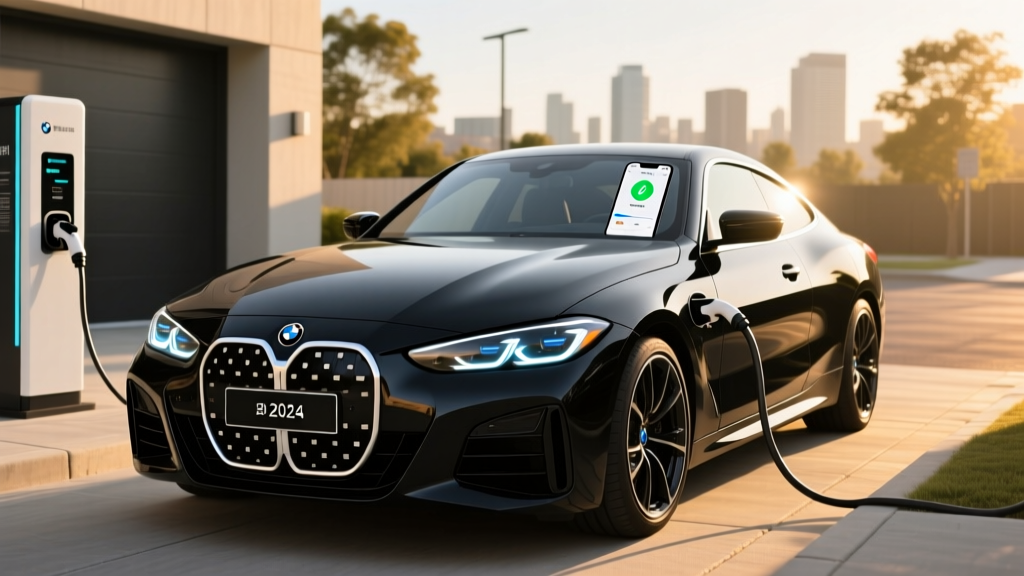
The BMW i4 Gran Coupe occupies a rare position in the EV market: it's an electric sedan that looks, drives, and feels like a proper BMW first and an electric vehicle second. For 2026, the i4 lineup continues with the eDrive40 (rear-wheel drive, single motor) and the M50 (dual-motor all-wheel drive), both riding on BMW's CLAR platform adapted for electrification. The result is a sport sedan that sacrifices nothing in driving dynamics while delivering competitive range and genuinely usable fast-charging speeds.
If you've been waiting for a luxury EV that doesn't look like a rolling appliance, the i4 Gran Coupe makes a compelling case. But the devil is in the details — charging curves, real-world efficiency, and tax credit eligibility all require a closer look before you sign the paperwork.
Spec Table: 2026 BMW i4 Gran Coupe at a Glance
| Specification | eDrive40 | M50 |
|---|---|---|
| EPA Range | 307 miles | 271 miles |
| Battery (usable / gross) | 81.5 kWh / 83.9 kWh | 81.5 kWh / 83.9 kWh |
| Battery Chemistry | NMC (Nickel Manganese Cobalt) | NMC |
| Drivetrain | RWD (single motor) | AWD (dual motor) |
| Horsepower | 335 hp | 536 hp |
| 0–60 mph | 5.5 seconds | 3.7 seconds |
| Top Speed | 118 mph | 130 mph |
| Max DC Fast Charge | 205 kW | 205 kW |
| 10–80% DC Charge Time | ~31 minutes | ~31 minutes |
| Level 2 Home Charge Rate | 11 kW (AC) | 11 kW (AC) |
| EPA Efficiency (combined) | 97 MPGe (35 kWh/100mi) | 86 MPGe (39 kWh/100mi) |
| Cargo Volume (rear seats up / folded) | 16.6 cu ft / 45.6 cu ft | 16.6 cu ft / 45.6 cu ft |
| Rear Legroom | 35.4 inches | 35.4 inches |
| Base MSRP (2026) | $57,900 | $70,700 |
| Battery Warranty | 8 yr / 100,000 mi | 8 yr / 100,000 mi |
Sources: EPA / fueleconomy.gov, BMW USA specifications.
Range and Efficiency: EPA vs. the Real World
Real-World Expectation: 255–280 miles highway (eDrive40); 220–250 miles highway (M50). In cold weather (below 32°F), expect a 20–30% reduction, dropping the eDrive40 to roughly 210–245 miles on a full charge.
The eDrive40's 307-mile EPA figure is genuinely competitive in the luxury EV sedan segment, trailing only the Tesla Model 3 Long Range and matching or exceeding rivals like the Mercedes EQB and Audi Q4 e-tron. But EPA estimates assume a mix of city and highway driving at moderate temperatures — conditions you won't always encounter.
In sustained 75-mph highway testing, the eDrive40 typically delivers between 255 and 280 miles depending on elevation changes, wind, and temperature. The M50's extra weight (roughly 450 lbs more from the front motor and associated hardware) and higher rolling resistance from its standard 19- or 20-inch wheels cut into range noticeably — expect 220 to 250 miles on a highway run.
Cold weather is the great equalizer for all EVs. The i4's heat pump (standard on 2026 models) mitigates cabin heating draw, but battery chemistry itself becomes less efficient at low temperatures. If your daily commute is 60 miles round-trip in Minnesota January, you'll still have adequate buffer — but a 300-mile winter road trip will require at least one charging stop.
Efficiency numbers tell the story: the eDrive40 consumes 35 kWh per 100 miles (97 MPGe combined), which is respectable for a 4,600-lb luxury sedan. The M50 uses 39 kWh/100mi (86 MPGe), reflecting the performance trade-off. For context, the Tesla Model 3 Long Range AWD achieves 132 MPGe combined — a meaningful gap if electricity cost is a primary concern.
Charging Speed: DC Fast Charging and Home Setup
Charging speed is where the i4 Gran Coupe delivers genuinely practical performance — though with some nuances that spec sheets gloss over.
| Charging Level | Power | Speed / Time |
|---|---|---|
| Level 1 (120V outlet) | 1.4 kW | ~4 miles per hour |
| Level 2 (240V home) | 11 kW max | ~30 miles per hour / 0–100% in ~8.5 hours |
| DC Fast Charge (CCS) | 205 kW peak | 10–80% in ~31 minutes |
The 205 kW peak DC fast-charge rate is the headline number, but the charging curve tells the fuller story. The i4 sustains roughly 175–200 kW from 10% to about 45% State of Charge (SoC), then gradually tapers. Between 45% and 65%, you'll see approximately 130–150 kW. Above 80%, the rate drops sharply to protect the NMC cells — typically below 50 kW. This taper behavior is why BMW quotes 10–80% time rather than 0–100%.
For road trips, this means a 20-minute stop at a 350 kW Electrify America or EVgo station will add roughly 150–180 miles of range (from 15% to 65% SoC), which is practical for highway driving. Plan your stops around 200-mile intervals and you'll spend about 20 minutes charging per stop — enough time for a rest break and coffee.
At home, the 11 kW onboard AC charger is competitive. On a 48-amp Level 2 circuit (the most common residential installation), you'll recover approximately 30 miles of range per hour, meaning an overnight charge from 20% to 100% takes about 8–9 hours. This is well-suited to daily commuting: plug in when you get home, wake up to a full battery.
The i4 uses the CCS1 connector standard for North American DC fast charging. Note that BMW has committed to adopting the NACS (Tesla-style) connector for future models, but the 2026 i4 Gran Coupe retains CCS. Adapters for Tesla Supercharger access are available from third parties but are not officially supported by BMW as of this writing.
Performance and Driving Dynamics
The eDrive40's single rear-mounted motor produces 335 horsepower and 317 lb-ft of torque, delivering a 5.5-second 0–60 mph time. That's brisk enough for confident highway merging and genuinely engaging on a back road. The rear-wheel-drive layout and near 50/50 weight distribution (thanks to the battery pack's low, central placement) give the i4 a chassis balance that front-heavy ICE sedans simply cannot match.
The M50 adds a front motor for all-wheel drive and a combined 536 hp and 586 lb-ft. The 3.7-second 0–60 time puts it in genuine sports-sedan territory — within a few tenths of the BMW M3 Competition. Launch control is standard, and the instant torque delivery makes the M50 feel even quicker than the numbers suggest in real-world passing scenarios.
Regenerative braking is adjustable through three levels (low, medium, high) plus an adaptive mode that uses radar and navigation data to modulate regen based on traffic and upcoming curves. One-pedal driving is achievable in the high setting, though BMW doesn't offer a true one-pedal mode that brings the car to a complete stop without brake-pedal input — a deliberate choice that some EV converts miss but traditional BMW drivers often prefer.
The adaptive M suspension (standard on M50, optional on eDrive40) manages the 4,600–5,050 lb curb weight well. Body roll is controlled, and the steering communicates road surface better than most EV competitors. This is the area where the i4 Gran Coupe most clearly separates itself from the Tesla Model 3 and Hyundai Ioniq 6: it feels engineered, not merely assembled.
Interior, Technology, and Practicality
The i4's cabin uses BMW's Curved Display setup: a 12.3-inch instrument cluster and 14.9-inch central touchscreen merged behind a single glass panel, running BMW iDrive 8.5. The system supports wireless Apple CarPlay and Android Auto, over-the-air updates, and a reasonably responsive voice assistant. Physical knobs for volume and climate temperature remain — a welcome ergonomic choice in an industry trending toward all-touch interfaces.
Driver assistance comes via BMW's Driving Assistant Professional package (a $2,500 option on eDrive40, standard on M50), which includes adaptive cruise control with stop-and-go, lane-keeping assist, and automated lane changes on divided highways. This is an SAE Level 2 system — it requires continuous driver supervision and does not constitute self-driving. It competes favorably with Tesla Autopilot and GM Super Cruise in smoothness, though it lacks the hands-free highway capability of Super Cruise or Ford BlueCruise.
Cargo space measures 16.6 cubic feet behind the rear seats and 45.6 cubic feet with the 40/20/40 split rear seats folded. The liftback design gives the i4 a larger, more usable cargo opening than a traditional sedan trunk — practical for loading luggage or bulky items. Rear legroom is 35.4 inches, which is adequate for adults on shorter trips but snug for anyone over 6 feet on longer journeys. Headroom in the rear is limited by the coupe-like roofline; taller passengers will notice.
There is no front trunk (frunk). The space under the hood houses the power electronics and, on the M50, the front drive unit. If frunk storage is important to you, the Tesla Model 3 or Ford Mustang Mach-E offer that flexibility.
Pricing, Trims, and Federal Tax Credit Eligibility
| Trim | Base MSRP | As-Tested (typical) | §30D Credit Eligibility |
|---|---|---|---|
| i4 eDrive40 | $57,900 | $62,000–$66,000 | Eligible (up to $7,500) — subject to income, sourcing |
| i4 M50 | $70,700 | $76,000–$82,000 | Eligible (up to $7,500) — subject to income, sourcing |
The i4 eDrive40 starts at $57,900 (including destination), placing it squarely in the luxury EV sedan segment alongside the Tesla Model 3 Performance and the Polestar 2. A well-equipped eDrive40 with the Premium Package, Driving Assistant Professional, and 19-inch wheels typically lands between $62,000 and $66,000 before incentives.
The M50 begins at $70,700 and can climb past $82,000 with the full suite of options including the Executive Package, carbon-fiber trim, and Harman Kardon surround sound.
Federal Tax Credit (§30D) — What You Need to Know
Both i4 trims qualify for up to $7,500 under the IRS §30D Clean Vehicle Credit, but eligibility depends on several factors that change annually:
- MSRP Cap: The i4 qualifies as a sedan (cap: $55,000). However, BMW classifies the i4 as a sedan for IRS purposes, and the eDrive40 base MSRP of $57,900 exceeds this threshold. The eDrive40 does NOT qualify for the new-vehicle §30D credit at its current base MSRP. The M50 at $70,700 also exceeds the sedan cap. Check with your dealer — some BMW EVs have been classified differently depending on body-style interpretation, but as of 2026, the i4 is listed as a sedan on fueleconomy.gov.
- Buyer Income Cap: Modified Adjusted Gross Income (MAGI) must not exceed $150,000 (single), $225,000 (head of household), or $300,000 (married filing jointly).
- Battery Sourcing: A percentage of critical minerals and battery components must be sourced from the U.S. or free-trade-agreement countries. BMW sources NMC cells from Samsung SDI and CATL, and sourcing compliance varies by model year. Verify current-year compliance on IRS.gov.
- Point-of-Sale Transfer: If eligible, the credit can be transferred to the dealer at purchase, reducing your out-of-pocket cost immediately rather than waiting for a tax refund.
Practical bottom line: Because the i4's MSRP exceeds the §30D sedan cap, most new-vehicle buyers will not qualify for the $7,500 federal credit on a new i4. However, the used EV credit (§25E) offers up to $4,000 (or 30% of the sale price, whichever is less) on a pre-owned i4 purchased from a dealer for $25,000 or more — subject to lower income caps ($75,000 single / $150,000 married). A 2023–2024 i4 eDrive40 on the used market may represent a stronger value proposition after this credit.
Ownership Costs and Warranty
BMW covers the i4's high-voltage battery and electric drivetrain for 8 years or 100,000 miles, whichever comes first. The battery warranty guarantees that capacity will not fall below 70% of its original state of health during the coverage period. The standard vehicle limited warranty is 4 years / 50,000 miles, and BMW includes 3 years / 36,000 miles of complimentary scheduled maintenance — a meaningful perk that Tesla does not offer.
Insurance costs for the i4 run higher than comparable ICE BMWs. Expect annual premiums in the $2,200–$3,000 range depending on your location, driving record, and coverage levels (based on 2026 national averages for luxury EVs). The M50's performance classification pushes premiums toward the upper end of that range.
Charging costs depend heavily on your electricity rate and whether you charge at home or rely on public DC fast chargers. At the U.S. average residential rate of $0.16/kWh, fully charging the eDrive40's 81.5 kWh usable battery at home costs approximately $13.04 — translating to roughly $0.045 per mile. For comparison, a BMW 330i getting 30 MPG combined at $3.50/gallon costs about $0.117 per mile. Over 15,000 miles annually, home charging saves roughly $1,080 per year in fuel costs.
Public DC fast charging is significantly more expensive — typically $0.35–$0.50/kWh at Electrify America or EVgo stations, pushing per-mile cost to $0.10–$0.14. If you lack home charging access, the cost advantage over gasoline narrows substantially.
How the i4 Gran Coupe Compares
The i4's competitive set includes several strong alternatives, each with distinct trade-offs:
- Tesla Model 3 Long Range AWD ($47,740): 341-mile EPA range, 132 MPGe, access to the Supercharger network, and eligibility for the $7,500 federal credit. The Model 3 wins on efficiency, range, and price — but the i4 wins on build quality, ride refinement, and dealer service infrastructure.
- Hyundai Ioniq 6 SEL AWD (~$47,000): 316-mile range, 800V architecture enabling 10–80% in 18 minutes at a 350 kW charger. The Ioniq 6 charges faster and costs less, but its interior materials and driving dynamics don't match BMW's.
- Polestar 2 Long Range Dual Motor (~$53,000): 276-mile range, Google-based infotainment, and Scandinavian design. The Polestar is a compelling alternative if you prefer understated luxury, but it trails the i4 in range and rear-seat space.
- Mercedes-Benz EQE 350+ (~$75,000): 305-mile range, more spacious interior, and a smoother (if less engaging) ride. The EQE is a size class larger and priced accordingly.
Pros and Cons
- Engaging driving dynamics — genuine BMW chassis feel
- 307-mile EPA range (eDrive40) is competitive
- Liftback cargo design (16.6 cu ft) is practical
- iDrive 8.5 with physical climate knobs
- 3 years complimentary maintenance included
- Strong build quality and cabin materials
- MSRP exceeds §30D sedan cap — no $7,500 new-vehicle credit
- Rear headroom limited by coupe roofline
- No front trunk (frunk)
- CCS-only charging (no native NACS/Supercharger access)
- Driving Assistant Pro is Level 2 only — no hands-free mode
- M50 range (271 mi) trails key competitors
Who Should Buy the BMW i4 Gran Coupe?
Choose the i4 eDrive40 if: You want a luxury sport sedan with competitive range, engaging rear-wheel-drive dynamics, and a premium cabin — and you can charge at home. Ideal for daily commuters and weekend road-trippers who value driving feel over maximum efficiency.
Choose the i4 M50 if: You want M-car acceleration (3.7s 0–60) with AWD all-weather capability, and you're willing to trade ~36 miles of range for the performance upgrade. Best for enthusiasts who want one car for daily driving and canyon carving.
Look elsewhere if: Maximum range, lowest cost, or federal tax credit eligibility are your top priorities (consider the Model 3 Long Range). If you need hands-free highway driving, GM's Super Cruise vehicles are a better fit. If you need frequent Tesla Supercharger access, the Model 3 or a NACS-equipped Hyundai/Kia is more practical.
Frequently Asked Questions
What is the real-world range of the BMW i4 Gran Coupe?
The eDrive40's EPA-estimated 307 miles translates to roughly 255–280 miles in sustained highway driving at moderate temperatures. In cold weather (below freezing), expect 210–245 miles. The M50 delivers approximately 220–250 miles highway, dropping to 185–210 miles in winter conditions.
How fast does the i4 charge at home and on the road?
At home on a 240V Level 2 charger (11 kW), the i4 recovers about 30 miles of range per hour — a full overnight charge covers most daily needs. On a DC fast charger, it peaks at 205 kW and charges from 10–80% in approximately 31 minutes. Expect roughly 150–180 miles added in a 20-minute highway stop.
Does the BMW i4 qualify for the $7,500 federal EV tax credit?
Likely not for new purchases. The §30D credit caps eligible sedans at $55,000 MSRP, and both i4 trims exceed that threshold. However, a used i4 may qualify for the §25E used-EV credit (up to $4,000) if purchased from a dealer for $25,000+ and the buyer meets income limits. Always verify current rules on IRS.gov and consult a tax professional.
Is the BMW i4 worth buying over a Tesla Model 3?
It depends on your priorities. The Model 3 Long Range wins on price ($10,000+ less), range (341 vs. 307 miles), efficiency (132 vs. 97 MPGe), Supercharger access, and federal credit eligibility. The i4 wins on build quality, ride comfort, steering feel, physical controls, and BMW dealer service. If driving engagement and luxury ambiance matter more than lowest cost, the i4 justifies its premium.
What is the battery warranty on the BMW i4?
BMW warrants the high-voltage battery and electric drivetrain for 8 years or 100,000 miles, whichever comes first. The battery must retain at least 70% of its original capacity during that period. The general vehicle warranty is 4 years / 50,000 miles.
Can the BMW i4 use Tesla Superchargers?
Not natively. The 2026 i4 uses the CCS1 connector, while Tesla Superchargers use NACS. Third-party CCS-to-NACS adapters exist, but BMW does not officially endorse their use on the i4. BMW has announced plans to adopt NACS on future models, but current i4 owners should rely on the Electrify America, EVgo, and ChargePoint networks for DC fast charging.