Quick Verdict: The BMW i4 eDrive40 as a Lease
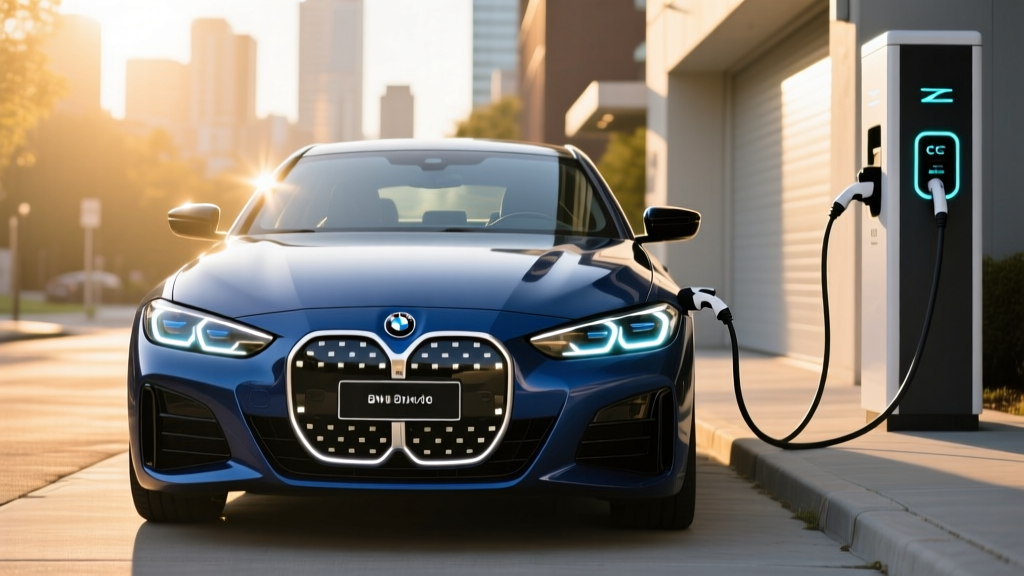
The 2026 BMW i4 eDrive40 occupies a rare sweet spot in the luxury EV sedan market: rear-wheel-drive dynamics, a usable 307-mile EPA range, and a cabin that doesn't scream "compromise." For lessees, it sidesteps the biggest EV ownership risk — long-term battery degradation — while capturing BMW's best current lease incentives. But the i4's 4-series Gran Coupe silhouette means rear headroom and cargo access come with real trade-offs versus boxier rivals like the Tesla Model 3 or Hyundai Ioniq 6.
If you're researching a BMW i4 eDrive40 lease, this review breaks down every number that matters — from DC fast-charge curves to federal tax credit passthrough — so you can negotiate with data, not brochure copy.
| Spec | Value |
|---|---|
| EPA Range | 307 miles (19" wheels) |
| Battery (Usable) | 81.5 kWh, NMC chemistry |
| Drivetrain | Rear-wheel drive (single motor) |
| Horsepower | 335 hp |
| 0–60 mph | 5.5 seconds |
| DC Fast Charge Peak | 205 kW (CCS1) |
| 10–80% DC Charge | ~31 minutes |
| Level 2 Charge Rate | 11 kW (~36 mi/hr) |
| MPGe (Combined) | 97 MPGe |
| Efficiency | 35 kWh/100 mi |
| Base MSRP | $57,900 (incl. destination) |
| Battery Warranty | 8 years / 100,000 miles |
Range and Efficiency: EPA vs. the Real World
The i4 eDrive40's 81.5 kWh usable battery (NMC lithium-ion, sourced from Samsung SDI cells in a BMW-packaged module) delivers an EPA-estimated 307 miles on the 19-inch wheel package. Opt for the 20-inch M Sport wheels and that drops to approximately 282 miles due to increased rolling resistance and aero drag.
Real-World Range Expectations
EPA Sticker: 307 miles
Mixed highway/city (55–75 mph, moderate climate): ~265–285 miles
Sustained 80 mph highway: ~240–255 miles
Cold weather (below 32°F, cabin heat on): ~210–235 miles
Best-case city/regen-heavy driving (spring/fall): up to ~310 miles
The i4's heat pump (standard on 2026 models) recovers waste heat from the drivetrain to warm the cabin, reducing cold-weather range loss compared to resistive-heater EVs. Still, plan for a 20–25% range reduction in sub-freezing conditions — physics doesn't negotiate. On a 250-mile winter road trip, you'll want a DC fast-charge stop planned at around the 180-mile mark to keep a safety buffer.
Efficiency lands at 97 MPGe combined (35 kWh per 100 miles), per fueleconomy.gov. That's competitive with the Tesla Model 3 Long Range (134 MPGe, though on a smaller battery) and slightly behind the Hyundai Ioniq 6 SEL (140 MPGe). The i4's heavier curb weight (~4,682 lbs) and sedan proportions explain the gap — this is a luxury GT, not an efficiency maximizer.
Charging Speed: DC Fast, Level 2, and the Curve
Charging is where lease buyers should pay close attention, since public DC fast-charging speed directly impacts road-trip viability.
| Level | Power / Rate | Speed | Notes |
|---|---|---|---|
| Level 1 (120V) | ~1.4 kW | ~4 mi/hr | Emergency/trickle only |
| Level 2 (240V, home) | 11 kW (48A) | ~36 mi/hr | Full charge in ~9 hrs |
| DC Fast (CCS1) | Peak 205 kW | 10–80% in ~31 min | Tapers above 80% SoC |
Understanding the charge curve: The 205 kW peak only holds roughly between 10% and 35% state of charge (SoC). From 35–60%, expect ~150 kW; from 60–80%, it drops to ~90–110 kW. Above 80%, charging slows dramatically to protect the NMC cells — a 10–90% session takes closer to 48 minutes. This is normal for NMC chemistry, but it means the advertised "10–80% in 31 minutes" is the practical fast-charge target for road trips.
For home Level 2 charging, the i4's onboard 11 kW charger is a standout. Most competitors (including the Tesla Model 3 at 11.5 kW and Ioniq 6 at 10.9 kW) are in the same ballpark, but the i4's 11 kW acceptance means a 48-amp home wallbox will replenish the battery at roughly 36 miles of range per hour. A typical overnight session (8 hours) adds ~288 miles — more than enough for daily driving plus errands.
Connector note: The 2026 i4 ships with a CCS1 port. BMW has confirmed NACS (Tesla Supercharger) adoption for future models, but the current i4 requires a CCS-to-NACS adapter for Supercharger access. BMW includes a complimentary adapter with new 2026 models.
Performance and Driving Dynamics
The eDrive40's single rear-mounted motor produces 335 horsepower and 317 lb-ft of torque, hitting 0–60 mph in 5.5 seconds. That's brisk enough for confident highway merging and genuinely fun on a back road — the rear-biased weight distribution (50.3/49.7 front/rear) and low center of gravity give it the classic BMW handling character that the heavier iX SUV can't match.
The dual-motor M50 variant (536 hp, 0–60 in 3.7 seconds, AWD) exists for those who want supercar acceleration, but it sacrifices ~40 miles of EPA range and adds roughly $12,000 to the price. For most lease buyers, the eDrive40's RWD setup is the smarter play — you get the BMW driving DNA without the efficiency penalty.
Regenerative braking offers three modes: adaptive (auto-adjusts based on traffic and navigation data), high (near one-pedal driving), and low (coasting). The adaptive mode is well-tuned and genuinely useful in stop-and-go traffic, though it doesn't quite achieve full one-pedal stops like a Nissan Leaf or Chevy Bolt.
Pricing, Lease Deals, and Tax Credit Passthrough
The 2026 BMW i4 eDrive40 starts at a base MSRP of $57,900 including destination. A well-equipped model with the Premium Package ($1,900), M Sport Package ($3,500), and Driving Assistance Professional ($1,700) lands around $65,000–$68,000 before incentives.
| Item | Amount |
|---|---|
| Base MSRP (eDrive40) | $57,900 |
| Typical as-tested (Premium + M Sport) | ~$65,000 |
| IRS §30D MSRP cap (sedans) | $55,000 |
| Federal credit eligibility (purchase) | Likely ineligible (exceeds MSRP cap) |
| Lease credit (§45W, lessor passthrough) | Up to $7,500 — varies by BMW FS offer |
| Buyer income cap (§30D, if eligible) | $150K single / $300K joint |
Critical tax credit nuance: The i4 eDrive40's base MSRP of $57,900 exceeds the IRS §30D sedan cap of $55,000, meaning it is not eligible for the $7,500 federal purchase credit regardless of your income or battery sourcing. This is where leasing becomes strategically important.
Under the commercial clean vehicle credit (§45W), the lessor (BMW Financial Services) can claim a $7,500 credit and pass it through as a lease incentive — effectively reducing your capitalized cost. BMW has historically passed this through as a "lease credit" applied at signing. Confirm with your dealer that the current offer includes this passthrough, as terms change quarterly. There is no MSRP cap or buyer income limit on the §45W lease credit, which makes leasing the i4 significantly more attractive than buying outright from a tax-incentive standpoint.
Typical 2026 BMW i4 eDrive40 lease structures run 36 months / 10,000–12,000 miles per year with money factors around 0.00125–0.00150 (equivalent to ~3.0–3.6% APR). With the $7,500 lease credit applied, monthly payments in the $650–$780 range are achievable depending on trim, options, and down payment.
Interior, Tech, and Daily Livability
Inside, the i4 runs BMW's iDrive 8.5 on a curved display that merges a 12.3-inch instrument cluster with a 14.9-inch central touchscreen. The system supports wireless Apple CarPlay and Android Auto, over-the-air updates, and BMW's Digital Key Plus (your phone becomes the key via UWB). The interface is responsive, though the heavy reliance on touchscreen controls for climate and seat heating draws valid criticism from drivers who prefer physical buttons.
Driver assistance: The Driving Assistance Professional Package adds Highway Assistant (a Level 2 hands-free system on divided highways up to 85 mph, with eyes-on monitoring via interior camera). This is SAE Level 2 — you must remain attentive and the system will not navigate interchanges or stoplights autonomously. It's competitive with Ford BlueCruise and GM Super Cruise in capability, though Super Cruise's hands-free coverage area is larger.
Space and Practicality
- Cargo (rear seats up): 16.6 cu ft (hatchback liftback — more usable than a traditional sedan trunk)
- Cargo (rear seats folded): 45.6 cu ft
- Front headroom: 39.5 inches
- Rear headroom: 37.2 inches (tight for passengers over 6'1")
- Rear legroom: 34.5 inches (adequate, not generous)
- Frunk: None — the i4 uses the CLAR platform shared with ICE 4-Series, so the motor occupies the front axle space
The lack of a frunk is a packaging consequence of the i4's shared platform with the gas-powered 4 Series Gran Coupe. It's not a dealbreaker, but rivals built on dedicated EV platforms (Tesla Model 3, Hyundai Ioniq 6) offer frunk storage. The hatchback liftgate, however, gives the i4 a practicality edge over traditional trunk sedans for loading bulky items.
Warranty and Long-Term Battery Outlook
BMW covers the i4's high-voltage battery for 8 years or 100,000 miles (whichever comes first) against defects and capacity loss below 70% of original capacity. The basic vehicle warranty is 4 years / 50,000 miles, and the powertrain warranty mirrors the battery at 8 years / 100,000 miles.
For lease holders on a 36-month term, battery degradation is essentially a non-issue. Industry data from BMW's earlier iX3 and i4 fleets suggests NMC cells in the Gen5 eDrive system lose roughly 5–8% capacity over 100,000 miles of mixed use. You'll return the car long before that becomes a concern — which is precisely why leasing an EV with NMC chemistry makes financial sense. The next owner (or BMW at auction) absorbs the long-tail degradation risk.
Maintenance advantage: BMW includes 3 years / 36,000 miles of complimentary scheduled maintenance on all 2026 models. For an EV, that primarily covers cabin air filters, brake fluid checks, and tire rotations — but it's a tangible lease-period perk that competitors like Tesla don't match.
Pros, Cons, and Who Should Lease the i4 eDrive40
Pros
- 307-mile EPA range covers most commutes and road trips comfortably
- RWD handling and 335 hp deliver genuine BMW driving engagement
- 11 kW Level 2 onboard charger enables fast home replenishment
- §45W lease credit passthrough can reduce effective cost by $7,500
- Hatchback liftback cargo area (45.6 cu ft folded) beats traditional sedans
- Heat pump standard — better cold-weather efficiency
- 3-year complimentary maintenance included
Cons
- Exceeds $55K §30D MSRP cap — no federal purchase credit
- Rear headroom tight for tall passengers (37.2 in)
- No frunk — CLAR platform compromise
- CCS1 port requires adapter for Tesla Supercharger access
- DC fast charge (205 kW peak) lags Hyundai/Kia E-GMP rivals (240+ kW)
- iDrive 8.5 relies heavily on touchscreen for climate controls
- Options packages push as-tested price well past $65,000
Who Should Lease the BMW i4 eDrive40?
Lease it if: You want a luxury sport sedan with real driving dynamics, your daily commute is under 80 miles round-trip, you have Level 2 home charging, and you value BMW's build quality and dealer service network. The lease structure lets you capture the $7,500 credit passthrough while avoiding battery-depreciation risk.
Look elsewhere if: You regularly carry tall rear-seat passengers, you need maximum DC fast-charge speed for frequent 300+ mile road trips (consider the Ioniq 6 or a Tesla Model 3 on NACS), or you want to purchase and claim the federal credit directly (look at vehicles under the $55K MSRP cap).
Competitor Comparison: i4 eDrive40 vs. the Field
| Spec | BMW i4 eDrive40 | Tesla Model 3 LR | Hyundai Ioniq 6 SEL | Polestar 2 LRSM |
|---|---|---|---|---|
| EPA Range | 307 mi | 341 mi | 361 mi | 276 mi |
| Battery | 81.5 kWh (NMC) | 75 kWh (NMC) | 77.4 kWh (NMC) | 82 kWh (NMC) |
| 0–60 mph | 5.5 sec | 4.2 sec | 5.1 sec | 4.5 sec |
| DC Fast Peak | 205 kW | 250 kW | 240 kW | 205 kW |
| 10–80% Time | ~31 min | ~25 min | ~18 min | ~30 min |
| Base MSRP | $57,900 | $47,740 | $42,715 | $54,300 |
| §30D Purchase Credit | No (over MSRP cap) | Yes (if income/sourcing qualify) | Yes (if income/sourcing qualify) | Borderline ($55K cap) |
| Cargo (seats up) | 16.6 cu ft | 23 cu ft | 12.3 cu ft | 14.4 cu ft |
The i4's advantage isn't on paper — it's in the seat. BMW's cabin materials, ride refinement, and chassis tuning are a class above the Hyundai and Polestar, and the build quality gap with Tesla remains real even as Model 3 Highland improved panel gaps. But if pure range or fast-charge speed is your priority, the Ioniq 6 and Model 3 win on data.
Frequently Asked Questions
What is the real-world range of the BMW i4 eDrive40?
Expect 265–285 miles in mixed driving, 240–255 miles at sustained highway speeds, and 210–235 miles in cold weather below freezing. The 307-mile EPA rating is achievable in mild conditions with city-heavy driving and strong regenerative braking.
How fast does the i4 eDrive40 charge at home and on the road?
At home on a 240V Level 2 charger (48 amps), the i4 accepts 11 kW and adds roughly 36 miles of range per hour — a full charge takes about 9 hours. On DC fast chargers, it peaks at 205 kW and charges from 10–80% in approximately 31 minutes, though the charge curve tapers significantly above 60% SoC.
Does the BMW i4 eDrive40 qualify for the federal EV tax credit?
Not as a purchase. The i4 eDrive40's base MSRP of $57,900 exceeds the IRS §30D sedan cap of $55,000, making it ineligible for the $7,500 new clean vehicle credit when buying. However, when leasing, the lessor (BMW Financial Services) may claim the §45W commercial clean vehicle credit and pass savings to you as a lease incentive — confirm current offers with your dealer. See IRS.gov for current rules.
Is leasing the i4 better than buying?
For the eDrive40, leasing has a structural advantage: the §45W lease credit can deliver up to $7,500 in savings that you cannot access as a buyer due to the MSRP cap. Leasing also eliminates battery-depreciation risk. If you typically keep cars 5+ years and drive under 12,000 miles annually, buying a vehicle that qualifies for the §30D purchase credit may net better long-term economics — but not with the i4.
How does the i4 compare to the Tesla Model 3 for a lease?
The Model 3 Long Range offers more EPA range (341 mi), faster DC charging (250 kW), native NACS/Supercharger access, and a lower MSRP that qualifies for the §30D purchase credit. The i4 counters with superior interior materials, a quieter cabin, more engaging RWD chassis dynamics, BMW's dealer service network, and complimentary maintenance. Choose the Model 3 for efficiency and charging infrastructure; choose the i4 for luxury and driving feel.
Does the i4 eDrive40 have a frunk?
No. The i4 is built on BMW's CLAR platform, which it shares with the gasoline 4 Series. The front motor and associated electronics occupy the space where a frunk would be. Total cargo capacity is 16.6 cu ft behind the rear seats (45.6 cu ft folded), accessed via a practical hatchback liftgate.
What connector does the 2026 i4 use?
The 2026 i4 uses a CCS1 connector for DC fast charging and a J1772 inlet for Level 2 AC charging. BMW includes a CCS-to-NACS adapter with new 2026 models for Tesla Supercharger compatibility, though native NACS ports are expected on the next-generation i4.