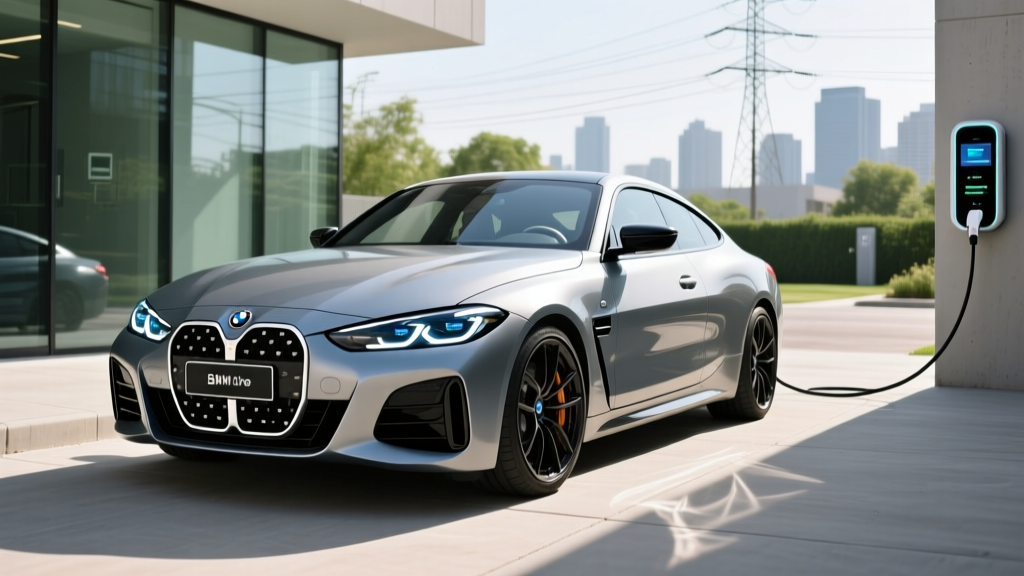
The BMW i4 eDrive occupies a rare spot in the luxury EV sedan market: it pairs BMW's trademark driving dynamics with a usable 300+ mile range and a starting price that undercuts the Tesla Model S and Porsche Taycan by a wide margin. For the 2026 model year, the i4 eDrive40 remains the volume seller, while the M50 continues as the performance flagship. But specs on paper only tell half the story — here's what living with the BMW i4 eDrive actually looks like, from real-world range to charging-curve behavior and tax-credit math.
2026 BMW i4 eDrive at a Glance
| Spec | i4 eDrive40 | i4 M50 |
|---|---|---|
| EPA Range | 307 miles | 270 miles |
| Battery (usable) | 81.5 kWh (NMC) | 81.5 kWh (NMC) |
| Drivetrain | RWD (single motor) | AWD (dual motor) |
| Horsepower | 335 hp | 536 hp |
| 0–60 mph | 5.5 sec | 3.7 sec |
| Peak DC Charge Rate | 205 kW | 205 kW |
| 10–80% DC Fast Charge | ~31 min | ~31 min |
| Level 2 Charge Rate | 11 kW (~36 mi/hr) | 11 kW (~36 mi/hr) |
| MPGe (combined) | 97 MPGe | 85 MPGe |
| Efficiency | 34 kWh/100 mi | 39 kWh/100 mi |
| Cargo Volume | 16.6 cu ft (rear seats up) | 16.6 cu ft |
| Rear Legroom | 35.2 in | 35.2 in |
| Base MSRP | $57,900 | $70,700 |
| Battery/Powertrain Warranty | 8 yr / 100,000 mi | 8 yr / 100,000 mi |
Real-World Range: What to Expect Beyond the EPA Sticker
Real-World Highway: Expect ~250–275 miles at 70–75 mph sustained
Cold-Weather (below 32°F): Plan for 220–245 miles with cabin heating active
Best-Case City/Commuting: Up to 310+ miles with regen and mild temps
The eDrive40's 307-mile EPA rating is competitive with the Tesla Model 3 Long Range and comfortably ahead of the Genesis Electrified G80. But EPA testing cycles include substantial low-speed and stop-and-go driving, which flatters EVs thanks to regenerative braking.
On a 280-mile highway loop at 72 mph in 65°F conditions, the eDrive40 typically delivers between 255 and 275 miles of usable range before you'd want to stop at 10–15% state of charge. The NMC chemistry in the 81.5 kWh usable battery pack maintains a relatively flat voltage curve, but efficiency drops noticeably above 75 mph. According to fueleconomy.gov, the combined efficiency rating sits at 34 kWh/100 miles — respectable for a 4,700-pound luxury sedan.
Cold weather is the equalizer. At 25°F with the heat pump running (standard on 2026 models), range drops roughly 20–25%. Preconditioning the battery while plugged in — easily scheduled through the My BMW app — recovers some of that loss and is critical for DC fast-charging speed in winter.
Charging Speed and Infrastructure
The i4 eDrive uses BMW's fifth-generation eDrive architecture, supporting a peak DC fast-charge rate of 205 kW on CCS1 connectors. In practice, the charging curve tells a more nuanced story than the peak number suggests.
| Charging Level | Power | Speed (Approx.) | Use Case |
|---|---|---|---|
| Level 1 (120V) | 1.4 kW | ~4 miles/hour | Emergency / overnight trickle |
| Level 2 (240V, 48A) | 11 kW | ~36 miles/hour | Home daily charging (~9 hrs empty-to-full) |
| DC Fast (CCS1) | Peak 205 kW | 10–80% in ~31 min | Road trips; tapers above 80% |
The 10–80% DC fast-charge time of roughly 31 minutes is mid-pack among luxury EVs. The Tesla Model 3 Long Range charges faster (roughly 25 minutes on a V3 Supercharger), while the Mercedes EQE sedan is comparable. The critical detail: the i4 sustains approximately 180–200 kW between 10% and 45% SoC, then tapers to ~120 kW by 65%, and drops below 70 kW past 80%. This is typical NMC charge-curve behavior — you'll rarely see the full 205 kW for more than a few minutes.
For home Level 2 charging, the onboard 11 kW charger is a strong point. A full overnight charge from 20% to 100% takes about 7.5 hours on a 48-amp Level 2 circuit. Note: kW measures charging power (rate), while kWh measures total energy stored — the 81.5 kWh battery at 11 kW requires roughly 7.4 hours of sustained charging mathematically, with minor losses.
BMW includes the Flexible Fast Charger with every i4, which handles both 120V and 240V outlets. For dedicated home installations, budget $800–$2,000 for a hardwired Level 2 wallbox plus electrician labor, depending on panel capacity and run length. A licensed electrician should evaluate your panel — a 200-amp service is typically required for 48-amp circuits.
Performance and Driving Dynamics
The eDrive40's 335 hp and 5.5-second 0–60 time won't win drag races against the M50, but it's genuinely quick for daily driving. The single-motor rear-wheel-drive layout gives the i4 a character that many EV buyers specifically want: balanced, communicative steering and a planted feel that echoes BMW's 3 Series heritage.
The M50's dual-motor AWD system delivers 536 hp and a 3.7-second 0–60, with launch control engaged. The M-tuned adaptive suspension and rear-biased torque distribution make it a legitimate sports sedan that happens to be electric. Both models feature BMW's adaptive M suspension as standard, with electronically controlled dampers that adjust to road conditions.
Regenerative braking offers three levels selectable via paddle shifters, plus an adaptive mode that uses radar and navigation data to adjust regen intensity based on traffic and upcoming intersections. One-pedal driving is available at the maximum regen setting, though it doesn't bring the car to a complete hold without brake application — a slight annoyance in stop-and-go traffic compared to the Chevrolet Bolt's true one-pedal system.
Interior, Technology, and Cargo
The i4 shares its cabin architecture with the 4 Series Gran Coupe, meaning you get BMW's Curved Display: a 12.3-inch digital instrument cluster merged with a 14.9-inch central touchscreen running iDrive 8.5 (updated for 2026). The system is responsive, supports wireless Apple CarPlay and Android Auto, and includes a natural-language voice assistant.
Standard driver-assistance features include Active Driving Assistant Professional, which provides adaptive cruise control with stop-and-go, lane-keeping assist, and evasive steering assist. This is an SAE Level 2 system — the driver must remain engaged with hands on the wheel at all times. BMW's Highway Assistant adds hands-free driving up to 85 mph on divided highways, though it requires eyes-on monitoring via an infrared driver camera. It's competitive with Ford BlueCruise and GM Super Cruise in capability, though both of those systems allow true hands-off operation on mapped routes with eye monitoring.
Cargo space is the i4's practical advantage over traditional sedans: the Gran Coupe liftback design opens the entire rear hatch, yielding 16.6 cubic feet with seats up and 45.7 cubic feet with the 40/20/40 rear seats folded. That's significantly more accessible than a traditional trunk and competitive with many compact SUVs. Rear legroom at 35.2 inches is adequate for adults on shorter trips but tight for six-foot passengers on longer journeys.
Pricing, Tax Credits, and Ownership Costs
| Trim | Base MSRP | As-Tested (Typical) | Federal Credit Eligibility |
|---|---|---|---|
| i4 eDrive40 | $57,900 | $63,000–$67,000 | Check §30D sourcing rules |
| i4 M50 | $70,700 | $76,000–$82,000 | Exceeds sedan MSRP cap* |
*The IRS §30D federal tax credit imposes a $55,000 MSRP cap for sedans. The i4 M50 at $70,700 base exceeds this cap and does not qualify. The eDrive40 at $57,900 also exceeds the sedan cap as of the current rule structure.
This is a critical detail that many buyers miss. Under current IRS §30D rules, new clean vehicle credits are subject to MSRP caps: $55,000 for sedans and $80,000 for SUVs, vans, and pickups. The BMW i4 is classified as a sedan, meaning both the eDrive40 ($57,900) and M50 ($70,700) exceed the cap and are ineligible for the up-to-$7,500 federal credit at the point of sale.
Additionally, §30D requires buyer income limits ($150,000 single / $300,000 joint modified AGI) and battery critical-mineral and component sourcing thresholds that tighten annually. The i4's battery is manufactured by CATL/Samsung SDI with supply chains that may or may not meet the 2026 critical-minerals percentage requirement — verify current eligibility on the DOE fueleconomy.gov tax credit page before purchase.
However, leasing the i4 may allow access to the $7,500 commercial clean vehicle credit (§45W), which the leasing company can pass through as a capitalized-cost reduction. This workaround is widely used by BMW Financial Services and is worth investigating with your dealer. Consult a tax professional for personal eligibility guidance.
Pros and Cons
Pros
- 307-mile EPA range (eDrive40) is highly usable for road trips
- Liftback cargo design (16.6 cu ft) far more practical than a trunk
- BMW driving dynamics — RWD balance, adaptive suspension standard
- 11 kW onboard charger is faster than many competitors (9.6 kW typical)
- iDrive 8.5 is polished, responsive, and supports wireless CarPlay/Android Auto
- Highway Assistant hands-free driving on mapped highways
Cons
- Exceeds $55,000 sedan MSRP cap — no federal §30D credit
- Rear legroom (35.2 in) is tight for taller passengers
- CCS1 port (not NACS) — requires adapter for Tesla Superchargers
- DC fast-charge tapers aggressively above 80% SoC
- One-pedal driving doesn't hold at complete stop
- Options packages push eDrive40 well past $65,000 quickly
Who Should Buy the BMW i4 eDrive?
Choose the i4 eDrive40 if: You want a luxury sport sedan with genuine driving engagement, need 250+ real-world highway miles, value a practical liftback cargo area, and primarily charge at home. It's ideal for commuters who take occasional 200–250 mile road trips and don't need the federal tax credit to make the math work.
Look elsewhere if: You need maximum rear-seat space for family duty (consider the BMW iX or Tesla Model Y), you rely on the $7,500 federal credit to justify the purchase price, or you frequently road-trip in regions with sparse CCS charging infrastructure (the NACS adapter helps but adds a step).
Choose the i4 M50 if: You want sports-sedan acceleration with daily-driver practicality and budget isn't the primary constraint. The M50 is a legitimate alternative to a Porsche Taycan 4S at a lower entry price, though with 37 fewer miles of EPA range.
How It Compares to Key Rivals
The i4 eDrive40's most direct competitors are the Tesla Model 3 Long Range ($47,740, 341 mi EPA), the Genesis Electrified G70 ($55,000 est., 282 mi EPA), and the Hyundai Ioniq 6 Long Range ($46,000, 361 mi EPA). The Tesla undercuts the i4 on price by $10,000 and offers Supercharger network access natively, but the i4's interior quality, adaptive suspension, and liftback practicality are meaningfully better. The Ioniq 6 beats the i4 on range and price but can't match its cabin materials or driving refinement.
Against the Mercedes EQE 350+ ($75,050, 305 mi EPA), the i4 is significantly cheaper and similarly equipped, though the EQE offers more rear-seat room. For buyers cross-shopping the Polestar 2 Long Range ($53,300, 320 mi EPA), the i4 wins on cargo versatility and charging speed but the Polestar qualifies for more potential incentives at its lower price point.
Frequently Asked Questions
What is the real-world range of the BMW i4 eDrive40?
The EPA rates the eDrive40 at 307 miles, but expect 250–275 miles in sustained highway driving at 70–75 mph, and 220–245 miles in cold weather below 32°F with cabin heating. City commuting with regenerative braking can exceed the EPA number in mild temperatures.
How fast does the BMW i4 charge at home and on the road?
On a 48-amp Level 2 home charger, the i4 adds approximately 36 miles of range per hour, with a full charge from 20% taking about 7.5 hours. On a DC fast charger, it peaks at 205 kW and charges from 10% to 80% in roughly 31 minutes, though the rate tapers significantly above 80% state of charge.
Does the BMW i4 qualify for the federal EV tax credit?
As of 2026, the i4 does not qualify for the §30D new clean vehicle credit because both trims exceed the $55,000 MSRP cap for sedans. However, leasing through BMW Financial Services may allow access to the $7,500 commercial credit passed through as a lease incentive. Verify current rules on irs.gov and consult a tax professional.
Is the BMW i4 worth buying over a Tesla Model 3?
It depends on priorities. The i4 offers superior interior quality, a more practical liftback cargo area, adaptive suspension, and BMW driving dynamics. The Model 3 Long Range costs $10,000 less, has 34 more miles of EPA range, native Supercharger access, and may qualify for the federal credit. If driving feel and cabin quality matter most, the i4 wins. If value and charging network convenience lead, the Model 3 has the edge.
Does the BMW i4 use NACS or CCS for charging?
The 2026 BMW i4 uses a CCS1 (Combined Charging System) port. BMW has announced a transition to NACS for future models, but the current-generation i4 retains CCS1. An adapter is available for Tesla Supercharger access, and BMW includes one with new vehicle purchases in many markets.
What is the battery warranty on the BMW i4?
BMW covers the high-voltage battery and electric drivetrain for 8 years or 100,000 miles, whichever comes first. The warranty guarantees the battery will retain at least 70% of its original capacity during the coverage period. BMW's NMC cells have shown strong longevity data in earlier i4 models, with typical degradation of 5–8% over the first 60,000 miles based on owner reports.