2026 BMW i4: The Electric Gran Coupe Measured Inside and Out
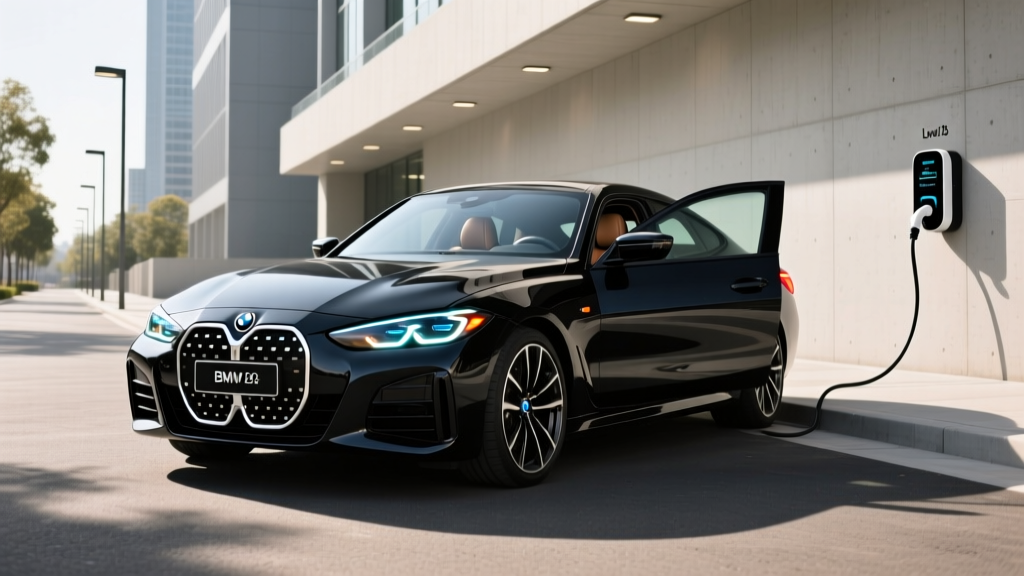
If you're cross-shopping electric sedans and keep returning to one question — how does the BMW i4 actually fit into your life? — you need more than a brochure. You need exact BMW i4 dimensions, real-world range data, honest charging speeds, and a clear picture of what you'll pay after incentives. The 2026 BMW i4 slots into a competitive space against the Tesla Model 3, Polestar 2, and Hyundai Ioniq 6, but it carves its own lane with a traditional luxury sedan silhouette, a driver-focused cockpit, and BMW's well-regarded build quality.
This guide breaks down every number that matters: exterior and interior dimensions, cargo capacity, battery chemistry, EPA range versus what you'll actually see on the highway in January, DC fast-charging curves, and whether the i4 qualifies for the federal EV tax credit under current IRS §30D rules.
BMW i4 Exterior and Interior Dimensions
The i4 is built on BMW's CLAR platform (shared with the 4 Series Gran Coupe), which means it carries conventional sedan proportions rather than the skateboard-optimized packaging of a dedicated EV platform. That trade-off shows up in the dimensions — particularly the transmission tunnel that slightly compromises rear middle-seat footroom — but it also gives the i4 a low-slung, athletic stance that dedicated EV platforms rarely match.
| Measurement | Specification |
|---|---|
| Wheelbase | 112.2 in (2,856 mm) |
| Overall Length | 188.3 in (4,783 mm) |
| Overall Width (w/o mirrors) | 72.9 in (1,852 mm) |
| Overall Height | 57.0 in (1,448 mm) |
| Front Track | 62.9 in (1,598 mm) |
| Rear Track | 63.6 in (1,616 mm) |
| Curb Weight (eDrive40) | 4,682 lbs (2,124 kg) |
| Curb Weight (M50) | 4,895 lbs (2,220 kg) |
| Ground Clearance | 4.9 in (125 mm) |
Compared to the Tesla Model 3 (184.8 in long, 72.8 in wide), the i4 is roughly 3.5 inches longer and nearly identical in width. The extra length translates to a slightly more commanding road presence and a longer wheelbase, but the real story is inside.
Interior Dimensions and Passenger Space
| Measurement | Front | Rear |
|---|---|---|
| Headroom | 39.1 in | 36.6 in |
| Legroom | 41.5 in | 33.4 in |
| Shoulder Room | 56.7 in | 54.3 in |
| Hip Room | — | — |
Rear legroom at 33.4 inches is the i4's most debated dimension. It's adequate for adults on trips under two hours but noticeably tighter than the Hyundai Ioniq 6 (38.4 in rear legroom) or even the Tesla Model 3 (35.3 in). If you regularly carry rear-seat passengers over six feet tall, this is a try-before-you-buy item. The Gran Coupe's sloping roofline also cuts into rear headroom, making the outboard seats more comfortable than the center position.
Cargo Volume and Practicality
The i4's liftback design (a full hatch rather than a traditional trunk lid) is a practicality win. You get 16.6 cubic feet of cargo space behind the rear seats, expanding to approximately 45.5 cubic feet with the 40/20/40 split rear seats folded. That liftback opening is wider and more usable than a conventional sedan trunk, making it easier to load bulkier items like golf bags or a folded stroller. However, there is no front trunk (frunk) — the i4's CLAR platform uses that space for power electronics and the HVAC system.
Battery, Range, and Real-World Efficiency
The 2026 BMW i4 is offered in three main trims, each with distinct powertrain and range characteristics. BMW uses a fifth-generation eDrive system with a prismatic NMC (nickel manganese cobalt) lithium-ion battery pack — not LFP. This chemistry prioritizes energy density and cold-weather performance over the ultra-long cycle life that LFP offers, which is the right trade-off for a luxury performance sedan.
| Trim | Battery (Gross/Usable) | Drivetrain | EPA Range | MPGe (City/Hwy/Combined) |
|---|---|---|---|---|
| eDrive40 | 83.9 kWh / 81.5 kWh | RWD (single motor) | 307 miles | 109 / 108 / 109 |
| xDrive40 | 83.9 kWh / 81.5 kWh | AWD (dual motor) | 277 miles | 102 / 100 / 101 |
| M50 | 83.9 kWh / 81.5 kWh | AWD (dual motor) | 269 miles | 91 / 93 / 92 |
The EPA-estimated 307 miles for the eDrive40 is achievable in mixed suburban driving at moderate temperatures. On sustained highway trips at 70-75 mph, expect 255–275 miles before needing a charge stop. In freezing temperatures (below 32°F), range drops to approximately 220–245 miles for the eDrive40 due to battery heating demands and cabin climate load. The i4 does include a heat pump (standard on all trims), which mitigates cold-weather losses compared to older EVs without one, but physics still wins in deep winter. Plan road trips around 230–250 miles between stops to maintain a comfortable buffer.
Efficiency for the eDrive40 works out to roughly 29 kWh/100 miles in mixed driving — competitive with the Tesla Model 3 Long Range (25–27 kWh/100 mi) but slightly behind due to the i4's heavier curb weight and less aerodynamic profile (Cd 0.29 vs. Model 3's 0.23). According to fueleconomy.gov, the i4 eDrive40's combined MPGe of 109 places it mid-pack among luxury electric sedans.
Charging Speed: DC Fast Charging and Home Level 2
Charging speed is where the i4's CLAR-platform compromise becomes most apparent. BMW rates the i4's DC fast-charging peak at 205 kW via its CCS1 connector (NACS adapter available for Tesla Supercharger access). That peak rate is competitive but not class-leading — the Hyundai Ioniq 6 peaks at 240+ kW, and the Porsche Taycan can sustain over 270 kW.
| Charging Method | Power | Speed / Time |
|---|---|---|
| Level 1 (120V household) | ~1.4 kW | ~3–4 miles per hour |
| Level 2 (240V home, 48A) | 11.5 kW | ~32–35 miles per hour; 0–100% in ~8.5 hours |
| DC Fast Charge (peak) | 205 kW | 10–80% in ~31 minutes |
| DC Fast Charge (150 kW station) | ~150 kW sustained | 10–80% in ~38 minutes |
The charging curve matters more than the peak number. In real-world DC fast charging, the i4 ramps quickly to around 180–200 kW between 10–30% State of Charge (SoC), holds near peak through roughly 45%, then begins a gradual taper. By 70% SoC, you're seeing roughly 120–130 kW, and above 80% the rate drops sharply to protect battery health. This means the advertised 31-minute 10–80% time is realistic at a 200+ kW station with battery preconditioning active, but add 5–8 minutes if you arrive at a 150 kW Electrify America or EVgo stall without preconditioning.
Home charging on a 48-amp Level 2 circuit (the most common residential installation) delivers about 11.5 kW, which replenishes the full 81.5 kWh usable battery in roughly 8.5 hours — perfect for overnight charging. The i4's onboard charger maxes out at 11 kW, so installing a 60-amp circuit won't speed things up. A standard BMW Wallbox or any quality J1772 Level 2 unit (ChargePoint Home Flex, Emporia Vue) works well.
Performance: 0-60, Horsepower, and Drivetrain
The i4's performance spread across trims is wide — from a comfortable daily commuter to a legitimate sports sedan rival:
| Trim | Motor | Horsepower | Torque (lb-ft) | 0-60 mph | Top Speed |
|---|---|---|---|---|---|
| eDrive40 | Rear single motor | 335 hp | 317 | 5.5 sec | 118 mph |
| xDrive40 | Dual motor AWD | 396 hp | 435 | 4.6 sec | 130 mph |
| M50 | Dual motor AWD | 536 hp | 586 | 3.7 sec | 140 mph |
The eDrive40's 335 hp and 5.5-second 0-60 time are more than adequate for daily driving and highway merging. The single-motor RWD layout also gives the eDrive40 a lighter front end and more traditional BMW steering feel — a point driving enthusiasts will appreciate. The M50's 3.7-second sprint puts it in Porsche Taycan 4S territory, though the M50's 4,895-lb curb weight is noticeable in tight corners despite the low center of gravity from the underfloor battery.
All trims feature adaptive regenerative braking with an auto mode that uses radar and navigation data to adjust regen intensity based on traffic and upcoming intersections. It's effective but not quite one-pedal driving — you'll still use the friction brakes for final stops.
Pricing, Trims, and Federal Tax Credit Eligibility
The 2026 BMW i4 lineup starts just under $58,000 and climbs past $70,000 for the M50 before options. Here's where the trims land:
| Trim | Base MSRP | As-Tested (Typical Options) |
|---|---|---|
| eDrive40 | $57,900 | $62,000–$65,000 |
| xDrive40 | $62,900 | $67,000–$71,000 |
| M50 | $70,700 | $75,000–$80,000 |
Does the BMW i4 Qualify for the Federal EV Tax Credit?
Under current IRS §30D rules, the BMW i4 faces a significant hurdle: the federal tax credit's MSRP cap for sedans is $55,000. Since all 2026 i4 trims start above that threshold, the i4 does not qualify for the up-to-$7,500 new clean vehicle credit based on MSRP alone. This is a critical distinction from the Tesla Model 3 Long Range ($47,740 MSRP, credit-eligible) and the Hyundai Ioniq 6 SE ($42,200, credit-eligible).
- ❌ MSRP cap: Sedan limit is $55,000 — all i4 trims exceed this
- ❌ Buyer income cap: $150K single / $300K joint (i4 buyers typically exceed, but credit is already disqualified by MSRP)
- ✅ Battery sourcing / critical minerals: BMW's supply chain is evolving, but moot due to MSRP
- ⚠️ Used EV credit (§25E): A pre-owned i4 under $25,000 could qualify for up to $4,000 — check IRS used vehicle credit rules
Technology, Driver Assistance, and Standout Features
The 2026 i4 runs BMW's iDrive 8.5 on a curved display that merges a 12.3-inch instrument cluster with a 14.9-inch central touchscreen. The system is responsive, supports wireless Apple CarPlay and Android Auto, and includes a reasonably accurate voice assistant. Navigation-based battery preconditioning for DC fast charging is built in — the car will warm the battery when you route to a charger, optimizing your charge curve on arrival.
Driver assistance falls under BMW's Driving Assistant Professional package, which includes adaptive cruise control with stop-and-go, lane-keeping assist, and automated lane-change on highway (activated via turn signal). This is an SAE Level 2 system — the driver must remain engaged with hands on the wheel and eyes on the road at all times. It is not self-driving. BMW's system is competent and smooth but does not match the route-aggressiveness of Tesla's Autopilot or GM's hands-free Super Cruise on mapped highways.
Notable tech highlights:
- BMW Digital Key Plus (UWB-based phone-as-key, works with iPhone and select Android devices)
- Over-the-air updates for powertrain, infotainment, and ADAS calibration
- Harman Kardon or optional Bowers & Wilkins surround sound
- Augmented-reality navigation overlay in the instrument cluster
- IconicSounds Electric (Hans Zimmer-composed drive sounds — love it or disable it)
Warranty Coverage
| Coverage | Term |
|---|---|
| Limited Vehicle Warranty | 4 years / 50,000 miles |
| High-Voltage Battery | 8 years / 100,000 miles (retains ≥70% capacity) |
| Powertrain (eDrive) | 8 years / 100,000 miles |
| Corrosion Perforation | 12 years / unlimited miles |
| Roadside Assistance | 4 years / unlimited miles |
The battery warranty guarantees at least 70% State of Health (SoH) over 8 years or 100,000 miles, which is industry-standard. BMW's NMC prismatic cells have shown moderate degradation in real-world i4 fleets — owners on BMW forums and IIHS data suggest typical 10–12% capacity loss over the first 60,000 miles with regular DC fast charging. Avoid routinely charging to 100% and use the built-in charge-limit settings (set daily max to 80–90%) to maximize longevity.
Pros and Cons: The Honest Assessment
- Premium build quality and materials that outclass the Model 3 interior
- Liftback cargo versatility (16.6 cu ft, 45.5 cu ft folded)
- RWD eDrive40 delivers authentic BMW driving dynamics
- Heat pump standard — better cold-weather range retention
- Strong 307-mile EPA range on eDrive40
- Quiet, well-damped ride at highway speeds
- Does NOT qualify for $7,500 federal tax credit (MSRP cap)
- Rear legroom (33.4 in) is tight for the segment
- No front trunk (frunk) — lost cargo opportunity
- DC fast charging peaks at 205 kW, trails Hyundai/Porsche rivals
- iDrive 8.5 climate controls buried in touchscreen menus
- Heavy curb weight affects cornering agility vs. gas 4 Series
Who Should Buy the 2026 BMW i4?
The i4 is best suited for the luxury commuter who values driving refinement over maximum efficiency or incentive optimization. If you have home Level 2 charging, drive 30–60 miles round-trip daily, and want a premium badge with genuine sport-sedan dynamics, the eDrive40 is the sweet spot. The xDrive40 adds all-weather confidence for those in snow-belt states. The M50 is a weekend-canyon toy that happens to be practical on weekdays.
It is not the right choice if: the federal tax credit is essential to your budget (look at the Tesla Model 3, Hyundai Ioniq 6, or Chevrolet Equinox EV), you need generous rear-seat space for car seats or tall teenagers (consider the Hyundai Ioniq 5 or Kia EV6), or you road-trip frequently and need the fastest possible DC charging (the Ioniq 6 or a Tesla on the Supercharger network will save you time at each stop).
Frequently Asked Questions
What is the real-world range of the BMW i4?
The EPA rates the eDrive40 at 307 miles, the xDrive40 at 277, and the M50 at 269. In real-world highway driving at 70–75 mph, expect roughly 255–275 miles from the eDrive40. In freezing weather, that drops to approximately 220–245 miles. The heat pump helps, but cold chemistry losses are unavoidable.
How fast does the BMW i4 charge at home and on the road?
At home on a 240V Level 2 charger (48A), the i4 charges at up to 11.5 kW, adding about 32–35 miles of range per hour and fully charging overnight in ~8.5 hours. On a DC fast charger, it peaks at 205 kW and reaches 10–80% in approximately 31 minutes at a 200+ kW station with preconditioning.
Does the BMW i4 qualify for the $7,500 federal EV tax credit?
No. Under IRS §30D rules, the MSRP cap for sedans is $55,000. Every 2026 i4 trim starts above that threshold, making it ineligible for the new clean vehicle credit regardless of buyer income or battery sourcing. A used i4 may qualify for the up-to-$4,000 used EV credit if the sale price is under $25,000.
Is the BMW i4 worth buying over the Tesla Model 3 or Hyundai Ioniq 6?
If premium interior quality, liftback practicality, and BMW driving dynamics matter more to you than the lowest price or fastest charging, yes. If you prioritize federal tax credit eligibility, maximum range per dollar, or the fastest DC charging speeds, the Model 3 Long Range or Ioniq 6 are more financially compelling. The i4 wins on refinement; it loses on incentives and charging speed.
What are the BMW i4's cargo dimensions?
The i4 offers 16.6 cubic feet of cargo space behind the rear seats and approximately 45.5 cubic feet with the 40/20/40 split rear seats folded. The liftback hatch opening is wider than a traditional trunk, improving usability. There is no frunk.