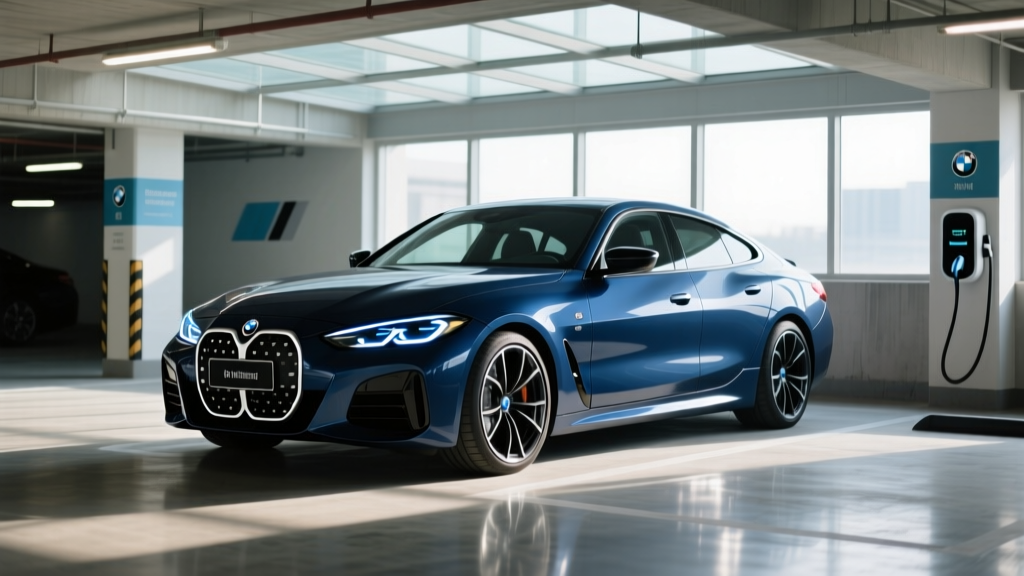
Quick Verdict: Is the BMW i4 the Best Luxury EV Sedan Deal Right Now?
The BMW i4 occupies a rare sweet spot in the 2026 EV market: a premium electric sedan that drives like a proper BMW, offers up to 307 miles of EPA range, and — depending on your income and the specific trim — may qualify for the full or partial federal EV tax credit under IRS §30D. For buyers hunting BMW i4 deals, the key is understanding which trim maximizes value, how the tax credit actually applies in 2026, and what real-world ownership looks like beyond the sticker price.
We've spent time with the eDrive40, xDrive40, and the performance-oriented M50 to break down exactly what you're getting — and what you're paying — at each level. The i4's CLAR-platform roots mean it shares architecture with the 4 Series Gran Coupe, giving it a driving refinement that dedicated EV platforms sometimes lack. The trade-off is a transmission tunnel hump and slightly less interior packaging efficiency than a ground-up EV like the Hyundai Ioniq 6 or Tesla Model 3.
BMW i4 Specifications at a Glance
| Spec | eDrive40 | xDrive40 | M50 |
|---|---|---|---|
| Base MSRP | $57,900 | $61,900 | $72,900 |
| Drivetrain | RWD (single motor) | AWD (dual motor) | AWD (dual motor) |
| Horsepower | 335 hp | 396 hp | 536 hp |
| 0-60 mph | 5.5 sec | 4.6 sec | 3.7 sec |
| Battery (usable) | 81.5 kWh NMC | 81.5 kWh NMC | 81.5 kWh NMC |
| EPA Range | 307 mi | 282 mi | 245 mi |
| EPA Efficiency | 109 MPGe / 30 kWh/100mi | 98 MPGe / 34 kWh/100mi | 87 MPGe / 39 kWh/100mi |
| Max DC Fast Charge | 205 kW | 205 kW | 205 kW |
| 10-80% DC Time | ~31 min | ~31 min | ~31 min |
| Level 2 Home Charge | 11 kW (~32 mi/hr) | 11 kW (~32 mi/hr) | 11 kW (~32 mi/hr) |
| Battery Warranty | 8 yr / 100,000 mi | 8 yr / 100,000 mi | 8 yr / 100,000 mi |
The eDrive40's EPA rating of 307 miles is achievable in mixed suburban driving at moderate temperatures. On sustained highway trips at 70+ mph, expect 250–275 miles. In cold weather (below 30°F), range drops 20–30%, putting realistic winter highway range around 200–220 miles for the eDrive40. The M50's 245-mile EPA figure translates to roughly 190–210 miles highway in fair weather, and as low as 160 miles in deep cold. BMW's heat pump (standard on 2026 models) helps mitigate winter losses but does not eliminate them.
Charging Performance: DC Fast Charging and Home Setup
The i4's 81.5 kWh (usable) NMC battery pack supports a peak DC fast-charge rate of 205 kW via its CCS1 port. BMW quotes a 10–80% charge time of approximately 31 minutes at a capable station. Here's what that actually looks like in practice:
| Charge Level | Power | Speed (approx.) | Use Case |
|---|---|---|---|
| Level 1 (120V household) | ~1.4 kW | ~4 mi/hr | Emergency top-up only |
| Level 2 (240V home, 48A) | 11 kW | ~32 mi/hr (full charge ~8.5 hr) | Daily overnight charging |
| DC Fast Charge (peak) | 205 kW | 10-80% in ~31 min | Road trips, quick top-ups |
Charging curve reality check: The 205 kW peak is achieved at lower states of charge (roughly 10–30% SoC). The curve tapers noticeably above 50%, and drops further past 80%. If you're charging from 20–80% at a 150 kW Electrify America or EVgo station — which is common real-world infrastructure — expect the session to take 35–40 minutes, not 31. BMW's preconditioning feature, activated when you navigate to a charger via iDrive, warms the battery to optimize charge acceptance. Skipping preconditioning in cold weather can add 10–15 minutes to your stop.
At home, the i4's 11 kW onboard charger is competitive. On a 48-amp Level 2 circuit (the most common residential install on a 60-amp breaker), you'll add roughly 32 miles of range per hour — enough to fully replenish even the eDrive40 overnight. A professional Level 2 installation typically costs $800–$2,000 depending on panel capacity and run length; budget more if your home needs a 200-amp panel upgrade.
2026 BMW i4 Pricing and Federal Tax Credit Eligibility
Finding strong BMW i4 deals requires understanding how the federal EV tax credit interacts with each trim. Under the current IRS §30D rules, the credit is up to $7,500, split between a $3,750 critical minerals requirement and a $3,750 battery component sourcing requirement. Eligibility depends on battery sourcing, buyer income, and the vehicle's MSRP.
| Trim | Base MSRP | Typical As-Tested | Est. §30D Credit | Effective Price (if eligible) |
|---|---|---|---|---|
| eDrive40 | $57,900 | $63,000 | Up to $7,500 | ~$55,500 |
| xDrive40 | $61,900 | $68,000 | Up to $7,500 | ~$60,500 |
| M50 | $72,900 | $79,000 | Up to $7,500 | ~$71,500 |
- MSRP Cap: Sedans must be under $55,000 MSRP. The i4 is classified as a sedan — all trims exceed this cap. However, if BMW reclassifies or if the vehicle qualifies under the SUV/truck cap of $80,000 (the Gran Coupe body style has sometimes been classified differently for CAFE purposes), eligibility may shift. Always verify the current IRS classification at fueleconomy.gov.
- Buyer Income Cap: AGI must not exceed $150,000 (single), $225,000 (head of household), or $300,000 (joint filers).
- Battery Sourcing: Critical minerals and battery components must meet phased-in domestic/free-trade-agreement thresholds. BMW sources cells from suppliers with varying compliance — check the IRS eligible vehicle list before purchasing.
- Point-of-Sale Transfer: Eligible buyers can transfer the credit to the dealer at purchase, reducing the upfront price rather than waiting for a tax refund.
Source: IRS.gov. Rules are subject to change — consult a tax professional for your specific situation.
Practical deal-hunting tip: The eDrive40 offers the strongest value proposition. Its 307-mile range, 335 hp, and sub-$58K starting price make it competitive with the Tesla Model 3 Long Range and Hyundai Ioniq 6 — while delivering a more premium interior and driving experience. Look for BMW Certified Pre-Owned i4 examples (2024–2025 model years) where dealers may discount aggressively to clear inventory ahead of the Neue Klasse generation. CPO vehicles carry an extended warranty and may qualify for the used EV tax credit (up to $4,000 under §25E, with lower income caps and a $25,000 MSRP ceiling for the used credit).
Interior, Cargo, and Technology
The i4's cabin is where the BMW investment shows. The curved display — a 12.3-inch instrument cluster merged with a 14.9-inch infotainment touchscreen running BMW iDrive 8.5 — is responsive and visually sharp. Wireless Apple CarPlay and Android Auto are standard, as is a Wi-Fi hotspot and over-the-air update capability.
Dimensions and practicality:
- Front legroom: 42.1 inches
- Rear legroom: 34.5 inches (tighter than a Model 3's 35.3 inches)
- Cargo volume: 16.6 cu ft (liftback) with rear seats up; 45.8 cu ft folded
- Frunk: None — the CLAR platform's front structure houses HVAC and power electronics
The Gran Coupe liftback design is genuinely practical. The hatch opening is wide, and 16.6 cu ft beats the Model 3 sedan's trunk (though the Tesla's frunk adds ~3 cu ft). Rear seat space is the i4's weakest point versus rivals: the transmission tunnel hump (a CLAR-platform artifact) intrudes on the center-rear footwell, making this strictly a four-adult car for longer trips.
Driver assistance: The i4 comes standard with Active Driving Assistant — BMW's SAE Level 2 system including lane-keeping, adaptive cruise with stop-and-go, and evasive steering assist. The optional Driving Assistance Professional Package adds Highway Assistant (hands-off steering at up to 85 mph on divided highways, with eyes-off monitoring via interior camera). This is a legitimate hands-off system for highway use, but it is not self-driving — the driver must remain aware and ready to intervene. It is competitive with GM's Super Cruise in capability, though Super Cruise's mapped-road network is larger.
How the BMW i4 Compares to Key Rivals
| Spec | BMW i4 eDrive40 | Tesla Model 3 LR | Hyundai Ioniq 6 LR | Polestar 2 LR SM |
|---|---|---|---|---|
| Base MSRP | $57,900 | $47,490 | $46,700 | $51,300 |
| EPA Range | 307 mi | 363 mi | 361 mi | 320 mi |
| 0-60 mph | 5.5 sec | 4.2 sec | 5.1 sec | 5.9 sec |
| Max DC Charge | 205 kW | 250 kW | 240 kW | 205 kW |
| 10-80% DC | ~31 min | ~25 min | ~18 min (800V) | ~31 min |
| Cargo (rear) | 16.6 cu ft | 23 cu ft + frunk | 12.3 cu ft | 14.4 cu ft + frunk |
| Luxury / Build Quality | High | Mid (improved) | Mid | High |
The i4's advantage is build quality, driving dynamics, and brand cachet. Its disadvantage is price-per-mile-of-range: you pay roughly $10,000 more than a Model 3 Long Range for 56 fewer miles of range and slower DC charging. The Ioniq 6's 800-volt architecture delivers the fastest real-world charging in this group. The Polestar 2 matches the i4's premium feel but falls short on range and acceleration.
Pros and Cons
- Class-leading ride and handling refinement
- 307-mile range on eDrive40 is genuinely road-trip capable
- Premium interior with excellent iDrive 8.5 infotainment
- Liftback cargo versatility (16.6 cu ft hatch)
- Highway Assistant is a top-tier SAE Level 2 system
- Strong BMW CPO market for deal-seekers
- Significantly pricier than Model 3 and Ioniq 6 rivals
- No frunk — all cargo is rear-only
- Rear seat center hump limits 5th passenger comfort
- 205 kW peak DC charge is outpaced by 800V competitors
- MSRP exceeds §30D sedan cap — tax credit eligibility uncertain
- CLAR platform is a compromise vs. dedicated EV architecture
Who Should Buy the BMW i4?
The i4 is best suited for buyers who prioritize driving engagement and interior luxury over maximum range-per-dollar. Specifically:
- The luxury commuter: If your daily drive is 40–80 miles round-trip and you want a quiet, refined cabin with excellent seats and a smooth ride, the eDrive40 delivers and still has 200+ miles of buffer.
- The BMW loyalist going electric: The i4 feels like a BMW. The steering weight, damper tuning, and iDrive logic will feel familiar to 3/4 Series owners transitioning to electric.
- The deal-hunter willing to go CPO: A 2024–2025 CPO i4 eDrive40 can be found in the low-to-mid $40K range, where it becomes a genuine value proposition against new Model 3s.
The i4 is not ideal for buyers who need maximum rear-seat space (families with older kids), the longest possible range (road-trip warriors should look at the Lucid Air or Ioniq 6), or the fastest DC charging (800V platforms from Hyundai/Kia and Porsche charge significantly quicker).
Frequently Asked Questions
What is the real-world range of the BMW i4?
The eDrive40 achieves its 307-mile EPA rating in mixed suburban driving at 50–65 mph in moderate temperatures. Highway driving at 75+ mph yields 250–275 miles. Cold weather (below 30°F) reduces range by 20–30%, so plan for 200–220 miles in winter highway conditions. The M50's 245-mile EPA rating translates to roughly 190–210 miles highway in fair weather.
How fast does the BMW i4 charge?
On a DC fast charger, the i4 peaks at 205 kW and charges from 10–80% in approximately 31 minutes under ideal conditions. At common 150 kW public chargers, expect 35–40 minutes for a 10–80% session. At home on a 48-amp Level 2 charger (240V), the i4 charges at 11 kW, adding about 32 miles of range per hour — a full overnight charge from empty takes about 8.5 hours.
Does the BMW i4 qualify for the federal EV tax credit?
Under IRS §30D rules, sedans face a $55,000 MSRP cap. Since every i4 trim starts above $55,000, eligibility depends on whether the Gran Coupe body style qualifies under the higher $80,000 SUV/truck cap — a classification that has been subject to interpretation. Always verify the i4's current status on the IRS eligible vehicles list before purchasing. Additionally, buyer AGI must fall within income limits ($150K single / $300K joint) and battery sourcing requirements must be met.
Is the BMW i4 worth buying vs. a Tesla Model 3?
If your priority is range-per-dollar and charging speed, the Model 3 Long Range wins — it offers 363 miles of range, 250 kW DC charging, and a lower base price. If you prioritize interior materials, ride comfort, steering feel, and dealership service experience, the i4 is the stronger choice. They serve different buyer profiles; neither is objectively "better" across all criteria.
What is the BMW i4's battery warranty?
BMW covers the i4's high-voltage battery for 8 years or 100,000 miles, whichever comes first. The warranty guarantees the battery will retain at least 70% of its original capacity during that period. BMW's NMC cells have demonstrated low degradation in real-world usage — most owners report 3–5% loss over the first 30,000 miles, well within the warranty buffer.
Are there good BMW i4 deals on used or CPO models?
Yes. The CPO market for 2024–2025 i4 eDrive40 models is robust, with examples appearing in the $38,000–$46,000 range depending on mileage and options. CPO vehicles include BMW's extended warranty coverage. Used EVs priced under $25,000 may qualify for the §25E used EV credit (up to $4,000 or 30% of sale price, with lower income caps). Check dealer inventories and BMW's CPO portal for current availability.