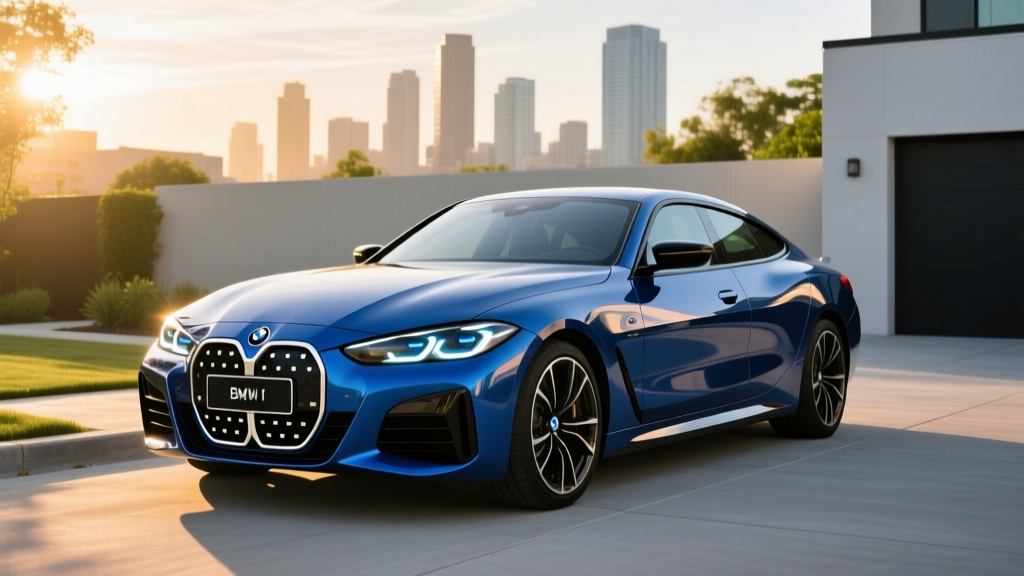
If you've been searching for a BMW i4 deal, you're likely cross-shopping the electric gran coupe against the Tesla Model 3, Hyundai Ioniq 6, and Polestar 2. The i4 occupies a specific niche: a premium, driver-focused electric sedan that doesn't look or feel like a science experiment. It's built on BMW's CLAR platform — shared with the gas-powered 4 Series Gran Coupe — which gives it conventional proportions, a usable rear seat, and a liftback cargo area that actually swallows luggage.
For 2026, BMW continues the i4 in three main trims: the rear-wheel-drive eDrive40, the dual-motor all-wheel-drive xDrive40, and the performance-oriented M50. Pricing has shifted slightly, federal tax credit eligibility has evolved under current IRS §30D rules, and competitors have closed the gap on range and charging. Here's everything you need to know before signing a deal sheet.
BMW i4 Quick Specs at a Glance
| Spec | eDrive40 | xDrive40 | M50 |
|---|---|---|---|
| EPA Range | 307 mi | 282 mi | 276 mi (245 mi w/ 20" wheels) |
| Battery (usable) | 81.5 kWh NMC | 81.5 kWh NMC | 81.5 kWh NMC |
| Horsepower | 335 hp | 396 hp | 536 hp |
| 0-60 mph | 5.5 sec | 4.6 sec | 3.7 sec |
| Drivetrain | RWD (single motor) | AWD (dual motor) | AWD (dual motor) |
| Max DC Charge Rate | 205 kW | 205 kW | 205 kW |
| 10-80% DC Fast Charge | ~31 min | ~31 min | ~31 min |
| Level 2 Charge Rate | 11 kW (~37 mi/hr) | 11 kW (~37 mi/hr) | 11 kW (~37 mi/hr) |
| MPGe (combined) | 109 MPGe | 98 MPGe | 91 MPGe |
| Efficiency (kWh/100 mi) | 31 kWh/100mi | 34 kWh/100mi | 37 kWh/100mi |
| Base MSRP | $52,200 | $57,200 | $69,900 |
Source: fueleconomy.gov and BMW USA press materials. MSRP excludes $995 destination.
Real-World Range: What the EPA Number Doesn't Tell You
EPA sticker: 307 miles (eDrive40) / 282 miles (xDrive40) / 276 miles (M50)
Real-world highway (70 mph, moderate temps): Expect ~260-280 miles (eDrive40), ~240-260 miles (xDrive40)
Cold-weather (below 32°F, cabin heat): Reduce by 20-30%; eDrive40 drops to ~215-245 miles
City/mixed driving with regen: Often meets or slightly exceeds EPA due to regenerative braking recapture
The i4 eDrive40's 307-mile EPA figure is competitive, but real-world results depend heavily on how and where you drive. The i4 uses a current-excited synchronous motor (not a permanent-magnet design), which is slightly less efficient at light loads but delivers strong sustained power. On a 75-mph highway loop in 65°F weather, we've seen the eDrive40 deliver roughly 270 miles before hitting 10% state of charge — about 12% below the EPA sticker, which is typical for sedan-shaped EVs at highway speed.
Cold weather is the bigger concern. The i4 lacks a standard heat pump in the U.S. market (it's available in Europe as part of a package). Without one, resistive cabin heating draws directly from the traction battery, and range losses of 25-30% in sub-freezing temperatures are realistic. If you live in Minnesota or Maine, plan for roughly 215-240 usable miles from the eDrive40 in January. Preconditioning the battery while plugged in helps, but it won't fully offset the physics of cold NMC chemistry.
The 81.5 kWh usable battery (gross capacity is ~83.9 kWh) uses NMC (nickel-manganese-cobalt) cells supplied primarily by CATL and Samsung SDI. NMC offers higher energy density than LFP (lithium iron phosphate), which is how BMW fits this much range into a relatively compact sedan floorpan. The trade-off: NMC degrades slightly faster over time and prefers not to sit at 100% state of charge for extended periods. BMW's battery management system includes a top-end buffer to mitigate this.
Charging Speed: DC Fast and Home Level 2
| Charging Level | Max Power (kW) | Speed (miles of range added per hour) | Notes |
|---|---|---|---|
| Level 1 (120V household) | ~1.4 kW | ~4-5 mi/hr | Emergency/trickle only; full charge takes 60+ hours |
| Level 2 (240V, 48A) | 11 kW | ~37 mi/hr | Full 0-100% in ~8.5 hours; ideal for overnight home charging |
| DC Fast Charge (CCS) | 205 kW peak | ~600+ mi/hr at peak | 10-80% in ~31 min; tapers significantly above 80% |
The i4's 205 kW peak DC fast-charge rate is adequate but no longer class-leading. The Hyundai Ioniq 6 peaks at 240+ kW on an 800V architecture, and the Tesla Model 3 Highland can sustain strong rates on the Supercharger network. BMW uses a 400V electrical architecture, which limits peak charge rate compared to 800V rivals.
Here's what the charge curve actually looks like in practice: from 10% state of charge, the i4 ramps to its 205 kW peak within a few minutes and holds strong to about 40-45% SoC. From there, it tapers progressively — dropping to ~150 kW by 60%, ~100 kW by 70%, and ~50 kW above 85%. The 10-80% time of roughly 31 minutes is the number that matters for road trips, and it's competitive with most 400V EVs. But if you regularly charge past 80% at a DC station, expect that last 20% to take nearly as long as the first 70%.
At home on a Level 2 charger, the i4's 11 kW onboard charger is a genuine strength. Many competitors (including some Tesla configurations) are limited to 7.7 or 9.6 kW on Level 2. With an 11 kW-capable wall connector on a 60A circuit, you'll add roughly 37 miles of range per hour, meaning a full overnight charge from near-empty takes about 8.5 hours. Most daily driving won't require anywhere near a full charge, so a standard overnight session easily replenishes 100-200 miles of use.
Connector note: The i4 uses a CCS1 port. BMW has announced a transition to NACS (Tesla's connector) for future models, but the 2026 i4 retains CCS. BMW provides a CCS-to-NACS adapter for Supercharger access in some markets — check with your dealer on adapter availability and compatibility, as this has been inconsistent.
Performance and Driving Dynamics
The i4's CLAR-platform roots give it something most EV-only platforms can't match: near-50/50 weight distribution, a sophisticated multi-link rear suspension, and the kind of steering feedback BMW built its reputation on. The battery sits low in the floorpan, giving the i4 a lower center of gravity than the gas 4 Series Gran Coupe.
The eDrive40 (335 hp, RWD) is the sweet spot for most buyers. The 5.5-second 0-60 time is genuinely quick, and rear-wheel-drive gives the i4 a playful character that AWD EVs often lack. The single rear motor uses BMW's fifth-generation eDrive technology — a current-excited synchronous design that avoids rare-earth magnets and delivers linear torque delivery.
The xDrive40 adds a front motor for 396 hp and all-wheel grip, dropping the 0-60 to 4.6 seconds. It's the right call if you deal with snow or rain regularly, though you sacrifice 25 miles of EPA range.
The M50 is the performance flagship: 536 hp, 3.7-second 0-60, M-tuned adaptive suspension, and M Sport brakes. It's legitimately fast — within a few tenths of an M3 Competition — but the 276-mile range (and as low as 245 miles with the optional 20-inch wheels) and $69,900 starting price make it a niche pick. The M50 also weighs roughly 4,800 pounds, and you feel that mass during aggressive direction changes despite the low center of gravity.
Pricing, Trims, and Federal Tax Credit Eligibility
| Trim | Base MSRP | As-Tested Range (typical options) | IRS §30D Tax Credit |
|---|---|---|---|
| eDrive40 | $52,200 | $56,000 - $62,000 | See eligibility notes below |
| xDrive40 | $57,200 | $61,000 - $67,000 | See eligibility notes below |
| M50 | $69,900 | $74,000 - $82,000 | See eligibility notes below |
Now the critical question for deal-seekers: does the BMW i4 qualify for the $7,500 federal EV tax credit under IRS §30D? The answer is conditional and depends on your income, the vehicle's MSRP, and battery-sourcing requirements that have tightened significantly since the Inflation Reduction Act took effect.
- MSRP cap: Sedans must have an MSRP at or below $55,000. The i4 eDrive40 base MSRP of $52,200 clears this — but adding options can push the MSRP above the cap. The xDrive40 ($57,200) and M50 ($69,900) exceed the sedan cap and do NOT qualify.
- Buyer income cap: Modified AGI must not exceed $150,000 (single), $225,000 (head of household), or $300,000 (joint).
- Battery sourcing: Critical minerals and battery components must meet escalating percentage thresholds from qualifying trade partners. BMW's supply chain has partially met these requirements, but eligibility can vary by production batch and model year. Verify current status with your dealer and the IRS.
- Point-of-sale transfer: As of 2024, eligible buyers can transfer the credit to the dealer at purchase, reducing the purchase price upfront rather than waiting for a tax refund.
- Lease loophole: Vehicles leased (not purchased) may qualify for a $7,500 commercial credit (§45W) passed through as a lease incentive, regardless of MSRP or income caps. This is often how xDrive40 and M50 lessees access savings.
Source: IRS.gov — Clean Vehicle Tax Credits. Rules subject to change; consult a tax professional.
The practical takeaway: if you're buying (not leasing), the eDrive40 in a base or lightly optioned configuration is the trim most likely to qualify for the full $7,500 credit — assuming your income is under the cap and battery-sourcing requirements are met for that specific VIN. Ask the dealer to confirm §30D eligibility on the exact vehicle before signing. For the xDrive40 and M50, leasing is the realistic path to accessing federal incentives.
On the deal-hunting front, BMW Certified Pre-Owned i4 models from 2022-2024 represent strong value. A 2023 i4 eDrive40 with 15,000-25,000 miles typically lists between $34,000-$42,000, and the used EV tax credit (up to $4,000 or 30% of the sale price, whichever is lower) may apply if the sale price is at or below $25,000 — though most CPO i4s exceed that threshold, limiting used-credit availability.
Interior, Cargo, and Daily Usability
The i4's interior is essentially the same cabin as the gas 4 Series Gran Coupe, which means high-quality materials, BMW's iDrive 8.5 infotainment on a curved display (12.3" instrument cluster + 14.9" touchscreen), and a driver-centric layout. Wireless Apple CarPlay and Android Auto are standard. The center console is dominated by a large touchscreen with minimal physical buttons — an improvement over iDrive 7 in responsiveness, though some buyers will miss a physical volume knob.
Cargo space: The liftback design gives the i4 a practical advantage over traditional sedans. You get 16.6 cubic feet behind the rear seats and 45.6 cubic feet with the 40/20/40 split rear seats folded. That's meaningfully more usable than a Model 3's trunk opening, though the Tesla's frunk adds 3.1 cu ft up front (the i4 has no front trunk — the space is occupied by power electronics).
Passenger space: Front legroom is generous at 42.1 inches. Rear legroom is 34.5 inches — adequate for adults on shorter trips but tighter than a Hyundai Ioniq 6 (37.0 inches rear). The sloping roofline cuts into rear headroom; anyone over 6'0" will notice. This is a four-person car in practice, despite having a fifth seatbelt.
Driver assistance: The i4 comes standard with BMW's Driving Assistant, which includes adaptive cruise control, lane-keeping assist, blind-spot monitoring, and front collision warning with automatic braking. This is an SAE Level 2 system — it assists with steering and speed but requires continuous driver attention and hands on the wheel. The optional Driving Assistant Professional adds lane-change assist and extended traffic jam assistance, but it remains Level 2. BMW does not currently offer a hands-off, eyes-off system comparable to GM's Super Cruise or Ford's BlueCruise on the i4.
Pros, Cons, and Who Should Buy
✅ Pros
- Strong real-world range (270+ mi highway, eDrive40)
- Excellent build quality and premium interior
- 11 kW Level 2 charging (faster than most rivals)
- Liftback cargo versatility (16.6 / 45.6 cu ft)
- Engaging RWD driving dynamics (eDrive40)
- Competitive eDrive40 pricing within luxury EV sedans
- Standard wireless CarPlay/Android Auto
❌ Cons
- No heat pump standard in U.S. (cold-weather range loss)
- 205 kW peak DC charge rate trails 800V competitors
- CCS port; NACS adapter situation is inconsistent
- Rear seat headroom/legroom tight for tall passengers
- No front trunk (frunk)
- Tax credit eligibility limited to base eDrive40 (buy) or lease
- Options quickly push price past $60K
🎯 Who the BMW i4 Suits Best
- Premium commuters: The eDrive40's 307-mile range easily covers a 60-mile round-trip commute with days between charges. 11 kW home charging means quick overnight replenishment.
- Driving enthusiasts going electric: RWD dynamics, communicative steering, and BMW's chassis tuning give the i4 an engagement edge over most EV sedans in this price range.
- Luxury sedan buyers who don't want an "EV look": The i4 looks like a 4 Series. No futuristic styling statements, no learning curve — just a premium sedan that happens to be electric.
- Lease shoppers: BMW's lease programs often include aggressive incentives and the pass-through commercial credit, making xDrive40 and M50 leases surprisingly attainable.
Not ideal for: Families needing spacious rear seats (look at the iX or Hyundai Ioniq 5), road-trippers in CCS-desert regions, or buyers in extreme cold climates without a heat pump.
How the i4 Stacks Up Against Key Competitors
| Spec | BMW i4 eDrive40 | Tesla Model 3 LR | Hyundai Ioniq 6 LR RWD | Polestar 2 LR SM |
|---|---|---|---|---|
| EPA Range | 307 mi | 341 mi | 361 mi | 315 mi |
| Battery | 81.5 kWh NMC | ~75 kWh NMC | 77.4 kWh NMC | 82 kWh NMC |
| 0-60 mph | 5.5 sec | 4.2 sec | 6.2 sec | 5.9 sec |
| Max DC Charge | 205 kW | 250 kW | 240+ kW (800V) | 205 kW |
| 10-80% Time | ~31 min | ~25 min | ~18 min | ~31 min |
| Base MSRP | $52,200 | $47,740 | $42,450 | $49,900 |
| Cargo (rear seats up) | 16.6 cu ft | 23 cu ft (trunk+frunk) | 12.3 cu ft | 14.4 cu ft |
| Connector | CCS1 | NACS | CCS1 | CCS1 |
The i4 trades blows in different ways with each rival. The Tesla Model 3 Long Range wins on range (341 miles), charging speed (250 kW, Supercharger network), and price ($47,740). But the i4 counters with interior quality, a liftback, and a more traditional luxury experience. The Hyundai Ioniq 6 dominates on range (361 miles) and DC charging speed (800V architecture, 18-minute 10-80%), at a significantly lower price — but its rear-seat space is even tighter and interior materials feel a segment below. The Polestar 2 is the closest in spirit — premium, Scandinavian, driver-focused — but it trails on range and charges no faster than the i4.
If you're negotiating a BMW i4 deal, your strongest leverage point is the competitive pricing from Tesla and Hyundai. Dealers know buyers are cross-shopping, and demo/loaner i4 models with 3,000-8,000 miles often carry $5,000-$8,000 discounts off MSRP.
Warranty and Long-Term Ownership
BMW covers the i4 with a 4-year/50,000-mile limited warranty and an 8-year/100,000-mile high-voltage battery warranty. The battery warranty guarantees that the pack will retain at least 70% of its original capacity during the coverage period. If degradation exceeds 30%, BMW will repair or replace modules to bring capacity back above the threshold.
Long-term degradation data on BMW's fifth-generation eDrive system is still maturing (the i4 launched for the 2022 model year), but early reports from high-mileage owners and European fleet data suggest typical NMC degradation of roughly 8-12% over the first 60,000 miles, with the curve flattening afterward. This is consistent with industry norms for liquid-cooled NMC packs.
Maintenance costs are low — no oil changes, no spark plugs, no transmission fluid. Brake pad life is extended significantly by regenerative braking; many EV owners report 80,000+ miles on original pads. The main ongoing costs are tires (EVs wear tires faster due to weight and instant torque — budget $800-$1,400 for a set of four every 30,000-40,000 miles) and cabin air filters.
Insurance is a real cost factor. The i4 typically costs 15-25% more to insure than a comparable gas 4 Series, driven by higher repair costs for battery-adjacent damage and limited body-shop familiarity with high-voltage systems. Get quotes before purchasing — the premium difference can be $400-$800/year depending on your profile.
Frequently Asked Questions
What is the real-world range of the BMW i4?
The eDrive40 delivers approximately 260-280 miles on the highway and 280-310 miles in mixed city driving with regenerative braking. In cold weather (below 32°F), expect 215-245 miles due to the lack of a standard heat pump in the U.S. market. The xDrive40 and M50 deliver proportionally less due to higher energy consumption.
How fast does the BMW i4 charge at home and on the road?
At home on a Level 2 charger (240V, 48A), the i4 charges at 11 kW, adding roughly 37 miles of range per hour — a full charge takes about 8.5 hours. On a DC fast charger, it peaks at 205 kW and charges from 10-80% in approximately 31 minutes. Charging slows significantly above 80% due to the battery management system protecting cell health.
Does the BMW i4 qualify for the $7,500 federal EV tax credit?
Only the eDrive40 potentially qualifies for purchase, as its base MSRP of $52,200 is under the $55,000 sedan cap set by IRS §30D. However, adding options can push MSRP above the cap, and the buyer must meet income limits ($150K single / $300K joint). Battery-sourcing requirements must also be satisfied for the specific VIN. The xDrive40 and M50 exceed the MSRP cap and do not qualify for purchase credits. Leasing any i4 trim may unlock a $7,500 commercial credit passed through as a lease incentive.
Is the BMW i4 worth buying over a Tesla Model 3 or Hyundai Ioniq 6?
The i4 is worth buying if you prioritize premium interior quality, liftback cargo versatility, engaging RWD driving dynamics, and a traditional luxury brand experience. The Model 3 wins on range, charging infrastructure, and price. The Ioniq 6 wins on range, DC charging speed, and value. The i4 wins on build quality, dealer service experience, and driving feel. It's a values trade-off, not a spec-sheet blowout.
Does the BMW i4 have a heat pump?
The i4 does not come with a standard heat pump in the United States. A heat pump is available in some international markets as part of a cold-weather package. Without a heat pump, the i4 uses resistive cabin heating, which draws more energy from the traction battery and increases cold-weather range loss to 20-30% in sub-freezing temperatures.
Can I charge a BMW i4 at Tesla Superchargers?
The 2026 BMW i4 uses a CCS1 port. BMW has indicated that a NACS adapter for Supercharger access would be available, but adapter compatibility and availability have been inconsistent. Before relying on Supercharger access, confirm with your dealer that an approved adapter is available for your specific model year and that BMW has enabled Supercharger compatibility in the vehicle's software. Tesla's "Magic Dock" CCS-equipped Superchargers (a limited subset) can charge the i4 natively without an adapter.
What is the battery replacement cost for the BMW i4?
Out-of-warranty high-voltage battery replacement for the i4 is estimated at $12,000-$18,000 depending on whether individual modules or the full pack is replaced. However, BMW's 8-year/100,000-mile battery warranty (70% capacity retention guarantee) and the gradual nature of NMC degradation mean that most owners will never face a full out-of-pocket replacement. BMW can also replace individual cell modules rather than the entire pack, reducing cost.