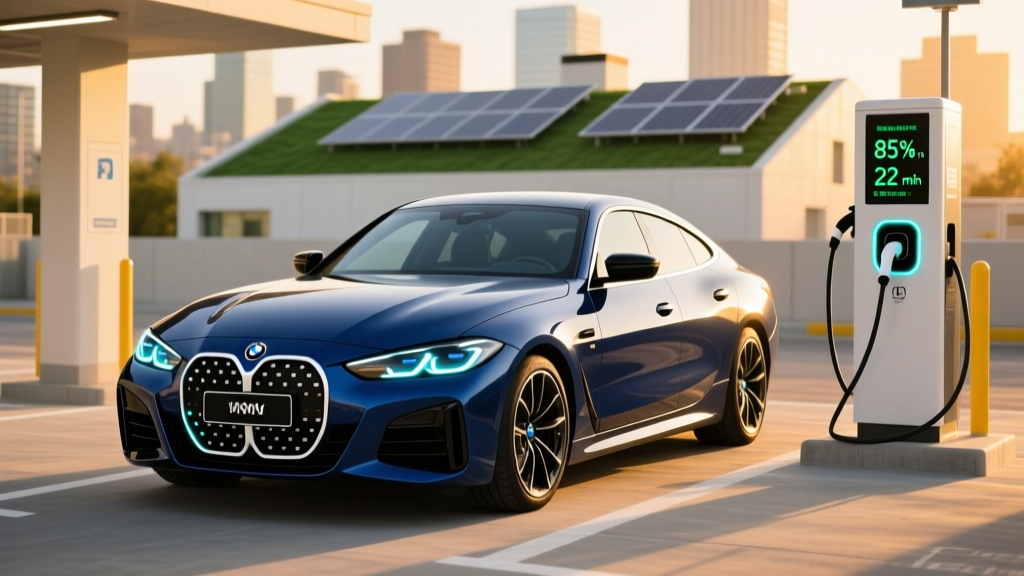
August is historically one of the best months to lease a BMW. Dealer lots are clearing current model-year inventory to make room for incoming vehicles, and BMW Financial Services typically rolls out aggressive lease money factors and loyalty credits. For the 2026 BMW i4 — the brand's electric Gran Coupe built on the CLAR platform shared with the 4 Series — that convergence of timing and value makes it a compelling moment to go electric without committing to a full purchase.
But before you sign on the dotted line, you need to know exactly what you're getting: real-world range versus the EPA sticker, how the i4 charges on DC fast chargers and at home, whether it qualifies for the §30D federal tax credit (and how that applies to leases), and how it stacks up against the Tesla Model 3, Hyundai Ioniq 6, and Polestar 2. This profile breaks down every number that matters.
2026 BMW i4 Lineup: Trims, Pricing, and Lease Economics
The 2026 i4 is offered in three trims, each targeting a different buyer profile. Here's the pricing landscape before any incentives or lease adjustments:
| Specification | i4 eDrive40 | i4 xDrive40 | i4 M50 |
|---|---|---|---|
| Base MSRP | $57,900 | $61,900 | $69,900 |
| Drivetrain | RWD (single motor) | AWD (dual motor) | AWD (dual motor) |
| Horsepower | 335 hp | 396 hp | 536 hp |
| 0–60 mph | 5.5 sec | 4.6 sec | 3.7 sec |
| Battery (usable) | 81.5 kWh, NMC | 81.5 kWh, NMC | 81.5 kWh, NMC |
| EPA Range | 301 mi | 279 mi | 269 mi |
| MPGe (combined) | 109 MPGe | 100 MPGe | 97 MPGe |
| Efficiency | 31 kWh/100mi | 34 kWh/100mi | 35 kWh/100mi |
| Max DC Charge Rate | 205 kW | 205 kW | 205 kW |
| 10–80% DC Time | ~31 min | ~31 min | ~31 min |
| Level 2 Home Charge | 11 kW (~34 mi/hr) | 11 kW (~34 mi/hr) | 11 kW (~34 mi/hr) |
| Battery Warranty | 8 yr / 100,000 mi | 8 yr / 100,000 mi | 8 yr / 100,000 mi |
Estimated August 2026 Lease Pricing
| Trim | MSRP | Typical Aug Lease (36 mo, 10k mi/yr) | Due at Signing | Est. Monthly |
|---|---|---|---|---|
| eDrive40 | $57,900 | ~$549–$599/mo | $3,500–$4,500 | ~$579 |
| xDrive40 | $61,900 | ~$619–$679/mo | $4,000–$5,000 | ~$649 |
| M50 | $69,900 | ~$749–$849/mo | $5,000–$6,500 | ~$799 |
Lease estimates based on typical August promotional money factors and residual values. Actual terms vary by region, credit tier, and dealer. BMW often adds $1,000–$2,000 loyalty credit for returning BMW owners or BMW CCA members in August.
Real-World Range: What the EPA Sticker Doesn't Tell You
EPA Estimated Range (eDrive40): 301 miles
Real-World Expectation: 250–270 miles on highway trips at 70–80 mph; 220–240 miles in freezing weather (below 32°F) with cabin heating. City and moderate-climate driving closely matches the EPA figure at ~285–300 miles.
The i4 eDrive40's 301-mile EPA rating is genuinely competitive, but EPA testing favors low-speed urban and suburban driving cycles. On a sustained 75 mph highway run in 70°F weather, expect to use about 33–35 kWh/100mi versus the EPA-rated 31 kWh/100mi — putting real highway range closer to 250–270 miles before the buffer reserve kicks in.
Cold weather is the bigger variable. BMW equips the i4 with a heat pump (standard on all trims), which significantly reduces the energy penalty of cabin heating compared to resistive heaters. Even so, NMC lithium-ion batteries lose efficiency in freezing temperatures, and you should budget for 20–25% range reduction in sustained sub-32°F conditions. That drops the eDrive40 to roughly 220–240 real-world miles — still adequate for most commutes but something to plan around on winter road trips.
The xDrive40 and M50 sacrifice range for the added traction and power of a second motor. At 279 and 269 EPA miles respectively, they remain practical, but the efficiency gap compounds at highway speed. If maximum range is your priority, the single-motor eDrive40 is the clear choice.
Charging Speed: DC Fast Charging and Home Setup
The i4 uses a CCS1 connector in North America (BMW has not yet adopted NACS for the i4 as of the 2026 model year). Here's how the charging profile breaks down across all three levels:
| Charging Level | Power | Speed (miles added) | Best Use Case |
|---|---|---|---|
| Level 1 (120V household) | ~1.4 kW | ~4 mi/hr | Overnight trickle, emergencies |
| Level 2 (240V home/public) | 11 kW (48A) | ~34 mi/hr | Daily home charging, full charge in ~9 hr |
| DC Fast Charge | Up to 205 kW peak | 10–80% in ~31 min | Road trips, quick top-ups |
The 205 kW peak DC rate is strong, but as with all EVs, that peak is not sustained across the full session. The i4's charge curve holds near 200 kW from roughly 10–30% State of Charge (SoC), then tapers progressively — dropping to ~150 kW around 50%, ~100 kW around 70%, and below 50 kW past 80%. A 10–80% session takes approximately 31 minutes at a capable 350 kW charger. Plan for 40–45 minutes if you're charging from near-empty to 90%.
For home charging, the i4's onboard charger maxes at 11 kW (48 amps on a 60-amp circuit). A full charge from 10% takes about 9 hours — perfect for overnight replenishment. If your home has a 200-amp electrical panel with available capacity, installation of a Level 2 wallbox (such as the BMW Wallbox or a ChargePoint Home Flex) typically runs $800–$2,000 including electrician labor and permits. Homes with older 100-amp panels may need a $2,000–$4,000 panel upgrade — a cost to factor before delivery day.
CCS compatibility note: With Tesla opening its Supercharger network to CCS-equipped vehicles via adapter, the i4 can access Tesla Superchargers using BMW's approved CCS-to-NACS adapter. This significantly expands the available fast-charging network, though charge speeds on Superchargers are typically capped at 150 kW for non-Tesla vehicles.
Federal Tax Credit Eligibility: §30D Rules and the Lease Loophole
The BMW i4 is assembled in Munich, Germany — and under current IRS §30D rules, that means it does not qualify for the $7,500 federal tax credit when purchased. The credit requires final assembly in North America, and BMW has not moved i4 production to its Spartanburg, SC plant.
§30D Purchase Credit Checklist for the BMW i4
- ❌ Final assembly in North America: No — assembled in Munich, Germany
- ❌ Purchase credit eligibility: Does NOT qualify for $7,500
- ✅ MSRP cap: $57,900 base is under the $55,000 sedan cap (M50 at $69,900 exceeds it)
- ✅ Buyer income cap: N/A since vehicle is ineligible regardless
However — the lease loophole. Under §45W (the commercial clean vehicle credit), vehicles leased through a financing entity can pass the $7,500 benefit to the lessee as a "capitalized cost reduction" regardless of assembly location or battery sourcing. Many BMW dealers apply this as a lease cash incentive, effectively reducing the monthly payment. This is the primary reason the i4 is often a better lease than a purchase from a pure-cost perspective.
Ask the dealer specifically whether the August lease offer includes the $7,500 EV lease credit applied as cap-cost reduction. Not all advertised lease prices include it — some dealers absorb it into the margin. Get the money factor, residual, and cap-cost reduction itemized on the lease worksheet.
Interior, Cargo, and Daily Livability
The i4 shares its cabin architecture with the 4 Series Gran Coupe, which means a driver-focused cockpit, premium materials, and BMW's Curved Display running iDrive 8.5 on a 14.9-inch touchscreen merged with a 12.3-inch instrument cluster. Wireless Apple CarPlay and Android Auto are standard, along with a Harman Kardon audio system on xDrive40 and M50 trims.
Practical dimensions matter for daily use:
- Cargo volume: 16.6 cu ft (rear seats up) / 45.6 cu ft (seats folded) — the liftback design provides a wide opening that makes loading easier than a traditional sedan trunk
- Rear legroom: 34.7 inches — adequate for adults on shorter trips but tighter than a Tesla Model 3 (35.3 in)
- Front legroom: 42.2 inches — generous for most drivers
- Frunk: None — the CLAR platform was originally designed for ICE powertrains, so the i4 has no front trunk
The absence of a frunk is a notable practicality gap versus dedicated EV platforms like the Hyundai Ioniq 6 or Tesla Model 3. The liftback cargo area compensates somewhat with its versatility, but if you regularly carry gear that benefits from separated storage (charging cables, groceries, gym bags), you'll rely entirely on the rear compartment.
Driver-assistance technology includes BMW's Driving Assistant Professional (available on all trims), which provides adaptive cruise control with stop-and-go, lane-keeping assist, and automated lane changes on divided highways. This is an SAE Level 2 system — the driver must remain engaged with hands on the wheel and eyes on the road at all times. It is not self-driving.
How the i4 Compares: Tesla Model 3, Ioniq 6, and Polestar 2
The i4 competes in a crowded luxury electric sedan segment. Here's how it measures up against three key rivals on the specs that drive purchase decisions:
| Spec | BMW i4 eDrive40 | Tesla Model 3 LR | Hyundai Ioniq 6 SEL | Polestar 2 LR SM |
|---|---|---|---|---|
| Base MSRP | $57,900 | $47,740 | $42,450 | $49,900 |
| EPA Range | 301 mi | 341 mi | 361 mi | 320 mi |
| Max DC Charge | 205 kW | 250 kW | 240 kW | 205 kW |
| 10–80% Time | ~31 min | ~25 min | ~18 min | ~30 min |
| 0–60 mph | 5.5 sec | 4.2 sec | 5.1 sec | 5.9 sec |
| Cargo | 16.6 cu ft | 23 cu ft | 12.3 cu ft | 14.4 cu ft |
| §30D Credit (purchase) | ❌ No | ✅ $7,500 | ✅ $7,500 | ❌ No |
| Build Quality | Excellent | Good (improved) | Good | Very Good |
The EPA's fueleconomy.gov data confirms what the spec table suggests: the i4 trades efficiency and range for build quality, ride refinement, and the BMW driving experience. The Ioniq 6 dominates on range and charging speed at a significantly lower price. The Model 3 offers the best Supercharger network access and the lowest entry cost with the tax credit. The i4's advantage is interior execution, chassis tuning, and brand cachet — factors that matter in the luxury segment but don't show up in a spec sheet.
Who Should Lease the BMW i4 in August?
Choose the BMW i4 if:
- You value interior quality, ride comfort, and driving dynamics over maximum range
- You want a luxury badge without the Porsche Taycan price tag
- You plan to lease (leveraging the §45W commercial credit loophole)
- You already own or lease a BMW and can stack loyalty incentives
- Your daily driving is under 200 miles with home charging access
Look elsewhere if:
- Maximum range and fastest charging are your top priorities (Ioniq 6, Model 3)
- You want to purchase and claim the §30D credit directly (i4 is ineligible)
- You need maximum rear-seat space or a frunk for cargo
- You live in a region with limited CCS charging infrastructure and no Tesla adapter access
The i4 is best suited for the luxury commuter — someone who drives 40–80 miles daily, charges at home overnight, and takes occasional road trips where 205 kW DC charging and the expanding CCS/Tesla-adapter network provide adequate flexibility. It's less ideal as a sole vehicle for a family that regularly drives 300+ miles between charges or frequently tows (the i4 is not rated for towing).
Pros
- Excellent ride quality and cabin refinement vs. rivals
- 301-mile EPA range (eDrive40) is practical for most use cases
- Heat pump standard — better cold-weather efficiency
- Lease loophole allows $7,500 credit despite German assembly
- BMW Driving Assistant Pro is a competent Level 2 system
- Liftback cargo design adds versatility
Cons
- No §30D purchase credit (German assembly)
- No frunk — a miss in this segment
- CCS connector requires adapter for Tesla Superchargers
- Rear legroom is tighter than Model 3 and Ioniq 6
- M50 range drops to 269 miles — steep for the performance premium
- Higher starting price than similarly equipped rivals
Frequently Asked Questions
What is the real-world range of the BMW i4 eDrive40?
The EPA rates the eDrive40 at 301 miles. In real-world highway driving at 70–80 mph, expect 250–270 miles. In freezing weather with the heat pump running, plan for 220–240 miles. City and suburban driving in moderate temperatures will closely match the EPA figure.
How fast does the BMW i4 charge at home and on DC fast chargers?
On DC fast chargers, the i4 peaks at 205 kW and charges from 10–80% in approximately 31 minutes. At home on a Level 2 (240V, 48A) charger, it accepts up to 11 kW, adding about 34 miles of range per hour and fully charging from 10% in roughly 9 hours.
Does the BMW i4 qualify for the $7,500 federal EV tax credit?
Not for purchase — the i4 is assembled in Germany and fails the North American final assembly requirement under IRS §30D. However, when leased, the dealer can apply the $7,500 commercial clean vehicle credit (§45W) as a capital cost reduction, lowering your monthly payment. Confirm this is included in any lease quote.
Is the BMW i4 worth leasing over the Tesla Model 3 or Hyundai Ioniq 6?
If interior quality, ride comfort, and the BMW brand experience are priorities, the i4 justifies its premium. If you want the lowest cost, longest range, and fastest charging, the Model 3 Long Range or Ioniq 6 are objectively better on paper. The i4 wins on refinement; the rivals win on value and efficiency.
What are the biggest drawbacks of the BMW i4?
The most significant issues are the lack of a frunk, no purchase tax credit eligibility, tighter rear legroom than rivals, and reliance on the CCS connector (requiring an adapter for Tesla Superchargers). The M50 trim's 269-mile range is also disappointing given its $69,900 price.
Is the BMW i4 all-wheel drive?
The eDrive40 is rear-wheel drive with a single motor. The xDrive40 and M50 are dual-motor all-wheel drive. If you live in a region with heavy snow or want the added traction, the xDrive40 is the sweet spot between range (279 EPA mi) and capability.
What is the BMW i4 battery warranty?
BMW covers the i4's high-voltage battery for 8 years or 100,000 miles (whichever comes first) against defects and capacity loss below 70% of original capacity, as verified by NHTSA-documented warranty standards. This is in line with industry norms from Tesla, Hyundai, and Mercedes-Benz.