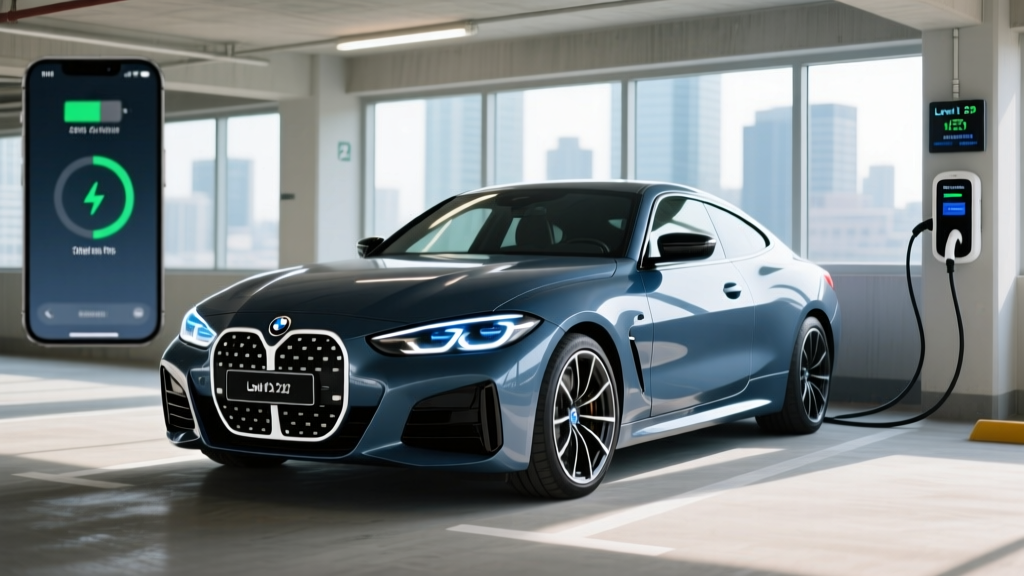
The 2022 BMW i4 marked the brand's first serious entry into the electric sport sedan segment, built on the same CLAR platform as the 4 Series Gran Coupe. Now several model years into production, the i4 has established itself as a driver-focused EV that prioritizes handling dynamics and premium build quality over maximum range-per-dollar. For buyers considering a used 2022 model or comparing it against newer alternatives, this profile covers the exact specs, real-world range data, charging performance, and ownership economics you need.
| Spec | eDrive40 | M50 |
|---|---|---|
| EPA Range | 301 mi (19" wheels) | 270 mi (19" wheels) |
| Battery (usable) | 81.5 kWh (NMC) | 81.5 kWh (NMC) |
| Drivetrain | RWD, single motor | AWD, dual motor |
| Horsepower | 335 hp | 536 hp |
| 0-60 mph | 5.5 sec | 3.7 sec |
| Max DC Charge Rate | 205 kW | 205 kW |
| 10-80% DC Fast Charge | ~31 min | ~31 min |
| Level 2 Charge Rate | 11 kW (AC) | 11 kW (AC) |
| EPA Efficiency | 99 MPGe / 34 kWh/100mi | 91 MPGe / 37 kWh/100mi |
| Original Base MSRP | $52,200 | $67,795 |
| Battery Warranty | 8 yr / 100,000 mi | |
Range and Efficiency: EPA Numbers vs. Real-World Reality
The EPA rates the rear-wheel-drive eDrive40 at 301 miles with 19-inch wheels, dropping to 282 miles with the optional 20-inch sport wheels. The dual-motor M50 achieves 270 miles (19-inch) or 245 miles (20-inch). These figures place the i4 competitively against the Tesla Model 3 Long Range (358 mi EPA) and Polestar 2 Long Range (276 mi EPA), though the i4 prioritizes driving dynamics over efficiency maximization.
- City/commute driving (eDrive40): 280-300 mi — regen braking in stop-and-go traffic recovers energy effectively.
- Highway cruising at 70-75 mph: 240-265 mi — aerodynamic drag and the i4's 4,682-lb curb weight reduce efficiency at sustained speed.
- Cold weather (below 32°F): 200-230 mi — expect a 20-25% reduction without preconditioning. The i4's heat pump (standard on M50, optional on eDrive40) mitigates this loss.
- Combined real-world average: 250-275 mi for most eDrive40 owners in moderate climates.
The 81.5 kWh usable battery capacity (83.9 kWh gross) uses Samsung SDI NMC (nickel-manganese-cobalt) cells in a prismatic format. BMW engineered a low center of gravity with the battery pack integrated into the floor structure, contributing to the i4's 50/50 weight distribution. According to fueleconomy.gov, the eDrive40 achieves 99 MPGe combined (34 kWh per 100 miles), which is respectable for a 4,700-lb luxury sedan but trails the Tesla Model 3's 132 MPGe.
Charging Performance: DC Fast Charging and Home Setup
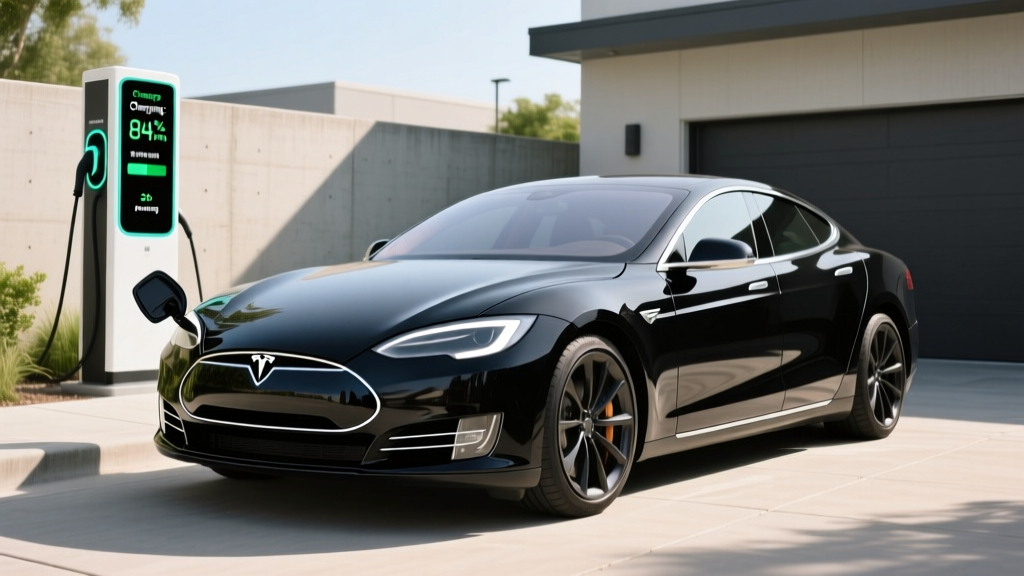
The i4 supports a peak DC fast-charge rate of 205 kW via CCS1 connector. In controlled testing, BMW achieves a 10-80% charge in approximately 31 minutes. However, the charge curve tells the full story: the i4 sustains peak power only briefly, tapering significantly above 60% state of charge (SoC). Expect average sustained rates closer to 130-150 kW across the full 10-80% session.
| Charge Level | Power | Time | Range Added |
|---|---|---|---|
| Level 1 (120V household) | 1.4 kW | ~60+ hrs (0-100%) | ~4 mi/hr |
| Level 2 (240V, 48A) | 11 kW | ~8.25 hrs (0-100%) | ~32 mi/hr |
| DC Fast Charge (peak) | 205 kW | ~31 min (10-80%) | ~164 mi in 31 min |
For home charging, the i4's onboard charger accepts up to 11 kW AC (three-phase in Europe; single-phase 48A in the US). This means a full Level 2 home installation with a 48-amp hardwired charger (like a ChargePoint Home Flex or Tesla Wall Connector with J1772 adapter) will replenish the battery overnight in about 8 hours. Most owners installing a NEMA 14-50 outlet on a 50-amp circuit will see slightly slower rates (~9.6 kW / ~28 mi/hr), which still covers daily commuting needs.
The i4 launched with CCS1 compatibility. BMW has since announced NACS adoption for future models, but 2022 i4 owners will need a BMW-provided CCS-to-NACS adapter (available as of 2025) to access Tesla Superchargers. This adapter enables access to over 18,000 Supercharger stalls nationwide, significantly expanding the i4's road-trip viability.
Performance and Driving Dynamics
The eDrive40's single rear motor produces 335 hp and 317 lb-ft of torque, delivering a 5.5-second 0-60 mph time. That's brisk but not supercar territory — BMW tuned the eDrive40 for progressive, controllable power delivery rather than neck-snapping acceleration. The M50's dual-motor AWD setup jumps to 536 hp (with Launch Control) and 586 lb-ft, dropping 0-60 to 3.7 seconds, rivaling the Tesla Model 3 Performance.
Where the i4 genuinely differentiates itself is chassis tuning. The adaptive M suspension (standard on M50, optional on eDrive40), near-perfect weight distribution, and precise steering deliver a driving experience that feels authentically BMW. The i4 doesn't isolate you from the road like a Mercedes EQE — it communicates. The trade-off is a firmer ride quality that some passengers find harsh on rough pavement.
Regenerative braking is adjustable via three levels (low, medium, high) or an adaptive mode that uses radar and navigation data to modulate regen based on traffic and upcoming turns. The adaptive mode is effective but lacks the true one-pedal driving experience of a Nissan LEAF or Chevrolet Bolt. You'll still use the friction brakes for final stops.
Interior, Technology, and Practicality
The i4 debuted BMW's iDrive 8 system on a curved display combining a 12.3-inch instrument cluster and 14.9-inch central touchscreen. The system is responsive and visually polished, though BMW's decision to eliminate most physical climate controls in favor of touchscreen sliders draws legitimate criticism from owners. Wireless Apple CarPlay and Android Auto are standard, as is a Wi-Fi hotspot.
The Driving Assistant Professional package ($1,700 on 2022 models) adds adaptive cruise control with stop-and-go, lane-keeping assist, and automatic lane-change on highway. This is an SAE Level 2 driver-assistance system — the driver must remain fully engaged with hands on the wheel and eyes on the road. It is not autonomous driving.
| Cargo Volume (rear seats up) | 16.6 cu ft |
| Cargo Volume (rear seats folded) | 45.6 cu ft |
| Front Legroom | 42.3 in |
| Rear Legroom | 34.7 in |
| Front Headroom | 39.4 in |
| Rear Headroom | 37.4 in |
The Gran Coupe liftback design provides a wide cargo opening and 16.6 cubic feet of trunk space — more practical than a traditional sedan trunk but less than an SUV. Rear legroom at 34.7 inches is tight for adults on long trips; this is a sport sedan, not a family hauler. The i4 has no frunk (front trunk), as the CLAR platform retains the 4 Series' mechanical architecture under the hood.
Pricing, Tax Credits, and Ownership Costs
The 2022 BMW i4 launched at $52,200 MSRP for the eDrive40 and $67,795 for the M50 (both before destination). Well-equipped examples with the Premium Package, Driving Assistant Professional, and larger wheels easily reached $60,000-$72,000 as-tested.
As a used vehicle in 2026, the i4 is no longer eligible for the new-vehicle §30D federal tax credit (which requires purchase of a new qualifying vehicle). However, buyers purchasing a used 2022 i4 from a dealer may qualify for the Used Clean Vehicle Credit under IRS §25E, which provides up to $4,000 or 30% of the sale price (whichever is less). Key eligibility requirements:
- Sale price must be $25,000 or below (challenging for most used i4 examples in 2026)
- Buyer income caps: $75,000 single / $112,500 head of household / $150,000 joint
- Vehicle must be at least 2 model years old (2022 models qualify in 2024+)
- Credit is non-refundable and can only be claimed once per vehicle
Given typical used i4 pricing of $35,000-$50,000 in 2026, most examples exceed the $25,000 sale-price cap, making the used credit unavailable. Always verify current rules with a tax professional and the IRS before assuming eligibility.
Battery Warranty and Long-Term Reliability
BMW backs the i4's high-voltage battery with an 8-year / 100,000-mile warranty against defects and capacity loss below 70% of original capacity. The powertrain (electric motors, power electronics) carries the same 8/100k coverage. The basic vehicle warranty is 4 years / 50,000 miles.
Based on data from early i4 owners and BMW's NMC cell chemistry track record (shared with the iX and i7), battery degradation has been minimal — typically 3-5% over the first 3 years / 45,000 miles. The i4's liquid-cooled thermal management system and conservative buffer strategy (approximately 2.4 kWh reserved above and below the usable range) help preserve long-term battery health. A full battery replacement outside warranty would cost an estimated $18,000-$22,000 based on current BMW parts pricing.
Who the 2022 BMW i4 Suits Best
- Best-in-class driving dynamics — steering feel, chassis balance, adaptive suspension
- Premium interior materials and build quality
- Strong DC fast-charge capability (205 kW peak)
- Liftback practicality with 16.6 cu ft cargo
- NACS adapter access to Tesla Supercharger network (2025+)
- Minimal battery degradation reported by owners
- Real-world highway range ~240-265 mi falls short of EPA sticker
- Rear legroom tight at 34.7 in — not ideal for families
- No frunk; CLAR platform limits storage innovation
- iDrive 8 climate controls on touchscreen frustrate some owners
- Firm ride quality on M Sport suspension
- Used tax credit unlikely due to $25k sale-price cap
Best for: Driving enthusiasts who want an EV that handles like a BMW, commute 30-60 miles daily with home charging access, and value premium materials and technology. The eDrive40 is the value pick; the M50 is for buyers who want dual-motor traction and M-car acceleration.
Not ideal for: Families needing spacious rear seats, road-trippers in charging-desert regions (though NACS adapter helps), or buyers prioritizing maximum range-per-dollar over driving dynamics.
Frequently Asked Questions
What is the real-world range of the 2022 BMW i4?
Expect 250-275 miles in mixed driving for the eDrive40, with highway-only range closer to 240-265 miles. Cold weather can reduce range by 20-25% without preconditioning.
How fast does the 2022 BMW i4 charge?
DC fast charging peaks at 205 kW, achieving 10-80% in about 31 minutes. Home Level 2 charging at 11 kW adds roughly 32 miles of range per hour, filling the battery overnight in ~8 hours.
Does the 2022 BMW i4 qualify for federal EV tax credits?
Not as a new vehicle purchase. Used buyers may qualify for the §25E used-EV credit (up to $4,000), but the vehicle must sell for $25,000 or less — rare for a used i4 in 2026. Verify eligibility with a tax professional and IRS guidelines.
Is the 2022 BMW i4 worth buying vs. a Tesla Model 3 or Polestar 2?
The i4 wins on driving dynamics, interior quality, and brand cachet. The Model 3 Long Range wins on range (358 mi EPA), charging network access (native NACS), and price. The Polestar 2 is a middle ground with strong design but lower range (276 mi). Choose the i4 if handling and build quality are priorities; choose the Model 3 if range and charging convenience matter most.
What are the biggest drawbacks of the 2022 BMW i4?
Real-world highway range falls short of EPA estimates, rear legroom is tight, there's no frunk, and the iDrive 8 touchscreen climate controls are divisive. The firm M Sport ride also isn't for everyone.
Can I charge a 2022 BMW i4 at Tesla Superchargers?
Yes, using BMW's official CCS-to-NACS adapter (available as of 2025). This opens access to over 18,000 Supercharger stalls. Verify adapter compatibility with your specific VIN through BMW.