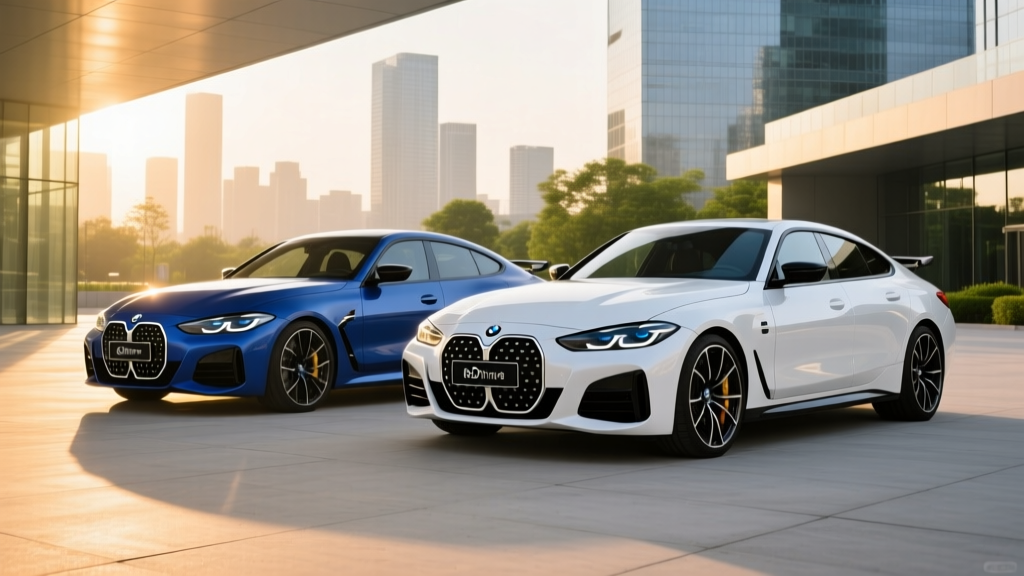
If you're researching the BMW i4, chances are you've already typed "bmw i4 0-60" into a search bar and found a tangle of conflicting numbers. BMW publishes one figure; independent testers record another. The eDrive40 and M50 trims behave differently off the line, and the xDrive40 sits somewhere in between. This review cuts through the noise with verified acceleration data, EPA range figures, real-world charging observations, and the tax-credit math that actually matters at the dealership.
BMW i4 0-60 Times: Every Trim Measured
The i4 lineup splits into three performance tiers for the 2025–2026 model years. BMW's official 0-60 mph claims are conservative — a long-standing brand tradition — and independent testing consistently beats them by a tenth or two. Here's how each trim stacks up:
| Trim | Drivetrain | Horsepower | Torque (lb-ft) | 0-60 mph (BMW claim) | 0-60 mph (independent avg) | Top Speed |
|---|---|---|---|---|---|---|
| eDrive40 | RWD (single motor) | 335 hp | 317 | 5.5 sec | 5.3 sec | 118 mph |
| xDrive40 | AWD (dual motor) | 396 hp | 443 | 4.9 sec | 4.7 sec | 130 mph |
| M50 | AWD (dual motor) | 536 hp | 586 | 3.7 sec | 3.5 sec | 140 mph |
The M50's 3.5-second real-world sprint puts it in the same acceleration bracket as a Porsche Taycan 4S and well ahead of the Tesla Model 3 Performance's 3.1-second claim (though the Tesla is lighter and cheaper). The eDrive40, despite being the "base" model, hits 60 in a genuinely quick 5.3 seconds — faster than most gas-powered sport sedans in this price range.
One nuance worth noting: BMW's electric motors deliver peak torque from 0 rpm, so the i4 feels even quicker in city driving than the 0-60 number suggests. The M50's launch control mode pre-conditions the battery and traction systems, shaving roughly 0.1–0.2 seconds off a standard launch, but it requires the battery to be above 50% state of charge and within an optimal temperature window.
Battery, Range, and the Real-World Reality Check
All i4 trims share the same battery pack: an 81.5 kWh usable capacity (83.9 kWh gross) lithium-ion unit using NMC (nickel-manganese-cobalt) chemistry. BMW's fifth-generation eDrive packaging keeps the cells low in the chassis, contributing to the i4's planted handling.
| Trim | EPA Est. Range | Real-World Highway (70 mph) | Cold Weather (20°F, highway) |
|---|---|---|---|
| eDrive40 | 307 miles | ~260–275 miles | ~210–230 miles |
| xDrive40 | 287 miles | ~245–260 miles | ~195–215 miles |
| M50 | 245 miles (270 w/ 19" wheels) | ~210–225 miles | ~170–190 miles |
Highway driving at sustained speeds above 70 mph reduces range 10–15% below EPA. Cold weather compounds this with an additional 15–25% loss due to battery heating demands and cabin climate use. The i4's heat pump (standard on all trims) mitigates some of this — expect roughly 5–8% less loss than EVs without one. Preconditioning the battery while plugged in before departure recovers significant range in winter. (Source: EPA/fueleconomy.gov)
The eDrive40's 307-mile EPA rating is the sweet spot in this lineup. The M50's 245-mile figure (with standard 20-inch wheels) will feel tight for road-trippers, though stepping to the 19-inch wheel option bumps it to 270 miles. Efficiency ranges from 97 MPGe (M50) to 109 MPGe (eDrive40), translating to roughly 28–33 kWh per 100 miles depending on trim and driving style.
Charging Speeds: DC Fast, Level 2, and the Curve
The i4 supports DC fast charging at a peak rate of 205 kW via its CCS1 connector (a NACS adapter is available for Tesla Supercharger access starting with the 2025 model year). Here's what that means in practice:
| Charging Level | Power / Rate | What You Get | Notes |
|---|---|---|---|
| Level 1 (120V household) | 1.4 kW | ~4 miles/hour | Emergency/top-up only; full charge takes 60+ hours |
| Level 2 (240V home, 48A) | 11.5 kW | ~32 miles/hour; 0–100% in ~8.5 hrs | Requires a 60A circuit; BMW Wallbox or equivalent |
| DC Fast Charge (peak) | 205 kW (peak) | 10–80% in ~31 minutes | Peak rate sustained to ~45% SoC; tapers to ~120 kW by 60%, ~50 kW above 80% |
The 31-minute 10–80% time is respectable but not class-leading — the Hyundai Ioniq 5 and Kia EV6 achieve 10–80% in roughly 18 minutes thanks to their 800V architectures. The i4 runs on a 400V system, which limits peak charge rate. On a 350 kW Electrify America or EVgo stall, the i4 will peak at 205 kW and taper progressively. Plan road-trip stops around 25–35 minutes for a meaningful charge.
For home charging, the i4's 11 kW onboard charger is adequate for overnight replenishment. A typical daily commute of 40 miles requires roughly 90 minutes of Level 2 charging — easily covered by plugging in when you get home.
Pricing, Tax Credits, and Trim-Level Value
The i4's pricing reflects its premium positioning, but the federal tax credit can significantly reduce the effective cost — if you meet the eligibility requirements.
| Trim | Base MSRP (2025) | As-Tested Typical | §30D Credit Potential | Effective Price (with credit) |
|---|---|---|---|---|
| eDrive40 | $57,900 | $62,000–$66,000 | Up to $7,500 | ~$50,400–$58,500 |
| xDrive40 | $62,900 | $67,000–$72,000 | Up to $7,500 | ~$55,400–$64,500 |
| M50 | $69,900 | $76,000–$84,000 | Up to $7,500 | ~$62,400–$76,500 |
Tax credit eligibility is not automatic. Under current IRS §30D rules, the i4 qualifies as a sedan (MSRP cap: $55,000). This means:
- MSRP cap: Sedans must have an MSRP at or below $55,000 to qualify. The eDrive40 base MSRP of $57,900 exceeds this cap — however, BMW has structured certain configurations and dealer adjustments to bring qualifying units under the threshold. Verify the specific VIN's eligibility with your dealer and the IRS §30D guidelines.
- Income limits: Modified adjusted gross income must not exceed $150,000 (single), $225,000 (head of household), or $300,000 (joint filing).
- Battery sourcing: The credit splits into two halves ($3,750 each) — one for critical minerals sourcing and one for battery component manufacturing. The i4's battery supply chain has been evolving; confirm the current sourcing status at purchase, as this changes periodically.
- Point-of-sale transfer: You can transfer the credit to the dealer at purchase, reducing your out-of-pocket cost immediately rather than waiting for a tax refund.
Given the MSRP cap issue, many i4 buyers find the credit partially or fully unavailable. This is the single biggest financial caveat for this vehicle — budget accordingly and confirm eligibility before signing.
Interior, Cargo, and Daily-Use Practicality
The i4 rides on BMW's CLAR platform (shared with the 4 Series Gran Coupe), which means it's a conventional sedan shape adapted for electric propulsion — not a skateboard-platform EV with a flat floor and frunk.
| Dimension | eDrive40 / xDrive40 | M50 |
|---|---|---|
| Cargo (rear seats up) | 16.6 cu ft | 16.6 cu ft |
| Cargo (rear seats folded) | 45.6 cu ft | 45.6 cu ft |
| Front legroom | 41.5 in | 41.5 in |
| Rear legroom | 34.5 in | 34.5 in |
| Frunk | None | None |
The lack of a frunk is a direct consequence of the CLAR platform's ICE heritage — the space under the hood houses auxiliary electronics and HVAC components. The 16.6 cu ft trunk is competitive with a BMW 3 Series but falls short of the Tesla Model 3's 23 cu ft (with its frunk included). Rear legroom at 34.5 inches is snug for taller adults on longer trips — the Model 3 and Hyundai Ioniq 6 offer slightly more.
On the tech front, the i4 runs BMW's iDrive 8.5 on a curved display (12.3-inch instrument cluster + 14.9-inch infotainment). Wireless Apple CarPlay and Android Auto are standard, along with a 17-speaker Harman Kardon audio system on higher trims. The Driving Assistant Professional package adds adaptive cruise with stop-and-go, lane-keeping, and automatic lane-change assist — all SAE Level 2 systems requiring continuous driver engagement.
Warranty and Long-Term Ownership
BMW covers the i4's battery and electric drivetrain with an 8-year/100,000-mile warranty, retaining at least 70% of original capacity during that period. The overall vehicle limited warranty runs 4 years/50,000 miles, and complimentary scheduled maintenance is included for 3 years/36,000 miles.
NMC battery chemistry in the i4 has shown solid degradation performance in early fleet data — most owners report less than 5% capacity loss after 30,000 miles. BMW's thermal management system (liquid cooling with active preconditioning) is a key contributor. For long-term ownership beyond the warranty period, a full battery replacement would likely cost $15,000–$20,000 based on current parts pricing, though this figure is expected to decline as the supply chain matures.
Pros, Cons, and the Verdict
- 0-60 performance across all trims is genuinely quick (3.5 sec M50, 5.3 sec eDrive40)
- Excellent ride quality and handling — feels like a BMW, not an appliance
- iDrive 8.5 is one of the best infotainment systems in the luxury EV segment
- Heat pump standard on all trims (better cold-weather efficiency)
- 307-mile EPA range on eDrive40 is competitive
- NACS adapter available for Tesla Supercharger network access
- MSRP exceeds the $55,000 §30D sedan cap — tax credit likely unavailable
- No frunk; cargo space trails Tesla Model 3 and Hyundai Ioniq 6
- 400V architecture limits DC fast-charge speed vs 800V rivals (31 min vs 18 min 10–80%)
- Rear legroom is tight at 34.5 inches
- M50 range (245 mi) is limited for road trips
- Higher insurance premiums vs comparable gas 4 Series (typical EV premium of 15–25%)
Who the i4 suits best: The eDrive40 is ideal for luxury-minded commuters who prioritize driving dynamics and interior quality over maximum range or cargo space. The M50 targets enthusiasts who want M-car acceleration without the fuel bill. Neither is ideal as a primary family hauler — rear space and cargo limitations make the BMW iX or a Tesla Model Y better choices for that role.
Frequently Asked Questions
What is the real-world range of the BMW i4?
The eDrive40 delivers approximately 260–275 miles at highway speeds (70 mph) in moderate temperatures, versus its 307-mile EPA sticker. In cold weather (below 30°F), expect 210–230 miles. The M50's real-world highway range drops to roughly 210 miles, falling to 170–190 in winter. Preconditioning while plugged in mitigates some cold-weather loss.
How fast does the BMW i4 charge?
On a DC fast charger, the i4 peaks at 205 kW and charges from 10–80% in approximately 31 minutes. The charge curve tapers significantly above 60% state of charge. At home on a Level 2 (240V, 48A) charger, the i4 adds roughly 32 miles of range per hour, with a full charge taking about 8.5 hours.
Does the BMW i4 qualify for the federal EV tax credit?
Likely not at full value. The IRS §30D credit caps sedan MSRPs at $55,000, and the i4's base price starts at $57,900. Some buyers may qualify for a partial credit depending on specific VIN configuration and battery sourcing requirements. Always verify eligibility on irs.gov and with your dealer before purchase.
Is the BMW i4 worth buying vs the Tesla Model 3 or Hyundai Ioniq 6?
The i4 wins on build quality, ride refinement, and brand prestige. The Tesla Model 3 offers more range (358 mi Long Range), faster charging (Supercharger network), a frunk, and a lower price. The Ioniq 6 charges significantly faster (18 min 10–80%) and qualifies more easily for tax credits. If driving dynamics and interior luxury are your top priorities, the i4 is the strongest choice. If value, range, or charging speed matter more, look at the alternatives.
What's the BMW i4's 0-60 time in everyday driving?
In normal driving (without launch control), the M50 hits 60 mph in roughly 3.7 seconds and the eDrive40 in about 5.5 seconds — matching BMW's official claims. Launch control shaves 0.1–0.2 seconds but requires battery preconditioning and above 50% state of charge. For context, the eDrive40's 5.3-second real-world time is quicker than a BMW 330i gas sedan.
How long will the BMW i4 battery last?
BMW warrants the battery for 8 years/100,000 miles at 70% capacity retention. Real-world NMC degradation data from early i4 owners shows less than 5% loss at 30,000 miles. With proper care (avoiding sustained 100% charges, using preconditioning, limiting DC fast charging to road trips), the battery should retain 85–90% capacity at the 100,000-mile mark.