BMW i3 Overview: The Original Urban EV Pioneer
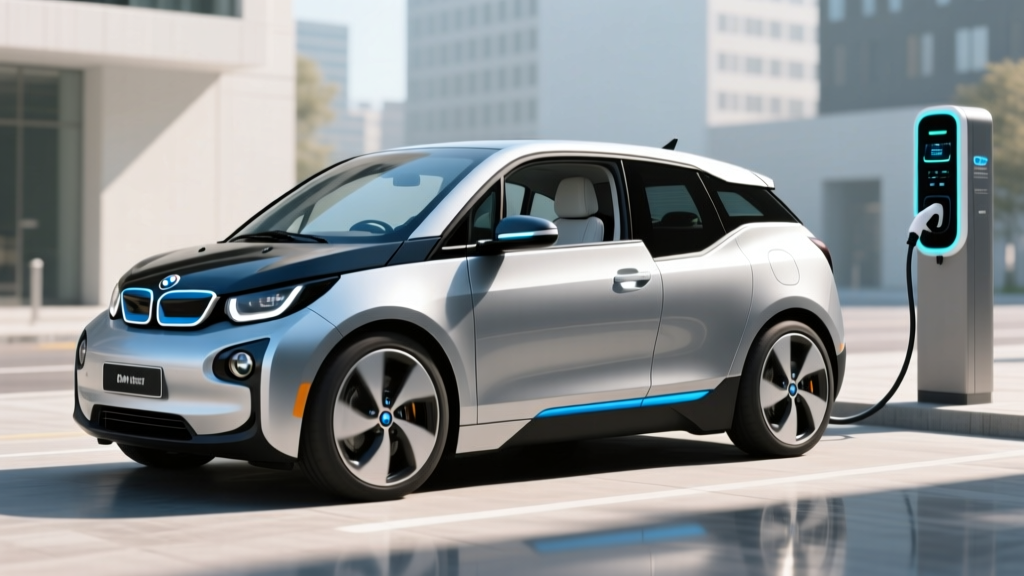
The BMW i3 arrived in 2014 as one of the first purpose-built electric vehicles from a legacy automaker, and its carbon-fiber-reinforced plastic (CFRP) body, rear-wheel-drive layout, and quirky coach-door design made it unlike anything else on the road. BMW discontinued the i3 after the 2021 model year in the United States, meaning every i3 you encounter today is a used vehicle. But for urban commuters and second-car shoppers, the i3 remains a compelling entry point into EV ownership — provided you understand its range limitations, charging profile, and what to look for on the used market.
This BMW i3 wiki consolidates every spec, real-world data point, and ownership consideration you need. Whether you're researching the original 60 Ah model (2014–2016), the upgraded 94 Ah version (2017–2018), or the final 120 Ah variant (2019–2021), we break down the exact numbers that matter.
BMW i3 Specifications at a Glance
| Specification | Value |
|---|---|
| EPA Range | 153 miles |
| Battery Capacity (Gross / Usable) | 42.2 kWh / ~39.4 kWh |
| Battery Chemistry | NMC (Nickel Manganese Cobalt), Samsung SDI cells |
| DC Fast Charge (Peak) | 50 kW (CCS Combo 2 on later models) |
| 10–80% DC Fast Charge Time | ~38–42 minutes |
| Level 2 AC Charge Rate | 7.4 kW (single-phase onboard charger) |
| Level 2 Charge Time (0–100%) | ~5.5 hours |
| Motor Output | 170 hp (125 kW) / 184 lb-ft torque |
| Drivetrain | Rear-wheel drive (RWD), single-speed |
| 0–60 mph | 7.0 seconds |
| EPA Efficiency | 113 MPGe combined (30 kWh/100 mi) |
| Cargo Volume (rear seats up / folded) | 15.1 cu ft / 34.8 cu ft |
| Seating Capacity | 4 passengers (suicide/coach doors) |
| Curb Weight | ~2,877 lbs |
| Battery Warranty (original) | 8 years / 100,000 miles |
| Federal Tax Credit (new, pre-2022) | $7,500 — no longer available for new purchases |
Real-World Range: What the EPA Number Doesn't Tell You
Real-World Expectation: 120–140 miles highway at 70 mph; 135–155 miles city/mixed driving
Cold-Weather Impact (below 32°F): Expect 25–35% reduction, dropping effective range to 95–115 miles
Earlier 94 Ah Model (2017–2018): EPA 114 miles; real-world ~90–105 miles highway
Original 60 Ah Model (2014–2016): EPA 81 miles; real-world ~60–75 miles highway
The BMW i3's range is its most polarizing characteristic. The final 120 Ah model's 153-mile EPA rating was competitive for a city-oriented EV in 2019, but it trails modern rivals significantly. In practice, the i3's lightweight construction (under 2,900 lbs) and narrow, low-rolling-resistance tires deliver impressive efficiency — often exceeding 4.0 miles per kWh in city driving. That means around-town commutes with frequent regenerative braking can actually push close to or slightly beyond the EPA figure.
Highway driving tells a different story. The i3's boxy shape creates aerodynamic drag that becomes punishing above 65 mph. On a flat, 70-mph cruise in moderate temperatures, expect roughly 120–135 miles before the low-battery warning. In winter conditions, the battery's reduced chemical efficiency combined with cabin heating demands can slash range by a third. The i3 does feature an optional heat pump (standard on some later trims), which reduces HVAC energy consumption compared to resistive heating — a feature worth verifying on any used example you consider.
Source: EPA Fuel Economy Guide — BMW i3 (2020)
Charging Profile: DC Fast, Level 2, and Level 1 Breakdown
Understanding the i3's charging capabilities is essential, especially since BMW's approach evolved across model years. Early 60 Ah models shipped with only a CCS DC fast-charge port as an option — many used examples lack it entirely. The 94 Ah and 120 Ah models improved availability, but the i3's peak charge rate of 50 kW remains modest by 2026 standards.
| Charging Level | Power (kW) | Connector | Time / Rate | Miles Added per Hour |
|---|---|---|---|---|
| Level 1 (120V household) | ~1.3 kW | J1772 / NACS adapter | ~30 hours (0–100%) | ~5 mi/hr |
| Level 2 (240V home/public) | 7.4 kW | J1772 (Type 1) | ~5.5 hours (0–100%) | ~28 mi/hr |
| DC Fast Charge | 50 kW peak | CCS Combo (if equipped) | ~38–42 min (10–80%) | ~75–85 mi in 30 min |
A critical ownership note: the i3's DC fast-charging curve is relatively flat compared to modern EVs. It ramps to ~47 kW quickly and sustains that rate until approximately 70–75% state of charge (SoC), then tapers to 25–30 kW through 85%, and drops further above 90%. This means the 10–80% charge takes roughly 38–42 minutes at a properly rated CCS station — adequate for a lunch stop, but not the 18-minute sprints offered by 800V-architecture vehicles like the Hyundai Ioniq 5 or Porsche Taycan.
For home charging, a Level 2 wallbox or outlet delivering 32 amps (7.4 kW) will fully replenish the 42.2 kWh pack overnight in about 5.5 hours. This is perfectly practical for daily commuters who plug in each evening. Level 1 charging from a standard 120V outlet is painfully slow at ~5 miles of range per hour — only viable as an emergency backup or for very low-mileage drivers who can leave the car plugged in for extended periods.
CCS availability check: Before purchasing any used i3, physically inspect the charge port. A CCS-equipped i3 will have two additional DC pins below the J1772 connector. If those pins are absent, the car can only charge on AC power (Level 1 or Level 2), which severely limits road-trip usability.
Performance and Driving Dynamics
The i3's 170-horsepower electric motor drives the rear wheels through a single-speed reduction gear. BMW tuned the instant torque delivery (184 lb-ft from 0 RPM) to make the i3 feel far quicker than its 7.0-second 0–60 time suggests. Around town, the i3 is genuinely rapid off the line — it will gap most traffic from a stoplight and remains eager up to 50 mph. The one-pedal driving mode, activated by lifting off the accelerator, provides strong regenerative braking that can bring the car to a complete stop without touching the brake pedal.
Where the i3's performance reveals its age is at highway speeds. Above 70 mph, acceleration becomes leisurely, and the car's tall, narrow profile makes it susceptible to crosswinds. The ultra-narrow 155/70R19 tires (yes, they're that thin) provide low rolling resistance for efficiency but limit cornering grip. The steering is quick and direct, however, and the car's low center of gravity — thanks to the battery pack mounted under the floor — gives it surprisingly composed handling for its height.
The i3's turning circle of 32.3 feet is exceptionally tight, making it a natural for urban parking and narrow streets. Combined with excellent outward visibility and compact dimensions (157.5 inches long), the i3 is one of the easiest EVs to park in a crowded city.
Used Pricing and Federal Tax Credit Eligibility
Since BMW ended U.S. i3 sales after 2021, the only purchase path is the used market. As of early 2026, here's what the market looks like:
| Model Year / Variant | Battery | Mileage Range | Typical Price Range |
|---|---|---|---|
| 2014–2016 i3 BEV (60 Ah) | 22 kWh gross | 50k–90k mi | $8,000–$13,000 |
| 2017–2018 i3 BEV (94 Ah) | 33.2 kWh gross | 35k–70k mi | $13,000–$19,000 |
| 2019–2021 i3 BEV (120 Ah) | 42.2 kWh gross | 15k–50k mi | $18,000–$27,000 |
| 2014–2021 i3 REx (Range Extender) | Varies + 2-cyl gas | Varies | $9,000–$24,000 |
- Vehicle must be at least 2 model years old (all i3s qualify)
- Sale price must be $25,000 or less
- Buyer AGI must not exceed $75,000 (single) / $112,500 (head of household) / $150,000 (joint)
- Must be purchased from a licensed dealer (private sales do not qualify)
- Vehicle must have a battery capacity of at least 7 kWh (all i3 variants qualify)
The original $7,500 federal tax credit (§30D) that applied to new i3 purchases is no longer relevant for new buys, since the car is discontinued. However, it's worth noting for historical context: the i3 did qualify for the full $7,500 when new, and some lease deals passed through a portion of that value.
Interior, Technology, and Practicality
The i3's interior is a study in sustainable design. BMW used renewable materials throughout — eucalyptus wood trim, kenaf plant fiber door panels, recycled-plastic upholstery, and even olive-leaf-tanned leather on higher trims. The result is an interior that feels genuinely different from any other BMW and has aged surprisingly well aesthetically.
Infotainment: The 2019–2021 models feature BMW's iDrive 6.0 system with a 10.25-inch display, wireless Apple CarPlay (added for 2018+), and navigation with EV-specific routing that accounts for charge level and terrain. Earlier models use a smaller 6.5-inch screen with less intuitive menus. Android Auto was never offered on the i3 in the U.S. market — a notable omission for Android users.
Driver Assistance: The i3 offers basic Level 1 and Level 2 driver-assist features on later models, including:
- Active Cruise Control with stop-and-go (optional)
- Lane Departure Warning (optional, part of Driver Assistance Plus)
- Park Distance Control (front/rear sensors)
- Automatic Emergency Braking with pedestrian detection (2018+)
These systems are generations behind BMW's current offerings and do not approach hands-free driving capability. The i3's driver assists require full driver engagement at all times — they are convenience aids, not autonomous systems.
Space and Practicality: The i3 seats four, not five. The rear "coach doors" (often called suicide doors) open backward and require the front doors to be open first — a distinctive design choice that makes rear access easy in a parking spot but means a rear passenger cannot exit independently. Cargo space behind the rear seats is 15.1 cubic feet (similar to a subcompact hatchback), expanding to 34.8 cubic feet with the rear seats folded. The absence of a front trunk (frunk) is a missed opportunity — the i3's front motor area has space that BMW used for ancillary components rather than storage.
Legroom is adequate for adults in the rear for short trips, but the upright seatback and high floor (due to the battery underneath) create a "knees-up" seating position that becomes uncomfortable on longer rides.
Battery Health, Degradation, and Warranty Considerations
The i3 uses Samsung SDI NMC (nickel manganese cobalt) lithium-ion cells — not the LFP chemistry found in some modern budget EVs. NMC offers higher energy density but is more susceptible to calendar and cycle-based degradation over time.
Real-world data from i3 owners and fleet operators suggests the 120 Ah (42.2 kWh) battery retains approximately 85–92% of its original capacity after 5 years / 60,000 miles, depending on climate and charging habits. The smaller 60 Ah pack from early models has shown more notable degradation, with some owners reporting 75–85% state of health after 8–10 years. This translates to a proportional range reduction: a 2014 i3 that originally delivered 81 EPA miles may now offer 60–68 miles on a full charge.
BMW's original battery warranty covers 8 years / 100,000 miles against defects and capacity loss below a specified threshold (typically 70% of original capacity). For a 2019 model, that warranty remains active through 2027. For a 2014–2016 model, the battery warranty has expired or is expiring soon — making a pre-purchase battery health check essential.
Pre-purchase tip: Ask the seller or dealer to perform a battery state-of-health (SoH) diagnostic. Many BMW dealers can pull this data, and third-party OBD2 tools like BimmerCode or ENcoding apps can read SoH from the battery management system. An SoH below 80% should factor into price negotiations significantly.
i3 vs. Key Competitors: Used EV Comparison
| Attribute | BMW i3 (120 Ah) | Chevy Bolt EV | Nissan LEAF (62 kWh) | VW e-Golf |
|---|---|---|---|---|
| EPA Range | 153 mi | 259 mi | 226 mi | 125 mi |
| Battery (usable) | ~39.4 kWh | ~60 kWh | ~62 kWh | ~32 kWh |
| DC Fast Charge | 50 kW | 55 kW | 100 kW | 50 kW |
| 0–60 mph | 7.0 sec | 6.5 sec | 6.5 sec | 9.6 sec |
| Cargo (rear up) | 15.1 cu ft | 16.9 cu ft | 23.6 cu ft | 22.8 cu ft |
| Seats | 4 | 5 | 5 | 5 |
| Used Price (2019–21) | $18k–$27k | $14k–$22k | $15k–$23k | $14k–$20k |
| Thermal Management | Active liquid | Active liquid | Air-cooled | Active liquid |
The Bolt EV dominates on range and cargo space at a lower used price, making it the pragmatic choice for most buyers. The LEAF offers more room and a stronger DC fast-charge rate, but its air-cooled battery is a liability in hot climates (accelerated degradation). The e-Golf is the closest rival in driving refinement but falls short on range.
The i3 wins on urban maneuverability, build quality, material uniqueness, and the prestige of the BMW badge. It also benefits from liquid thermal management, which protects the battery in extreme temperatures far better than the LEAF's passive system.
Pros, Cons, and Final Verdict
Pros
- Exceptional efficiency (113 MPGe, ~4 mi/kWh city)
- Premium materials and unique sustainable interior
- Tight turning circle, ideal for urban driving
- Strong regenerative braking enables one-pedal driving
- Lightweight CFRP construction — fun to drive
- Liquid battery thermal management
- Eligible for up to $4,000 used EV tax credit (§25E)
Cons
- Limited range — 153 mi EPA (120 Ah); earlier models far less
- Only seats 4; coach-door design limits rear-seat independence
- 50 kW DC fast charging is slow by 2026 standards
- No Android Auto support (any model year)
- Small cargo area, no frunk
- Expensive proprietary tires (155/70R19)
- DC fast charge was optional on early models — not all have it
- Discontinued — no new examples, limited dealer support
Who Should Buy a Used BMW i3?
- Your daily commute is under 60 miles round-trip
- You have reliable home Level 2 charging
- You want a premium, distinctive second car for errands and city driving
- You value efficiency and low operating costs over range and cargo space
- You live in a mild climate or value liquid battery thermal management
- You need 200+ miles of range for regular road trips
- You need seating for 5 or substantial cargo space
- You lack home charging and rely on public DC fast charging
- You want modern driver-assist technology or Android Auto
Frequently Asked Questions
What is the real-world range of the BMW i3?
The 2019–2021 i3 (120 Ah) delivers approximately 120–140 miles on the highway and 135–155 miles in city driving on a full charge. In cold weather below freezing, expect 95–115 miles. Earlier models have significantly less: the 94 Ah (2017–2018) manages ~90–110 miles real-world, and the 60 Ah (2014–2016) delivers ~60–80 miles.
How fast does the BMW i3 charge?
On a DC fast charger (if equipped with CCS), the i3 peaks at 50 kW, taking approximately 38–42 minutes to go from 10% to 80%. On a Level 2 home charger (240V, 32A), a full charge takes about 5.5 hours at 7.4 kW. Level 1 (120V) adds roughly 5 miles of range per hour.
Does the BMW i3 qualify for any federal tax credit?
The original $7,500 new-vehicle credit (§30D) no longer applies since the i3 is discontinued. However, the federal used clean vehicle credit (§25E) may provide up to $4,000 (30% of sale price, capped at $4,000) if the vehicle is purchased from a dealer for $25,000 or less and the buyer's income falls within IRS limits. Verify current rules at IRS.gov.
Is the BMW i3 worth buying over a Chevy Bolt or Nissan LEAF?
If range and cargo space are your priorities, the Chevy Bolt EV (259 mi EPA, ~$14k–$22k used) is the more practical choice. If you value driving dynamics, premium materials, urban agility, and a unique design, the i3 has no direct rival. The LEAF offers more room and faster DC charging but lacks liquid battery cooling. The i3 is a niche pick — excellent for the right use case, limited for general-purpose needs.
What should I check before buying a used BMW i3?
Three critical checks: (1) Verify CCS DC fast-charge capability by inspecting the charge port for the two additional DC pins. (2) Request a battery state-of-health (SoH) reading — aim for 85%+ on 2019–2021 models. (3) Confirm whether the car has the optional heat pump, which significantly improves cold-weather range. Also check service records for any battery module replacements and verify the iDrive software version.
How long will the BMW i3 battery last?
Based on owner data, the 120 Ah NMC battery typically retains 85–92% capacity after 5 years / 60,000 miles. With proper care (avoiding frequent 100% charges, minimizing DC fast charging in extreme heat), the battery should remain functional for 150,000+ miles. BMW's original 8-year/100,000-mile battery warranty covers capacity loss below ~70% of original. Out-of-warranty battery replacement costs are estimated at $8,000–$14,000 depending on the pack variant.
Sources: EPA Fuel Economy — BMW i3, IRS Used Clean Vehicle Credit (§25E), BMW USA archived specifications.