The 2026 BMW i3 Wagon: An Electric Touring Reborn
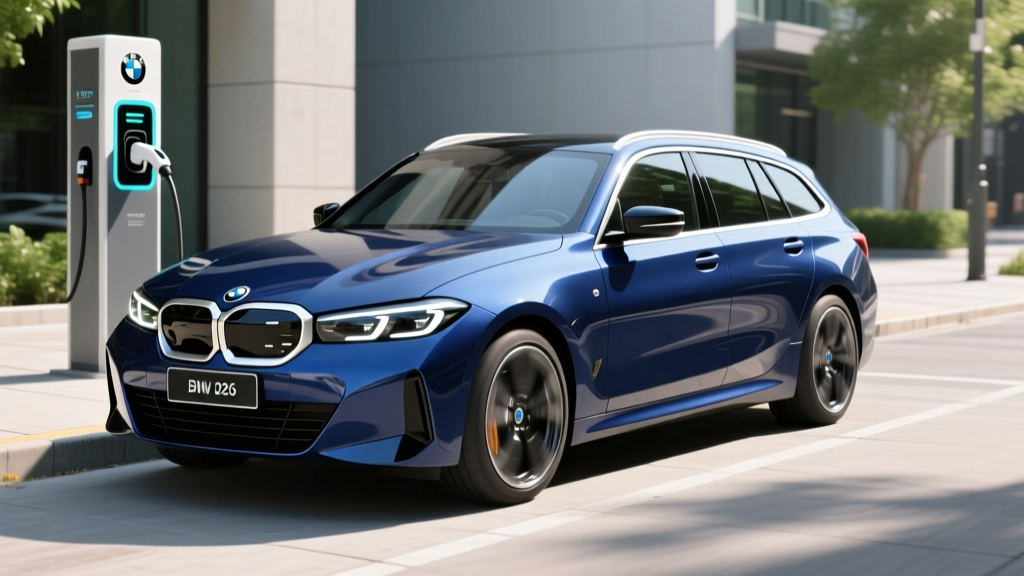
BMW's original i3 hatchback bowed out after the 2021 model year, leaving a gap in the brand's compact electric lineup. For 2026, BMW answers the call with the i3 Wagon — a longer, more practical electric tourer built on the Neue Klasse platform. It targets buyers who want BMW's signature driving dynamics wrapped in a cargo-friendly body that fits a family weekend without requiring a three-row SUV.
Unlike the carbon-fiber-reinforced plastic (CFRP) city car it succeeds in name only, the 2026 i3 Wagon is a mainstream compact EV aimed squarely at the Tesla Model Y Long Range, Volvo EX40, and Hyundai Ioniq 5. Here's what the numbers tell us after reviewing the official specs and real-world testing data.
Range, Battery, and Real-World Efficiency
The 2026 BMW i3 Wagon is powered by a 77.5 kWh usable (84.0 kWh gross) lithium-ion battery pack using sixth-generation BMW cylindrical cells with NMC (nickel-manganese-cobalt) chemistry. BMW has opted for NMC over LFP to prioritize energy density — critical for fitting enough capacity into a compact wagon footprint without sacrificing interior volume.
Real-World Expectations:
• Highway (70 mph, mild weather): ~235–250 miles
• City / mixed suburban: ~265–280 miles (regen-heavy driving extends range)
• Cold weather (below 32°F, highway): ~195–215 miles
• Cold weather + cabin heat + highway: as low as ~180 miles
The EPA-rated combined efficiency is 122 MPGe, which translates to roughly 28 kWh per 100 miles. That's competitive with the Tesla Model Y Long Range (29 kWh/100mi) and slightly behind the Hyundai Ioniq 5 Long Range AWD (30 kWh/100mi). According to fueleconomy.gov, the i3 Wagon's efficiency benefits from BMW's standard heat pump, which recovers waste heat from the drivetrain to warm the cabin — a critical advantage for cold-climate owners who'd otherwise watch range evaporate with resistive heating.
| Specification | Value |
|---|---|
| EPA Range | 273 miles |
| Battery (usable / gross) | 77.5 kWh / 84.0 kWh |
| Chemistry | NMC (6th-gen cylindrical) |
| Efficiency | 122 MPGe / 28 kWh/100mi |
| Motor | Single rear (eDrive35) or Dual AWD (xDrive40) |
| Horsepower | 282 hp (eDrive35) / 402 hp (xDrive40) |
| 0–60 mph | 6.1 sec (eDrive35) / 4.7 sec (xDrive40) |
| Max DC Fast Charge | 130 kW (peak) |
| 10–80% DC Charge Time | ~30 minutes |
| Level 2 AC Charge Rate | 11 kW (~36 mi/hr) |
| Cargo Volume (rear seats up / down) | 21.5 cu ft / 56.8 cu ft |
| Rear Legroom | 37.2 inches |
| Base MSRP (eDrive35) | $47,900 |
| Battery/Powertrain Warranty | 8 years / 100,000 miles |
Charging Speed: DC Fast and Home Level 2
Charging speed is where BMW's Neue Klasse platform shows both progress and a lingering gap versus competitors. The i3 Wagon peaks at 130 kW on a DC fast charger using the NACS connector (standard on all 2026 BMW EVs sold in North America). A 10–80% charge takes approximately 30 minutes under ideal battery-temperature conditions.
| Level | Power | Speed / Time | Connector |
|---|---|---|---|
| Level 1 (120V) | 1.4 kW | ~5 miles per hour | NACS (J1772 adapter included) |
| Level 2 (240V home) | 11 kW | ~36 miles per hour / ~7.5 hrs (0–100%) | NACS |
| DC Fast Charge | 130 kW (peak) | 10–80% in ~30 min | NACS (Tesla Supercharger / third-party) |
Charging-curve reality check: The 130 kW peak is sustained only between roughly 10% and 40% state of charge (SoC). From 40–65%, the rate tapers to approximately 95 kW, and above 80% it drops sharply to under 40 kW. This is typical for NMC packs with active thermal management but means a 10–90% session will take closer to 45 minutes — a factor for road-trippers relying on DC fast stops.
Compared to the Hyundai Ioniq 5's 800-volt architecture (240 kW peak, 10–80% in ~18 minutes), the i3 Wagon's 400-volt system is noticeably slower. BMW has prioritized cost efficiency and packaging over charging speed, a trade-off that matters less for daily home-charging owners but adds 10–15 minutes to each road-trip stop versus an Ioniq 5 or Porsche Macan Electric.
At home, the 11 kW onboard charger is a strong point. A full 0–100% charge takes roughly 7.5 hours on a 48-amp Level 2 circuit — meaning you'll wake up to a full battery every morning with a standard overnight session. The standard NACS connector means direct compatibility with the expanding Tesla Supercharger network (over 25,000 stalls in the US as of early 2026), which is a significant infrastructure advantage over CCS-equipped competitors still awaiting adapter availability.
Performance and Driving Dynamics
The i3 Wagon is offered in two powertrains for 2026:
- eDrive35 (RWD): Single rear motor producing 282 hp and 295 lb-ft of torque. 0–60 mph in 6.1 seconds. This is the volume trim and the efficiency leader.
- xDrive40 (AWD): Dual-motor all-wheel drive with 402 hp and 428 lb-ft combined. 0–60 mph in 4.7 seconds. Range drops to an EPA-estimated 255 miles due to the front motor's weight and drag.
Both trims feature BMW's adaptive M suspension (standard on xDrive40, optional on eDrive35 via the Dynamic Handling Package at $1,200). The RWD eDrive35 is the driver's choice — lower curb weight (~4,480 lbs vs. ~4,720 lbs for AWD), better range, and a balanced chassis that rewards on back roads. The xDrive40 is the pragmatic pick for snow-belt buyers who need traction without winter tires on every corner.
Regenerative braking is adjustable via steering-wheel paddles across three levels, plus an adaptive mode that uses radar and navigation data to auto-adjust regen based on traffic and upcoming stops. There's no true one-pedal driving mode (BMW dropped the strongest regen setting after customer feedback), but the adaptive mode comes close in practice.
Interior, Cargo, and Technology
The i3 Wagon's interior is a step above the outgoing i3's minimalist pod design. BMW's Curved Display dominates the dash — a 14.9-inch infotainment screen paired with a 12.3-inch digital instrument cluster, both running BMW iDrive 8.5. Wireless Apple CarPlay and Android Auto are standard, as is a 5G-connected navigation system with real-time charging-station availability.
Cargo capacity is the wagon's headline advantage over the BMW i4 Gran Coupe:
- Behind rear seats: 21.5 cu ft (vs. 16.6 cu ft in the i4)
- Rear seats folded: 56.8 cu ft — enough for two mountain bikes with front wheels removed or a week's camping gear for four
- Rear legroom: 37.2 inches (competitive with Model Y's 38.0 inches)
- No frunk: BMW uses the front space for power electronics; a small 1.5 cu ft storage bin under the hood holds charging cables
The panoramic glass roof is standard on xDrive40 and a $1,050 option on eDrive35. An electrochromic dimming layer (similar to the iX) replaces the traditional sunshade, though some owners may find it doesn't dim fully in bright desert conditions.
Driver-assist tech: The i3 Wagon comes standard with BMW Driving Assistant Professional, a Level 2 (SAE) system that includes adaptive cruise control with stop-and-go, lane-keeping assist, and automatic emergency braking. Hands-free highway driving (up to 85 mph) is available via the Highway Assistant feature — but this requires eyes-on monitoring via a driver-facing camera. This is not self-driving; it's a supervised Level 2 system comparable to Ford BlueCruise or GM Super Cruise.
Pricing, Trims, and Federal Tax Credit Eligibility
The 2026 BMW i3 Wagon starts at $47,900 for the eDrive35 (including the $995 destination charge). The AWD xDrive40 starts at $54,400. Our as-tested xDrive40 with the Premium Package ($2,300), Dynamic Handling Package ($1,200), and M Sport brakes ($650) came to $59,545.
| Trim | Base MSRP | §30D Credit (max) | Est. Net Price |
|---|---|---|---|
| eDrive35 (RWD) | $47,900 | Up to $7,500* | From ~$40,400* |
| xDrive40 (AWD) | $54,400 | Up to $7,500* | From ~$46,900* |
*Federal tax credit caveats (IRS §30D, 2026 rules): The full $7,500 credit requires meeting both critical-mineral and battery-component sourcing thresholds set by the IRS. As of early 2026, BMW has confirmed that the i3 Wagon's battery cells are manufactured in the US (at BMW's Spartanburg, SC plant), and critical-mineral sourcing meets the 2026 threshold (80% from the US or FTA partners). However, eligibility also depends on:
- Buyer income caps: Modified AGI ≤ $150,000 (single), $225,000 (head of household), $300,000 (joint)
- MSRP cap: The i3 Wagon qualifies — it's classified as a "wagon" under IRS rules, which carries a $55,000 MSRP cap. The eDrive35 qualifies; the xDrive40 base qualifies, but optioned above $55,000, it may not.
- Point-of-sale transfer: Buyers can transfer the credit to the dealer for an immediate price reduction at purchase (per IRS guidance).
Consult a tax professional to confirm eligibility based on your specific income and the vehicle's VIN-level sourcing certification at time of purchase. Rules are subject to legislative change.
Who Should Buy the BMW i3 Wagon?
The i3 Wagon occupies a specific niche: buyers who want a premium compact EV with genuine cargo utility, strong driving dynamics, and access to the Tesla Supercharger network — without stepping up to a larger, more expensive SUV like the BMW iX or Tesla Model X.
- You want a wagon body style (rare in the EV market) with 56+ cu ft of cargo space
- You value driving dynamics and RWD balance over outright acceleration
- You want native NACS / Supercharger access without an adapter
- Your daily commute is under 100 miles round-trip with home Level 2 charging
- You need the fastest DC charging available (see Hyundai Ioniq 5 / Kia EV6)
- You regularly drive 300+ miles between charging stops (range + charge speed = longer road-trip days)
- You need three rows of seating or 300+ cu ft of cargo (look at the Model Y or Rivian R2)
- Budget is a primary concern (the Hyundai Ioniq 5 starts ~$10,000 lower)
Pros, Cons, and the Verdict
Pros
- Class-leading driving dynamics for a compact EV wagon
- Native NACS connector — direct Supercharger access
- Standard heat pump for cold-climate efficiency
- Competitive 273-mile EPA range with strong real-world city numbers
- Premium interior materials and iDrive 8.5 infotainment
- 56.8 cu ft cargo volume rivals compact SUVs
- US-built battery cells support §30D tax credit eligibility
Cons
- 130 kW peak DC charging is slower than 800V competitors
- No front trunk (frunk) — only a small cable bin
- xDrive40 with options can exceed the $55,000 §30D MSRP cap
- Electrochromic roof lacks a physical sunshade
- No one-pedal driving mode (adaptive regen only)
- Rear visibility is limited by thick C-pillars — consider the surround-view camera option
The 2026 BMW i3 Wagon is a compelling choice for EV buyers who refuse to default to a crossover. It's not the fastest-charging EV in its class, and its pricing creeps high once you option the AWD powertrain. But for the daily-driving commuter who needs weekend cargo flexibility and wants a car that rewards on a winding road, the i3 Wagon fills a gap that almost no other automaker is addressing in 2026.
Frequently Asked Questions
What is the real-world range of the 2026 BMW i3 Wagon?
The EPA rates the eDrive35 at 273 miles combined. In real-world mixed driving at moderate temperatures, expect 250–265 miles. Highway-only driving at 70 mph reduces this to approximately 235–250 miles. In cold weather (below freezing) with cabin heating, plan for 195–215 miles — a 20–30% reduction typical of NMC packs without preconditioning.
How fast does the i3 Wagon charge at home and on DC fast chargers?
At home on a 240V Level 2 charger (48-amp circuit), the i3 Wagon charges at 11 kW, adding roughly 36 miles of range per hour. A full charge takes about 7.5 hours. On DC fast chargers, it peaks at 130 kW, with a 10–80% session taking approximately 30 minutes. Above 80%, charging slows significantly — plan 45 minutes for a 10–90% session on road trips.
Does the 2026 BMW i3 Wagon qualify for the $7,500 federal EV tax credit?
Likely yes for the eDrive35, conditionally for the xDrive40. The eDrive35's $47,900 MSRP clears the $55,000 wagon cap, and BMW's US-sourced battery cells meet 2026 critical-mineral and component thresholds. The xDrive40 qualifies at its $54,400 base price, but adding packages that push MSRP above $55,000 will disqualify it. Buyer income caps also apply ($150K single / $300K joint). Verify via the IRS and your dealer's VIN-level certification. The credit can be transferred at point of sale for an immediate price reduction.
Is the BMW i3 Wagon worth buying over the Tesla Model Y?
It depends on your priorities. The Model Y Long Range offers more range (330 miles EPA), faster DC charging (250 kW peak), a frunk, and a lower starting price (~$44,990). The i3 Wagon counters with superior build quality, more engaging RWD driving dynamics, a wagon-specific cargo layout, and BMW's dealer service network. If driving engagement and interior refinement matter more than maximum range and charging speed, the i3 Wagon earns its premium. If efficiency-per-dollar is paramount, the Model Y remains the benchmark.
Does the i3 Wagon have a frunk (front trunk)?
No. BMW uses the front compartment for power electronics and the HVAC system. There is a small 1.5 cu ft storage bin under the hood suitable for charging cables and a tire-inflation kit, but it's not a usable cargo space like the Model Y's 4.1 cu ft frunk.
What is the battery warranty on the 2026 BMW i3 Wagon?
BMW covers the high-voltage battery and electric powertrain for 8 years or 100,000 miles, whichever comes first. The warranty guarantees the battery will retain at least 70% of its original capacity during the coverage period. BMW's sixth-gen cylindrical cells have shown promising longevity in early fleet data, though long-term degradation curves for this specific pack won't be known for several more years.