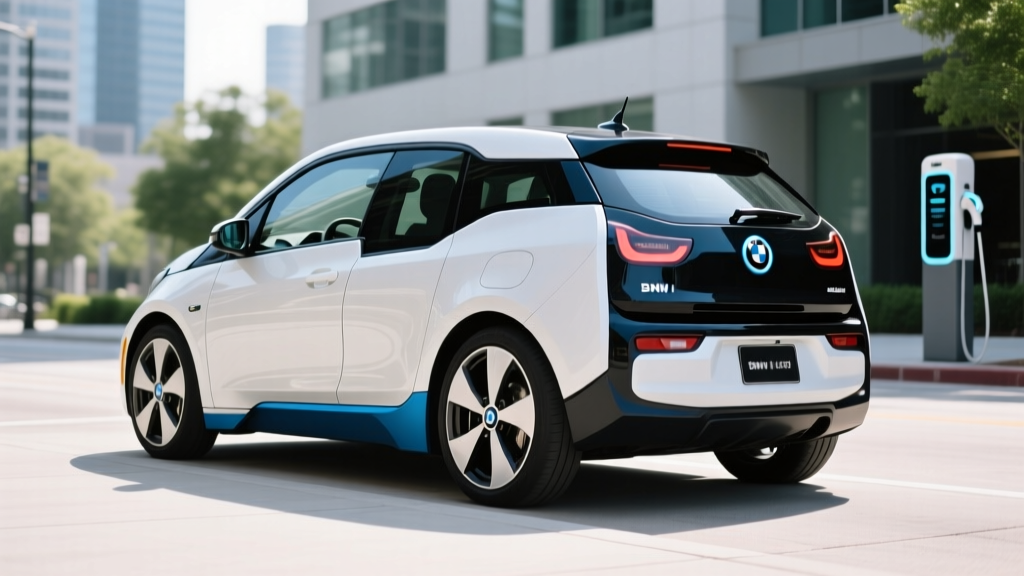
The BMW i3 was never a conventional electric car, and that's precisely why it still commands attention on the used-EV market in 2026. With its carbon-fiber-reinforced plastic (CFRP) chassis, skinny low-rolling-resistance tires, and unmistakable silhouette, the i3 remains one of the most distinctive EVs ever sold in the United States. But with production ending after the 2021 model year, the question for today's shoppers is whether this pioneering city EV still holds up against modern competitors offering 250+ miles of range and 150 kW fast charging.
This guide covers everything a US-based buyer needs to know about the BMW i3 — from its real-world range and charging behavior to used-market pricing, tax-credit eligibility on the secondhand market, and how it stacks up against current compact EVs.
BMW i3 USA: Model History and Current Status
BMW sold the i3 in the United States from the 2014 through 2021 model years. The vehicle underwent one major battery upgrade during its lifecycle: the original 2014–2016 models shipped with a 22 kWh battery pack (approximately 18.8 kWh usable), which was replaced in 2017 by a 33 kWh pack (27.2 kWh usable). The final and most desirable iteration arrived for the 2019 model year with a 42.2 kWh battery pack (37.9 kWh usable) using Samsung SDI NMC (nickel-manganese-cobalt) cells.
BMW officially discontinued the i3 globally in July 2022, with the last US deliveries arriving as 2021 models. There is no successor wearing the i3 badge; BMW's electric strategy pivoted to the i4, iX, and the Neue Klasse platform. If you see a "new" i3 listed anywhere, it's leftover inventory at best — more likely, it's misinformation. Every i3 you can buy in 2026 is a used vehicle.
Range, Efficiency, and Real-World Driving
The EPA rated the 2019–2021 BMW i3 (42.2 kWh pack, BEV-only) at 153 miles of combined range. The earlier 33 kWh version (2017–2018) earned a 114-mile EPA rating, and the original 22 kWh version (2014–2016) managed just 81 miles. For any serious used-EV purchase, the 120 Ah (42.2 kWh) model is the one to target.
EPA estimate: 153 miles (combined)
Real-world highway (70 mph, moderate weather): ~120–135 miles
Real-world city (stop-and-go, mild temps): ~145–160 miles
Cold-weather (below 32°F, heater on): ~90–115 miles
The i3's tall, narrow body creates more aerodynamic drag at highway speeds than its EPA city testing suggests. In our experience and consistent with owner reports on forums like SpeakEV and InsideEVs, expect a 15–20% range reduction at sustained 70+ mph highway driving. Winter cold hits harder: the i3 lacks a heat pump (it uses resistive cabin heating), which can slash range by 30–40% in sub-freezing conditions. Preconditioning while plugged in is essential for preserving range in winter.
Efficiency is where the i3 genuinely shines. The EPA rates it at 113 MPGe combined, which translates to roughly 30 kWh per 100 miles — competitive even with 2026-era compact EVs. The lightweight CFRP structure (curb weight around 2,800 lbs for the BEV) is the main reason. For context, the 2026 Chevrolet Bolt EV rates at 120 MPGe combined, and the Hyundai Kona Electric at 120 MPGe. The i3's efficiency is excellent; its short range is purely a function of its small battery.
| Spec | Value |
|---|---|
| EPA Range | 153 miles (combined) |
| Battery (Gross / Usable) | 42.2 kWh / 37.9 kWh |
| Battery Chemistry | NMC (Samsung SDI) |
| Efficiency | 113 MPGe / ~30 kWh/100 mi |
| Motor / Drivetrain | 170 hp / 184 lb-ft, RWD (single motor) |
| 0–60 mph | 6.9 seconds |
| Max DC Fast Charge | 50 kW (CCS1) |
| 10–80% DC Charge Time | ~45 minutes |
| Level 2 AC Charge Rate | 7.4 kW (~25 mi/hr) |
| Cargo Volume | 15.1 cu ft (rear seats up) |
| Battery Warranty (original) | 8 years / 80,000 miles |
| Original Base MSRP (2021) | $44,450 |
Charging Speed: DC Fast and Level 2 at Home
Charging is the i3's most significant weakness by 2026 standards. The car's CCS1 DC fast-charging system peaks at just 50 kW, and because the battery is small, the charge curve tapers aggressively. BMW quotes approximately 45 minutes from 10% to 80% on a 50 kW DC charger. On newer 150 kW or 350 kW stations (Electrify America, EVgo), the i3 will still only pull 50 kW maximum — the car's onboard charge controller is the bottleneck, not the station.
For Level 2 home charging, the i3's onboard charger accepts up to 7.4 kW on a 240V circuit (32 amps). This adds roughly 25 miles of range per hour of charging. A full charge from empty to 100% on Level 2 takes about 5–6 hours. Because the battery is small, overnight home charging easily replenishes a full day's driving — which is exactly how this car was designed to be used.
| Charging Level | Power (kW) | Miles Added per Hour | Full Charge Time |
|---|---|---|---|
| Level 1 (120V, 12A) | ~1.4 kW | ~4–5 mi/hr | ~26–30 hours |
| Level 2 (240V, 32A) | 7.4 kW | ~25 mi/hr | ~5–6 hours |
| DC Fast (CCS1, 50 kW peak) | 50 kW (peak) | ~150 mi/hr (peak) | ~45 min (10–80%) |
Important note on kW vs kWh: Kilowatts (kW) measure charging power — the rate at which energy flows into the battery. Kilowatt-hours (kWh) measure battery capacity — the total energy stored. The i3's 50 kW charge rate fills its 37.9 kWh usable battery relatively quickly in absolute terms, but 50 kW is slow compared to modern EVs pulling 150–250 kW.
Performance, Driving Dynamics, and Practicality
The i3's electric motor produces 170 horsepower and 184 lb-ft of torque, sending power to the rear wheels through a single-speed transmission. The 0–60 mph time of 6.9 seconds feels brisk in city driving thanks to instant torque delivery. The i3's remarkably tight 32.3-foot turning circle and featherweight steering make it arguably the best urban EV ever built for navigating tight streets and parking garages.
The CFRP (carbon-fiber-reinforced plastic) passenger cell, which BMW calls the "Life Module," keeps weight down to roughly 2,800 pounds — about 1,000 pounds lighter than a Tesla Model 3. This lightweight construction is why the i3 achieves such strong efficiency despite its boxy aerodynamics.
Interior Space and Cargo
Practicality is a mixed story. The i3 seats four passengers (no middle rear seat). Front legroom is generous at 40.5 inches, but rear legroom is tight at 31.9 inches — adequate for children or short trips but cramped for adults on longer rides. The rear-hinged "coach doors" for back-seat access require the front door to be open first, which is awkward in tight parking spots.
Cargo volume behind the rear seats is 15.1 cubic feet, comparable to a small hatchback. Fold the rear seats (they split 50/50), and you get approximately 39.2 cubic feet — enough for a week's groceries or two carry-on suitcases, but not furniture. There is no frunk (front trunk); the space under the hood houses electronics and the windshield-washer reservoir.
Technology and Driver Assistance
The 2019–2021 i3 came with BMW's iDrive 6 infotainment system on a 10.25-inch display, including wireless Apple CarPlay (added for 2019) and navigation with EV-specific route planning. The digital instrument cluster shows range, efficiency, and a power-consumption gauge. A Range Extender (REx) variant was available through 2018 in the US — a tiny 647cc two-cylinder BMW Motorrad gasoline engine that acted as a generator to maintain battery charge, adding roughly 80 miles of extended range. The REx was discontinued for the 2019 model year in America.
Driver-assistance features are basic by 2026 standards: the i3 offers forward collision warning with automatic emergency braking and lane-departure warning on higher trims. It does not have adaptive cruise control, lane-centering assist, or any SAE Level 2 driver-assist system like Tesla Autopilot or GM Super Cruise. The i3 is strictly an SAE Level 1 vehicle — you are driving it at all times.
Used Pricing and Federal Tax Credit Eligibility
As of early 2026, used BMW i3 pricing in the US market varies significantly by model year, mileage, and battery size. Here's what to expect from dealer listings and private-party sales:
| Model Year | Battery | EPA Range | Typical Used Price |
|---|---|---|---|
| 2014–2016 | 22 kWh | 81 mi | $8,000–$12,000 |
| 2017–2018 | 33 kWh | 114 mi | $12,000–$17,000 |
| 2019–2021 | 42.2 kWh | 153 mi | $17,000–$25,000 |
Used EV Tax Credit (§25E)
While the §30D new-vehicle credit is irrelevant for a discontinued model, the Used Clean Vehicle Credit under IRS §25E can provide up to $4,000 (or 30% of the sale price, whichever is less) when buying a qualifying used i3 from a licensed dealer. Per IRS guidelines, eligibility requires:
- Sale price: $25,000 or less (this is a hard cap — many 2019–2021 i3s fall right at or above this threshold, so negotiate accordingly)
- Buyer income caps: Modified AGI of $75,000 (single), $112,500 (head of household), or $150,000 (joint)
- Vehicle age: Must be at least two model years old (all i3s qualify)
- Dealer sale required: Private-party sales do not qualify
- First used sale: The credit applies only to the first qualified sale since August 16, 2022 — verify with the dealer that this specific VIN hasn't already been claimed
For a 2019 i3 purchased at $22,000 from a dealer, the credit would be $4,000 (30% of $22,000 = $6,600, but capped at $4,000). That brings the effective cost to $18,000 — a compelling price for a carbon-fiber electric car with 153 miles of range. Always confirm eligibility with a tax professional and verify the vehicle's credit history through the IRS energy credit portal.
Battery Health, Degradation, and Warranty
The i3's Samsung SDI NMC battery has aged better than many early critics predicted. Owner-reported data from BMW i3 forums and fueleconomy.gov suggest that 2019–2021 models (120 Ah cells) typically retain 85–92% of original capacity after 5–6 years and 50,000–70,000 miles. This translates to a real-world range of roughly 130–140 miles for a well-maintained example.
BMW's original battery warranty covers 8 years or 80,000 miles against defects and capacity loss below 70% of original. For a 2019 model, this warranty extends through the 2027 model year — meaning some 2019 i3s may still have active battery warranty coverage in 2026. For 2017–2018 models, the 8-year window has expired or is expiring imminently.
If a battery replacement is needed out of warranty, expect a cost of $10,000–$16,000 for a refurbished or new pack through BMW — though third-party EV battery repair shops are increasingly offering cell-level module replacements for $3,000–$6,000. Before buying any used i3, request a battery health report (State of Health, or SoH) from a BMW dealer or use an OBD-II app like BimmerCode to read the battery's actual capacity.
How the BMW i3 Compares to 2026 Alternatives
The i3 occupies a unique niche, but used-EV shoppers will cross-shop it with several current and recent models. Here's how it stacks up on the metrics that matter:
| Metric | BMW i3 (2019–21) | Chevy Bolt EV (2023) | Nissan LEAF SV Plus (2023) | Hyundai Kona Electric (2024) |
|---|---|---|---|---|
| EPA Range | 153 mi | 259 mi | 212 mi | 261 mi |
| Battery | 42.2 kWh (NMC) | 65 kWh (NMC) | 62 kWh (NMC) | 64.8 kWh (NMC) |
| DC Fast Charge | 50 kW | 55 kW | 100 kW | 100+ kW |
| 0–60 mph | 6.9 sec | 6.5 sec | 6.8 sec | 7.2 sec |
| Cargo (rear up) | 15.1 cu ft | 16.6 cu ft | 23.6 cu ft | 19.2 cu ft |
| Typical Used Price | $17K–$25K | $20K–$28K | $18K–$26K | $24K–$32K |
The Bolt EV's 259-mile range and the LEAF's more practical hatchback cargo area are obvious advantages. But neither matches the i3's build quality, lightweight engineering, or urban maneuverability. The LEAF's CHAdeMO connector is also a liability as the US market has standardized on CCS and NACS — the i3's CCS1 port is more future-proof, though adapters will be needed at NACS-only Tesla Superchargers.
- Exceptional efficiency (113 MPGe, ~30 kWh/100 mi)
- Ultra-lightweight CFRP construction — unique in the EV market
- Tight turning circle (32.3 ft) — best-in-class for city driving
- Premium interior materials and build quality
- Strong battery longevity data on 120 Ah models
- Potential $4,000 used-EV tax credit (§25E)
- Distinctive design that still turns heads
- Only 153 miles EPA range (42.2 kWh model)
- 50 kW DC fast charging is painfully slow by 2026 standards
- Cramped rear seats (31.9" legroom) and awkward coach doors
- Small cargo area (15.1 cu ft) for a hatchback
- No heat pump — severe cold-weather range loss
- Discontinued: no new-vehicle warranty, limited dealer support
- No advanced driver-assist features (ADAS Level 1 only)
- CCS1 port requires adapter for Tesla NACS Superchargers
Who Should Buy a BMW i3 in 2026?
The BMW i3 is not a one-car solution for most households. It excels in a very specific role and struggles outside it.
Choose the BMW i3 if:
- You need a dedicated city commuter car with a sub-40-mile daily round trip
- You have reliable home Level 2 charging and rarely road-trip
- You value premium build quality and unique design over maximum range
- You want an efficient, lightweight EV with a small physical footprint
- You're buying a second or third household car, not your only vehicle
- You need 200+ miles of range for highway commuting or road trips
- You regularly carry adult passengers in the rear seats
- You live in a cold climate and need reliable winter range without a heat pump
- You depend on public DC fast charging (50 kW means long waits)
- You want modern ADAS features like adaptive cruise or lane-centering
Frequently Asked Questions
What is the real-world range of the BMW i3?
The 2019–2021 BMW i3 (42.2 kWh battery) has an EPA-estimated 153 miles of combined range. In real-world driving, expect about 120–135 miles at highway speeds, 145–160 miles in city driving, and as little as 90–115 miles in freezing weather due to resistive cabin heating and the absence of a heat pump.
How fast does the BMW i3 charge?
On a 50 kW DC fast charger, the i3 charges from 10% to 80% in approximately 45 minutes. At home on a Level 2 (240V, 7.4 kW) charger, it adds about 25 miles of range per hour, with a full charge taking 5–6 hours. The 50 kW DC peak is the car's hardware limit — connecting to a 150 kW or 350 kW station will not speed things up.
Does the BMW i3 qualify for any federal tax credit?
The i3 does not qualify for the §30D new-vehicle credit (production ended in 2021). However, it may qualify for the §25E Used Clean Vehicle Credit of up to $4,000 if purchased from a dealer for $25,000 or less, and the buyer meets income caps ($75K single / $150K joint). Verify eligibility per IRS §25E rules and consult a tax professional.
Is the BMW i3 worth buying versus a Chevy Bolt or Nissan LEAF?
It depends on your priorities. The Bolt EV offers 259 miles of EPA range and more cargo space for a similar used price. The LEAF SV Plus gives 212 miles and a larger interior. The i3 wins on efficiency, build quality, urban agility, and uniqueness — but loses on range, charging speed, and practicality. If your commute is short and you charge at home, the i3 is a compelling premium city car. If you need versatility, the Bolt or LEAF is the smarter buy.
How long will the BMW i3 battery last?
Data from owner communities indicates the 120 Ah (42.2 kWh) Samsung SDI NMC battery retains 85–92% capacity after 50,000–70,000 miles. BMW's original warranty covers 8 years / 80,000 miles against capacity loss below 70%. A 2019 i3 may still carry active battery warranty through 2027. Out-of-warranty replacement costs $10,000–$16,000 through BMW, with third-party module repairs available for $3,000–$6,000.
Can I charge the BMW i3 at Tesla Superchargers?
The i3 uses a CCS1 charge port. Tesla's Supercharger network is transitioning to NACS connectors, and Tesla has opened some stations to non-Tesla EVs via the built-in Magic Dock (CCS1 compatible) or through adapters. Check the Tesla app for station compatibility before relying on Superchargers. For everyday charging, Electrify America, EVgo, and ChargePoint stations with CCS1 connectors work natively.
Sources: EPA range and efficiency data from fueleconomy.gov; used-EV tax credit rules from irs.gov; BMW i3 specifications from BMW USA press archives.