Quick Verdict: The Electric Wagon BMW Fans Have Waited For
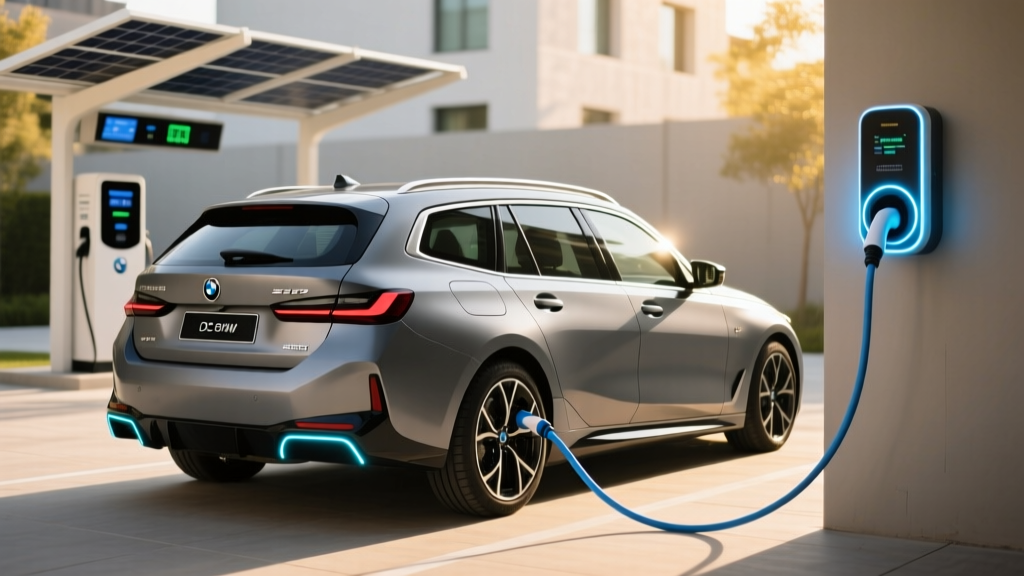
The 2026 BMW i3 Touring is the brand's first dedicated electric wagon built on the Neue Klasse platform, slotting below the i5 Touring in size and price. It targets buyers who want the cargo versatility of a long-roof body style without stepping up to a full-size luxury EV. With an EPA-estimated 246 miles of range, a rear-biased single-motor layout, and BMW's latest iDrive X infotainment, the i3 Touring makes a credible case as a daily-driver EV that can also handle weekend road trips—provided you plan your charging stops.
The i3 Touring faces direct competition from the Audi A4 Avant e-tron and the Volvo V60 Recharge (PHEV), while its own sibling, the i5 Touring, looms as a pricier but more capable alternative. Here's exactly what the numbers look like and whether this electric wagon earns a spot in your driveway.
Range, Battery, and Efficiency
The 2026 BMW i3 Touring is equipped with an 80.5 kWh (usable) lithium-ion battery pack using BMW's sixth-generation cylindrical cells. These are nickel-manganese-cobalt (NMC) chemistry, chosen for their higher energy density compared to LFP—a necessary trade-off to keep the wagon's weight and floor height in check.
EPA Estimated Range: 246 miles (RWD eDrive35 trim)
Real-World Highway (70 mph, 68°F): Expect approximately 215–230 miles. The wagon's taller profile and roof rails increase drag at sustained highway speeds.
Cold Weather (32°F, mixed driving): Plan for 175–195 miles. The i3 Touring includes a standard heat pump, which mitigates but does not eliminate winter range loss. Preconditioning while plugged in is essential to preserve range in freezing conditions.
| Spec | eDrive35 (RWD) | xDrive40 (AWD) |
|---|---|---|
| EPA Range | 246 mi | 232 mi |
| Battery (usable) | 80.5 kWh, NMC | 80.5 kWh, NMC |
| Horsepower | 300 hp | 402 hp |
| 0–60 mph | 5.8 sec | 4.7 sec |
| Drivetrain | Rear-wheel drive | Dual-motor AWD |
| Efficiency | 120 MPGe / 28 kWh/100mi | 112 MPGe / 30 kWh/100mi |
| Base MSRP | $49,900 | $56,400 |
Efficiency lands at 120 MPGe combined (28 kWh per 100 miles) for the RWD model, according to fueleconomy.gov. That's competitive with the segment, though the lighter Tesla Model Y Long Range edges ahead at roughly 122 MPGe. The AWD xDrive40 drops to 112 MPGe due to the second motor's parasitic losses and added weight.
Charging Speed: DC Fast, Level 2, and the Curve Reality
Charging is where Neue Klasse architecture shows its teeth. The i3 Touring supports a peak DC fast-charge rate of 175 kW via its CCS1 port (NACS adapter available as a $0-cost option at order, giving access to Tesla Superchargers). BMW quotes a 10–80% charge time of approximately 24 minutes under ideal conditions.
| Charging Level | Max Power | Speed | Notes |
|---|---|---|---|
| Level 1 (120V) | 1.4 kW | ~4 mi/hr | Emergency/trickle only |
| Level 2 (240V, 48A) | 11.5 kW | ~36 mi/hr | Full charge in ~7.5 hours |
| DC Fast Charge | 175 kW peak | 10–80% in ~24 min | Sustains ~150 kW to 50%, tapers above 60% |
Charging curve reality check: The 175 kW peak is achieved between roughly 15% and 45% state of charge. Above 60% SoC, the rate drops to approximately 100 kW, and above 80% it falls further to around 50 kW. This is standard behavior for NMC packs with active thermal management, but it means a 10–90% charge will take closer to 38 minutes, not 24. If you're road-tripping, plan your stops around the 10–80% window for maximum time efficiency.
At home on a Level 2 BMW Wallbox (or any 48-amp, 240V hardwired charger), the onboard 11.5 kW charger replenishes the pack from empty in about 7.5 hours—enough for a full overnight charge on a standard overnight schedule. A 200-amp electrical panel is typically sufficient, but older homes may require a panel upgrade; consult a licensed electrician for a site assessment.
Performance and Driving Dynamics
The eDrive35's single rear motor produces 300 hp and 295 lb-ft of torque, delivering a 5.8-second 0–60 mph time. That's brisk for a wagon and puts it ahead of the base Audi A4 Avant e-tron. The xDrive40's dual-motor setup bumps output to 402 hp and drops the sprint to 4.7 seconds—sports-sedan territory in a cargo-friendly body.
BMW's rear-biased chassis tuning carries over from its ICE heritage. The i3 Touring's low center of gravity (battery pack mounted under the floor) and near 50/50 weight distribution give it a planted feel through corners that most electric crossovers can't match. Adaptive M Suspension is standard on xDrive40 and optional on eDrive35, with a comfort mode that soaks up rough pavement convincingly.
Regenerative braking offers three levels selectable via paddle shifters, plus an adaptive mode that uses radar and navigation data to modulate regen automatically. One-pedal driving is available but not as aggressive as in some competitors—you'll still reach for the brake pedal in stop-and-go traffic.
Interior, Cargo, and Technology
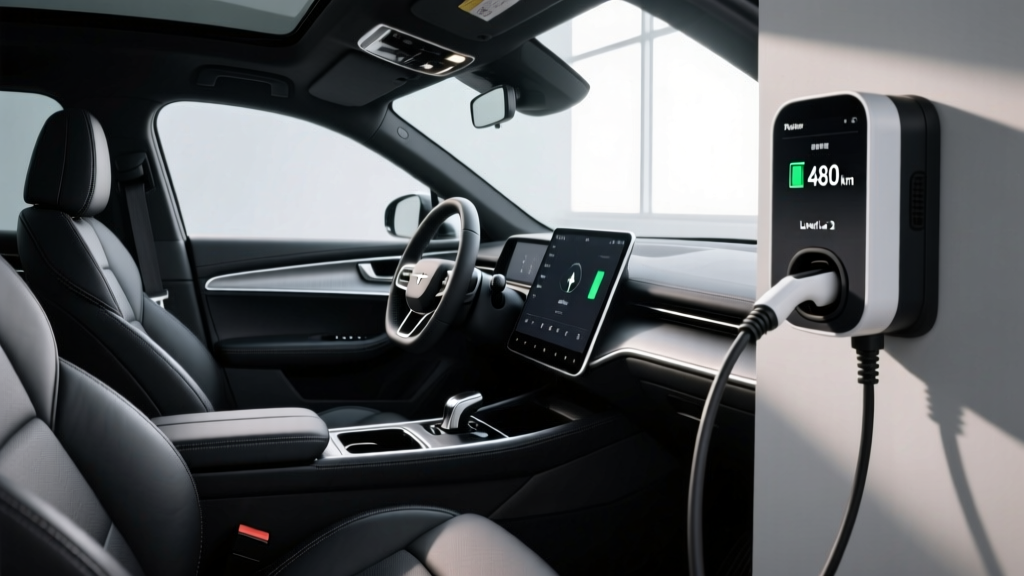
The i3 Touring's cabin uses BMW's Panoramic Vision display—a full-width head-up projection that replaces a traditional instrument cluster—alongside a 14.9-inch central touchscreen running iDrive X. Wireless Apple CarPlay and Android Auto are standard, as is a 5G-connected navigation system with real-time charging-station routing.
Cargo and passenger dimensions:
- Cargo volume (rear seats up): 21.5 cu ft
- Cargo volume (rear seats folded): 57.0 cu ft
- Rear legroom: 37.2 inches
- Front legroom: 41.3 inches
- Frunk: 1.8 cu ft (cable storage only — the Neue Klasse platform does not offer a large front trunk)
The 57 cu ft maximum cargo area is competitive with the Audi A4 Avant e-tron (~55 cu ft) but trails the Tesla Model Y (76 cu ft with seats folded). If maximum cargo capacity is your priority, the Model Y still wins on volume, though the i3 Touring counters with superior build quality, a quieter cabin, and a more traditional wagon silhouette.
Driver assistance: The i3 Touring comes standard with BMW Driving Assistant Professional, which includes adaptive cruise control with stop-and-go, lane-keeping assist, automated lane changes, and evasive steering assist. This is an SAE Level 2 system—the driver must remain engaged with hands on or near the wheel at all times. BMW's Highway Assistant (hands-off driving up to 80 mph on divided highways, with eye monitoring) is available as part of the Premium Package.
BMW Driving Assistant Professional and Highway Assistant are SAE Level 2 driver-assist systems. They are NOT autonomous or self-driving. The driver must remain attentive, monitor the road, and be prepared to take over immediately. Hands-off Highway Assistant requires continuous eye tracking and will disengage if the driver looks away.
Pricing, Tax Credits, and Ownership Costs
The 2026 BMW i3 Touring starts at $49,900 for the eDrive35 (RWD) and $56,400 for the xDrive40 (AWD), before destination charges of $1,175. A well-equipped eDrive35 with the Premium Package, metallic paint, and 20-inch wheels lands around $57,000–$59,000 as-tested.
| Trim | Base MSRP | §30D Credit (est.) | Effective Price |
|---|---|---|---|
| eDrive35 (RWD) | $49,900 | Up to $7,500* | From ~$42,400 |
| xDrive40 (AWD) | $56,400 | Up to $7,500* | From ~$48,900 |
Federal tax credit eligibility (§30D): The i3 Touring qualifies for up to $7,500 under the IRS clean vehicle credit, subject to the following requirements:
- MSRP cap: Vans/wagons classified as SUVs have an $80,000 cap. Confirm the i3 Touring's classification with your dealer — if classified as a passenger car, the cap is $55,000, which would exclude the xDrive40.
- Buyer income limits (2026 tax year): $150,000 single / $225,000 head of household / $300,000 joint filers (modified AGI).
- Battery sourcing: The §30D credit is split into two halves — $3,750 for critical-minerals sourcing and $3,750 for battery-component assembly. BMW's sixth-gen cells are manufactured in partnership with CATL and Samsung SDI; verify current-year sourcing compliance on fueleconomy.gov before purchasing.
- Point-of-sale transfer: The credit can be applied as a down-payment reduction at the dealership, reducing your out-of-pocket cost at purchase rather than waiting for a tax refund.
Consult a tax professional to confirm your personal eligibility. Credit rules are subject to legislative changes.
Five-year ownership outlook: With home charging at the national average of $0.16/kWh, the eDrive35 costs approximately $670 per year to fuel for 12,000 miles of driving. A comparable gas-powered BMW 3 Series wagon at 28 MPG and $3.50/gal would cost roughly $1,500 per year—a fuel savings of about $830 annually. Insurance premiums for the i3 Touring run approximately 8–12% higher than the gas 3 Series, based on early 2026 quotes. BMW's scheduled maintenance program covers the first 3 years/36,000 miles.
Warranty and Battery Longevity
BMW provides the following coverage for the 2026 i3 Touring:
- Limited vehicle warranty: 4 years / 50,000 miles
- Battery and powertrain warranty: 8 years / 100,000 miles (covers defects and capacity loss below 70% of original capacity)
- Corrosion warranty: 12 years, unlimited miles
- Roadside assistance: 4 years, unlimited miles
The 70% capacity retention threshold is standard across the German luxury brands. Based on BMW's fifth-generation battery data from the i4 and iX, degradation has averaged approximately 5–7% over the first 100,000 miles in temperate climates—well within warranty margins. The sixth-gen cylindrical cells are expected to perform similarly or better, though long-term fleet data won't be available until 2028–2029.
Pros and Cons
- True wagon practicality with 57 cu ft cargo volume and a premium cabin
- 175 kW DC charging with 10–80% in ~24 minutes
- RWD dynamics and near 50/50 weight distribution
- Heat pump standard — better winter range preservation
- Eligible for up to $7,500 federal tax credit (verify sourcing)
- Highway Assistant hands-off driving (Level 2, eyes-monitored)
- 246-mile EPA range is adequate, not class-leading (Tesla Model Y LR: 320 mi)
- Small 1.8 cu ft frunk — no meaningful front storage
- xDrive40 may exceed $55K car MSRP cap for §30D credit (classification pending)
- Cargo volume trails Tesla Model Y by nearly 20 cu ft
- 175 kW peak charge rate trails Hyundai/Kia's 800V architecture (~240 kW)
- No spare tire — tire repair kit only
Who Should Buy the BMW i3 Touring?
Choose the i3 Touring if: You want a premium European electric wagon with refined driving dynamics, solid (if not spectacular) range, and the cargo versatility of a long-roof body. It's ideal for two-adult households who commute 30–60 miles daily, take 2–3 road trips per year, and value cabin materials and ride quality over maximum cargo volume.
Look elsewhere if: You need 300+ miles of range for frequent long-distance driving (consider the Tesla Model Y Long Range or the BMW i5 Touring), you regularly haul bulky cargo that demands 70+ cu ft of space, or you want the fastest possible DC charging (Hyundai Ioniq 5 N and Kia EV6 GT charge at up to 240 kW on 800V architecture).
Frequently Asked Questions
What is the real-world range of the 2026 BMW i3 Touring?
The EPA rates the eDrive35 at 246 miles. In mixed real-world driving at moderate temperatures, expect 220–235 miles. Sustained highway driving at 75+ mph drops that to roughly 215–230 miles, and cold weather (below freezing) can reduce range to 175–195 miles even with the standard heat pump.
How fast does the i3 Touring charge?
On a DC fast charger, it peaks at 175 kW and charges from 10–80% in approximately 24 minutes under ideal conditions. Above 80%, charging slows significantly; a 10–90% session takes roughly 38 minutes. At home on a Level 2 charger (11.5 kW / 48 amps), a full charge takes about 7.5 hours.
Does the BMW i3 Touring qualify for the $7,500 federal EV tax credit?
It can qualify for up to $7,500 under IRS §30D, but eligibility depends on your income (single filers under $150K AGI, joint under $300K), the vehicle's MSRP classification (car vs. SUV cap), and battery-component/critical-mineral sourcing compliance. Always verify on fueleconomy.gov and with a tax professional before purchasing.
Is the i3 Touring worth buying over the Tesla Model Y?
It depends on your priorities. The Model Y Long Range offers significantly more range (320 mi EPA), more cargo space (76 cu ft), and access to the Supercharger network natively. The i3 Touring counters with superior interior quality, a quieter ride, traditional wagon styling, and BMW's dealer/service network. If range and cargo volume are paramount, the Model Y wins. If build quality and driving refinement matter more, the i3 Touring is the stronger choice.
Does the i3 Touring have a NACS (Tesla) charging port?
The standard port is CCS1. BMW offers a NACS adapter at no additional cost at the time of order, enabling access to Tesla Supercharger V3 and V4 stalls. If you plan to use Superchargers frequently, request the adapter when configuring your vehicle.
What is the battery warranty on the 2026 i3 Touring?
BMW covers the high-voltage battery and electric powertrain for 8 years or 100,000 miles, whichever comes first. The warranty covers defects and capacity degradation below 70% of the battery's original usable capacity.