Quick Verdict: The Urban EV That Started It All
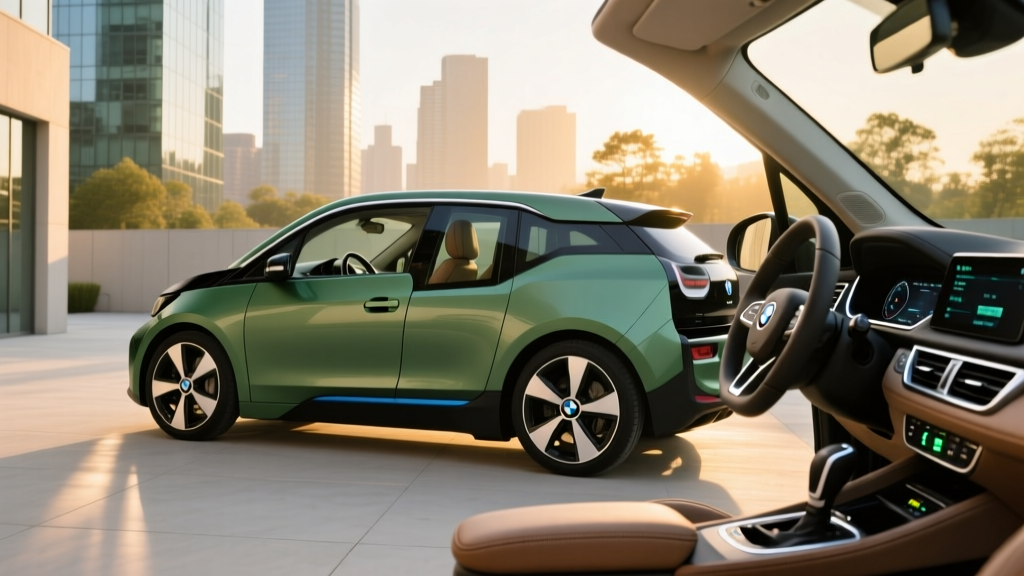
The BMW i3 remains one of the most distinctive electric vehicles ever built — a carbon-fiber-reinforced plastic (CFRP) city car with a radical design, tight turning circle, and genuine urban efficiency. While BMW ended i3 production in July 2022, the model continues to command attention in the used EV market and serves as a benchmark for lightweight electric design. This guide compiles every essential BMW i3 statistic — from EPA range and battery degradation data to charging speeds, ownership costs, and real-world efficiency — so buyers evaluating a pre-owned i3 can make a data-driven decision.
For the 2022 final model year (the newest available), the i3 BEV delivers 153 miles of EPA-estimated range from a 42.2 kWh battery pack, paired with a 170-hp rear-mounted electric motor. Below, we break down the numbers that matter.
BMW i3 Core Specifications at a Glance
| Specification | Value |
|---|---|
| EPA Range | 153 miles |
| Battery Capacity (Usable) | 37.9 kWh (42.2 kWh gross) |
| Battery Chemistry | NMC (Nickel Manganese Cobalt) — Samsung SDI cells |
| Motor Output | 170 hp / 184 lb-ft torque |
| Drivetrain | Rear-wheel drive (single motor) |
| 0-60 mph | 6.9 seconds |
| Top Speed | 93 mph (electronically limited) |
| EPA Efficiency | 113 MPGe combined (30 kWh/100 mi) |
| DC Fast Charge (Peak) | 50 kW (CCS Combo 2) |
| Level 2 Charge Rate | 7.4 kW (240V, 32A) |
| 10-80% DC Fast Charge | ~36 minutes |
| Cargo Volume (rear seats up) | 15.1 cu ft |
| Cargo Volume (rear seats folded) | 36.0 cu ft |
| Curb Weight | 2,935 lbs |
| Battery Warranty (original) | 8 years / 100,000 miles (70% capacity retention) |
| Original MSRP (2022 base) | $44,450 |
Range Statistics: EPA vs. Real-World Driving
EPA Estimated Range: 153 miles (2022 i3 BEV, 19-inch wheels)
Real-World Expectation: Plan for 120-135 miles in mixed highway/city driving at 65-75 mph. In cold weather (below 32°F), expect a 20-30% reduction, dropping usable range to approximately 95-115 miles without preconditioning.
The i3's EPA rating of 153 miles applies specifically to the 2019-2022 models equipped with the 42.2 kWh (120 Ah) battery pack. Earlier generations had significantly less range:
- 2014-2016 (60 Ah / 22 kWh usable): 81 miles EPA
- 2017-2018 (94 Ah / 27.2 kWh usable): 114 miles EPA
- 2019-2022 (120 Ah / 37.9 kWh usable): 153 miles EPA
The i3's lightweight construction (under 3,000 lbs curb weight) helps it achieve strong city efficiency — often exceeding the EPA rating in stop-and-go traffic thanks to aggressive regenerative braking. However, the tall, narrow tires (155/70R19) and boxy aerodynamic profile hurt highway efficiency. On a 70-mph cruise, expect consumption closer to 33-36 kWh/100 mi, which reduces effective range to roughly 120 miles.
Cold weather is the i3's most significant range limitation. Without a heat pump (BMW used resistive PTC heating), cabin warmth draws heavily from the battery. Preconditioning while plugged in is essential in winter climates. According to fueleconomy.gov, the i3 achieves 113 MPGe combined, 121 MPGe city, and 105 MPGe highway.
Charging Speed: DC Fast, Level 2, and Level 1
| Charging Level | Power / Voltage | Rate (Miles Added/Hour) | Notes |
|---|---|---|---|
| Level 1 (120V) | ~1.4 kW | ~4-5 miles/hour | Emergency/trickle only; ~27+ hours for full charge |
| Level 2 (240V, 32A) | 7.4 kW | ~25 miles/hour | Full charge in ~5.5 hours; recommended home setup |
| DC Fast (CCS) | 50 kW peak | ~150+ miles/hour (at peak) | 10-80% in ~36 min; tapers significantly above 80% |
The i3's 50 kW DC fast-charging cap is its most debated statistic. While competitors in the 2022 model year (Chevrolet Bolt EUV at 55 kW, Nissan Leaf Plus at 100 kW) offered comparable or faster rates, the i3's small battery means 50 kW represents a roughly 1.3C charge rate — reasonably quick for the pack size. The charge curve holds near 50 kW from roughly 10% to 55% state of charge, then tapers to 35 kW through 70%, and drops further above 80%.
For home charging, a 7.4 kW Level 2 station (such as a ChargePoint Home Flex or Emporia Vue) replenishes the i3's battery from empty to full in approximately 5.5 hours. The i3 uses a CCS Combo 2 connector in North America (Type 1 CCS plug). Earlier models (2014-2018) may have CHAdeMO or SAE Combo adapters depending on the market and option package — always verify the specific vehicle's DC port configuration before purchasing.
The i3's onboard charger is limited to single-phase 7.4 kW. Unlike some European-market EVs, it cannot accept three-phase AC power in the US. This means upgrading to a 48A or 80A home circuit provides no charging benefit — a 32A / 240V circuit is the practical maximum.
Performance and Drivetrain Numbers
The i3's electric powertrain produces 170 horsepower and 184 lb-ft of torque from a single rear-mounted synchronous motor. BMW quotes a 0-60 mph time of 6.9 seconds for the pure BEV variant, though independent testing by outlets like Car and Driver has recorded times as low as 6.5 seconds thanks to the instant torque delivery and low curb weight.
The i3s (sport variant, also discontinued after 2022) bumped output to 184 hp and 199 lb-ft, shaving the 0-60 time to approximately 6.2 seconds. The i3s also received a wider track, sport suspension tuning, and 20-inch wheels, which reduced EPA range to 141 miles.
Both variants are rear-wheel drive only — BMW never offered an AWD or dual-motor i3. The turning circle of 32.8 feet is exceptionally tight, making the i3 one of the most maneuverable EVs for urban parking. Top speed is electronically limited to 93 mph (BEV) and 99 mph (i3s).
Battery Technology and Degradation Data
The i3's battery pack uses Samsung SDI NMC (nickel manganese cobalt) prismatic cells arranged in 8 modules (for the 120 Ah pack). Total gross capacity is 42.2 kWh, with approximately 37.9 kWh usable — BMW reserves a ~4.3 kWh buffer (roughly 10%) to protect longevity.
Real-world degradation data from high-mileage i3 owners and fleet studies shows:
- Year 1-2: 2-4% capacity loss (typical for NMC chemistry)
- Year 3-5: Degradation slows to ~1-2% per year
- Year 8 (projected): Most packs retain 80-88% of original capacity
- Warranty threshold: BMW guarantees 70% capacity retention for 8 years / 100,000 miles
The i3's battery thermal management uses passive air cooling rather than active liquid cooling. This is adequate for the pack's modest size and 50 kW charge rate, but it means sustained high-speed driving in hot climates or repeated DC fast-charging sessions can cause thermal throttling. Battery replacement cost, should it be needed out of warranty, ranges from $12,000 to $16,000 for the complete pack through BMW, though individual module replacement (approximately $1,500-$2,500 per module) is possible at specialized shops.
The i3 also includes a Range Extender (REx) variant with a 647cc two-cylinder gasoline engine that acts as a generator. The REx was discontinued after the 2021 model year in the US. REx models carry a smaller 33.2 kWh (94 Ah) or 42.2 kWh (120 Ah) battery paired with a 2.4-gallon fuel tank, adding roughly 70-80 miles of gasoline-generated range.
Pricing, Tax Credits, and Ownership Cost
Since the BMW i3 is no longer in production, pricing applies to the used and certified pre-owned market. Original MSRP figures for reference:
| Model Year / Trim | Original MSRP | Notes |
|---|---|---|
| 2022 i3 BEV (base) | $44,450 | Included destination; Mega World interior |
| 2022 i3s BEV | $48,850 | Sport suspension, 184 hp, 20-inch wheels |
| 2022 i3 BEV w/ Tera World | ~$48,000-$50,000 | Premium leather, LED lights, tech package |
Used market pricing (2026): A 2022 BMW i3 BEV with 20,000-40,000 miles typically lists between $22,000 and $30,000 depending on condition, trim, and region. Earlier 94 Ah models (2017-2018) can be found for $14,000-$18,000, while 60 Ah models (2014-2016) range from $8,000-$12,000.
Federal tax credit: The i3 qualified for the full $7,500 federal EV tax credit (IRS §30D) when purchased new. For used EV purchases in 2026, the Used Clean Vehicle Credit offers up to $4,000 or 30% of the sale price (whichever is lower), subject to these requirements:
- Vehicle sale price must not exceed $25,000
- Buyer income caps: $75,000 single / $112,500 head of household / $150,000 joint
- Vehicle must be at least 2 model years old
- Must purchase from a licensed dealer (private sales excluded)
- Credit is non-refundable unless transferred at point of sale
This means a 2022 i3 listed at $24,500 from a dealer could qualify a buyer for up to $4,000 off at point of sale, bringing the effective price to approximately $20,500. Buyers should verify eligibility through their tax professional, as rules may shift with legislative changes. Consult IRS Publication 5984 for current-year guidance.
Interior, Cargo, and Technology
The i3's interior is unlike any other BMW — and unlike most EVs. The cabin uses sustainable materials including eucalyptus wood trim, recycled plastic panels, and optional wool-cloth or olive-leaf-tanned leather upholstery. The suicide-style rear coach doors open opposite the front doors (there is no B-pillar on the passenger side), creating a wide opening but requiring the front door to open first for rear-seat access.
Interior dimensions (2022 model):
- Front headroom: 39.6 inches
- Front legroom: 40.5 inches
- Rear headroom: 37.8 inches
- Rear legroom: 31.9 inches (tight for adults over 5'10")
- Cargo behind rear seats: 15.1 cu ft
- Cargo with seats folded: 36.0 cu ft
Tech features (2022 model year):
- 10.25-inch iDrive 6.0 touchscreen with navigation
- Wireless Apple CarPlay (no Android Auto)
- Harman Kardon 360W premium audio (optional)
- Driving Assistant Plus: adaptive cruise control, lane-keeping assist, front collision warning with city braking
- Parking Assistant with rear-view camera
- Wireless phone charging pad (optional)
Notable omissions: No Android Auto support (even in the final model year), no over-the-air updates, no heat pump, no front trunk (frunk), limited rear-seat legroom, and no tow rating. The i3 was never designed for towing.
Pros and Cons: Honest Assessment
Pros
- Exceptional city efficiency (121 MPGe city) and tight 32.8-ft turning circle
- Lightweight CFRP construction — unique in the EV market
- Strong regenerative braking enables true one-pedal driving
- Premium interior materials with sustainable sourcing
- Distinctive design that stands out from crossover-heavy EV market
- Low used-EV pricing with potential $4,000 federal credit
- Reliable Samsung SDI NMC battery with proven degradation curve
Cons
- 153-mile EPA range limits highway and road-trip usability
- 50 kW DC fast-charging cap means longer stops on longer trips
- No active battery thermal management (air-cooled only)
- No Android Auto support
- Cramped rear seats; coach doors require front-door access
- No heat pump — significant winter range loss
- Discontinued: no new-vehicle availability, limited dealer support for specialized CFRP repairs
- Expensive replacement tires (narrow 155/70R19 size, limited brand options)
Who the BMW i3 Suits Best
Choose the BMW i3 if: You need a premium, efficient urban commuter with home charging access, your daily round-trip commute is under 80 miles, you value distinctive design and sustainable materials, and you want an affordable entry into a well-built EV with strong city manners.
Look elsewhere if: You regularly drive highway trips over 100 miles, need seating for four adults comfortably, require DC fast-charging above 100 kW for road trips, want the latest infotainment (Android Auto, OTA updates), or live in a climate with extended sub-freezing temperatures where the lack of a heat pump becomes a daily frustration.
Key competitors to cross-shop: 2022 Chevrolet Bolt EV (259 mi range, ~$18,000 used), 2022 Nissan Leaf Plus (226 mi range, ~$16,000 used), 2022 Hyundai Kona Electric (258 mi range, ~$20,000 used), and 2022 Mini Cooper SE (114 mi range but similar urban character, ~$22,000 used). The i3 trades range for build quality, materials, and driving dynamics that these competitors don't match — but range is a numbers game, and 153 miles is a hard ceiling.
Frequently Asked Questions
What is the real-world range of the BMW i3?
The 2019-2022 BMW i3 BEV carries a 153-mile EPA rating. In real-world mixed driving at moderate temperatures, expect 130-140 miles. Highway-only driving at 70 mph drops this to roughly 115-125 miles. In cold weather (below freezing), range can fall to 95-115 miles without preconditioning. Earlier 94 Ah models (2017-2018) deliver approximately 95-105 real-world miles; 60 Ah models (2014-2016) deliver approximately 65-75 real-world miles.
How fast does the BMW i3 charge?
On a DC fast charger (CCS), the i3 peaks at 50 kW and charges from 10-80% in approximately 36 minutes. On a Level 2 home charger (240V, 32A, 7.4 kW), a full charge takes about 5.5 hours. On a standard 120V outlet (Level 1), expect roughly 4-5 miles of range per hour of charging — making it impractical for daily use unless your commute is very short.
Does the BMW i3 qualify for the federal EV tax credit?
The i3 qualified for the full $7,500 credit when purchased new (now expired since production ended). For used purchases in 2026, the Used Clean Vehicle Credit provides up to $4,000 or 30% of sale price (whichever is less), provided the sale price is at or below $25,000, the buyer meets income caps ($75K single / $150K joint), and the purchase is through a licensed dealer. Confirm current rules at IRS.gov.
Is the BMW i3 worth buying in 2026 vs. competitors?
It depends on your use case. At $20,000-$28,000 on the used market, the i3 offers premium build quality, a unique CFRP structure, and excellent city efficiency that rivals can't match. However, the 153-mile range and 50 kW charging speed are significant compromises compared to a used Chevrolet Bolt EV (259 mi, $16,000-$19,000) or Hyundai Kona Electric (258 mi, $18,000-$22,000). If your driving is 90% urban with home charging, the i3 is a compelling premium choice. If you need highway versatility, the Bolt or Kona Electric offer more practical range.
How long will the BMW i3 battery last?
BMW's original battery warranty covers 8 years / 100,000 miles with a 70% capacity retention guarantee. Real-world data suggests most 120 Ah (2019-2022) packs retain 82-90% capacity after 5 years of typical use. The passive air-cooling system and conservative 10% buffer help longevity. Out-of-warranty replacement costs $12,000-$16,000 for a full pack, though individual module repair is possible for $1,500-$2,500 per module at EV specialists.
What are the biggest drawbacks of the BMW i3?
The top complaints from owners are: limited range for highway travel, slow DC fast-charging by modern standards (50 kW peak), lack of Android Auto, cramped rear seats, no heat pump (winter range loss), and expensive proprietary tires. The CFRP body, while innovative, also means fewer body shops can handle collision repairs, and insurance costs can be higher than comparable steel-body EVs.