Quick Verdict: The Neue Klasse i3 Sedan Redefines BMW's Electric Core
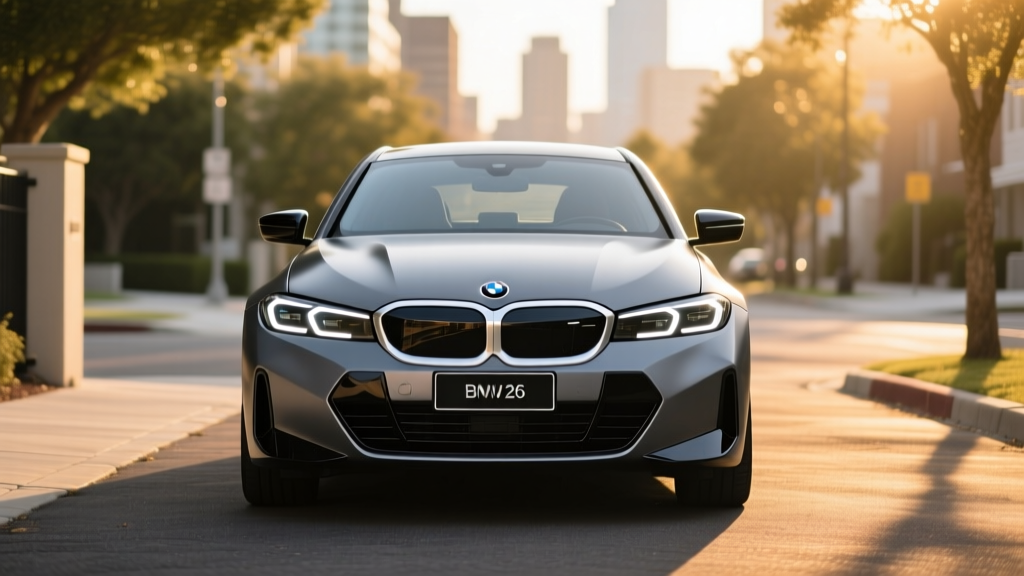
The 2026 BMW i3 Sedan Neue Klasse is not a continuation of the quirky carbon-fiber hatchback discontinued in 2021. This is an entirely new vehicle — a compact executive electric sedan built on BMW's dedicated Neue Klasse platform, debuting the brand's sixth-generation eDrive powertrain and cylindrical battery cells. Production at the Debrecen, Hungary plant begins in late 2025, with U.S. deliveries expected by early-to-mid 2026.
BMW has confirmed the i3 Sedan as the first production Neue Klasse model, positioning it as a direct competitor to the Tesla Model 3, Hyundai Ioniq 6, and upcoming Mercedes-Benz CLA EV. With an 800-volt architecture, up to 30% more energy density, and a radically reimagined interior centered on the Panoramic Vision display, the i3 Sedan aims to leapfrog the current crop of compact electric sedans.
Because this vehicle is newly launching for the 2026 model year, several specifications below reflect BMW's confirmed preliminary data and European homologation figures. EPA-certified numbers for the U.S. market will be finalized closer to delivery. We'll update this review as official figures are published.
Range and Efficiency: 400+ Miles Targeted, Real-World Expectations
BMW has stated the Neue Klasse i3 Sedan will achieve a WLTP range of approximately 400 miles (640 km) in its long-range rear-wheel-drive configuration. Converting WLTP to EPA — which uses a more demanding test cycle — we estimate the U.S.-spec i3 Sedan will carry an EPA-estimated range of roughly 340–360 miles for the base RWD model.
EPA estimated: ~340–360 miles (RWD, preliminary)
Real-world highway (70 mph, moderate climate): ~280–310 miles
Cold weather (below 32°F, highway): ~240–270 miles
City/mixed driving: Closer to EPA sticker, potentially exceeding it with regen-heavy routes
The Neue Klasse platform uses a heat pump as standard equipment, which mitigates cold-weather range loss compared to resistive heating systems. BMW's Gen6 battery management system also features improved preconditioning algorithms — when you navigate to a DC fast charger, the battery thermally conditions itself to accept peak charge rates upon arrival.
Efficiency is targeted at approximately 25–27 kWh per 100 miles (roughly 125–135 MPGe combined), which would place it competitive with the Tesla Model 3 Long Range (25 kWh/100 mi) and ahead of the Hyundai Ioniq 6 (24 kWh/100 mi for the lighter RWD trim).
Battery and Powertrain: Gen6 Cylindrical Cells, 800V Architecture
The i3 Sedan debuts BMW's sixth-generation eDrive system, which replaces the prismatic pouch cells of the current i4 and iX with cylindrical cells — similar in form factor to Tesla's 4680 cells but with BMW's proprietary dimensions (46 mm diameter, two height variants). BMW has confirmed these cells deliver:
- 20% higher energy density than Gen5 prismatic cells
- 30% faster charging capability
- Up to 30% weight reduction at the pack level
- Reduced cobalt content in the NMC cathode chemistry
| Specification | i3 Sedan RWD (Base) | i3 Sedan xDrive (AWD) |
|---|---|---|
| Drivetrain | Rear-Wheel Drive | Dual-Motor AWD |
| Battery Usable Capacity | ~90 kWh (est.) | ~90 kWh (est.) |
| Cell Chemistry | NMC (Gen6 cylindrical) | NMC (Gen6 cylindrical) |
| Architecture Voltage | 800V nominal | 800V nominal |
| Horsepower | ~300 hp (est.) | ~450+ hp (est.) |
| 0–60 mph | ~5.8 sec (est.) | ~4.0 sec (est.) |
| EPA Range (est.) | ~340–360 mi | ~300–320 mi |
| Efficiency | ~25–27 kWh/100 mi | ~28–30 kWh/100 mi |
BMW has confirmed both single-motor RWD and dual-motor xDrive configurations. A high-performance M variant is expected later in the production cycle but has not been detailed. The 800V architecture is standard across all trims — a significant differentiator from the Tesla Model 3, which still operates on a ~400V system.
Charging: Peak DC Speed and Home Level 2 Rates
The 800-volt system enables substantially faster DC fast charging than BMW's current 400V models. BMW has stated the Neue Klasse platform supports peak DC charging rates above 300 kW, with a 10–80% charge time of approximately 20 minutes or less under optimal conditions.
| Charging Level | Power (kW) | Time / Rate | Notes |
|---|---|---|---|
| Level 1 (120V household) | ~1.4 kW | ~3–4 mi/hr | Emergency/trickle only |
| Level 2 (240V, 48A) | 11.5 kW | ~35–40 mi/hr; full charge ~9 hr | Standard home charging |
| DC Fast Charge (peak) | 300+ kW | 10–80% in ~20 min | Requires 350 kW station; tapers above 80% |
| DC Fast Charge (50 kW) | 50 kW | ~170 mi/hr; 10–80% in ~80 min | Common older station speed |
Understanding the charge curve: The 300+ kW peak rate is only sustained while the battery is at a low state of charge (roughly 10–30%) and properly preconditioned. As the battery fills past 50%, charge speed tapers significantly — expect roughly 150–180 kW at 50% SoC, dropping further above 80%. This tapering is normal physics for lithium-ion cells and protects long-term battery health. Plan your road trips around 10–80% stops rather than chasing a full charge.
The i3 Sedan will ship with a NACS (North American Charging Standard) port for the U.S. market, consistent with BMW's commitment to adopt Tesla's connector. This grants access to Tesla Supercharger stations via native plug, alongside Electrify America, EVgo, and other networks — no adapter required.
For home Level 2 charging, the onboard charger supports up to 11.5 kW (48 amps at 240V). A full charge from near-empty takes roughly 9 hours, meaning an overnight charge easily replenishes even a fully depleted battery. Installation of a Level 2 home charger typically costs $500–$2,000 for equipment and electrician labor, depending on panel capacity and run length.
Interior, Technology, and the Panoramic Vision Display
The Neue Klasse interior represents BMW's most significant cabin redesign in a decade. The centerpiece is the Panoramic Vision display — a full-width projection across the lower windshield that replaces the traditional instrument cluster. This is not a conventional HUD; it spans the entire width of the driver's field of view and displays speed, navigation, range, and driver-assist information.
Complementing Panoramic Vision is a new 17.9-inch central touchscreen running BMW's latest iDrive operating system with a redesigned interface optimized for the Neue Klasse platform. BMW has also introduced a new multifunction steering wheel with haptic controls and an integrated display strip.
Notable technology features:
- Panoramic Vision full-width windshield display
- BMW iDrive with AI-driven predictive navigation and energy management
- BMW Highway Assistant (Level 2 ADAS) — hands-on-wheel lane centering with adaptive cruise; not autonomous driving
- Augmented reality navigation overlay on the central display
- Over-the-air updates for powertrain calibration, infotainment, and ADAS
- Digital Key Plus with Ultra-Wideband (UWB) for phone-as-key
BMW has not yet published official cargo and passenger volume figures for the U.S. spec. Based on the vehicle's exterior dimensions (similar footprint to the current 3 Series), expect approximately 13–15 cu ft of trunk space and competitive rear legroom in the 34–36 inch range. The dedicated EV platform's flat floor should improve rear-seat comfort compared to the transmission-tunnel layout of ICE 3 Series models. A front trunk (frunk) is expected but capacity has not been confirmed.
Pricing, Tax Credits, and Ownership Economics
BMW has not announced official U.S. MSRP pricing. Based on European pricing signals, BMW's current model positioning, and competitive pressure from Tesla and Hyundai, we estimate the following pricing structure:
| Trim | Estimated MSRP | Est. After $7,500 Credit* | Destination |
|---|---|---|---|
| i3 Sedan RWD (Base) | ~$47,000–$50,000 | ~$39,500–$42,500 | ~$1,175 |
| i3 Sedan xDrive (AWD) | ~$54,000–$58,000 | ~$46,500–$50,500 | ~$1,175 |
| i3 Sedan M Sport | ~$60,000+ (TBA) | May exceed MSRP cap | ~$1,175 |
*Federal tax credit eligibility depends on multiple factors. See details below.
Federal §30D Tax Credit Eligibility
- MSRP cap: Sedans must be ≤$55,000 MSRP (vans/SUVs/pickups: ≤$80,000). The base RWD i3 should qualify; higher trims may exceed the cap.
- Buyer income cap: Modified AGI ≤$150,000 (single), ≤$225,000 (head of household), ≤$300,000 (joint).
- Battery sourcing: Critical minerals and battery components must meet escalating domestic/free-trade-agreement sourcing percentages. BMW's Gen6 cell supply chain is still being finalized — eligibility for the full $7,500 (vs. partial $3,750) depends on final sourcing certification.
- Point-of-sale transfer: Buyers can transfer the credit to the dealer at purchase, reducing the upfront price rather than waiting for a tax refund.
Always verify current eligibility at IRS.gov and consult a tax professional before purchasing.
Warranty, Battery Longevity, and Ownership Costs
BMW's standard EV warranty coverage for U.S. models includes:
- Battery warranty: 8 years / 100,000 miles (whichever comes first), covering capacity loss below 70% of original
- Powertrain warranty: 8 years / 100,000 miles
- Bumper-to-bumper: 4 years / 50,000 miles
- Corrosion perforation: 12 years / unlimited miles
- Roadside assistance: 4 years / unlimited miles
The Gen6 cylindrical cells are expected to exhibit lower degradation than BMW's current prismatic cells, thanks to improved thermal management and cell chemistry refinements. Based on industry data for comparable NMC cylindrical cells, expect approximately 8–12% degradation over 100,000 miles under normal use — well within the 70% warranty threshold. BMW has not published a specific replacement cost for the Gen6 pack, but current BMW i4 battery replacements run $15,000–$20,000 out of warranty.
Insurance premiums for the i3 Sedan are likely to be higher than the ICE 3 Series due to EV repair costs and higher MSRP. Expect annual premiums in the $1,800–$2,500 range depending on state, driving record, and coverage level.
Competition: How the i3 Sedan Stacks Up
The i3 Sedan enters one of the most competitive segments in the EV market. Here's how preliminary specs compare against key rivals:
| Spec | BMW i3 Sedan (est.) | Tesla Model 3 LR | Hyundai Ioniq 6 SE LR |
|---|---|---|---|
| EPA Range | ~340–360 mi | 363 mi | 361 mi |
| Battery (usable) | ~90 kWh | 75 kWh | 77.4 kWh |
| DC Fast Charge Peak | 300+ kW | ~250 kW | ~240 kW |
| 10–80% DC Time | ~20 min | ~25 min | ~18 min |
| 0–60 mph | ~5.8 sec (RWD) | 4.2 sec (AWD) | 5.1 sec (RWD) |
| Starting MSRP | ~$47,000–$50,000 | $47,740 | $42,450 |
| Architecture | 800V | ~400V | 800V |
The i3 Sedan's key differentiators are the 800V architecture (shared with Hyundai, not Tesla), the Gen6 battery's energy density advantage, and the Panoramic Vision interior technology. Where Tesla wins on Supercharger network maturity and Hyundai wins on value pricing, BMW targets build quality, driving dynamics, and a premium cabin experience.
- 800V architecture enables 300+ kW peak DC charging
- Gen6 cylindrical cells offer higher energy density and potentially longer lifespan
- Panoramic Vision display is a genuine technology leap for the segment
- NACS port standard — native Supercharger access
- BMW driving dynamics and build quality reputation
- Standard heat pump for cold-weather efficiency
- Higher starting price than Ioniq 6 and competitive with Model 3
- Full §30D tax credit eligibility unconfirmed (battery sourcing TBD)
- Some EPA specs still preliminary — final U.S. numbers pending
- BMW's U.S. public charging partnerships less robust than Tesla's network
- Panoramic Vision may take adaptation for drivers preferring traditional gauges
- No confirmed frunk capacity or towing rating
Who Should Buy the 2026 BMW i3 Sedan Neue Klasse?
- You want a premium compact electric sedan with BMW driving dynamics and build quality
- You value the latest cabin technology (Panoramic Vision, iDrive AI)
- You want 800V charging speeds and NACS Supercharger access without an adapter
- You're upgrading from an ICE 3 Series or 4 Series and want to go electric without downsizing
- Budget is the primary concern — the Ioniq 6 SE offers 361 miles of range for ~$42,450
- You need proven Supercharger reliability now — the Tesla Model 3 is the safe choice
- You need AWD immediately and the i3 xDrive pricing exceeds the §30D MSRP cap
Frequently Asked Questions
What is the real-world range of the BMW i3 Sedan Neue Klasse?
With an estimated EPA range of 340–360 miles (RWD), expect roughly 280–310 miles in real-world highway driving at 70 mph in moderate temperatures. Cold weather (below freezing) will reduce this to approximately 240–270 miles. City driving with regenerative braking may approach or slightly exceed the EPA estimate.
How fast does the i3 Sedan charge at home and on the road?
At home on a Level 2 (240V, 48A) charger, the i3 Sedan charges at up to 11.5 kW, adding roughly 35–40 miles of range per hour. A full overnight charge takes about 9 hours. On a DC fast charger rated 350 kW, the i3 can peak above 300 kW and charge from 10–80% in approximately 20 minutes — though real-world times depend on station capacity, battery temperature, and charge-curve tapering above 80%.
Does the 2026 BMW i3 Sedan qualify for the $7,500 federal EV tax credit?
Potentially, but it depends on three factors per IRS §30D rules: (1) The MSRP must be at or below $55,000 for sedans — the base RWD should qualify, but higher trims may not. (2) Your modified adjusted gross income must be within the caps ($150K single / $300K joint). (3) The battery's critical minerals and components must meet domestic sourcing thresholds. BMW has not yet confirmed final sourcing certification. Always verify at IRS.gov before purchasing.
Is the i3 Sedan worth buying vs. the Tesla Model 3 or Hyundai Ioniq 6?
The i3 Sedan is worth considering if you prioritize premium build quality, BMW driving dynamics, and the Panoramic Vision cabin technology. The Tesla Model 3 offers a more mature Supercharger network and strong performance at a similar price. The Hyundai Ioniq 6 provides the best value with comparable range and 800V charging at a lower MSRP. Your decision should weigh cabin experience (BMW wins) vs. charging network maturity (Tesla wins) vs. price (Hyundai wins).
What are the biggest pros and cons of the i3 Sedan Neue Klasse?
Key pros: 800V/300+ kW charging, Gen6 high-density battery, NACS standard, Panoramic Vision display, BMW driving quality. Key cons: higher price than some rivals, unconfirmed full tax credit eligibility, preliminary U.S. specs, and BMW's public charging infrastructure still developing.
When will the BMW i3 Sedan be available in the U.S.?
Production at BMW's Debrecen plant begins in late 2025. U.S. deliveries are expected in early-to-mid 2026. BMW has not announced a specific on-sale date. Reservations and configurator access are expected to open several months before delivery.
Specifications in this review are based on BMW's confirmed preliminary data and industry analysis as of publication. Final EPA-certified range, efficiency, and pricing will be updated when BMW publishes U.S. homologation figures. Always verify tax credit eligibility at fueleconomy.gov and IRS.gov before purchasing.