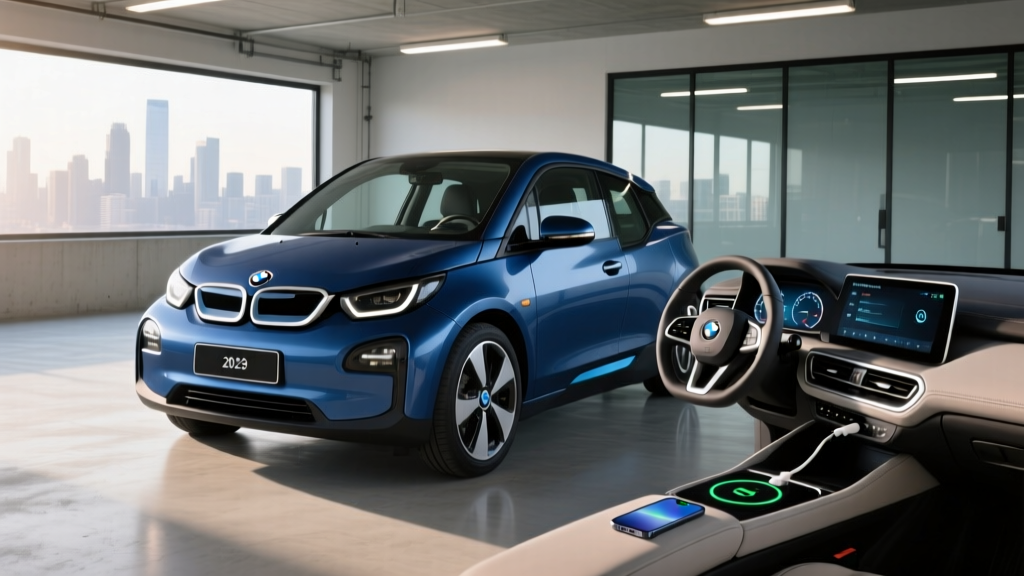
The BMW i3 was ahead of its time when it launched in 2014, and even after its 2022 discontinuation, it remains one of the most talked-about used EVs on the market. With its carbon-fiber-reinforced plastic (CFRP) body, rear-wheel-drive layout, and unmistakable design, the i3 is unlike anything else on the road. But for buyers in 2026 considering a pre-owned example, the question that matters most is straightforward: is the BMW i3 reliable?
The short answer is yes — with important caveats around battery capacity, the range-extender variant, and parts availability. This guide covers everything you need to know before buying a used BMW i3 in 2026, from real-world range and charging speeds to long-term battery health and ownership costs.
BMW i3 Quick Specs at a Glance
| Spec | 60 Ah (2014–2016) | 94 Ah (2017–2018) | 120 Ah (2019–2022) |
|---|---|---|---|
| Usable Battery | 18.8 kWh (NMC) | 27.2 kWh (NMC) | 37.9 kWh (NMC) |
| EPA Range (BEV) | 81 mi | 114 mi | 153 mi |
| EPA Range (REx) | 72 mi EV + 80 mi gas | 97 mi EV + 83 mi gas | 126 mi EV + 84 mi gas |
| Motor Output | 170 hp / 184 lb-ft | 170 hp / 184 lb-ft | 170 hp / 199 lb-ft |
| 0–60 mph | 7.0 sec | 7.0 sec | 6.9 sec |
| Drivetrain | RWD | RWD | RWD |
| DC Fast Charge (max) | 50 kW (CCS) | 50 kW (CCS) | 50 kW (CCS) |
| Level 2 Charge Rate | 7.4 kW | 7.4 kW | 7.4 kW |
| EPA Efficiency | 118 MPGe | 113 MPGe | |
| Battery Warranty (orig.) | 8 yr / 100,000 mi | 8 yr / 100,000 mi | 8 yr / 100,000 mi |
Real-World Range: What the EPA Sticker Doesn't Tell You
EPA vs. Reality (120 Ah model, 2019–2022): The EPA rates the final-generation i3 BEV at 153 miles. In real-world mixed driving, expect 130–145 miles in moderate temperatures. On sustained highway driving at 70+ mph, plan for 110–125 miles. In freezing winter conditions (below 32°F), range can drop to 95–115 miles due to cabin heating demand and reduced battery chemistry efficiency. The i3 lacks a heat pump — it uses resistive electric heating, which draws significant energy from the pack in cold weather.
The 94 Ah models (2017–2018) with an EPA rating of 114 miles will realistically deliver 90–105 miles in temperate conditions and as low as 70–85 miles in winter. The earliest 60 Ah cars are best treated as dedicated city commuters, with usable real-world range of 60–75 miles.
For context, the i3's small battery and lightweight construction (around 2,800 lbs curb weight) make it exceptionally efficient — averaging roughly 25–27 kWh per 100 miles in mixed driving for the 120 Ah model, per fueleconomy.gov. That efficiency is a genuine ownership advantage: even with modest range, your per-mile electricity cost stays very low.
Charging Speed: The i3's Biggest Limitation in 2026
Here's where the i3 shows its age most clearly. BMW equipped the i3 with a 50 kW CCS DC fast-charging capability (on models equipped with the DC fast-charge option — not all early cars have it; verify before buying). At 50 kW peak, the 120 Ah model charges from 10–80% in approximately 42–45 minutes. That's roughly half the speed of modern 800V-platform EVs like the Hyundai Ioniq 5 or Porsche Taycan.
| Charge Level | Power | 120 Ah Speed | Notes |
|---|---|---|---|
| Level 1 (120V) | ~1.4 kW | ~5 mi/hr | Emergency/trickle only |
| Level 2 (240V, 32A) | 7.4 kW | ~25 mi/hr; full charge ~5.5 hr | Standard home charging |
| DC Fast (CCS) | 50 kW peak | 10–80% in ~42 min | Option on early models; std on later |
The Level 2 rate of 7.4 kW is adequate for overnight home charging — a full charge from empty takes about 5.5 hours on the 120 Ah model. Most owners plug in nightly and rarely think about it. But the 50 kW DC fast-charge ceiling means the i3 is poorly suited for frequent long-distance road trips. If your commute is under 60 miles round-trip and you have home Level 2 access, this is a non-issue.
Battery Degradation and Long-Term Reliability
The BMW i3 uses Samsung SDI NMC (nickel manganese cobalt) lithium-ion cells. BMW built in a generous buffer on the i3's battery management system — the 120 Ah model has a gross capacity of 42.2 kWh but only 37.9 kWh is usable, protecting the cells from extreme states of charge that accelerate degradation.
Based on owner-reported data across i3 forums and fleet studies, the 120 Ah models are showing 5–10% degradation after 4–5 years and 50,000–70,000 miles. The earlier 60 Ah cars, now 10–12 years old, show wider variance: some have lost 15–25% of original capacity, particularly in hot climates. The original battery warranty covers 8 years or 100,000 miles against defects and capacity loss below 70% of original capacity. For 2014–2016 models, that factory warranty has expired or is expiring — a critical factor when evaluating a used purchase.
Key reliability considerations specific to the i3:
- CFRP body: The carbon-fiber passenger cell is exceptionally strong and corrosion-resistant, but collision repair requires specialized BMW-certified body shops. Minor fender-benders can be costly if structural carbon fiber is involved.
- Range Extender (REx) engine: The 647cc two-cylinder gasoline engine in REx models requires standard ICE maintenance — oil changes, spark plugs, fuel system care. Cars that sat with old fuel in the tank can develop fuel-system issues. If buying a REx, verify maintenance records on the range-extender engine.
- 19-inch narrow tires: The i3 uses unique 155/70R19 tires that are more expensive than standard sizes ($180–$250 per tire) and wear faster due to the car's instant torque and light weight. Budget for replacement every 25,000–35,000 miles.
- 12V battery: Like all EVs, the i3 has a conventional 12V battery that can fail. A dead 12V battery will prevent the car from starting even with a full traction battery. Replacement every 4–5 years is typical.
- Suspension and steering: Generally robust, but front control arm bushings and rear shocks can wear by 80,000–100,000 miles. Parts availability remains adequate through BMW's network and aftermarket suppliers as of 2026.
Interior, Cargo, and Practicality
The i3's interior was genuinely innovative — recycled materials, eucalyptus wood trim, and an open, airy cabin. But it's a compact car by any measure:
- Front headroom: 39.6 inches (excellent)
- Rear headroom: 37.8 inches
- Front legroom: 40.5 inches
- Rear legroom: 31.9 inches (tight for adults on longer trips)
- Cargo behind rear seats: 15.1 cu ft
- Cargo with rear seats folded: 51.0 cu ft
The rear-hinged "coach doors" (no B-pillar) give the i3 excellent rear-seat access in parking lots but mean you must close the rear door before opening the front — an annoyance in tight spaces. There is no frunk; the front hood area houses electronics and the REx engine (if equipped).
The i3 seats four adults, but rear passengers on longer trips will find the upright seating position and limited legroom fatiguing. This is a city car and commuter first, not a family hauler.
Tech, Safety, and Driver Assistance
The i3's iDrive infotainment system was competitive at launch but feels dated in 2026. Key tech notes:
- iDrive: 6.5-inch screen on early models, upgraded to 10.25-inch on 2018+ models with the Technology Package. Navigation, Bluetooth, and USB are standard. Apple CarPlay was added for 2018+ models; Android Auto was never officially supported.
- Driver assistance: The i3 offers basic features — forward collision warning, automatic emergency braking (on 2017+ models), and park distance control. It does not offer adaptive cruise control, lane-keeping assist, or any Level 2 driver-assist system comparable to modern offerings. This is an SAE Level 0–1 vehicle in terms of automation.
- Safety ratings: The IIHS rated the i3 as "Good" in most crashworthiness categories, though headlight ratings were "Poor" on most trims. NHTSA gave it 4 stars overall.
SAE Automation Note: The BMW i3 does not include any Level 2 or higher driver-assistance system. All driving tasks — steering, braking, lane management — remain entirely the driver's responsibility at all times. Do not confuse the i3's parking sensors and collision warnings with automated driving capability.
Used Pricing and Value in 2026
The BMW i3 is strictly a used-vehicle purchase as of 2026 — BMW ended production in July 2022 after approximately 250,000 units worldwide. Here's what the used market looks like:
| Model Year | Battery | Typical Used Price (2026) | Federal Used EV Credit (§25E) | Effective Price |
|---|---|---|---|---|
| 2014–2016 | 60 Ah | $8,000–$13,000 | Up to $4,000 (30% of sale price, max $4,000) | $5,500–$10,000 |
| 2017–2018 | 94 Ah | $13,000–$19,000 | Up to $4,000 | $10,000–$15,500 |
| 2019–2022 | 120 Ah | $19,000–$28,000 | Up to $4,000 | $15,500–$24,500 |
The §25E used EV tax credit (as of 2026 IRS rules) provides 30% of the sale price, up to a maximum of $4,000, for qualifying used EVs priced at $25,000 or less. Income caps apply: $75,000 single / $112,500 head of household / $150,000 joint filers. The vehicle must be at least two model years old and purchased from a licensed dealer (private-party sales do not qualify). Starting in 2024, this credit can be transferred to the dealer at point of sale as an immediate price reduction.
Note: The new-vehicle §30D credit no longer applies to the i3 since it is no longer manufactured. Do not confuse §30D (new) with §25E (used).
Pros and Cons
Pros
- Exceptional efficiency (25–27 kWh/100 mi)
- Quick off the line (170 hp, instant torque, 6.9s 0–60)
- Tight turning radius (32.3 ft) — ideal for city parking
- Unique, head-turning design and premium interior materials
- Low running costs — electricity + minimal maintenance
- Carbon-fiber body resists corrosion
- §25E used EV credit eligibility (up to $4,000 off)
Cons
- Limited range (81–153 mi EPA depending on year)
- Slow DC fast charging (50 kW max, ~42 min 10–80%)
- No modern Level 2 driver-assist features
- Expensive proprietary 19-inch tires
- CFRP collision repair requires specialized shops
- Tight rear legroom (31.9 in) and limited cargo space
- Android Auto never supported; dated infotainment
- Factory battery warranty expired on 2014–2016 models
Who Should Buy a Used BMW i3?
The i3 excels in a narrow but well-defined use case. It's the right car if:
- Your daily commute is under 50 miles round-trip and you can charge at home.
- You live in a city or dense suburb where the tight turning radius and compact size are daily advantages.
- You want a premium-badge EV at a bargain used price after the §25E credit.
- You value efficiency and low per-mile electricity cost over long-distance capability.
- You're buying a second car for errands and commuting, not a primary family vehicle.
Look elsewhere if you need highway road-trip capability, rear-seat space for teenagers or car seats, modern driver-assistance systems, or fast DC charging for frequent long drives. In those cases, a used Chevrolet Bolt EV (238–259 mi range), Hyundai Kona Electric (258 mi), or a newer Tesla Model 3 will serve you better — though at higher used prices.
Frequently Asked Questions
Is the BMW i3 reliable after 100,000 miles?
Generally yes. The electric powertrain (motor and power electronics) has proven very durable, with few reported failures even at high mileage. The main concern at 100,000+ miles is battery degradation — expect 10–20% capacity loss depending on climate and charging habits. The REx (range-extender) models add gasoline engine maintenance to the equation, which introduces oil changes, fuel system service, and potential exhaust component wear that pure BEV i3s avoid entirely.
How much does a BMW i3 battery replacement cost?
As of 2026, a full battery pack replacement for the i3 ranges from approximately $10,000 to $16,000 depending on the battery generation (60/94/120 Ah) and whether you source new, refurbished, or used cells. BMW has offered battery module-level replacement (swapping individual degraded modules rather than the entire pack) at lower cost. Given that most 120 Ah i3s are showing only modest degradation, full pack replacement remains uncommon. Third-party EV repair shops are increasingly offering module-level service at $3,000–$6,000.
Does the BMW i3 qualify for any tax credit in 2026?
The i3 does not qualify for the §30D new-vehicle credit (production ended in 2022). However, it does qualify for the §25E used clean vehicle credit: 30% of the sale price up to $4,000, subject to buyer income caps ($75K single / $150K joint), a $25,000 maximum vehicle sale price, and purchase from a licensed dealer. Verify current-year rules on irs.gov before purchasing, as incentive programs can change.
How does the i3 compare to a used Chevy Bolt or Nissan Leaf?
The Chevrolet Bolt EV (2017–2023) offers dramatically more range (238–259 mi EPA) and practical cargo space at similar used prices, making it the more versatile commuter. The Nissan Leaf (40 or 62 kWh) offers 149–226 miles of range but uses a CHAdeMO connector (a declining standard) and passive air-cooled battery, which degrades faster in hot climates. The i3's advantages are its premium interior, unique design, exceptional city maneuverability, and lower weight. If range is your top priority, choose the Bolt. If driving feel and urban practicality matter more, the i3 wins.
Should I buy the BEV or the REx (range extender) version?
For most buyers in 2026, the pure BEV 120 Ah model (2019–2022) is the better choice — you get 153 miles of EPA range, no gasoline engine to maintain, and the lowest running costs. The REx makes sense only if you lack reliable home charging or regularly face routes slightly beyond the BEV's range and want the gas-engine safety net. Keep in mind the REx adds weight, complexity, and maintenance cost. If you're buying a 60 Ah or 94 Ah model, the REx becomes more justifiable since the pure-electric range is quite limited.
What are the most common problems with the BMW i3?
The most frequently reported issues include: 12V battery failure (common across all EVs), fuel system problems on REx models that sat unused, premature tire wear on the unique 19-inch wheels, occasional door latch mechanism wear on the coach doors, and cabin heating element failures on early (2014–2015) models. The high-voltage battery, electric motor, and power electronics have been notably trouble-free relative to industry averages.