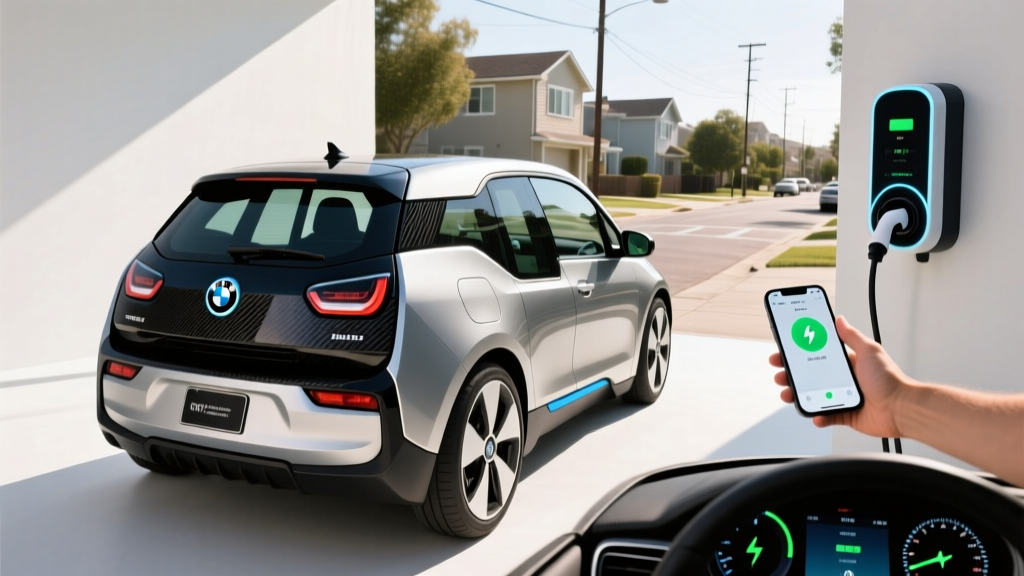
The BMW i3 was one of the first mass-market electric vehicles to prove that carbon-fiber construction and purpose-built EV architecture could work at scale. Produced from 2014 through 2021 (with the final 2022 model year in some markets), the i3 remains a popular used-EV target for city commuters seeking premium build quality in a compact package. But with production ended and vehicles now aging past their factory battery warranty, the question that dominates owner forums and used-car searches is straightforward: how reliable is the BMW i3 in real-world ownership?
After analyzing owner-reported data, service bulletins, battery degradation curves, and common failure points across all three battery generations (60 Ah, 94 Ah, and 120 Ah), the short answer is encouraging: the i3's electric powertrain is among the most robust in the early-EV era. The eDrive motor has proven nearly bulletproof, and BMW's battery management system has kept degradation conservative. But reliability isn't just about whether the car starts — it's about the cost and frequency of repairs when things do go wrong, and here the i3's carbon-fiber and aluminum construction creates a unique ownership profile that buyers need to understand before signing paperwork.
Battery Longevity: The Core of BMW i3 Reliability
For any used EV, battery health is the single largest financial variable. The i3 was offered with three battery configurations over its production run, each with distinct capacity, chemistry, and degradation characteristics.
| Generation | Model Years (US) | Gross / Usable kWh | Chemistry | EPA Range | Typical SoH at 8 Years |
|---|---|---|---|---|---|
| 60 Ah | 2014–2016 | 22.0 / 18.8 | NMC (Samsung SDI) | 81 mi | ~80–85% |
| 94 Ah | 2017–2018 | 33.2 / 27.2 | NMC (Samsung SDI) | 114 mi | ~85–90% |
| 120 Ah | 2019–2021 | 42.2 / 37.9 | NMC (Samsung SDI) | 153 mi | ~90–94% |
All i3 batteries use Samsung SDI nickel-manganese-cobalt (NMC) cells in a prismatic format. BMW engineered an aggressive thermal management system with active liquid cooling and heating, and the battery management system (BMS) maintains a relatively large buffer — particularly on the 60 Ah model, where the usable-to-gross ratio is only about 85%. That buffer is a primary reason i3 degradation has been gentler than early Nissan Leaf or early Tesla Model S packs that lacked active thermal management.
Real-world data from owner communities and aggregated State of Health (SoH) reports shows that most 120 Ah i3s retain 90% or more capacity after 60,000 miles and five years of service. The 60 Ah models, now the oldest in the fleet, typically sit between 78% and 85% SoH at the 8-year mark — meaning a car that originally delivered 81 miles of range may now provide 65–70 miles. That's livable for a dedicated city commuter, but it's a critical number to verify before purchase.
EPA estimates: 81 mi (60 Ah) · 114 mi (94 Ah) · 153 mi (120 Ah)
What to actually expect: On the 120 Ah model, plan for ~130–140 miles in mixed driving at moderate temperatures. Highway-only driving at 70+ mph drops this to ~115–125 miles due to the i3's tall, narrow profile and higher drag coefficient (0.29 Cd). In freezing weather (below 32°F / 0°C), expect a 20–30% range reduction — the i3 does offer a heat pump option (standard on later models in some markets), which mitigates cabin-heating energy draw but doesn't eliminate cold-weather losses entirely. The 60 Ah model in winter may deliver as little as 50–55 real-world miles.
Battery warranty status matters enormously for used i3 buyers. BMW provided an 8-year / 100,000-mile battery warranty guaranteeing at least 70% capacity retention. For 2014–2016 models (60 Ah), that warranty window has closed or is closing in 2024–2025. For 2017–2018 (94 Ah) models, coverage extends through 2025–2026. The 2019–2021 (120 Ah) models retain warranty coverage through 2027–2029. If you're buying a 60 Ah i3 today, you are almost certainly buying it out of battery warranty — making a pre-purchase battery health check non-negotiable.
Drivetrain & Motor: Where the i3 Excels
The i3's electric motor is a rear-mounted synchronous unit producing 170 horsepower and 184 lb-ft of torque across all battery generations. This is where BMW i3 reliability shines brightest: there are virtually no widespread reports of motor failure. The eDrive system has no multi-speed transmission (it uses a single-speed reduction gear), no timing belt, no oil changes, and far fewer moving parts than any internal-combustion drivetrain.
| Spec | 60 Ah (2014–2016) | 94 Ah (2017–2018) | 120 Ah (2019–2021) |
|---|---|---|---|
| Horsepower | 170 hp | 170 hp | 170 hp |
| Torque | 184 lb-ft | 184 lb-ft | 184 lb-ft |
| Drivetrain | RWD | RWD | RWD |
| 0–60 mph | 7.0 sec | 6.9 sec | 6.9 sec |
| MPGe (combined) | 124 MPGe | 111 MPGe | 113 MPGe |
| kWh / 100 mi | 27 | 30 | 30 |
| Curb Weight | ~2,795 lb | ~2,960 lb | ~2,980 lb |
The i3's efficiency is a genuine highlight. According to fueleconomy.gov, the 120 Ah model achieves 113 MPGe combined, translating to 30 kWh per 100 miles. That's remarkably efficient — better than most modern EVs — thanks to the i3's lightweight carbon-fiber-reinforced plastic (CFRP) passenger cell and narrow, low-rolling-resistance tires (155/70 R19). At US average electricity prices (~$0.16/kWh in 2025), that works out to roughly $0.048 per mile in energy cost.
The i3s variant (available from 2018 onward) adds 14 hp (184 hp total), a slightly wider track, and sport-tuned suspension, but the core motor and battery architecture remain identical. Reliability is unchanged between i3 and i3s.
Charging Speed: The i3's Biggest Limitation
If there's one area where the BMW i3's age shows most clearly, it's DC fast charging. By 2026 standards, the i3's peak charge rate is modest, and buyers coming from modern EVs with 200+ kW charging capability will notice the difference on road trips.
| Charge Type | 60 Ah | 94 Ah | 120 Ah |
|---|---|---|---|
| DC Fast Charge (peak kW) | 47 kW | 50 kW | 50 kW |
| DC 10–80% Time | ~25 min | ~35 min | ~42 min |
| Level 2 (240V) Onboard Charger | 7.4 kW | 7.4 kW | 7.4 kW |
| Level 2 Full Charge Time | ~3 hours | ~4.5 hours | ~5.5 hours |
| Level 1 (120V) Approx. Rate | ~1.4 kW | ~1.4 kW | ~1.4 kW |
| Connector (DC) | CCS1 (Combo) | CCS1 (Combo) | CCS1 (Combo) |
| Connector (AC) | J1772 / Type 1 | J1772 / Type 1 | J1772 / Type 1 |
The 50 kW DC fast-charge ceiling on 94 Ah and 120 Ah models means a 10–80% session takes roughly 35–42 minutes, depending on battery temperature and ambient conditions. The i3 does not support preconditioning via navigation routing the way a Tesla or Hyundai Ioniq 5 does — you'll need to manually initiate battery preconditioning through the iDrive menu before arriving at a charger to achieve peak rates. Skip this step on a cold day, and your peak charge rate may drop to 25–30 kW until the pack warms.
The 7.4 kW onboard Level 2 charger is adequate for overnight home charging. On a 32-amp Level 2 home station (the most common residential setup), a full charge from empty takes about 5.5 hours on the 120 Ah model. For a daily commuter who plugs in each evening, this is perfectly sufficient — you'll wake up with a full battery every morning.
Key charging reliability note: Early 2014–2015 models experienced some onboard charger (OBC) failures, particularly when used frequently with certain Level 2 stations that had grounding or voltage irregularities. BMW issued service bulletins addressing this, and replacement OBC units have proven more robust. If you're evaluating a 2014–2015 model, ask whether the onboard charger has been replaced under warranty.
Common Problems & Repair Costs
Based on owner reports, NHTSA complaint databases, and service bulletins, here are the most frequently cited issues across the i3's production run:
Electric Powertrain (Motor, Inverter, BMS)
Failures here are rare. The motor and power electronics have proven extremely durable. Isolated reports of inverter faults exist on early 60 Ah models, but these are outliers. This is one of the most trouble-free electric drivetrains of its era.
12V Auxiliary Battery
This is the single most common "stranded" complaint among i3 owners. The i3 uses a conventional 12V lead-acid auxiliary battery to power electronics, lights, and the contactors that connect the high-voltage traction battery. If the 12V battery dies (typically after 3–5 years), the car cannot start — even if the main HV battery is fully charged. This is not unique to the i3 (it affects nearly all EVs), but i3 owners should proactively replace the 12V battery every 4 years or install a battery tender if the car sits unused for extended periods. Replacement cost: $150–$250 installed.
Range Extender (REx) Engine — If Equipped
Models equipped with the optional range extender — a 647cc two-cylinder BMW motorcycle engine — introduce an entirely separate maintenance system. REx owners need to manage oil changes, fuel stabilization (the small tank can develop stale-fuel issues), spark plug replacement, and emissions-system components. The REx engine is generally reliable but adds complexity and cost. If your commute fits within battery range alone, a pure BEV i3 is the simpler, more reliable choice.
Climate Control & Heat Pump
The i3's HVAC system, particularly on models equipped with the heat pump option, has generated a moderate number of complaints. Refrigerant leaks and heat pump compressor failures have been reported, typically around the 60,000–80,000 mile mark. Repair costs are significant: heat pump compressor replacement runs $1,500–$2,500 at a BMW dealer. Models without the heat pump use resistive cabin heating, which is simpler but draws more energy in cold weather (contributing to greater winter range loss).
Suspension & Steering
The i3's lightweight construction and narrow tires mean less mass on suspension components, and most owners report minimal wear. However, the unique 19-inch wheels and low-profile tires are expensive to replace ($250–$400 per tire for the OEM Bridgestone Ecopia or equivalent). Some owners report premature wear on front control arm bushings around 70,000–90,000 miles, with replacement running $600–$900 per side.
CFRP Body Panels
The carbon-fiber passenger cell is structurally excellent but creates a repair-cost challenge. Unlike steel or aluminum panels that can be pulled, hammered, or welded, damaged CFRP sections typically require full panel replacement by a BMW-certified body shop with CFRP training. A rear quarter panel replacement can exceed $5,000. If you live in an area with frequent parking-lot damage or hail, this is a real financial consideration. Comprehensive insurance coverage is strongly recommended.
Interior, Cargo & Daily Usability
The i3's interior was genuinely innovative for its era, featuring sustainable materials (eucalyptus wood trim, recycled-plastic textiles, olive-leaf-tanned leather on higher trims) and an open, airy cabin design. The freestanding 10.25-inch iDrive display (updated on later models) remains responsive, and BMW's iDrive 6 infotainment system — while dated compared to 2026 offerings — supports Apple CarPlay (wireless on 2019+ models). Android Auto was never natively supported, which is a notable gap for Android users.
| Dimension | Measurement |
|---|---|
| Front Headroom | 39.6 in |
| Front Legroom | 40.5 in |
| Rear Headroom | 37.8 in |
| Rear Legroom | 31.9 in |
| Cargo Volume (rear seats up) | 15.1 cu ft |
| Cargo Volume (rear seats folded) | 39.2 cu ft |
| Frunk (front trunk) | None (hood houses washer fluid & electronics) |
The rear-hinged "coach doors" (suicide doors) give the i3 a distinctive look and wide rear access when both front and rear doors are open, but they require the front door to be opened first — a practical annoyance in tight parking spaces. Rear legroom at 31.9 inches is tight for adults on longer trips but adequate for children or short urban rides.
Cargo space is a genuine strength: 15.1 cubic feet behind the rear seats and 39.2 with them folded is competitive with compact hatchbacks like the Honda Fit. The tall, boxy shape accommodates bulky items well. There is no frunk — the front hood area houses the windshield washer reservoir, power electronics, and the 12V battery.
Driver Assistance & Safety Features
The i3 offers a basic suite of driver-assistance features by 2026 standards. Available systems include:
- Active Driving Assistant: Forward collision warning with city collision mitigation (automatic emergency braking at low speeds)
- Park Distance Control: Front and rear parking sensors
- Rear-view camera: Standard on 2018+ models, optional on earlier years
- Cruise control: Standard; adaptive cruise control was not offered on the i3
The BMW i3 does not offer Level 2 driver-assistance (no lane-centering, no hands-free highway driving). The most advanced feature is automatic emergency braking, which is a Level 0/1 system. The driver is fully responsible for all steering, acceleration, and braking at all times. Do not confuse this with BMW's newer Highway Assistant (Level 2) available on the iX and i7.
Safety ratings were mixed: the i3 earned a Good rating from IIHS in several crash categories, but its small overlap front test results were less impressive. NHTSA did not comprehensively rate the i3. For a city runabout, the safety suite is adequate; for a primary family vehicle, it falls short of what's available in a 2026 Chevrolet Bolt EUV or Hyundai Kona Electric.
Used Pricing, Tax Credits & Ownership Cost
Since the BMW i3 is no longer sold new, federal §30D new-EV tax credits do not apply. However, the Used Clean Vehicle Credit (§25E) may be available for qualifying purchases from a licensed dealer.
| Factor | Detail |
|---|---|
| Used Price Range (60 Ah, 2014–2016) | $8,000 – $14,000 |
| Used Price Range (94 Ah, 2017–2018) | $13,000 – $20,000 |
| Used Price Range (120 Ah, 2019–2021) | $18,000 – $30,000 |
| Federal Used EV Credit (§25E) | Up to $4,000 (30% of sale price, capped) |
| §25E Income Cap (modified AGI) | $75K single / $112.5K HoH / $150K joint |
| §25E Vehicle Price Cap | $25,000 or less |
| §25E Dealer Requirement | Must purchase from licensed dealer (not private party) |
The §25E credit is significant for the i3 market: most 60 Ah and many 94 Ah models fall under the $25,000 price cap, making buyers eligible for up to $4,000 off at point of sale (transferred to the dealer). However, the income caps are strict, and the vehicle must be purchased from a registered dealer — private-party sales do not qualify. Per IRS guidelines, the credit equals 30% of the sale price up to $4,000, so a $12,000 i3 would yield a $3,600 credit. Always verify current eligibility with a tax professional, as §25E rules are subject to legislative changes.
Insurance costs for the i3 tend to be moderate — typically $1,200–$1,800 annually depending on location and coverage — but CFRP repair costs can push collision premiums higher in some markets. Get an insurance quote before purchasing.
Is the BMW i3 Worth Buying in 2026? Decision Framework
- Your daily commute is under 40 miles round-trip (60 Ah) or under 70 miles (120 Ah)
- You have reliable home Level 2 charging and rarely need DC fast charging
- You value premium interior materials and distinctive design over mainstream practicality
- You want one of the lowest cost-per-mile EVs available (30 kWh/100 mi is outstanding)
- You're buying a 120 Ah model still under battery warranty, or you've verified SoH on an older unit
- You need 200+ miles of range for road trips or longer commutes
- You want modern driver-assistance features (lane centering, adaptive cruise)
- You live in an area with limited BMW service centers — CFRP and high-voltage repairs require specialist training
- You need a five-seat family vehicle with generous rear legroom
- DC fast charging speed is important to you (the 50 kW ceiling is a real limitation)
- Exceptionally efficient — 113 MPGe / 30 kWh per 100 mi
- Electric drivetrain reliability is among the best of its era
- Lightweight CFRP construction gives nimble city handling (23.8 ft turning circle)
- Premium interior materials and distinctive design
- Strong cargo space for its footprint (39.2 cu ft seats folded)
- Low running costs — ~$0.05/mi in electricity
- Limited range — 81 to 153 mi EPA depending on generation
- Slow DC fast charging — 50 kW peak, 35–42 min 10–80%
- No battery preconditioning via navigation
- CFRP body repair is expensive and requires BMW-certified shops
- No Android Auto support; no adaptive cruise or lane centering
- Rear coach doors are impractical in tight parking spaces
- Battery warranty expiring on older models (60 Ah, 94 Ah)
Pre-Purchase Checklist: Buying a Used BMW i3
- Check battery State of Health (SoH): Use the iDrive hidden service menu or an OBD-II app like BimmerCode or LeafSpy (with i3 support) to read actual SoH percentage. Anything below 80% on a 120 Ah model should lower the price significantly.
- Verify battery warranty status: Confirm the in-service date and mileage against BMW's 8-year/100,000-mile coverage. Request the original window sticker or BMW CPO documentation.
- Inspect 12V battery age: If it's original and the car is more than 4 years old, budget $200 for immediate replacement.
- Test DC fast charging: Visit a CCS1 DC fast charger during the test drive. Confirm the car pulls close to 50 kW after preconditioning. A failure to charge above 25 kW may indicate a cooling-system or contactor issue.
- Check for HVAC function: Run both heating and A/C at full blast. Listen for unusual compressor noise and verify the cabin reaches temperature within 3–5 minutes.
- Review service records for REx models: If the car has the range extender, confirm oil changes, fuel system service, and spark plug replacement intervals were followed.
- Get a pre-purchase inspection from a BMW EV-certified technician: Independent shops may lack the high-voltage diagnostic tools needed for a thorough evaluation.
Frequently Asked Questions
What is the real-world range of the BMW i3?
For the 120 Ah model (2019–2021), expect 130–140 miles in mixed driving at moderate temperatures, dropping to 105–120 miles on highway-only trips and 95–115 miles in freezing weather. The 60 Ah model delivers 65–75 miles in real-world mixed driving when new, and potentially 50–55 miles in winter with age-related degradation.
How fast does the BMW i3 charge at home and on DC fast chargers?
On a 7.4 kW Level 2 home charger, the 120 Ah i3 charges fully in about 5.5 hours — ideal for overnight charging. On a DC fast charger, it peaks at 50 kW and reaches 10–80% in approximately 42 minutes (120 Ah). The 60 Ah model charges 10–80% in about 25 minutes at its 47 kW peak.
Does the BMW i3 qualify for any federal tax credit?
The i3 does not qualify for the §30D new-vehicle credit (production ended). However, it may qualify for the §25E Used Clean Vehicle Credit — up to $4,000 or 30% of the sale price — if purchased from a licensed dealer for $25,000 or less, and the buyer meets income caps ($75K single / $150K joint). Verify current rules with a tax professional and the IRS §25E page.
Is the BMW i3 more reliable than a used Nissan Leaf or Chevrolet Bolt?
The i3's electric drivetrain is comparably reliable to both, but its active thermal management gives it a degradation advantage over air-cooled Nissan Leaf models (2011–2018). The Chevrolet Bolt (2017–2023) offers significantly more range (238–259 mi EPA) and faster DC charging, making it more versatile — though the Bolt's battery recall (2017–2019 models for fire risk) is a separate consideration. The i3 wins on efficiency and city maneuverability; the Bolt wins on range and practicality.
How much does it cost to replace a BMW i3 battery?
Out-of-warranty high-voltage battery replacement for the i3 has been quoted at $10,000–$16,000 depending on generation and dealer. Third-party refurbishment and module-level repair services are emerging (typically $5,000–$8,000), but availability varies by region. For most buyers, the cost of battery replacement exceeds the vehicle's market value on 60 Ah models — making a verified healthy battery the most important factor in purchase price negotiation.
Can the BMW i3 be my only car?
If your daily driving is under 60 miles, you charge at home, and you don't regularly take road trips exceeding 100 miles one-way, the 120 Ah i3 can serve as a sole vehicle. For households with longer commutes, frequent highway travel, or no home charging access, it works better as a dedicated commuter car paired with a longer-range vehicle.