The BMW i3 was an EV pioneer — a carbon-fiber-reinforced plastic (CFRP) city car with a futuristic interior made from recycled and renewable materials. BMW ended i3 production in July 2022, so you will not find a new 2026 model on a dealer lot. But with used prices now dropping into the $15,000–$28,000 range, the i3 is attracting a second wave of buyers looking for an affordable, distinctive commuter EV. This BMW i3 review breaks down every model year's real-world range, charging reality, and ownership costs so you can decide if this icon still earns a spot in your driveway.
Quick Verdict: Who Should Buy a Used BMW i3?
The i3 is best understood as a dedicated urban and suburban commuter — not a road-trip vehicle. If your daily round trip is under 70 miles, you have reliable Level 2 home charging, and you value a premium interior with a tight turning circle, the i3 remains one of the most engaging small EVs ever built. If you need highway range, fast DC charging, or back-seat space for adults on long drives, look at a used Chevrolet Bolt EV, Nissan Leaf, or Hyundai Kona Electric instead.
Choose the BMW i3 (BEV) if: You commute under 70 miles daily, want a premium city runabout, and can charge at home every night.
Choose the BMW i3 REx if: You love the i3's character but need occasional 150+ mile flexibility without relying on sparse CCS charging infrastructure.
Skip the i3 if: You regularly drive highway trips over 100 miles, need modern 150+ kW fast charging, or require back-seat space for adults on long journeys.
Real-World Range: What the EPA Sticker Doesn't Tell You
The i3 went through three battery generations, and the EPA range difference between them is massive. Here is what fueleconomy.gov lists, paired with what you should actually expect:
2014–2016 (60 Ah / 22 kWh usable): EPA 81 miles. Real-world: ~60–70 miles highway, ~50–55 miles in freezing weather with heat on.
2017–2018 (94 Ah / 33 kWh usable): EPA 114 miles (BEV). Real-world: ~90–100 miles highway, ~75–85 miles in winter.
2019–2022 (120 Ah / 42.2 kWh usable): EPA 153 miles (BEV). Real-world: ~125–140 miles highway at 70 mph, ~100–115 miles in sub-30°F weather.
The i3's tall, narrow tires (155/70 R19) and lightweight CFRP construction give it excellent city efficiency — often beating its EPA MPGe rating around town. But the same thin tires and boxy shape hurt highway efficiency above 65 mph. The i3 also lacks a heat pump (it uses resistive PTC heating), which cuts range by 25–35% in cold weather. If you live in the northern U.S. and are eyeing a 2014–2016 model, plan for a winter range as low as 50 miles.
| Spec | 2014–2016 (60 Ah) | 2017–2018 (94 Ah) | 2019–2022 (120 Ah) |
|---|---|---|---|
| Battery (usable) | 18.8 kWh (NMC) | 27.2 kWh (NMC) | 37.9 kWh (NMC) |
| EPA Range (BEV) | 81 mi | 114 mi | 153 mi |
| EPA Range (REx) | 72 mi + 78 mi gas | 97 mi + 83 mi gas | 126 mi + 79 mi gas |
| EPA Efficiency | 124 MPGe | 111 MPGe | 113 MPGe |
| Motor Output | 170 hp / 184 lb-ft | 170 hp / 184 lb-ft | 170 hp / 184 lb-ft |
| 0–60 mph | 7.0 sec | 7.0 sec | 6.9 sec |
| Drivetrain | RWD | RWD | RWD |
Charging Speed: The i3's Biggest 2026 Limitation
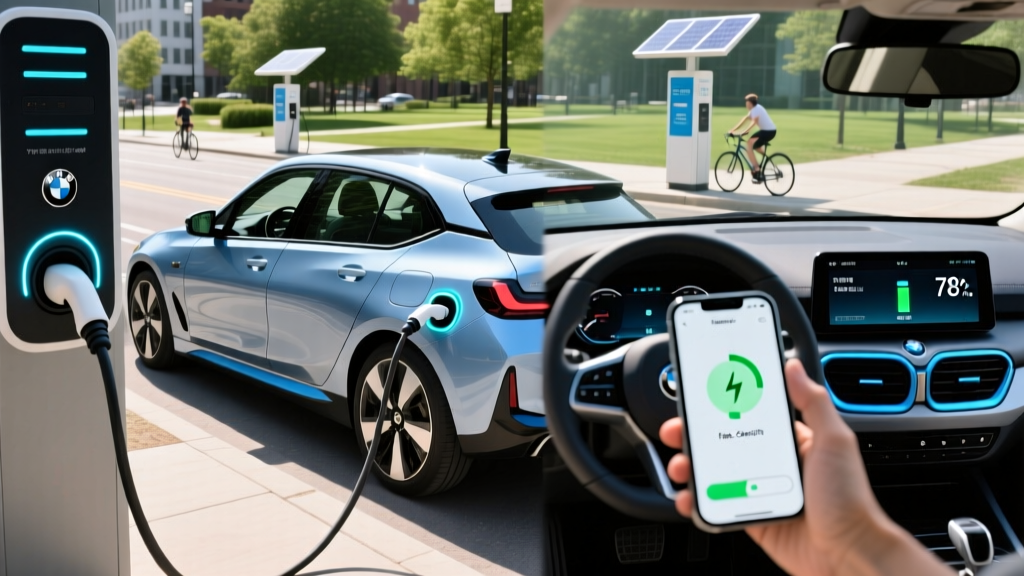
This is where the i3 shows its age most clearly. BMW equipped the i3 with a Combined Charging System (CCS) DC fast-charge port, but the peak rate is only 50 kW — far below the 150–250 kW common on modern EVs. Here is the full charging picture:
| Level | Power / Rate | Time / Miles Added |
|---|---|---|
| Level 1 (120V household) | ~1.4 kW | ~4–5 miles per hour; full charge ~30 hrs |
| Level 2 (240V, 32A) | 7.4 kW | ~25 miles per hour; 0–100% in ~6 hrs |
| DC Fast Charge (CCS) | 50 kW peak | 10–80% in ~38 min; tapers sharply above 80% |
The 50 kW DC charge rate means a 10–80% session takes roughly 38 minutes on the 120 Ah model — and longer on older 94 Ah and 60 Ah variants because their batteries are smaller but still limited to 50 kW peak. The charge curve tapers aggressively above 80% SoC, so DC fast charging past 80% is painfully slow. For practical purposes, the i3 is a home-charging-first vehicle. If you cannot install a Level 2 charger at home, the i3's Level 1 speed (roughly 5 miles of range per hour of charging) makes daily life difficult.
One note for CCS charging: as the North American industry shifts to NACS (Tesla's connector), CCS stations remain widely available through Electrify America and EVgo, but long-term infrastructure trends favor NACS. The i3 will always need a CCS-to-NACS adapter if future station conversions reduce CCS plug availability.
Performance and Driving Impressions
The i3's 170-hp rear-mounted electric motor delivers instant torque to the rear wheels, making it surprisingly quick off the line. The 0–60 mph time of roughly 6.9 seconds (120 Ah) feels even faster in practice because the electric torque hits immediately. The i3's 2,800-pound curb weight (thanks to that CFRP body) gives it a power-to-weight ratio that embarrasses many heavier modern EVs at stoplights.
The handling is unique: ultra-narrow 155-section tires mean the i3 leans into corners with a go-kart eagerness but will break into oversteer if you push too hard on wet roads. The 32.3-foot turning circle is among the tightest of any car sold, making it a parking-lot champion. Regenerative braking is aggressive enough for true one-pedal driving — lift off the accelerator and the i3 slows briskly to a stop without touching the brake pedal.
The REx (Range Extender) models add a 647cc two-cylinder BMW Motorrad gasoline engine that acts as a generator, never driving the wheels directly. It kicks in when the battery drops to roughly 6% SoC, maintaining that level while you drive. The REx adds about 150 pounds and eliminates the frunk, but gives you a combined range of 200+ miles when the gas tank is full.
Interior, Cargo, and Technology
The i3's cabin is unlike any other BMW. The dashboard uses eucalyptus wood and kenaf (a natural fiber) trim, the seats are upholstered in recycled materials or optional leather, and the airy, loft-like design feels more Scandinavian than German. The rear-hinged "coach doors" (suicide doors) create a wide opening but require the front doors to open first — a quirk that frustrates some owners in tight parking spaces.
Cargo space: 15.1 cubic feet behind the rear seats (comparable to a Honda Fit). Fold the rear seats flat and you get roughly 39.2 cubic feet. The rear seats are best suited for children or short trips — legroom is 31.9 inches, tight for adults over 5'10".
Tech: The i3 uses BMW's iDrive infotainment system with a 6.5-inch screen (2014–2018) or an optional 10.25-inch touchscreen (2019–2022). Apple CarPlay was added for the 2018 model year, but Android Auto was never offered. The digital instrument cluster is clear but basic by 2026 standards. Driver-assistance features are limited: you get standard forward collision warning and automatic emergency braking on later models, but no adaptive cruise control, no lane-keeping assist, and no hands-free driving system. The i3 is strictly SAE Level 0–1 for automation — this is a driver's car with minimal electronic help.
Pricing, Tax Credits, and Used Market Value
Because the i3 was discontinued after the 2022 model year, every i3 you buy today is a used vehicle. This changes the tax credit calculus entirely. Here is the current landscape:
| Model Year / Trim | Typical Used Price | Federal Used EV Credit (IRC §25E) | Effective Cost |
|---|---|---|---|
| 2014–2016 i3 BEV (60 Ah) | $10,000–$15,000 | Up to $4,000 (30% of sale price) | $6,000–$11,000 |
| 2017–2018 i3 BEV (94 Ah) | $15,000–$20,000 | Up to $4,000 | $11,000–$16,000 |
| 2019–2022 i3 BEV (120 Ah) | $20,000–$28,000 | Up to $4,000 | $16,000–$24,000 |
| 2019–2022 i3 REx (120 Ah) | $22,000–$30,000 | Up to $4,000 | $18,000–$26,000 |
Federal Used Clean Vehicle Credit (§25E) Requirements — verify at irs.gov:
- Credit equals 30% of the sale price, capped at $4,000
- Vehicle must cost $25,000 or less to qualify
- Buyer AGI limits: $75,000 (single), $112,500 (head of household), $150,000 (joint)
- Vehicle must be at least 2 model years old (all i3s qualify)
- Must purchase from a licensed dealer (private-party sales do not qualify)
- Credit is non-refundable — you need sufficient tax liability to claim it
- Beginning in 2024, credit can be transferred to the dealer as a point-of-sale discount
Most 2019–2022 i3 models with higher mileage (40,000+ miles) fall under the $25,000 cap and qualify for the full $4,000 credit. Lower-mileage examples may exceed the cap and receive 30% of the sale price instead. Always confirm eligibility with your tax professional before purchasing.
Battery Health, Warranty, and Longevity
The i3 uses Samsung SDI NMC (nickel manganese cobalt) lithium-ion cells. BMW's original battery warranty covers 8 years or 100,000 miles against capacity loss below 70% of original — meaning a 2017 i3's battery warranty is expiring or already expired in 2025–2026, while 2019–2022 models still have some coverage remaining.
Real-world degradation data from i3 owner communities shows the 120 Ah (42.2 kWh) battery retains roughly 88–93% of its original capacity after 60,000 miles and 5 years — better than many early-2010s EVs. The 60 Ah (22 kWh) models from 2014–2016 show more noticeable degradation, with some owners reporting 75–82% State of Health (SoH) after 80,000+ miles. Before buying any used i3, request a battery health report from a BMW dealer or use an OBD2 scanner with an app like BimmerCode or CarScanner to read the actual SoH percentage.
If the battery does need replacement out of warranty, expect a cost of $8,000–$14,000 for a refurbished or new pack from BMW, plus $1,500–$2,500 in labor. Third-party refurbishment shops are emerging as a lower-cost option ($5,000–$8,000 for cell-level repairs).
Pros, Cons, and How the i3 Compares
Pros
- Lightweight CFRP body — exceptional city efficiency and nimble handling
- Tight 32.3-ft turning circle — best-in-class parking maneuverability
- Premium, sustainable interior materials unlike anything else in the segment
- One-pedal driving with strong regen — excellent in stop-and-go traffic
- REx option provides range flexibility without full reliance on chargers
- Strong used-EV tax credit eligibility — as low as $6,000 net for early models
Cons
- 50 kW DC fast charging is painfully slow by 2026 standards
- 81–153 mile EPA range limits highway and road-trip usefulness
- No heat pump — significant winter range loss (25–35%)
- Narrow rear seats and coach doors are impractical for adult passengers
- No Android Auto; Apple CarPlay only on 2018+ models
- Unusual tire size (155/70 R19) is expensive and limits replacement options
- Original battery warranty expiring on 2014–2017 models
Against key competitors in the used EV market: the Chevrolet Bolt EV offers 238–259 miles of EPA range and 55 kW DC charging for similar money, making it the more practical choice for range-conscious buyers. The Nissan Leaf (40 kWh/62 kWh) offers 149–226 miles of range but uses CHAdeMO (a fading standard) and passive battery cooling. The Hyundai Kona Electric delivers 258 miles and 100 kW DC charging but costs more on the used market. The i3 wins on character, city efficiency, and build quality — but loses on range and charging speed to all three.
BMW i3 FAQ
What is the real-world range of the BMW i3?
For the final 120 Ah (2019–2022) BEV model, expect 125–140 miles on the highway and 135–150 miles in mixed city driving. In freezing temperatures, plan for 100–115 miles. Earlier 60 Ah models deliver just 55–75 real-world miles.
How fast does the BMW i3 charge?
DC fast charging peaks at 50 kW, taking roughly 38 minutes from 10–80% on the 120 Ah model. Home Level 2 charging at 7.4 kW adds about 25 miles per hour, filling the battery in roughly 6 hours.
Does the BMW i3 qualify for the federal EV tax credit?
As a used vehicle, the i3 qualifies for the IRC §25E Used Clean Vehicle Credit — up to $4,000 or 30% of the sale price (whichever is less), provided the sale price is under $25,000 and the buyer meets income caps. The original §30D new-vehicle credit no longer applies since production ended in 2022.
Is the BMW i3 worth buying in 2026?
Yes, if you need an affordable, premium city commuter with home charging and short daily drives. No, if you need highway range, fast DC charging, or family practicality. The 120 Ah models (2019–2022) offer the best value with 153 miles of EPA range and remaining battery warranty.
What are the biggest BMW i3 problems?
The most commonly reported issues include 12V auxiliary battery failures (common in all EVs), air-conditioning compressor wear, and the range-extender engine requiring maintenance (oil changes, fuel stabilizer) that pure BEV owners avoid. The CFRP body is extremely strong but can be costly to repair after a collision — verify that a body shop near you can service carbon-fiber structures.
Should I buy the BEV or the REx (range extender)?
Choose the BEV if you have reliable home charging and want minimal maintenance. Choose the REx if you occasionally need 200+ miles of range and lack access to fast chargers on your routes. The REx adds weight, eliminates the frunk, and requires gas-engine maintenance — but eliminates range anxiety for many owners.
Sources: EPA range and efficiency data from fueleconomy.gov; federal tax credit rules from IRS.gov; safety ratings from IIHS.