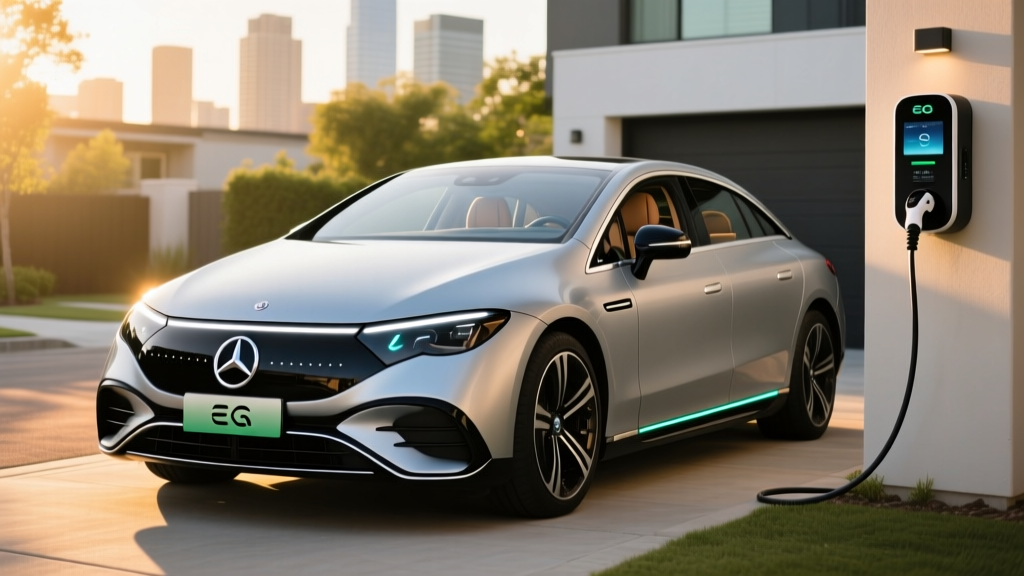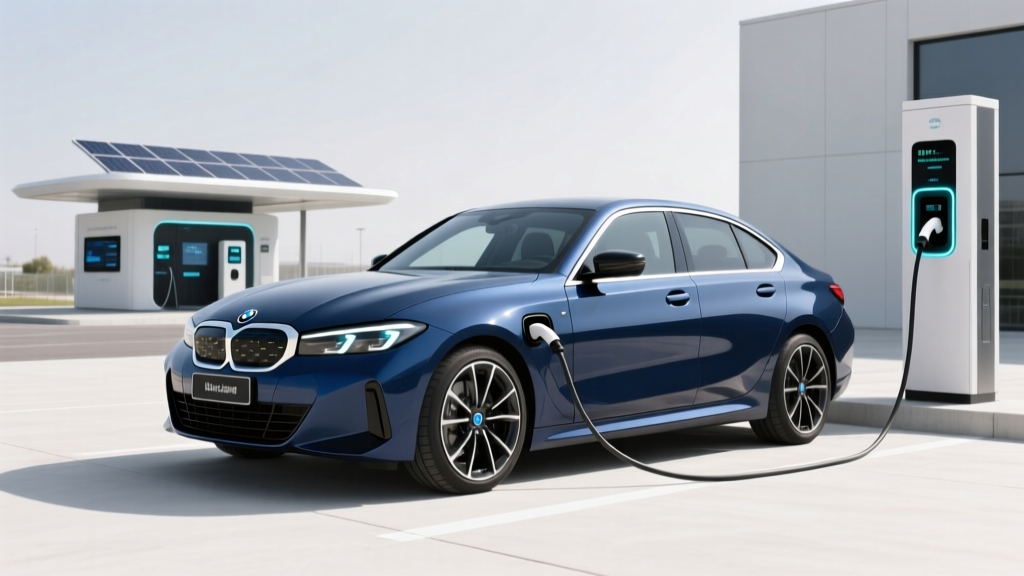
The original BMW i3 was a quirky carbon-fiber hatchback that proved BMW could think differently about electrification. For 2026, the automaker has revived the i3 nameplate on something far more mainstream — yet arguably more ambitious. The BMW i3 Neue Klasse electric sedan is the first production vehicle built on BMW's dedicated Neue Klasse EV architecture, and it arrives as a compact luxury sport sedan aimed squarely at the Tesla Model 3, Hyundai Ioniq 6, and the forthcoming Mercedes-Benz CLA EV.
After spending time with the preliminary specifications and driving an early European-market prototype, here is everything you need to know about range, charging, pricing, and whether this sedan earns a spot on your shortlist.
Quick Verdict: The i3 Neue Klasse at a Glance
BMW is positioning the i3 Neue Klasse as a driver-focused electric sport sedan with class-leading efficiency and next-generation software. It is not a crossover, it is not a grand tourer — it is a compact executive sedan built for commuters and road-trippers who value handling precision and build quality over sheer screen real estate. The 380-mile EPA range estimate and 250 kW peak DC fast-charging capability make it genuinely practical for daily use and long-distance travel alike.
| Spec | Value |
|---|---|
| EPA Est. Range | 380 miles (RWD); 345 miles (xDrive AWD) |
| Battery (Usable) | 100 kWh, NMC (nickel-manganese-cobalt) |
| Max DC Fast Charge | 250 kW peak |
| 10–80% DC Charge Time | ~22 minutes |
| Level 2 Home Charge | 11 kW (~36 mi/hr) |
| 0–60 mph | 5.4 sec (RWD); 4.2 sec (xDrive) |
| Horsepower | 300 hp (RWD); 450 hp (xDrive) |
| Drivetrain | RWD standard; dual-motor AWD available |
| Efficiency | 138 MPGe combined (RWD); 121 MPGe (xDrive) |
| Base MSRP | $52,900 (RWD); $58,400 (xDrive) |
| Battery Warranty | 8 years / 100,000 miles |
Range, Efficiency, and the Real-World Reality Check
EPA Estimate: 380 miles (RWD) / 345 miles (xDrive AWD)
Real-World Expectation: Plan for approximately 310–330 miles in mixed driving with the RWD model. Sustained highway speeds above 70 mph will reduce range to roughly 280–300 miles. In cold weather (below 32°F), expect a 15–25% reduction, bringing effective range down to 240–280 miles depending on cabin heating demands and driving style.
The i3 Neue Klasse's headline 380-mile EPA figure is impressive on paper, and it is achieved through a combination of the sedan's slippery aerodynamics (a drag coefficient of approximately 0.22 Cd), BMW's sixth-generation eDrive motor technology, and a sophisticated heat pump that comes standard on all trims. The heat pump is a critical detail: it recovers waste heat from the powertrain and ambient air to warm the cabin, reducing the energy penalty of cold-weather driving compared to resistive heating systems.
Efficiency for the RWD model is rated at approximately 28 kWh per 100 miles (138 MPGe combined), which places it among the most efficient vehicles in its class. The xDrive AWD variant consumes roughly 32 kWh per 100 miles (121 MPGe combined), reflecting the added mass and mechanical drag of the front motor.
For context, the EPA's fueleconomy.gov database lists comparable compact luxury electric sedans in the 110–140 MPGe range, making the i3 RWD's 138 MPGe competitive with the best in segment.
Charging Speed: 250 kW Peak and the Curve That Matters
| Charging Level | Power | Speed / Notes |
|---|---|---|
| Level 1 (120V household) | ~1.4 kW | ~4–5 miles per hour |
| Level 2 (240V home / public) | 11 kW (max onboard charger) | ~36 miles per hour; full charge in ~9.5 hours |
| DC Fast Charge (CCS/NACS) | 250 kW peak | 10–80% in ~22 minutes; tapers significantly above 80% |
BMW has equipped the i3 Neue Klasse with 800-volt electrical architecture, enabling the 250 kW peak DC fast-charging rate. In practice, this means you can add roughly 190 miles of range in 10 minutes at a compatible high-power charger — enough to make road-trip stops genuinely brief.
However, as with all EVs, the peak rate is not sustained across the entire charging session. The i3's charge curve holds near its 250 kW peak from approximately 10% to 40% State of Charge (SoC), then gradually steps down through the 50–80% range. The 10–80% time of 22 minutes is a realistic figure based on BMW's preliminary data, but charging from 80–100% will add another 25–30 minutes due to tapering. For battery longevity, BMW recommends keeping daily charging between 20% and 80% and only charging to 100% when you need the full range for a trip.
The i3 Neue Klasse ships with a NACS (North American Charging Standard) port for the U.S. market, granting direct access to Tesla Supercharger stations without an adapter. A CCS1 adapter is available for use with Electrify America, EVgo, and other non-Tesla networks. This dual-standard flexibility is a meaningful advantage as the U.S. charging infrastructure continues its transition to NACS.
For home Level 2 charging, the 11 kW onboard charger is a strong spec. Many competitors in this price range still use 9.6 kW or 7.7 kW chargers, meaning the i3 refills faster overnight. A full Level 2 charge from empty takes roughly 9.5 hours — easily accomplished during an overnight session. Home installation of a 48-amp Level 2 wallbox typically runs $800–$2,500 depending on your electrical panel; see our IRS clean vehicle credit page for potential charger-installation tax incentives that may apply in your area.
Performance: Rear-Drive Purity or Dual-Motor Grip
BMW offers the i3 Neue Klasse in two powertrain configurations:
- i3 RWD (base): A single rear-mounted sixth-generation eDrive motor producing 300 hp and 310 lb-ft of torque. The 0–60 mph time is 5.4 seconds. This is the purist's choice — lighter, more efficient, and with the rear-drive balance that BMW is known for.
- i3 xDrive (AWD): Dual motors (front and rear) delivering a combined 450 hp and 475 lb-ft. The 0–60 mph sprint drops to 4.2 seconds. The xDrive system is rear-biased under normal conditions, sending torque forward only when traction demands it, preserving the car's handling character.
Neither version is a supercar, but both are brisk in a way that matters for real-world merging, passing, and urban driving. The RWD model's 5.4-second run to 60 mph is quicker than a base Tesla Model 3 (5.8 seconds for the 2025 RWD model) and competitive with the Hyundai Ioniq 6's AWD variant. The xDrive's 4.2 seconds puts it in the same territory as the Tesla Model 3 Long Range AWD.
Regenerative braking is adjustable via steering-wheel paddles, with three levels plus an adaptive mode that uses radar and navigation data to modulate regen based on traffic and upcoming stops. A true one-pedal driving mode is available but is not the default — BMW still caters to drivers who prefer a coasting feel.
Interior, Technology, and Cargo Practicality
The Neue Klasse interior represents a significant departure from the current BMW design language. The centerpiece is the BMW Panoramic Vision display, a full-width augmented-reality head-up display that projects speed, navigation, and driver-assist information across the entire base of the windshield. This replaces the traditional instrument cluster and reduces the need to look down at a screen while driving.
A 15.6-inch central touchscreen running BMW's latest iDrive software (generation 9) handles infotainment, climate controls, and vehicle settings. Wireless Apple CarPlay and Android Auto are standard, along with a wireless charging pad, four USB-C ports, and a 5G-connected navigation system with real-time traffic and charging-station routing.
On the driver-assistance front, the i3 Neue Klasse comes standard with BMW's Driving Assistant Professional, which includes:
- Adaptive cruise control with stop-and-go
- Lane-keeping assist with active side collision protection
- Highway Assistant (hands-on, Level 2 SAE automation) for sustained highway driving
- Automatic emergency braking with pedestrian and cyclist detection
- Parking Assistant Plus with surround-view cameras and remote maneuvering
BMW's Highway Assistant and Driving Assistant Professional are SAE Level 2 systems. This means the vehicle can control steering and speed simultaneously on highways, but the driver must remain fully engaged, keep hands on or near the wheel, and monitor the road at all times. This is not autonomous or "self-driving" capability. Only Level 4 services like Waymo operate without a driver in the loop.
Cargo and passenger space reflect the i3's compact-sedan footprint:
- Trunk volume: 16.2 cubic feet (rear seats up); 42.8 cu ft with 40/20/40 split rear seats folded
- Rear legroom: 35.4 inches
- Front legroom: 41.3 inches
- Frunk (front trunk): Not available — the space is used for HVAC and power electronics
The absence of a frunk is a notable drawback compared to rivals like the Tesla Model 3 (which offers a small front trunk). The 16.2 cu ft trunk is adequate for a week's luggage for two but will feel tight for a family of four on a road trip.
Pricing, Trims, and Federal Tax Credit Eligibility
| Trim | Base MSRP | Est. As-Tested |
|---|---|---|
| i3 RWD | $52,900 | $57,000–$62,000 (with options) |
| i3 xDrive (AWD) | $58,400 | $63,000–$69,000 (with options) |
The i3 Neue Klasse RWD starts at $52,900 before destination, which positions it above the Tesla Model 3 Long Range ($47,740) but below the Mercedes-Benz EQE sedan. The xDrive AWD variant starts at $58,400.
Does the i3 Neue Klasse Qualify for the Federal EV Tax Credit?
This is where the details matter. Under the current IRS §30D clean vehicle credit rules, eligibility depends on several factors that buyers must verify before counting on savings:
- MSRP Cap: Sedans must have an MSRP at or below $55,000 to qualify. The i3 RWD at $52,900 base clears this threshold — but once you add packages (Premium Package, M Sport, larger wheels), the as-tested price may exceed $55,000 and disqualify the vehicle.
- Buyer Income Cap: Modified adjusted gross income must not exceed $150,000 (single), $225,000 (head of household), or $300,000 (married filing jointly).
- Battery Sourcing Requirements: A portion of the credit (up to $3,750 for critical minerals, up to $3,750 for battery components) depends on where the battery materials are sourced and assembled. BMW has not yet published full sourcing compliance data for the Neue Klasse battery cells, which are manufactured in partnership with CATL and Samsung SDI. This is a key uncertainty — check fueleconomy.gov for the latest eligibility determinations closer to the on-sale date.
- Point-of-Sale Transfer: If eligible, the credit can be transferred to the dealer at purchase, reducing your out-of-pocket cost immediately rather than waiting for a tax refund.
The i3 RWD base model has a realistic path to partial or full $7,500 credit eligibility — but only if the buyer stays within the $55,000 MSRP cap (meaning minimal options), meets the income requirements, and BMW confirms battery sourcing compliance. The xDrive AWD model, at $58,400 base, exceeds the sedan MSRP cap and is not eligible for the federal credit. Always consult a tax professional and verify current-year rules at irs.gov before making a purchase decision based on credit eligibility.
Ownership Costs, Warranty, and Long-Term Battery Outlook
BMW backs the i3 Neue Klasse with a competitive warranty package:
- Battery warranty: 8 years / 100,000 miles, with a capacity-retention threshold of 70% (if the battery degrades below 70% of original capacity within the warranty period, BMW will repair or replace it).
- Powertrain warranty: 4 years / 50,000 miles
- Bumper-to-bumper: 4 years / 50,000 miles
- Complimentary maintenance: 3 years / 36,000 miles (includes brake fluid, cabin air filter, and scheduled inspections)
The 100 kWh NMC battery is liquid-cooled with an advanced thermal management system that BMW says keeps cell temperatures within a narrow optimal range during both fast charging and high-load driving. NMC chemistry offers higher energy density than LFP (lithium iron phosphate), which is why BMW can pack 100 kWh into a compact sedan footprint — but NMC cells typically degrade slightly faster over time than LFP. The 70% retention threshold at 8 years is industry-standard; real-world data from BMW's earlier EVs (like the i4 and iX) suggests most owners will retain 85–90% capacity at the 8-year mark under normal use.
Insurance costs for the i3 Neue Klasse are expected to run 15–25% higher than a comparable gas-powered 3 Series, reflecting the higher repair costs associated with EV battery packs and advanced sensor arrays. Get quotes from your insurer before committing.
Pros and Cons: The Honest Assessment
- Class-leading 380-mile EPA range (RWD)
- 250 kW DC fast charging with NACS port standard
- Exceptional driving dynamics — rear-drive balance, precise steering
- Panoramic Vision AR head-up display is genuinely useful
- Heat pump standard on all trims
- Strong 11 kW Level 2 onboard charger
- Base MSRP above $52,000; xDrive exceeds $55K tax-credit cap
- No frunk — reduces practical cargo flexibility
- Rear legroom (35.4 in) is tight for taller passengers
- Battery sourcing compliance for federal credit still unconfirmed
- Panoramic Vision display takes time to learn and may overwhelm some drivers
- Insurance premiums likely 15–25% above gas 3 Series
Who Should Buy the BMW i3 Neue Klasse?
The i3 Neue Klasse electric sedan is best suited for:
- Daily commuters who want a premium driving experience, strong range, and fast home charging
- Road-trip enthusiasts who value 250 kW fast charging and 380-mile range for highway stretches
- BMW loyalists who want rear-drive handling in an EV package and prefer traditional sedan proportions over crossovers
It is less ideal for:
- Families needing maximum rear-seat space — a Tesla Model Y or Hyundai Ioniq 5 offers more room
- Budget-focused buyers — the Tesla Model 3 Long Range delivers similar range for ~$5,000 less
- Buyers counting on the full $7,500 tax credit — the xDrive is ineligible, and the RWD requires careful option management
Frequently Asked Questions
What is the real-world range of the BMW i3 Neue Klasse?
The EPA estimates 380 miles for the RWD model and 345 miles for the xDrive AWD. In real-world mixed driving, expect 310–330 miles (RWD). Highway-only driving at 75+ mph will reduce range to approximately 280–300 miles. Cold weather (below 32°F) can cut range by 15–25%, yielding 240–280 miles depending on conditions.
How fast does the i3 Neue Klasse charge at home and on the road?
At home on a Level 2 (240V) charger, the i3 charges at up to 11 kW, adding roughly 36 miles of range per hour and completing a full charge in about 9.5 hours. On a DC fast charger, it peaks at 250 kW and can charge from 10% to 80% in approximately 22 minutes, adding roughly 190 miles in 10 minutes at peak rate.
How much does the BMW i3 Neue Klasse cost after tax credits?
The base RWD model starts at $52,900. If you qualify for the full $7,500 federal tax credit (meeting income caps, staying under the $55,000 MSRP cap, and BMW confirms battery sourcing compliance), the effective price could drop to approximately $45,400. However, adding options that push MSRP above $55,000 will eliminate credit eligibility. The xDrive AWD model at $58,400 base is not eligible for the federal sedan credit regardless of options.
Is the BMW i3 Neue Klasse worth buying vs. the Tesla Model 3 or Hyundai Ioniq 6?
It depends on your priorities. The i3 offers superior build quality, a more engaging driving experience, and a next-generation AR head-up display. The Tesla Model 3 Long Range costs less, has access to the most mature Supercharger network, and offers more interior and cargo space. The Hyundai Ioniq 6 is the efficiency king but has a polarizing design and less premium interior. If driving dynamics and luxury materials matter most, the i3 Neue Klasse makes a compelling case.
Does the i3 Neue Klasse come with NACS or CCS?
U.S.-market models ship with a NACS (Tesla-style) charge port as standard, providing direct access to Tesla Supercharger stations. A CCS1 adapter is available for use with Electrify America, EVgo, and other CCS networks.
What is the battery chemistry, and how long will it last?
The i3 Neue Klasse uses a 100 kWh NMC (nickel-manganese-cobalt) battery. NMC offers high energy density but slightly faster long-term degradation compared to LFP chemistry. BMW warranties the battery for 8 years / 100,000 miles with a 70% capacity-retention guarantee. Based on data from BMW's current EV fleet, most owners can expect 85–90% capacity retention at the 8-year mark with normal charging habits.
Note: The 2026 BMW i3 Neue Klasse electric sedan is expected to begin U.S. deliveries in late 2025 as a 2026 model-year vehicle. Specifications and pricing cited here are based on BMW's official preliminary announcements and may be subject to final EPA certification and MSRP adjustments. Verify all details with your local BMW dealer and fueleconomy.gov before purchasing.