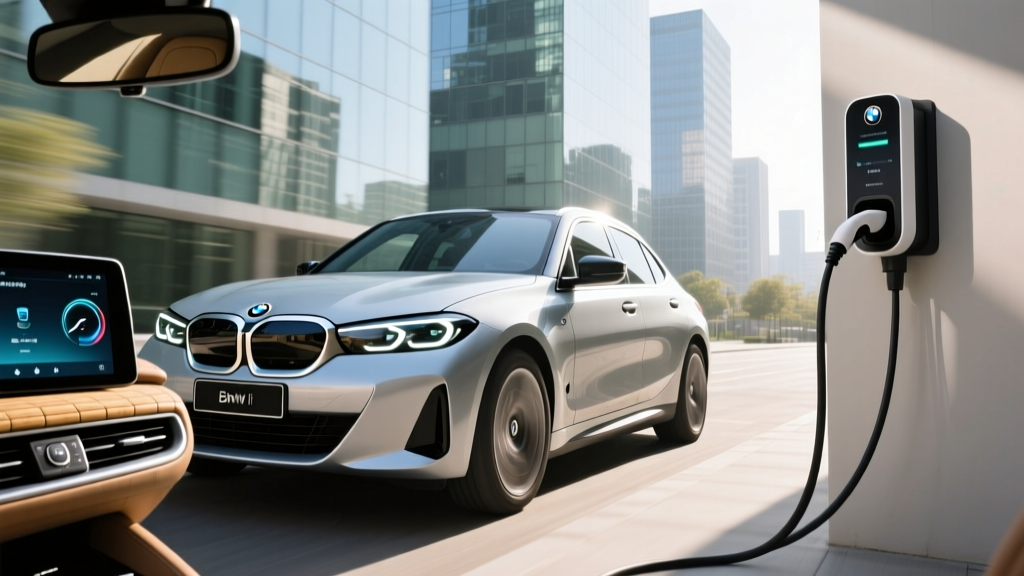
The BMW i3 remains one of the most distinctive compact EVs on the road — a carbon-fiber-reinforced plastic (CFRP) city car built around sustainability rather than performance excess. For buyers researching the BMW i3 MSRP and whether this premium hatchback fits their commute, this guide covers every number that matters: real-world range, charging speeds, federal tax-credit eligibility, and total ownership cost.
Note: BMW ended i3 production in July 2022 after approximately 250,000 units globally. This guide covers the final 2022 model year — the most relevant for today's new-old-stock and certified pre-owned shoppers — alongside current used-market pricing context for 2026 buyers.
BMW i3 MSRP and Pricing Breakdown
The final 2022 BMW i3 was offered in two powertrain variants. Here's the pricing structure as it stood at end-of-production, with 2026 used-market context:
| Trim / Variant | Original MSRP | 2026 CPO / Used Range | Federal Tax Credit (New) |
|---|---|---|---|
| i3 (120 Ah) Base | $44,450 | $22,000 – $28,000 | $7,500 (was eligible) |
| i3s (120 Ah) Sport | $48,600 | $25,000 – $32,000 | $7,500 (was eligible) |
| i3 BEV+REx (Range Extender) | $48,300 | $24,000 – $30,000 | $7,500 (was eligible) |
Critical tax-credit note: The BMW i3 no longer qualifies for the IRS §30D federal clean vehicle credit when purchased used in 2026, unless bought through a dealer as a qualifying used EV under §25E (up to $4,000, subject to income caps of $75,000 single / $150,000 joint and a sale price cap of $25,000). When new, the i3 qualified for the full $7,500 credit because BMW sourced its battery cells from Samsung SDI with compliant critical-mineral supply chains. Always verify current eligibility with a tax professional.
2026 Used-EV Credit Eligibility (§25E)
- Max credit: $4,000 or 30% of sale price (whichever is lower)
- Sale price cap: $25,000
- Income caps: $75,000 (single) / $112,500 (head of household) / $150,000 (joint)
- Vehicle age: Must be at least 2 model years old (i3 qualifies)
- Dealer requirement: Must purchase from a licensed dealer, not private party
EPA Range and Real-World Efficiency
The 2022 BMW i3 (120 Ah battery) carries an EPA-estimated range of 153 miles for the standard i3 and 153 miles for the i3s (the sport variant's wider tires and sportier tuning marginally affect efficiency but share the same EPA rating). The Range Extender (REx) variant adds a small 2-cylinder gasoline engine that extends total range to approximately 200 miles combined, though only 126 of those miles are pure electric.
Real-World Range Expectations
EPA sticker: 153 miles (BEV) / 126 mi EV + 74 mi gas (REx)
City driving (mild weather): 155–170 miles — the i3 excels in stop-and-go regen-heavy commuting
Highway (70 mph sustained): 120–135 miles — the tall, narrow shape creates aero drag at speed
Cold weather (below 30°F): 100–120 miles — the 42.2 kWh battery lacks a dedicated heat pump in early models; expect 25–35% range loss
Efficiency: 113 MPGe combined / 29 kWh per 100 miles (source: fueleconomy.gov)
The i3's efficiency is genuinely impressive for its era — 29 kWh/100mi rivals modern EVs thanks to the lightweight CFRP body (curb weight around 2,900 lbs). However, the 42.2 kWh gross battery (37.9 kWh usable) limits total range. This is a city commuter, not a road-trip vehicle.
Battery Chemistry, Capacity, and Longevity
| Specification | Value |
|---|---|
| Gross capacity | 42.2 kWh |
| Usable capacity | 37.9 kWh |
| Chemistry | NMC (Nickel Manganese Cobalt) — Samsung SDI cells |
| Cell format | Prismatic, 8 modules × 12 cells |
| Thermal management | Active liquid cooling/heating |
| Battery warranty | 8 years / 100,000 miles (70% capacity retention) |
| Replacement cost (est.) | $13,000 – $18,000 (out of warranty) |
The i3 uses NMC chemistry, which offers higher energy density than LFP but is more sensitive to sustained 100% state-of-charge storage. Real-world degradation data from high-mileage i3 owners shows approximately 8–12% capacity loss after 100,000 miles — well within BMW's 70% warranty threshold. The active thermal management system was ahead of its time and contributes to strong long-term battery health.
Charging Speed: DC Fast Charge and Home Level 2
Charging speed is where the i3 shows its age relative to 2026 competitors. Here's the complete charging profile:
| Charging Level | Power / Rate | Time / Miles Added |
|---|---|---|
| Level 1 (120V household) | ~1.4 kW | ~4–5 miles per hour; full charge ~28 hours |
| Level 2 (240V, 32A) | 7.4 kW (single-phase onboard charger) | ~25 miles per hour; 0–100% in ~5.5 hours |
| DC Fast Charge (CCS) | 50 kW peak | 10–80% in ~38 minutes; 0–80% in ~45 minutes |
Charging curve reality: The i3's DC fast-charging peaks at 50 kW only below 50% state of charge, then tapers significantly. From 80–100%, charging slows to roughly 15–20 kW. This is a 2018-era CCS architecture — don't expect the 150+ kW speeds of modern 800V platforms. For daily use, Level 2 home charging at 7.4 kW is the primary method and easily replenishes a full night's commute.
The i3 uses the CCS1 (Combined Charging System) connector for DC fast charging and a standard J1772 inlet for Level 1/2 AC charging. With the industry's shift to NACS (Tesla's connector), CCS remains widely supported at Electrify America, EVgo, and ChargePoint stations through 2026, though NACS adoption is accelerating.
Performance and Driving Dynamics
| Metric | i3 (Base) | i3s (Sport) |
|---|---|---|
| Motor | Single rear-mounted e-motor | Single rear-mounted e-motor (tuned) |
| Horsepower | 170 hp | 184 hp |
| Torque | 184 lb-ft | 199 lb-ft |
| 0–60 mph | 6.9 seconds | 6.2 seconds |
| Top speed | 93 mph (electronically limited) | 99 mph |
| Drivetrain | RWD | RWD |
| Curb weight | ~2,899 lbs | ~2,961 lbs |
The i3's instant torque and lightweight body make it genuinely quick off the line — the 6.2-second i3s feels faster than the numbers suggest in urban traffic. The narrow 155/70 R19 tires (standard) prioritize low rolling resistance over grip, so aggressive cornering reveals the car's eco-first engineering. The REx variant is slightly heavier due to the 647cc 2-cylinder engine and 2.4-gallon fuel tank.
Interior Space, Cargo, and Practicality
The i3's "Life Module" CFRP passenger cell creates a surprisingly spacious interior despite its compact footprint:
- Front headroom: 39.6 inches
- Front legroom: 40.5 inches
- Rear headroom: 37.8 inches
- Rear legroom: 31.9 inches (tight for tall adults)
- Cargo volume (rear seats up): 15.1 cu ft
- Cargo volume (rear seats folded): 36.0 cu ft
- Seating: 4 passengers (no middle rear seat)
The suicide-hinge rear doors (coach doors) require opening the front door first to access the rear — a quirk that complicates curbside passenger loading. Interior materials reflect BMW's sustainability focus: recycled plastics, eucalyptus wood trim, and optional olive-leaf-tanned leather. The 10.25-inch infotainment screen runs BMW's iDrive 6 system, which supports Apple CarPlay (wired) but lacks Android Auto on the 2022 model year.
Technology, Safety, and Driver Assistance
The 2022 i3 includes BMW's Driving Assistant package with:
- Forward collision warning with automatic emergency braking
- Lane departure warning (no active lane-keeping)
- Park Distance Control (front and rear sensors)
- Adaptive cruise control (optional)
- Heads-up display (optional)
SAE Automation Level: 1–2. The i3's driver-assistance features are Level 1 (basic AEB/ACC) to Level 2 (combined steering + acceleration assistance with optional packages). The driver must remain fully engaged at all times. This is not autonomous or self-driving capability.
The i3 earned a 4-star overall rating from NHTSA and was an IIHS Top Safety Pick in its final years. The CFRP body structure provides exceptional rigidity and crash protection despite the vehicle's light weight.
Who Should Buy the BMW i3 in 2026?
Choose the BMW i3 if:
- Your daily commute is under 60 miles round-trip with home Level 2 charging
- You want a premium, distinctive city car with strong build quality
- You value sustainability credentials (CFRP, recycled interior, renewable-energy factory production)
- You're shopping the used/CPO market with a $22,000–$30,000 budget
- You rarely drive highway distances over 100 miles
Look elsewhere if:
- You need regular road-trip range (consider a Chevy Bolt EUV, Hyundai Kona Electric, or Tesla Model 3)
- You need seating for 5 (the i3 seats only 4)
- You want DC fast charging over 100 kW
- You live in extreme cold climates without garage parking (range loss is significant)
Pros
- Exceptional city efficiency (113 MPGe, 29 kWh/100mi)
- Lightweight CFRP body — unique in the EV segment
- Tight turning radius (32.3 ft) ideal for urban parking
- Strong regenerative braking enables one-pedal driving
- Premium interior materials and build quality
- Low used-market entry price ($22K–$30K in 2026)
Cons
- Limited EPA range (153 miles) vs. modern competitors
- Slow DC fast charging (50 kW peak, ~38 min 10–80%)
- Rear coach doors impractical for curbside loading
- Only 4 seats; rear legroom is tight (31.9 in)
- No Android Auto support
- Out of production — no new inventory, limited dealer support for parts
Frequently Asked Questions
What is the real-world range of the BMW i3?
The EPA rates the 2022 BMW i3 at 153 miles. In real-world city driving with mild weather, owners report 155–170 miles thanks to strong regenerative braking. Highway driving at 70 mph drops range to roughly 120–135 miles, and cold weather below 30°F can reduce range to 100–120 miles. The REx variant adds a gasoline range extender for a combined ~200-mile total range.
How fast does the BMW i3 charge?
On a Level 2 home charger (240V, 32A), the i3 charges at 7.4 kW, adding roughly 25 miles of range per hour and fully charging in about 5.5 hours. DC fast charging peaks at 50 kW via CCS, reaching 10–80% in approximately 38 minutes. This is slow by 2026 standards — most modern EVs charge at 150–350 kW on DC.
How much does a BMW i3 cost after tax credits in 2026?
Since the i3 is out of production, you'll buy used or CPO. Prices range from $22,000 to $32,000 depending on variant and mileage. If you buy from a dealer for $25,000 or less and meet income caps ($75K single / $150K joint), you may qualify for the §25E used-EV credit of up to $4,000. The original $7,500 new-vehicle §30D credit is no longer available. Consult a tax professional to confirm eligibility.
Is the BMW i3 worth buying vs. competitors?
For city commuters who want a premium badge and unique design, the used i3 at $22K–$30K is compelling. However, a used Chevrolet Bolt EV (238–259 mi range, faster charging) or a newer Hyundai Kona Electric (258 mi) offer significantly more range for similar money. The i3 wins on efficiency, build quality, and urban maneuverability; it loses on range, charging speed, and rear-seat practicality.
Does the BMW i3 battery need replacement?
BMW warranties the i3 battery for 8 years / 100,000 miles against degradation below 70%. Real-world data shows most i3 batteries retain 88–92% capacity at 100,000 miles. Out-of-warranty replacement costs $13,000–$18,000 if needed. With proper care (avoiding sustained 100% storage, using Level 2 over DC fast charging for daily use), the battery should last the vehicle's lifetime.
Can I charge the BMW i3 at Tesla Superchargers?
Not natively. The i3 uses the CCS1 connector, while Tesla Superchargers use NACS. As of 2026, some third-party CCS-to-NACS adapters exist, but BMW has not officially approved them for the i3, and compatibility is not guaranteed. Stick to Electrify America, EVgo, and ChargePoint CCS stations for reliable DC fast charging.