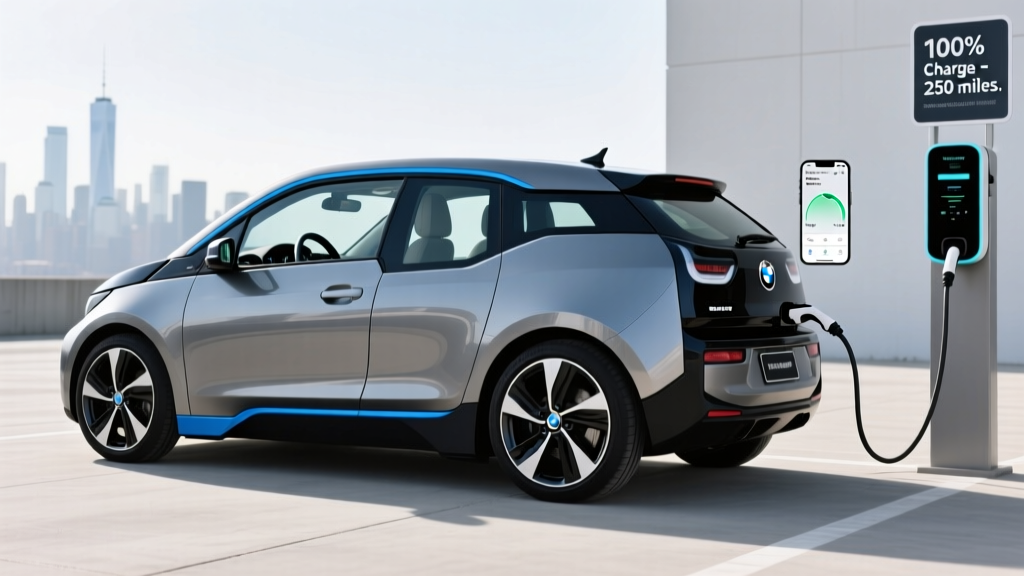
The BMW i3 was never a conventional electric car, and it never tried to be. Launched in 2014 and produced through 2021, BMW's carbon-fiber city runabout was an engineering moonshot: a purpose-built EV with a life-cell passenger module made from carbon-fiber-reinforced plastic (CFRP), a rear-mounted electric motor, and skinny low-rolling-resistance tires that looked like they belonged on a concept car. For buyers searching for BMW i3 miles per gallon data today, the answer is measured not in gallons but in MPGe — and the numbers still hold up remarkably well against modern EVs in the urban efficiency game.
Because BMW ended i3 production in 2021, this review focuses on what you need to know as a used-EV buyer in 2026: real-world efficiency, battery health expectations, charging practicality, and whether the i3's unique architecture is a blessing or a liability at today's used-market prices.
BMW i3 MPGe and Efficiency: The Numbers That Matter
The EPA rates the final-generation BMW i3 (2019–2021, 120 Ah battery) at 113 MPGe combined — that's 120 MPGe city and 106 MPGe highway. In energy terms, it consumes roughly 30 kWh per 100 miles of mixed driving, which translates to about 3.3 miles per kWh.
| Metric | City | Highway | Combined |
|---|---|---|---|
| MPGe | 120 | 106 | 113 |
| kWh/100 mi | 28 | 32 | 30 |
| Miles/kWh | 3.6 | 3.1 | 3.3 |
That 113 MPGe combined puts the i3 ahead of most current EVs in city driving. For context, the 2025 Nissan Leaf SV Plus achieves 104 MPGe combined, and the Chevrolet Bolt EV managed 109 MPGe before its initial discontinuation. The i3's lightweight CFRP construction (roughly 2,800 lbs curb weight — lighter than many compact gas cars) is the primary reason it sips electrons so frugally at low speeds.
However, highway efficiency drops noticeably. The i3's narrow 155/70R19 tires and boxy shape create more drag at speed, and the single-speed transmission offers no gearing optimization above 70 mph. Expect real-world highway consumption closer to 33–36 kWh/100 mi (roughly 97–103 MPGe) at sustained 75 mph.
EPA Range vs. Real-World Range: What You'll Actually Get
The EPA's 153-mile figure applies to the final 120 Ah battery generation. Earlier 60 Ah (2014–2016) and 94 Ah (2017–2018) models carry lower EPA ratings of 81 and 114 miles, respectively.
In mixed suburban and city driving at moderate temperatures (60–80°F), expect 130–145 miles from the 120 Ah model. Sustained highway driving at 75 mph reduces this to approximately 110–125 miles. In freezing temperatures (below 32°F) without preconditioning, range can drop to 85–100 miles — a 30–40% loss typical of EVs without a dedicated heat pump. The i3 uses a resistive cabin heater, which draws significant power in cold weather.
The i3's 42.2 kWh battery pack (gross), with approximately 37.9 kWh usable, is modest by 2026 standards. Samsung SDI manufactured the cells using NMC (nickel manganese cobalt) chemistry, which offers good energy density but is more sensitive to high-state-of-charge stress than LFP (lithium iron phosphate) packs found in some modern budget EVs.
For a 2026 used buyer, battery health is the critical variable. A 2019–2021 i3 with 60,000 miles may show 85–92% State of Health (SoH) depending on charging habits and climate exposure. That means real-world range on a five-year-old 120 Ah pack could be closer to 115–135 miles in ideal conditions. Always request a battery health report from a BMW dealer or use an OBD-II app like BimmerLink to check SoH before purchasing.
Charging Speed: DC Fast Charge and Home Level 2
Charging is where the i3's age shows most clearly. BMW equipped the i3 with a CCS1 (Combined Charging System) DC fast-charge port on most US-market models from 2015 onward, but the peak charge rate is limited by today's standards.
| Charging Level | Power (kW) | Time / Rate | Connector |
|---|---|---|---|
| Level 1 (120V outlet) | ~1.2 kW | ~3 mi/hr | J1772 |
| Level 2 (240V, 32A) | 7.4 kW | ~25 mi/hr; full charge in ~5.5 hr | J1772 |
| DC Fast Charge | 50 kW peak | 10–80% in ~45 min | CCS1 |
The 50 kW DC fast-charge peak is the i3's biggest limitation for road-trip use. Modern EVs like the Hyundai Ioniq 5 or Tesla Model 3 peak at 200–250 kW, making 10–80% stops in 18–25 minutes. The i3's 45-minute fast-charge session also includes a tapering curve above 60% SoC, where the rate drops to roughly 25–30 kW. On a long trip, you'll spend more time at chargers than behind the wheel.
For daily use, however, Level 2 home charging is perfectly adequate. A standard 240V/32A home charger (like a ChargePoint Home Flex or Tesla Wall Connector with a J1772 adapter) replenishes the i3's full battery in about 5.5 hours — easily overnight. The 7.4 kW onboard charger means there's no benefit to installing a 48A circuit; the car simply can't accept more than 7.4 kW.
Charge curve reality check: The i3's DC fast-charge curve is relatively flat between 10–50% SoC (holding near 45–50 kW), then steps down to ~25 kW around 60%, and drops further to under 15 kW above 80%. This means the advertised 10–80% time of 45 minutes is achievable, but a 10–100% session takes over 70 minutes.
Performance, Drivetrain, and Driving Dynamics
| Spec | Value |
|---|---|
| Motor | Single rear-mounted AC synchronous |
| Horsepower | 170 hp |
| Torque | 184 lb-ft |
| Drivetrain | RWD (rear-wheel drive) |
| 0–60 mph | 6.9 seconds |
| Top Speed | 93 mph (electronically limited) |
| Curb Weight | ~2,850 lbs |
The i3's 170 hp and 184 lb-ft of torque deliver lively acceleration from stops — the instant torque characteristic of electric motors makes it feel quicker than its 6.9-second 0–60 time suggests. In city driving, the i3 is genuinely quick off the line, and the rear-wheel-drive layout with a low center of gravity (battery pack mounted under the floor) gives it surprisingly engaging handling for a tall hatchback.
Regenerative braking is aggressive and enables true one-pedal driving in most conditions. The i3 was one of the first mainstream EVs to implement strong regen that could bring the car to a complete stop without touching the brake pedal — a feature that has since become standard across most EVs.
The trade-off: the i3's skinny tires provide modest grip, and stability control intervenes early during spirited cornering. The 93 mph top speed limiter also makes the i3 ill-suited for high-speed Autobahn-style driving, though this is irrelevant for US speed limits.
The Range Extender (REx) Variant: A PHEV in Disguise
From 2014 through 2018, BMW offered the i3 with an optional Range Extender (REx) — a 647cc two-cylinder gasoline engine from BMW's Motorrad division that acts as a generator, not a direct drive mechanism. This makes the REx technically a series plug-in hybrid (PHEV), similar in concept to the Chevrolet Volt.
The REx adds a 2.4-gallon fuel tank and extends total range to approximately 180–200 miles (electric + gasoline). However, the range-extender engine only activates when the battery drops to roughly 6% SoC, and it maintains that floor rather than recharging the battery significantly. Highway speeds above 70 mph can outpace the generator's output, leading to reduced performance in "limp-home" mode.
BMW discontinued the REx option after the 2018 model year when the larger 120 Ah battery made the all-electric version more practical. If you're considering a used REx model, note that the gasoline engine requires standard maintenance (oil changes, spark plugs) and adds weight (~260 lbs) that slightly reduces electric-only efficiency.
Interior, Cargo Space, and Technology
The i3's interior is unlike anything else in the BMW lineup — or any mainstream car, for that matter. The cabin uses renewable materials including eucalyptus wood trim, recycled plastic fiber textiles, and olive-leaf-tanned leather on higher trims. The freestanding 10.25-inch infotainment display sits atop a minimalist dashboard, and the absence of a center tunnel (thanks to the skateboard-style battery platform) creates a flat floor and a walk-through front cabin.
| Dimension | Value |
|---|---|
| Front Headroom | 39.6 in |
| Front Legroom | 40.5 in |
| Rear Headroom | 37.2 in |
| Rear Legroom | 31.9 in |
| Cargo (behind rear seats) | 15.1 cu ft |
| Cargo (rear seats folded) | 39.2 cu ft |
The rear-hinged "coach doors" (suicide doors) provide decent rear-seat access but require the front doors to open first, which can be awkward in tight parking spaces. Rear legroom at 31.9 inches is tight for adults on longer trips — this is strictly a four-seat city car.
Technology includes BMW's iDrive infotainment system with navigation (on most trims), a digital instrument cluster, and optional features like heated seats, a heated steering wheel, and a sunroof. Driver-assistance features are basic by 2026 standards: adaptive cruise control and parking sensors were available, but the i3 lacks modern lane-keeping assist, blind-spot monitoring, or any form of semi-autonomous driving. This is an SAE Level 0–1 vehicle in terms of automation — you are driving this car, not supervising it.
Pricing, Tax Credits, and Used Market Value in 2026
The BMW i3 was discontinued after the 2021 model year, so all purchases in 2026 are on the used market. Here's what you're looking at:
| Model Year / Battery | Mileage Range | Typical Used Price |
|---|---|---|
| 2014–2016 (60 Ah, 81 mi EPA) | 60,000–100,000 | $8,000–$12,000 |
| 2017–2018 (94 Ah, 114 mi EPA) | 40,000–80,000 | $12,000–$17,000 |
| 2019–2021 (120 Ah, 153 mi EPA) | 15,000–50,000 | $17,000–$25,000 |
Federal tax credit note: The IRS §30D federal tax credit applies only to new clean vehicles. Since the i3 is no longer produced, new-vehicle credits are unavailable. However, the used clean vehicle credit (§25E) may apply: qualified buyers purchasing a used EV for $25,000 or less from a dealer can claim up to $4,000 or 30% of the sale price (whichever is less), subject to income caps ($75,000 single / $150,000 married filing jointly). The vehicle must be at least two model years old and sold by a licensed dealer. Consult a tax professional for your specific eligibility.
At $17,000–$25,000 for a 2019–2021 120 Ah model, the i3 occupies an interesting niche. It competes with used Chevrolet Bolt EVs ($14,000–$20,000 with 259 miles of range), used Nissan Leaf Plus models ($15,000–$20,000 with 212 miles), and early Tesla Model 3 Standard Range examples ($18,000–$24,000 with 240+ miles). The i3 offers less range than all three but compensates with BMW build quality, unique materials, and superior city efficiency.
Battery Warranty and Long-Term Ownership Costs
BMW provided an 8-year/100,000-mile battery and powertrain warranty for the i3, covering defects and capacity loss below 70% of original capacity. For 2014–2017 models, this factory warranty has expired or is expiring in 2025–2026. The 2019–2021 models still carry some remaining factory coverage.
If the battery requires out-of-warranty replacement, expect costs between $12,000 and $16,000 for a new or refurbished pack — a significant expense relative to the car's used value. Third-party EV battery repair shops can sometimes replace individual modules for $2,000–$5,000, but availability varies by region.
Maintenance costs are low compared to gasoline BMWs: no oil changes, no spark plugs, no transmission fluid. Brake pad life is extended significantly by regenerative braking — many i3 owners report original brake pads at 80,000+ miles. The primary wear items are tires (the unusual 155/70R19 size limits options and costs $180–$250 per tire for the Bridgestone Ecopia EP600 originals) and cabin air filters.
Pros, Cons, and Who Should Buy the BMW i3
- Best-in-class city MPGe (120 MPGe city)
- Lightweight CFRP construction — unique engineering
- Tight turning circle (32.3 ft) — ideal for urban parking
- One-pedal driving with strong regen
- Premium interior with sustainable materials
- Low running costs (electricity + minimal maintenance)
- Eligible for used EV tax credit (§25E, up to $4,000)
- Limited range (153 mi EPA, ~110–125 mi highway)
- Slow DC fast charging (50 kW peak, ~45 min 10–80%)
- Tight rear seats and modest cargo space
- Unusual tire size — expensive and limited options
- Outdated driver-assist tech (no lane-keep, no blind-spot)
- Battery warranty expiring on early models
- Resistive heater — significant cold-weather range loss
The i3 is ideal for a single driver or couple with reliable home Level 2 charging, a commute under 60 miles round-trip, and a second vehicle (or transit access) for longer trips. It excels as a premium urban runabout — think of it as the electric equivalent of a Fiat 500 with BMW engineering. It is not a road-trip car, a family hauler, or a viable sole vehicle for anyone without home charging.
Frequently Asked Questions
What is the real-world range of the BMW i3?
The 2019–2021 BMW i3 (120 Ah) carries an EPA range of 153 miles. In real-world city driving at moderate temperatures, expect 130–145 miles. Highway driving at 75 mph drops this to 110–125 miles. In freezing weather without preconditioning, range can fall to 85–100 miles due to the resistive cabin heater and battery chemistry limitations.
How fast does the BMW i3 charge?
On a DC fast charger, the i3 peaks at 50 kW, reaching 10–80% in approximately 45 minutes. At home on a Level 2 (240V/32A) charger, it charges at 7.4 kW, adding about 25 miles of range per hour and filling the battery in roughly 5.5 hours. Level 1 (120V) charging adds approximately 3 miles per hour — adequate only for emergency top-ups.
Does the BMW i3 qualify for any federal tax credit?
Since the i3 is discontinued, the new-vehicle §30D credit does not apply. However, the §25E used clean vehicle credit may provide up to $4,000 (or 30% of the sale price) if you buy from a licensed dealer for $25,000 or less and meet income caps ($75,000 single / $150,000 joint). Verify eligibility with a tax professional before purchase.
Is the BMW i3 worth buying vs. a used Chevy Bolt or Nissan Leaf?
If maximum range and value are your priorities, the used Chevrolet Bolt EV (259 mi EPA, $14,000–$20,000) is the more practical choice. The Nissan Leaf Plus (212 mi EPA) offers more range than the i3 but uses a CHAdeMO connector, which is increasingly rare at US fast-charging stations. The i3 wins on city efficiency, build quality, and driving engagement — but it gives up 50–100+ miles of range to both competitors. Choose the i3 if you want a premium urban commuter; choose the Bolt if you need range versatility.
How long will the BMW i3 battery last?
BMW's NMC battery packs in the i3 have demonstrated good longevity, with most 120 Ah models showing 85–92% State of Health after 5 years and 60,000 miles. The battery should provide reliable service for 150,000+ miles with proper care (avoiding frequent DC fast charging to 100% and minimizing extended storage at high SoC). Out-of-warranty replacement costs $12,000–$16,000 if needed.
What are the BMW i3's miles per gallon (MPG)?
As a battery-electric vehicle (in its standard BEV form), the BMW i3 uses no gasoline and has no MPG rating. Its efficiency is expressed as MPGe (miles per gallon of gasoline equivalent). The 2019–2021 i3 achieves 113 MPGe combined (120 city / 106 highway) per fueleconomy.gov. The discontinued Range Extender (REx) variant could use gasoline as a backup generator, but its electric-only efficiency was rated at 111 MPGe combined.