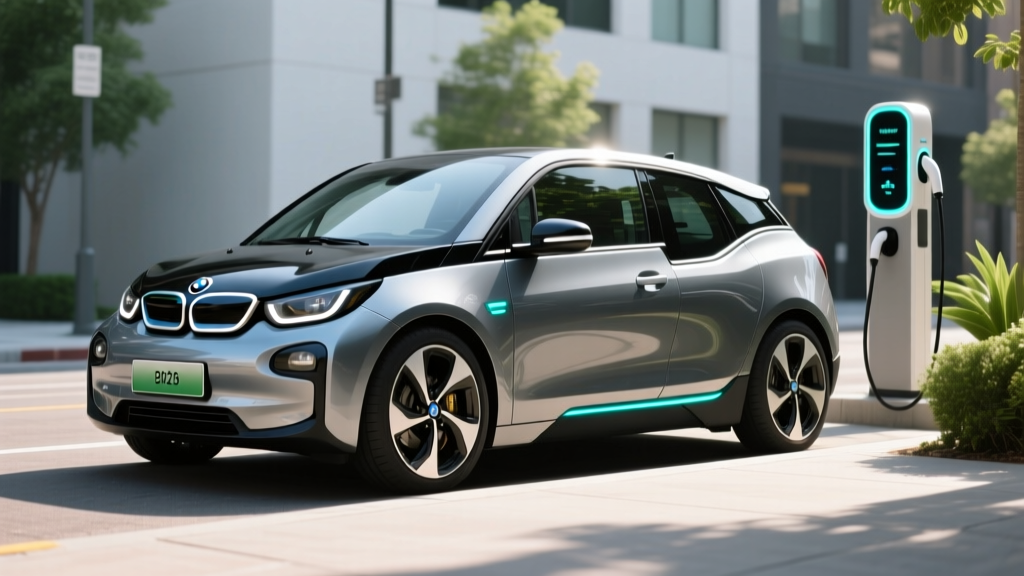
The BMW i3 was one of the first mass-market electric vehicles to prove that purpose-built EV architecture could work at scale. Built on a revolutionary carbon-fiber-reinforced plastic (CFRP) passenger cell and powered by a compact electric motor, the i3 carved out a unique niche from its 2014 launch through its final 2021 model year in the United States. If you are searching for BMW i3 MPG data, you have likely discovered that this EV converts energy so efficiently that it rivals vehicles costing twice as much — but its 153-mile EPA range and quirky packaging demand that buyers go in with eyes wide open.
BMW discontinued the i3 globally after the 2022 model year, which means every i3 on the U.S. market today is a used vehicle. That shifts the purchase calculus entirely: instead of the §30D new-vehicle credit, buyers should evaluate the Used Clean Vehicle Credit (§25E), which can knock up to $4,000 off the purchase price at the point of sale — subject to strict income, price, and vehicle-age rules. Below, we break down every efficiency number, charging spec, and ownership cost you need to evaluate a used BMW i3 in 2026.
BMW i3 Efficiency: MPGe, kWh/100mi, and Real-World MPG Equivalents
When buyers search for BMW i3 MPG, they are really asking how efficiently this car uses electricity compared to gasoline vehicles. The EPA measures EV efficiency in MPGe (miles per gallon equivalent) and kWh per 100 miles. Here is the official data for the final U.S.-spec i3 (2019–2021 model years with the 42.2 kWh battery):
| Metric | City | Highway | Combined |
|---|---|---|---|
| MPGe | 124 MPGe | 102 MPGe | 113 MPGe |
| kWh/100 mi | 27 kWh | 33 kWh | 30 kWh |
| Range per Full Charge | 153 miles (EPA) | ||
Source: U.S. EPA Fuel Economy.
The i3's combined 113 MPGe is outstanding, especially considering its relatively tall, boxy shape. For context, the Chevrolet Bolt EV (discontinued after 2023) achieved 120 MPGe combined, while the Hyundai Kona Electric (2021) hit 120 MPGe. The i3 trails slightly, but its real-world efficiency is heavily influenced by driving style, temperature, and speed — more on that below.
Real-World Range: What the EPA Sticker Does Not Tell You
Real-World Highway (70 mph, 65°F): ~120–130 miles
Real-World City (mixed stop-and-go, 65°F): ~140–155 miles
Cold Weather (25°F, mixed driving): ~95–115 miles (30–40% range loss typical for NMC chemistry without aggressive preconditioning)
The i3's real-world range story is a tale of two batteries. Early models (2014–2016) shipped with a 22 kWh pack yielding just 81 EPA miles. The 2017 refresh bumped capacity to 33 kWh (94 Ah cells) for 114 miles. The final 2019–2021 models carried a 42.2 kWh gross / ~37.9 kWh usable battery using Samsung SDI NMC (nickel-manganese-cobalt) pouch cells, delivering the 153-mile EPA figure.
Because the i3 lacks a heat pump (it uses resistive PTC heating), cold weather hits this car harder than EVs equipped with modern thermal management. Expect 30–40% range loss in sustained sub-freezing temperatures. Highway driving at 70+ mph also erodes range quickly — the i3's upright profile creates meaningful aerodynamic drag. If your daily commute is 40 miles round-trip or less, the i3 handles it easily year-round. If you regularly push 80+ miles one-way, you will want to plan charging stops.
Battery, Powertrain, and Performance Specs
| Specification | Value |
|---|---|
| Battery Gross / Usable | 42.2 kWh / ~37.9 kWh |
| Battery Chemistry | NMC (Samsung SDI pouch cells) |
| Drivetrain | Rear-wheel drive (single motor) |
| Motor Output | 170 hp (125 kW) / 184 lb-ft torque |
| 0–60 mph | 6.9 seconds (BEV); 6.2 sec (i3s variant) |
| Top Speed | 93 mph (BEV); 100 mph (i3s) |
| Curb Weight | ~2,972 lbs (BEV) |
| Cargo Volume (rear seats up / folded) | 15.1 cu ft / 36.9 cu ft |
| Front Headroom / Legroom | 39.6 in / 40.5 in |
| Rear Headroom / Legroom | 37.2 in / 31.9 in |
The i3's 170-hp electric motor sends all its torque to the rear wheels through a single-speed reduction gear. Acceleration feels brisk around town — the instant 184 lb-ft of torque makes the i3 genuinely quick off the line. The sportier i3s variant (2018–2021) bumps output to 184 hp and 199 lb-ft, adding a 0.7-second advantage to 60 mph and a slightly wider track.
BMW's CFRP "Life Module" passenger cell keeps weight under 3,000 lbs — remarkable for an EV — and contributes directly to the i3's strong efficiency. The trade-off is interior space: rear legroom is tight at 31.9 inches, and the rear-hinged "coach doors" require the front doors to be open before rear passengers can exit. This car seats four adults, but the back seat is best for children or occasional use.
Charging Speeds: DC Fast Charging and Home Level 2
The BMW i3 uses a CCS1 (Combo) connector for DC fast charging and a standard J1772 inlet for Level 1 and Level 2 AC charging. Here is what charging looks like across all three levels:
| Charging Level | Connector | Max Power | Speed / Time |
|---|---|---|---|
| Level 1 (120V household) | J1772 | ~1.4 kW | ~3.5 miles per hour of charging |
| Level 2 (240V home/public) | J1772 | 7.4 kW (single-phase onboard charger) | ~22 miles per hour; full charge in ~5.5 hours |
| DC Fast Charge | CCS1 | 50 kW peak | 10–80% in ~36–42 minutes |
The i3's 50 kW DC fast-charging peak is the single biggest limitation for road-trip use. Modern EVs routinely accept 150–250 kW, meaning a 10–80% charge in 18–25 minutes. The i3's ~40-minute DC session is acceptable for a planned lunch stop but frustrating on longer drives. The charge curve is relatively flat — the i3 holds near 50 kW from roughly 10% to 65% SoC before tapering to 25 kW and below past 80%.
At home on a 240V Level 2 circuit (a 32-amp or 40-amp dedicated circuit is typical), the i3's 7.4 kW onboard charger fills the battery from empty to full in about 5.5 hours. Most owners who plug in nightly will never need DC fast charging for daily driving.
Important note on the Range Extender (REx): Some 2014–2021 i3 models were sold with an optional 647cc two-cylinder gasoline range extender that acts as a generator, adding roughly 50–80 miles of range after the battery depletes. The REx models are heavier, slightly less efficient on pure electric driving, and introduce gasoline-engine maintenance (oil changes, fuel stabilizer). In 2026, finding E10-free fuel or managing stale gas in a rarely-used REx is a legitimate ownership hassle.
Pricing, Trims, and the Used-EV Tax Credit (§25E)
Because BMW discontinued the i3 after the 2021 model year in the U.S., every available example is used. Pricing in early 2026 for a well-maintained 2019–2021 i3 (120 Ah / 42.2 kWh) typically falls in the $18,000–$28,000 range depending on mileage, condition, and whether it is the standard i3 or the sportier i3s.
| Model Year / Trim | Typical Used Price | §25E Credit (if eligible) | Effective Cost |
|---|---|---|---|
| 2019 i3 (120 Ah) | $18,000–$22,000 | Up to $4,000 | $14,000–$18,000 |
| 2020 i3 (120 Ah) | $20,000–$24,000 | Up to $4,000 | $16,000–$20,000 |
| 2021 i3s (120 Ah) | $23,000–$28,000 | Up to $4,000 | $19,000–$24,000 |
The Used Clean Vehicle Credit (IRS §25E) provides up to $4,000 or 30% of the sale price (whichever is less) for qualifying used EVs purchased from a licensed dealer. To qualify, per IRS guidelines:
- Sale price must be $25,000 or less — this eliminates many low-mileage 2021 i3s models from credit eligibility
- Buyer income caps: $75,000 single / $112,500 head of household / $150,000 married filing jointly (modified AGI)
- Vehicle must be at least 2 model years old — all i3 models qualify
- Vehicle must have a battery capacity of at least 7 kWh — all i3 models qualify
- Must be purchased from a licensed dealer (private-party sales do not qualify)
- Credit is non-refundable and can only be claimed once per VIN; buyer must not have received a used-EV credit in the prior 3 years
Because the §25E credit is non-refundable, you need sufficient federal tax liability to benefit from it. Consult a tax professional for your specific situation.
Battery Health, Degradation, and Warranty Considerations
The BMW i3's NMC battery has demonstrated moderate but predictable degradation. Owner-reported data from forums and fleet analyses suggest 8–15% capacity loss over 8 years / 80,000 miles, depending on climate and charging habits. An i3 that started with 153 EPA miles may show 130–140 miles of range at 8 years old — still usable for commuting but noticeably reduced.
BMW's original battery warranty covers 8 years / 100,000 miles against defects and capacity loss below 70% of original capacity. For a 2017 model, that warranty expires in 2025. For 2019–2021 models, some factory battery coverage may still be active in 2026 — verify the in-service date with BMW or a dealer before purchasing.
Replacement battery costs for the i3 are significant: $12,000–$18,000 including parts and labor at a BMW dealer, though independent EV shops may offer refurbished packs for less. Given that a used i3 might cost $20,000, a battery replacement can approach or exceed the vehicle's value — a critical factor for high-mileage examples.
Tips for evaluating a used i3 battery:
- Request a State of Health (SoH) report from a BMW dealer or use an OBD-II tool like BimmerCode to read the battery management system directly
- Look for SoH above 85% — anything below 80% means noticeable range reduction
- Avoid vehicles that were repeatedly DC fast-charged to 100% and stored at high SoC in hot climates
- The i3's active liquid thermal management system is a plus for battery longevity compared to passively cooled packs
Technology, Safety, and Daily-Use Features
The i3's interior is one of the most distinctive in the EV world. BMW used sustainable materials — eucalyptus wood trim, recycled wool-blend upholstery, and kenaf-fiber door panels — giving the cabin an airy, modernist feel that still looks fresh in 2026. The freestanding 10.25-inch iDrive display (2019+ models) runs BMW's iDrive 6 system with wireless Apple CarPlay (added for 2019). Android Auto was never officially supported on the i3 — a notable omission for Google-phone users.
Driver-assistance features are basic by 2026 standards. The i3 offers:
- Active Driving Assistant (forward collision warning, automatic emergency braking, lane departure warning)
- Park Distance Control (front and rear sensors)
- Optional Adaptive Cruise Control (on later models)
There is no hands-free driving system, no lane-centering assist, and no Tesla Autopilot equivalent. The i3's ADAS features are SAE Level 1 — they assist but do not automate steering or speed management simultaneously. The driver must remain fully engaged at all times.
The i3 earned a Top Safety Pick designation from IIHS for certain model years with acceptable crash-test results, though small overlap front ratings varied. NHTSA did not comprehensively rate the i3. Buyers prioritizing the latest safety tech should cross-shop newer EVs.
Pros, Cons, and the Verdict: Who Should Buy a Used BMW i3?
- Exceptional efficiency: 113 MPGe combined, ~30 kWh/100mi
- Ultra-light CFRP construction gives nimble, fun city handling
- Tight 25-foot turning circle makes parking effortless
- Unique, sustainable interior materials that age well
- Strong regenerative braking enables one-pedal driving
- Eligible for up to $4,000 used-EV tax credit (§25E)
- Low running costs: ~$0.04–$0.06 per mile on home electricity
- 153-mile EPA range limits road-trip practicality
- 50 kW DC fast-charging peak is slow by 2026 standards (~40 min for 10–80%)
- Rear coach doors are inconvenient; rear legroom is tight (31.9 in)
- No Android Auto support; iDrive 6 feels dated
- No heat pump — significant cold-weather range loss
- Battery replacement cost ($12K–$18K) can exceed vehicle value on older models
- Discontinued: no factory support for new parts updates
Look elsewhere if: You regularly drive more than 100 miles one-way, you need DC fast-charging for road trips, you require modern ADAS features or Android Auto, or you live in an extremely cold climate where the i3's range loss would make daily driving stressful.
Compared to a used Chevrolet Bolt EV (238–259 mile range, 55 kW DC charging, similar pricing), the i3 sacrifices range and charging speed for lighter weight, better city efficiency, and a more premium interior. Compared to a used Nissan Leaf (150–226 mile range, passive battery cooling), the i3's active thermal management gives it an edge in battery longevity. The i3 occupies a specific niche: it is the most efficient premium compact EV from its era, not the most capable.
Frequently Asked Questions
What is the real-world range of the BMW i3?
The 2019–2021 BMW i3 (42.2 kWh battery) has an EPA range of 153 miles. In real-world mixed driving at moderate temperatures, expect 130–145 miles. Highway driving at 70+ mph drops range to roughly 120–130 miles, and sustained cold weather (below 32°F) can reduce range to 95–115 miles due to resistive cabin heating and battery chemistry limitations.
How fast does the BMW i3 charge at home and on DC fast chargers?
On a 240V Level 2 home charger, the i3 accepts up to 7.4 kW, adding about 22 miles of range per hour and fully charging in roughly 5.5 hours. On a DC fast charger (CCS1 connector), the i3 peaks at 50 kW, reaching 10–80% in approximately 36–42 minutes. This is significantly slower than modern EVs that accept 150–250 kW.
How much does a used BMW i3 cost after the federal tax credit?
Used 2019–2021 BMW i3 models typically sell for $18,000–$28,000 in 2026. If the sale price is $25,000 or less and you meet IRS income limits (up to $150,000 married filing jointly), the §25E Used Clean Vehicle Credit can reduce your federal tax liability by up to $4,000, bringing effective cost as low as $14,000–$21,000. Verify eligibility with a tax professional and ensure purchase through a licensed dealer.
Does the BMW i3 qualify for the federal EV tax credit?
The i3 does not qualify for the §30D new-vehicle credit because it is discontinued. However, it may qualify for the §25E Used Clean Vehicle Credit (up to $4,000) if the sale price is ≤$25,000, the buyer meets income caps, the vehicle is purchased from a dealer, and the buyer has not claimed a used-EV credit in the prior 3 years. See IRS §25E guidelines.
Is the BMW i3 worth buying in 2026 vs. a newer used EV?
The i3 is worth buying if your commute is short, you charge at home, and you value efficiency and design over range and tech. At $14K–$20K after the used-EV credit, it is one of the cheapest ways into a premium electric car. However, if you need 200+ miles of range, fast DC charging, or modern driver assists, a used Chevrolet Bolt EV, Hyundai Kona Electric, or early Tesla Model 3 will serve you better — albeit at higher prices.
What is the BMW i3's MPGe and how does it compare to gas cars?
The 2019–2021 BMW i3 achieves 113 MPGe combined (124 city / 102 highway) and consumes approximately 30 kWh per 100 miles. At a national average electricity rate of $0.16/kWh, that is roughly $4.80 per 100 miles — compared to $12–$15 per 100 miles for a 30-MPG gas car at $3.50–$4.50/gallon. The i3's efficiency is among the best of any EV sold in the U.S.