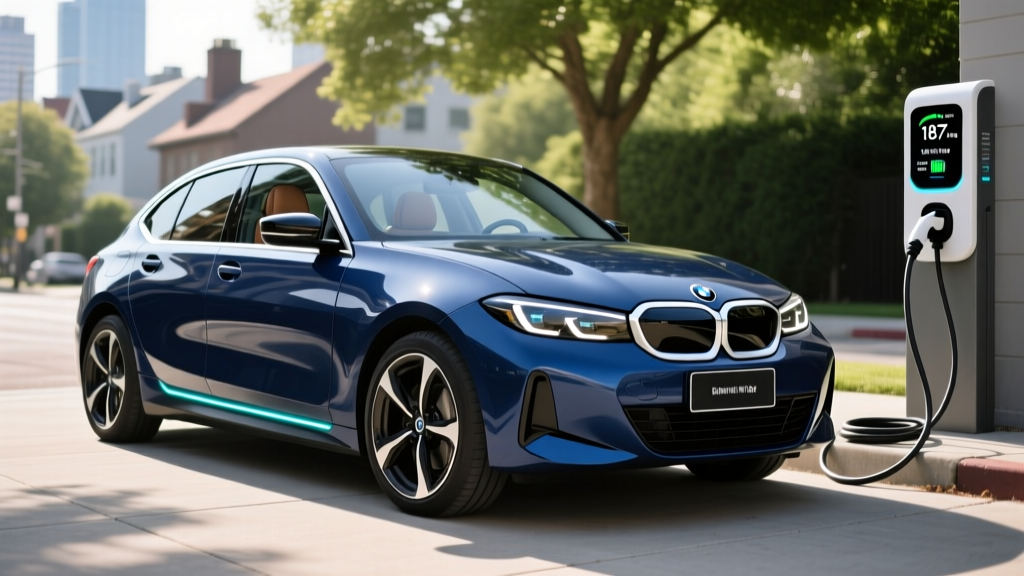
The BMW i3 remains one of the most distinctive electric vehicles ever produced — a carbon-fiber-reinforced plastic (CFRP) city car with a radical design philosophy that prioritized efficiency above all else. Though BMW ended production in 2022, the i3 commands a loyal following on the used-EV market, and understanding its real-world mileage, range, and efficiency is essential for anyone considering one as a daily driver or commuter runabout in 2026.
This profile covers every major i3 variant — the original 60 Ah (22 kWh), the upgraded 94 Ah (33 kWh), and the final 120 Ah (42 kWh) — plus the Range Extender (REx) models with their onboard gasoline generators. We'll break down EPA estimates against real-world results, charging speeds, ownership economics, and whether the i3 still holds up against modern competition.
BMW i3 Range and Mileage by Model Year
The i3 went through three battery generations during its production run (2014–2022). Each upgrade meaningfully increased usable range, so knowing which battery pack a specific used i3 carries is the single most important factor in your purchase decision.
| Generation | Model Years | Battery (Usable kWh) | Chemistry | EPA Range (BEV) | EPA Range (REx Total) |
|---|---|---|---|---|---|
| 60 Ah | 2014–2016 | 18.8 kWh | NMC (Samsung SDI) | 72–81 mi | 150 mi (combined) |
| 94 Ah | 2017–2018 | 27.2 kWh | NMC (Samsung SDI) | 114 mi | 180 mi (combined) |
| 120 Ah | 2019–2022 | 37.9 kWh | NMC (Samsung SDI) | 153 mi | 200 mi (combined) |
All i3 battery packs use NMC (nickel manganese cobalt) lithium-ion cells supplied by Samsung SDI. BMW engineered an aggressive thermal management system and a large buffer — the 120 Ah model, for instance, has a gross capacity of 42.2 kWh but limits usable capacity to 37.9 kWh to protect long-term cell health. This conservative approach has paid off: EPA data on fueleconomy.gov and owner surveys consistently show the i3's battery degrading more slowly than many contemporaries.
EPA estimated: 153 miles. Real-world expectation: plan for 125–140 miles in mixed highway driving at 70+ mph, and 100–115 miles in freezing temperatures (below 32°F) without preconditioning. City driving with regenerative braking can match or slightly exceed the EPA figure — owners regularly report 155–165 miles in stop-and-go urban conditions during mild weather. The i3's light weight (2,972 lbs) and skinny 155/70R19 tires are efficiency-optimized, but the boxy shape creates highway-speed drag that reduces range noticeably above 65 mph.
Efficiency: MPGe and Energy Consumption
The i3 was designed from the ground up as an efficiency-first vehicle, and the numbers reflect that philosophy. Among mass-market EVs, only the Tesla Model 3 and Hyundai Ioniq Electric have consistently matched or beaten its energy consumption per mile.
| Model | MPGe (Combined) | kWh / 100 mi | Miles / kWh |
|---|---|---|---|
| 60 Ah (2014–2016) | 124 MPGe | 27 kWh | 3.7 mi/kWh |
| 94 Ah (2017–2018) | 111 MPGe | 30 kWh | 3.3 mi/kWh |
| 120 Ah (2019–2022) | 113 MPGe | 30 kWh | 3.3 mi/kWh |
| 120 Ah REx (2019–2022) | 100 MPGe (elec) / 31 MPG (gas) | 34 kWh | 2.9 mi/kWh |
The slight efficiency drop from the 60 Ah to later models comes from the added battery mass — the 120 Ah pack weighs roughly 100 lbs more than the original. Still, 3.3 miles per kWh is excellent, meaning the i3 costs very little to charge. At the US average electricity rate of $0.16/kWh, a full 37.9 kWh charge in the 120 Ah model costs roughly $6.06 — about one-tenth the cost of filling a comparable gas car's tank.
The Range Extender (REx) models add a 647cc two-cylinder gasoline engine that acts solely as a generator. It never drives the wheels. When the battery depletes to approximately 6–7% state of charge, the engine fires up to maintain that level, giving you an additional 70–80 miles of range on the 2.4-gallon fuel tank. The REx adds roughly 265 lbs, which reduces electric-only efficiency slightly.
Charging Speed: DC Fast and Home Level 2
The i3's charging capabilities reflect its era — capable by 2015 standards but noticeably slower than 2026's 250+ kW chargers. Understanding the charge curve is critical for trip planning.
| Charge Type | 60 Ah | 94 Ah | 120 Ah |
|---|---|---|---|
| Level 1 (120V / 12A) | ~1.4 kW / ~5 mi/hr | ~1.4 kW / ~4 mi/hr | ~1.4 kW / ~4 mi/hr |
| Level 2 (240V / 32A) | 7.4 kW / ~25 mi/hr | 7.4 kW / ~22 mi/hr | 7.4 kW / ~22 mi/hr |
| DC Fast (CCS Combo) | 47 kW peak | 50 kW peak | 50 kW peak |
| DC 10–80% Time | ~25 min | ~35 min | ~42 min |
The i3 uses a CCS Combo 1 connector for DC fast charging (a CCS adapter or native port depending on model year). DC fast charging was an option on early 60 Ah models — verify the specific car has the CCS port before purchasing. All 94 Ah and 120 Ah models sold in the US include CCS as standard.
The charge curve tapers significantly above 80% state of charge. You'll see the full 50 kW between roughly 10–60% SoC on the 120 Ah model, then power drops to 30–35 kW through 80%, and slows to single-digit kW above 90%. For road trips, plan your stops around the 10–80% window — charging beyond 80% is painfully slow and rarely worth the wait.
At home, the 7.4 kW onboard charger is the practical sweet spot. A full charge from empty on a Level 2 home charger takes approximately 5.5 hours for the 120 Ah model. Most owners plug in overnight and wake up to a full battery every morning. If your home electrical panel supports a 40A circuit (which delivers 32A continuous to the car), you're maximizing the i3's onboard charger capacity.
Performance and Drivetrain
The i3 is rear-wheel drive with a single-speed reduction gear. Its electric motor delivers instant torque that makes it surprisingly quick off the line — a characteristic that belies its economy-car mission.
| Spec | 60 Ah | 94 Ah / 120 Ah (BEV) | 120 Ah REx |
|---|---|---|---|
| Horsepower | 170 hp | 170 hp | 170 hp |
| Torque | 184 lb-ft | 184 lb-ft | 184 lb-ft |
| 0–60 mph | 7.0 sec | 7.2 sec | 7.7 sec |
| Top Speed | 93 mph (gov.) | 93 mph (gov.) | 93 mph (gov.) |
| Drivetrain | RWD | RWD | RWD |
| Curb Weight | 2,717 lbs | 2,859 lbs | 3,234 lbs |
The i3's 170 hp and instant torque make it genuinely fun in urban environments — it will beat most traffic off the line and feels nimble through corners thanks to its low center of gravity and 50/50 weight distribution. The skinny Bridgestone Ecopia tires (155/70R19) prioritize low rolling resistance over grip, so you'll feel the limits earlier than in a conventional BMW. The steering is quick and direct, and the one-pedal driving mode (activated by lifting off the accelerator) provides aggressive regenerative braking that most owners quickly prefer over traditional braking.
The i3s variant (available from 2018–2022) adds 14 hp (184 hp total), slightly wider tires (175/60R20), a lowered sport suspension, and a 0–60 time of approximately 6.9 seconds. It's the enthusiast pick, though the standard i3 is already responsive enough for most drivers.
Pricing, Tax Credits, and Ownership Cost
Since the i3 is no longer in production, all purchases in 2026 are on the used market. Prices have settled into an accessible range, and the federal used-EV tax credit can make certain model years a compelling deal.
| Model | Typical Used Price | Federal Used EV Credit (§25E) | Adjusted Cost |
|---|---|---|---|
| 60 Ah (2014–2016) | $8,000–$13,000 | Up to $4,000 (30% of sale price, max $4,000) | $6,000–$9,000 |
| 94 Ah (2017–2018) | $13,000–$19,000 | Up to $4,000 | $9,000–$15,000 |
| 120 Ah (2019–2022) | $18,000–$28,000 | Up to $4,000 | $14,000–$24,000 |
The IRS §25E used clean vehicle credit is worth 30% of the sale price up to a maximum of $4,000. Key eligibility requirements:
- The vehicle must be at least two model years old (all i3s qualify)
- Sale price must be $25,000 or less (most i3s qualify; some low-mileage 2021–2022 120 Ah models may exceed this)
- Buyer income caps: $75,000 single / $112,500 head of household / $150,000 joint (modified AGI)
- The credit is non-refundable — you must have tax liability to claim it
- The vehicle must be purchased from a licensed dealer (private-party sales do not qualify)
- You can only claim the credit once per vehicle (check the VIN history)
Always verify eligibility with a tax professional before counting on the credit, as IRS rules and vehicle qualification lists are updated periodically.
Interior Space, Cargo, and Practicality
The i3's interior is where its radical design philosophy is most apparent — and most polarizing. The cabin uses recycled and sustainable materials extensively: eucalyptus wood dash trim, recycled-plastic textiles, and natural-fiber door panels. It feels more like a design studio than a traditional car interior.
| Dimension | Measurement |
|---|---|
| Front Headroom | 39.6 in |
| Front Legroom | 40.5 in |
| Rear Headroom | 37.8 in |
| Rear Legroom | 31.9 in |
| Cargo (behind rear seats) | 15.1 cu ft |
| Cargo (rear seats folded) | 39.2 cu ft |
| Seating Capacity | 4 passengers |
The rear-hinged "coach doors" (suicide doors) are the i3's most distinctive exterior feature and a practical necessity — the rear seats are tight for adults on longer trips, and the rear door opening makes entry and exit far easier than a conventional small-car layout. However, you cannot open the rear doors independently of the front doors, which is a genuine daily annoyance if rear passengers need to exit while the driver stays seated.
Cargo space is adequate for groceries and carry-on luggage with the rear seats up (15.1 cu ft), and the flat load floor with seats folded (39.2 cu ft) can handle a surprising amount of cargo — IKEA runs are a well-documented i3 use case. There is no frunk; the hood area houses the windshield washer fluid reservoir and the optional REx engine.
Technology, Safety, and Driver Assists
The i3's tech suite reflects its production era. The iDrive infotainment system (with a 6.5-inch screen on early models, upgraded to 10.25 inches on 2019+ models with the Technology + Driving Assistance package) supports Apple CarPlay (2018+ models) but not Android Auto on most model years. Navigation, if equipped, includes an EV-specific range display and charging-station routing.
Driver assistance is basic by 2026 standards:
- Standard: Dynamic cruise control, daytime pedestrian detection, forward collision warning, automatic emergency braking (2019+ with Driving Assistance package)
- Optional (Technology + Driving Assistance pkg): Adaptive cruise control with stop-and-go, lane departure warning, parking assistant, surround-view camera
- Not available: Lane-keeping assist, blind-spot monitoring, semi-autonomous highway driving
The i3 has not been crash-tested by NHTSA. The IIHS rated the 2017–2022 models as "Acceptable" in the moderate overlap front test and "Good" in most other categories, though headlight ratings were consistently "Poor." The carbon-fiber passenger cell (called "Life Module" by BMW) is extremely rigid and provides excellent occupant protection in real-world incidents, even without formal US crash-test scores.
Warranty and Battery Longevity
BMW's original warranty coverage for the i3 was competitive at launch, and many used examples still carry partial factory coverage.
| Coverage | Term |
|---|---|
| Basic / Bumper-to-Bumper | 4 years / 50,000 mi |
| Powertrain | 4 years / 50,000 mi |
| High-Voltage Battery | 8 years / 100,000 mi (below 70% capacity) |
| Corrosion Perforation | 12 years / unlimited mi |
| Roadside Assistance | 4 years / unlimited mi |
The high-voltage battery warranty guarantees that capacity will not fall below 70% of original within 8 years or 100,000 miles. In practice, i3 batteries have shown excellent longevity. Multiple owner surveys and fleet data indicate typical degradation of 5–10% over the first 100,000 miles for the 120 Ah model, well within the warranty threshold. The large buffer BMW engineered into the pack is the primary reason — the car never uses the full gross capacity, which reduces stress on the cells.
For a 2020 120 Ah model with 50,000 miles, you can expect the battery warranty to remain in effect for approximately three more years or 50,000 more miles. Always request a battery health report from the seller or have a BMW dealer run a capacity diagnostic before purchasing.
Pros and Cons
- Outstanding efficiency — 3.3+ miles per kWh keeps charging costs minimal
- Carbon-fiber construction keeps weight low and interior space high for the footprint
- Excellent battery longevity thanks to conservative buffer management
- Fun, torquey acceleration in city driving (7.0–7.2 sec 0–60)
- Tight turning radius (32.3 ft) makes parking effortless
- Unique, head-turning design with sustainable interior materials
- Used-EV tax credit can bring cost below $10,000 for 94 Ah models
- Limited range — even the 120 Ah tops out at 153 mi EPA (125–140 real-world highway)
- Slow DC fast charging (50 kW peak) by 2026 standards — 42 min 10–80%
- Only seats 4; rear-hinged doors are a daily-use annoyance
- No Android Auto support on most model years
- Thin tires and light weight can feel unsettled in crosswinds at highway speed
- REx engine requires gasoline and adds maintenance (oil changes, spark plugs)
- No longer in production — parts availability may tighten over time
Is the BMW i3 Worth Buying in 2026?
The i3 occupies a specific and honest niche: it is a superb urban commuter and second car for households that need a zero-emission daily driver for trips under 80 miles round-trip. If that describes your use case, the i3 delivers one of the lowest cost-per-mile ownership experiences in the EV market, especially after the used-EV tax credit.
Against key competitors on the used market:
- vs. Nissan Leaf (40/62 kWh): The Leaf offers more range (149–226 mi EPA) and more cargo space, but uses passive air cooling on its battery, leading to faster degradation and slower repeated fast-charging. The i3's active thermal management and carbon-fiber build give it a longevity edge.
- vs. Chevrolet Bolt EV: The Bolt delivers 259 miles of EPA range and seats five, making it far more versatile. However, the i3 is more efficient per mile, more fun to drive in the city, and has a more premium interior.
- vs. Tesla Model 3 (Standard Range): A used 2019–2020 Model 3 offers 240+ miles of range, Supercharger access, and modern driver assists, but typically costs $8,000–$12,000 more than a comparable i3. If range and road-trip capability matter, the Model 3 wins. If you want the cheapest possible efficient commuter, the i3 wins.
Look elsewhere if: You need 200+ miles of range, regular road-trip capability, seating for five, or modern driver-assistance features like lane-centering and blind-spot monitoring.
Frequently Asked Questions
What is the real-world range of the BMW i3?
For the 120 Ah model (2019–2022), the EPA estimates 153 miles. In real-world mixed driving at highway speeds, expect 125–140 miles. In city driving with regenerative braking, you can often match or exceed 153 miles. In freezing weather without preconditioning, range drops to roughly 100–115 miles. Earlier 94 Ah and 60 Ah models offer proportionally less — plan for 90–100 real-world miles and 55–70 real-world miles, respectively.
How fast does the BMW i3 charge at home and on DC fast chargers?
At home on a Level 2 (240V) charger, the i3 accepts up to 7.4 kW, adding roughly 22 miles of range per hour. A full charge takes about 5.5 hours for the 120 Ah model. On DC fast charging, the i3 peaks at 50 kW, reaching 10–80% in approximately 42 minutes. Charging above 80% slows dramatically — plan DC stops around the 10–80% window for efficiency.
Does the BMW i3 qualify for any federal tax credit?
The i3 no longer qualifies for the new-vehicle §30D credit since production ended. However, it may qualify for the IRS §25E used clean vehicle credit, which provides 30% of the sale price up to $4,000. The vehicle must sell for $25,000 or less, be purchased from a licensed dealer, and the buyer must meet income caps ($75,000 single / $150,000 joint). Verify eligibility with a tax professional before purchase.
What's the difference between the BMW i3 BEV and the i3 REx?
The BEV (battery electric vehicle) is purely electric. The REx (Range Extender) adds a small 647cc two-cylinder gasoline engine that acts as a generator — it never drives the wheels directly. When the battery depletes to approximately 6%, the engine maintains that charge level, extending total range by 70–80 miles on the 2.4-gallon fuel tank. The REx adds 265 lbs, slightly reduces electric efficiency, and requires standard gasoline-engine maintenance (oil, spark plugs, emissions). It's ideal for drivers who occasionally need to exceed the electric range but don't want to rely on public charging infrastructure.
How long will the BMW i3 battery last?
BMW's battery warranty covers 8 years or 100,000 miles against capacity loss below 70%. Real-world data shows i3 batteries typically lose only 5–10% capacity over 100,000 miles, thanks to BMW's conservative buffer strategy (the car uses only 37.9 of the 42.2 gross kWh in the 120 Ah model). Many 2014–2016 60 Ah models with 80,000+ miles still report 85–90% original capacity. Replacement batteries are available through BMW but cost approximately $12,000–$15,000 including labor — a significant expense relative to the car's current value.
Can I take the BMW i3 on road trips?
It's possible but requires patience and planning. With 50 kW DC fast charging and 125–140 miles of real-world highway range, you'll stop every 90–110 miles for 30–40 minute charging sessions. The REx model makes road trips significantly easier by extending range to 200+ miles combined and allowing you to refuel at any gas station. For frequent road trippers, a longer-range EV like a used Chevrolet Bolt or Tesla Model 3 will be far less frustrating.