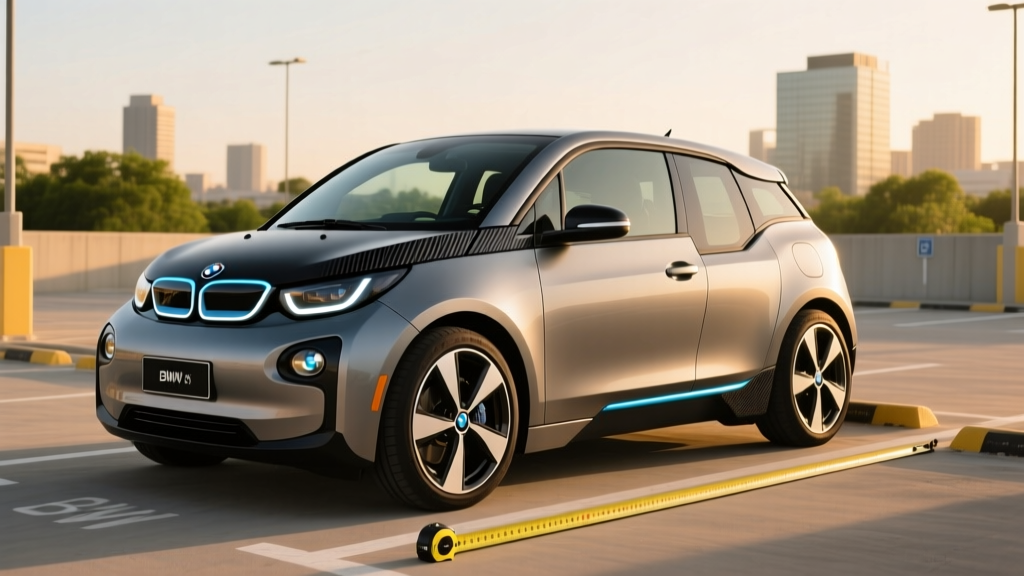
The BMW i3 remains one of the most distinctive electric vehicles ever built — a carbon-fiber-reinforced plastic (CFRP) city car with coach doors, a tiny turning circle, and an unmistakable silhouette. Though BMW ended i3 production in July 2022, thousands remain on the road and on the used market, and their unique dimensions continue to draw search interest. If you've been searching for the BMW i3 length and whether this compact hatch still holds up as a daily driver in 2026, this profile covers every critical spec: exterior dimensions, real-world range, charging speeds, battery chemistry, and ownership economics.
Because the i3 is no longer sold new, this review focuses on the final 2021–2022 model year (the 120 Ah battery variant), which represents the most capable and relevant version for today's used-EV buyers.
BMW i3 Dimensions: Length, Width, and Why Size Matters
The BMW i3 was engineered from the ground up as an urban electric vehicle, and its compact footprint reflects that mission. Here are the exact exterior and interior measurements for the final-generation (2019–2022) i3:
| Measurement | Specification |
|---|---|
| Overall length | 158.3 inches (4,021 mm) |
| Overall width (without mirrors) | 69.9 inches (1,775 mm) |
| Overall width (with mirrors) | 80.0 inches (2,032 mm) |
| Overall height | 62.9 inches (1,598 mm) |
| Wheelbase | 101.2 inches (2,570 mm) |
| Ground clearance | 5.5 inches (139 mm) |
| Curb weight | 2,961 lbs (BEV); ~3,300 lbs (REx) |
| Front headroom | 39.6 inches |
| Front legroom | 40.5 inches |
| Rear headroom | 37.8 inches |
| Rear legroom | 31.9 inches |
| Cargo volume (behind rear seats) | 15.1 cu ft |
| Cargo volume (rear seats folded) | 39.2 cu ft |
| Turning circle | 32.3 feet |
At 158.3 inches long, the BMW i3 is roughly 18 inches shorter than a Honda Fit and nearly two feet shorter than a Tesla Model 3. That compact length, combined with its 32.3-foot turning circle, makes the i3 exceptionally easy to park in tight urban spaces. However, the trade-off is limited rear-seat legroom (31.9 inches) and modest cargo capacity compared to modern electric crossovers.
The i3's tall, upright profile (62.9 inches high) creates surprisingly generous front headroom, and the rear-hinged coach doors provide decent access to the back seat — though you must open the front door first, which can be awkward in tight parking spots.
EPA Range, Battery Capacity, and Chemistry
The final-generation BMW i3 (2019–2022) uses a 42.2 kWh battery pack (gross capacity), with approximately 37.9 kWh usable. BMW sourced these cells from Samsung SDI, and the pack uses NMC (nickel manganese cobalt) lithium-ion chemistry — not the LFP (lithium iron phosphate) chemistry that has become common in newer, more affordable EVs.
EPA estimated range: 153 miles (BEV 120 Ah model)
Real-world range: Expect approximately 120–135 miles in mixed driving. Highway speeds above 70 mph reduce range to roughly 110–125 miles. In cold weather (below 32°F), plan for 90–115 miles of usable range due to cabin heating demands and reduced battery efficiency. The i3's relatively small battery and tall, narrow tires (designed for low rolling resistance) make it particularly sensitive to temperature and speed.
The EPA-rated efficiency is 111 MPGe combined (city: 124 MPGe / highway: 98 MPGe), which translates to roughly 30 kWh per 100 miles. That's competitive with many modern EVs, though the i3's small battery limits total range rather than efficiency.
The earlier 94 Ah models (2017–2018) carry a 33.2 kWh pack with an EPA range of 114 miles, while the original 60 Ah models (2014–2016) managed just 81 miles. If you're shopping used, the 120 Ah variant is strongly preferred for daily usability.
Charging Speed: DC Fast Charging and Home Level 2
The i3's charging capabilities reflect its era — adequate for city driving but modest by 2026 standards, where 200+ kW DC fast charging is increasingly common.
| Charging Method | Power / Rate | Time / Notes |
|---|---|---|
| DC Fast Charge (CCS Combo 2) | 50 kW peak | 10–80% in approximately 40 minutes |
| DC Fast Charge (CHAdeMO adapter) | 50 kW peak | Same rate; requires optional adapter on some markets |
| Level 2 Home Charging (240V, 32A) | 7.4 kW | 0–100% in ~5.5 hours; ~22 miles of range per hour |
| Level 1 Trickle (120V, 12A) | 1.4 kW | 0–100% in ~29 hours; ~4 miles of range per hour |
The 50 kW DC fast-charge peak is the i3's most significant limitation for road trips. While 50 kW was respectable in 2014, it means a 10–80% charge takes roughly 40 minutes — and because the i3's battery is small, you'll need to stop more frequently than in a 300-mile-range EV. The charge curve holds near 50 kW up to about 60% state of charge, then tapers progressively. Above 80%, charging slows substantially to protect battery health.
For daily use, home Level 2 charging at 7.4 kW is perfectly adequate — a full overnight charge takes about 5.5 hours, which means you'll wake up to a full battery every morning. The i3 uses a standard CCS1 connector (J1772 for AC, with two additional DC pins) on North American models, which is compatible with most public charging networks, though the industry is rapidly shifting toward NACS (Tesla's connector). Adapters from CCS to NACS are available for i3 owners who want access to Tesla Superchargers.
Performance: 0–60, Horsepower, and Drivetrain
The BMW i3 120 Ah BEV is powered by a single rear-mounted electric motor producing 170 horsepower and 184 lb-ft of torque. It's a rear-wheel-drive configuration — no all-wheel-drive option was ever offered.
BMW published a 0–60 mph time of 7.2 seconds, which remains brisk for a compact city car. The instant torque delivery makes the i3 feel quicker than the number suggests in stop-and-go traffic, and its lightweight CFRP construction (curb weight under 3,000 lbs for the BEV) contributes to nimble handling. The i3s variant adds 11 hp (181 total) and lowers the 0–60 time to 6.8 seconds, along with a sport suspension and wider tires.
The optional Range Extender (REx) model added a 647cc two-cylinder gasoline engine that acted as a generator to maintain battery charge, extending total range to approximately 200 miles combined (electric + gas). The REx adds roughly 340 lbs to the curb weight and slightly reduces cargo space.
Technology, Interior, and Driver Assists
The i3's interior was futuristic at launch and still stands out today. Sustainable materials dominate: recycled plastics, eucalyptus wood trim, and wool-blend upholstery were standard on many trims. The freestanding 10.25-inch infotainment display runs BMW's iDrive 6.0 system, which supports Apple CarPlay (wireless on later models) but notably lacks Android Auto — a significant omission by today's standards.
Driver-assistance features were limited compared to modern EVs. The i3 offers:
- Active Cruise Control (with stop-and-go on later models)
- Forward Collision Warning with City Collision Mitigation (automatic emergency braking at low speeds)
- Lane Departure Warning (alert only — no lane-keeping assist)
- Park Distance Control (front and rear sensors)
- Rear-view camera
There is no Level 2 hands-free driving system (like GM's Super Cruise or Ford's BlueCruise) available on the i3. This is an SAE Level 0–1 vehicle in terms of automation — the driver must remain fully engaged at all times.
One standout feature: the i3's preconditioning capability. Using the BMW Connected app, owners can preheat or precool the cabin while the car is plugged in, preserving battery range for driving rather than climate control. This is especially valuable in cold weather, where resistive cabin heating can consume significant energy. (The i3 does not have a heat pump — it uses a PTC electric heater, which is less efficient.)
Used Pricing and Federal Tax Credit Eligibility
Because the BMW i3 is no longer produced, you'll only find it on the used market. As of early 2026, typical pricing for the final 120 Ah models is:
| Model / Trim | Original MSRP | Typical Used Price (2026) |
|---|---|---|
| 2021 i3 BEV (base) | $45,445 | $22,000–$27,000 |
| 2021 i3s BEV | $48,645 | $25,000–$30,000 |
| 2022 i3 BEV (base) | $45,445 | $24,000–$29,000 |
| 2022 i3s BEV | $48,645 | $27,000–$32,000 |
Federal Used EV Tax Credit (§25E): Under current IRS rules, qualified used EVs purchased from a dealer for $25,000 or less may be eligible for a federal tax credit equal to 30% of the sale price, up to a maximum of $4,000. This credit has income caps: modified adjusted gross income (MAGI) must not exceed $75,000 (single filers), $112,500 (head of household), or $150,000 (joint filers). The vehicle must be at least two model years old, purchased from a licensed dealer, and the sale price must be $25,000 or less to qualify. The credit can be transferred to the dealer at the point of sale as a discount. See the IRS §25E page for full eligibility details and to verify current-year rules.
Note: The new-vehicle §30D credit (up to $7,500) no longer applies to the i3 since it cannot be purchased new. The used-vehicle §25E credit is the relevant incentive for buyers in 2026.
Battery Warranty, Degradation, and Longevity
BMW provided an 8-year / 100,000-mile battery warranty for the i3, covering defects and capacity loss below 70% of original capacity. For 2019–2022 models, that warranty remains active through at least 2027–2030, depending on the model year.
Real-world battery degradation data from i3 owners suggests the NMC pack holds up reasonably well. Most 120 Ah models show approximately 5–10% capacity loss after 60,000–80,000 miles, which is within the normal range for liquid-cooled NMC batteries. The i3's battery thermal management system uses a glycol-based cooling loop (not active heating for cold-weather preconditioning — that relies on grid power when plugged in).
If you're evaluating a used i3, request a battery health report from a BMW dealer or use an OBD-II diagnostic tool to check the current state of health (SoH). Any pack showing below 85% SoH at under 60,000 miles may warrant further investigation or a warranty claim.
Who the BMW i3 Suits Best — and Who Should Look Elsewhere
✅ Pros
- Ultra-compact 158.3-inch length ideal for tight city parking
- Lightweight CFRP construction gives nimble handling
- Distinctive, sustainable interior materials
- Strong efficiency (111 MPGe combined)
- Active battery warranty still in effect on 2019+ models
- Very low running costs with home charging
❌ Cons
- Limited 153-mile EPA range (120–135 real-world)
- Slow 50 kW DC fast charging — poor road-trip EV
- No Android Auto support
- Tight rear seat (31.9" legroom) and modest cargo space
- Narrow, tall tires are expensive and limited in selection
- Out of production — no new-vehicle warranty or credit
Best for: Urban commuters who drive under 80 miles per day, have reliable home charging, and value a compact footprint for street parking. The i3 excels as a second car or dedicated city runabout.
Not ideal for: Families needing rear-seat space, road-trip enthusiasts, drivers in extreme cold climates without garage parking, or anyone who needs to regularly carry cargo beyond a few grocery bags.
Frequently Asked Questions
What is the exact length of the BMW i3?
The BMW i3 measures 158.3 inches (4,021 mm) in overall length across all model years (2014–2022). This makes it one of the shortest four-seat EVs ever sold in the US market.
What is the real-world range of the BMW i3?
The EPA rates the final 120 Ah model at 153 miles. In real-world mixed driving, expect 120–135 miles. Highway driving at 70+ mph drops that to roughly 110–125 miles, and cold weather (below freezing) can reduce range to 90–115 miles due to cabin heating and reduced battery efficiency.
How fast does the BMW i3 charge?
On a DC fast charger, the i3 peaks at 50 kW, taking approximately 40 minutes for a 10–80% charge. At home on a Level 2 (240V, 32A) charger, it draws up to 7.4 kW, adding roughly 22 miles of range per hour and fully charging in about 5.5 hours.
Does a used BMW i3 qualify for any federal tax credit?
Yes — under the §25E Used Clean Vehicle Credit, you may qualify for up to $4,000 (30% of sale price) if you purchase a qualifying i3 from a dealer for $25,000 or less and your income falls within the caps ($75K single / $150K joint). The vehicle must be at least two model years old. Verify current rules at IRS.gov.
Is the BMW i3 worth buying in 2026 vs. newer EVs?
It depends on your needs. For a sub-$25,000 city commuter with home charging, the i3 offers a compelling package: lightweight construction, low running costs, and an active battery warranty. However, if you need more range, faster charging, modern driver assists, or rear-seat space, newer options like the Chevrolet Bolt EV (used), Nissan Leaf, or Hyundai Kona Electric may serve you better. The i3's 50 kW charging speed and 153-mile range are its biggest limitations in 2026.
What battery chemistry does the BMW i3 use?
The i3 uses NMC (nickel manganese cobalt) lithium-ion cells supplied by Samsung SDI. NMC offers good energy density but is more sensitive to high-temperature degradation than LFP chemistry. BMW's liquid cooling system helps manage pack temperature, and real-world data shows 5–10% capacity loss over 60,000–80,000 miles for most 120 Ah models.