The BMW i3 Leak: Separating Rumor from Reality
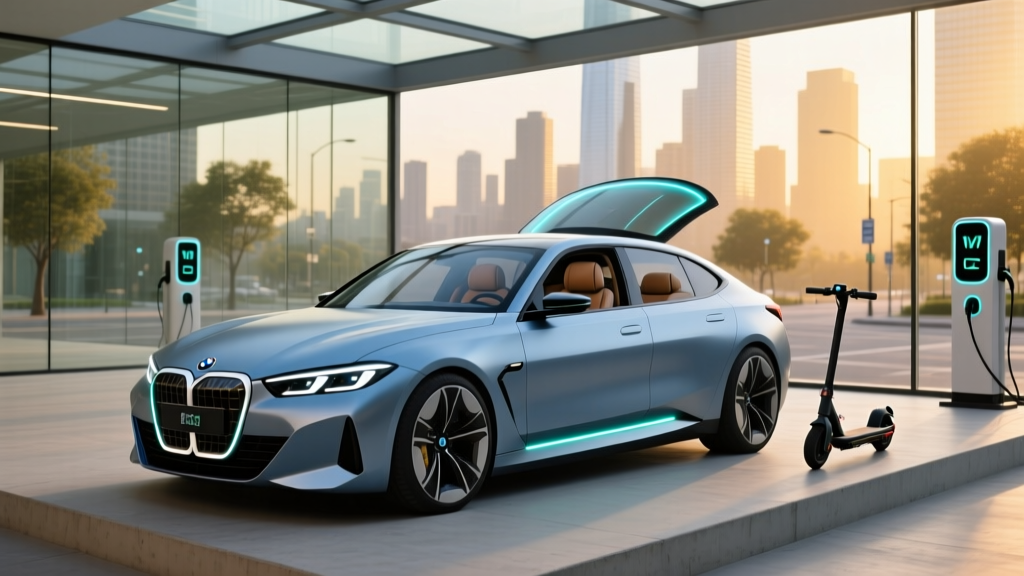
When the BMW i3 launched in 2014, it was a radical experiment: a carbon-fiber-reinforced plastic city car with a tiny battery and an optional range-extender engine. BMW discontinued the i3 in 2022, but recent industry reports and a BMW i3 leak from European supply-chain sources suggest the nameplate may return as a next-generation electric hatchback built on BMW's upcoming Neue Klasse platform. Before you get excited—or start planning a pre-order—here's what the leaked details actually tell us, what remains unconfirmed, and how a revived i3 might stack up against today's compact EV benchmarks.
Critical caveat: As of early 2026, BMW has not officially announced a new i3 for sale. The information below is compiled from supplier leaks, patent filings, and automotive press reports. Specs are preliminary and subject to change. We'll update this article when BMW makes an official reveal.
Leaked Specs: What the BMW i3 Leak Suggests
| Attribute | Leaked / Estimated Figure | Notes |
|---|---|---|
| Platform | Neue Klasse (dedicated EV) | 800V architecture rumored |
| Battery Capacity | ~60 kWh usable (NMC) | Prismatic cells, 6th-gen eDrive |
| EPA Range (est.) | ~270–310 miles | WLTP figures may be higher; EPA TBD |
| DC Fast Charge (peak) | ~200 kW | 10–80% in est. 22–25 min |
| Level 2 Home Charge | 11 kW (48A) | ~30–35 miles of range per hour |
| Powertrain | RWD single motor | AWD variant possible later |
| Horsepower | ~230–270 hp (est.) | Single-motor Neue Klasse output |
| 0–60 mph | ~6.2–6.8 seconds (est.) | Performance trim TBD |
| Base MSRP (est.) | ~$45,000–$50,000 | Before destination, incentives |
| Federal Tax Credit | TBD — depends on battery sourcing | Must meet §30D critical-mineral rules |
These figures are estimates based on what we know about BMW's 6th-generation eDrive technology and the Neue Klasse platform that underpins the upcoming iX3 and next-gen 3 Series electric variants. The original i3's 42.2 kWh battery and 153-mile EPA range would be dramatically improved upon.
Range and Efficiency: Real-World Expectations
EPA Estimated Range: ~270–310 miles (preliminary, not officially rated)
Real-World Expectation: Expect ~230–260 miles in mixed highway driving at 70+ mph. In cold weather (below 32°F), plan for 180–210 miles of usable range without preconditioning. City driving with regenerative braking will yield results closer to the EPA sticker.
BMW's Neue Klasse platform is expected to use a heat pump as standard equipment—a critical feature for cold-weather efficiency that the original i3 lacked in its early years. The 800V electrical architecture, if confirmed, would improve charging speed and reduce resistive losses compared to the 400V systems used in most current compact EVs.
Efficiency is likely to land around 120–130 MPGe combined (roughly 26–28 kWh per 100 miles), which would place the revived i3 in the same efficiency tier as the Hyundai Ioniq 5 and Tesla Model 3 RWD. The original i3 was one of the most efficient EVs on the market at 113 MPGe combined; a larger, heavier successor will need excellent aerodynamics and powertrain efficiency to match that legacy.
Charging Speed: DC Fast and Home Level 2
Charging speed is where the Neue Klasse platform should deliver a significant leap. Here's what the leaked details suggest for the revived i3:
| Charging Level | Power | Speed | Notes |
|---|---|---|---|
| Level 1 (120V) | ~1.4 kW | ~4–5 miles/hr | Emergency/trickle only |
| Level 2 (240V, 48A) | 11 kW | ~30–35 miles/hr | Full charge in ~6 hours |
| DC Fast Charge | ~200 kW peak | 10–80% in ~22–25 min | Sustained rate likely 120–150 kW above 50% SoC |
Important context on DC charging: The 200 kW peak rate is only achievable at low states of charge (roughly 10–30% SoC) with battery preconditioning active. Like all EVs, the charge curve tapers significantly above 50% SoC and drops sharply past 80%. If you regularly DC fast-charge, plan your stops around 10–80% windows rather than attempting full charges—that's where you'll see the best time-to-range ratio.
If BMW equips the i3 with NACS (Tesla connector) for the North American market—as the automaker has committed to doing for its 2025+ models—access to Tesla's Supercharger network would be a significant practical advantage. According to BMW's official charging page, all new BMW EVs will transition to NACS, but the exact timeline for the i3 nameplate remains unconfirmed.
Performance and Driving Dynamics
The leaked powertrain details point to a single rear-mounted motor producing an estimated 230–270 horsepower. BMW's Neue Klasse platform uses a modular motor design, meaning an AWD dual-motor variant (badged xDrive) is technically feasible and likely for a future M Performance or sport trim.
At roughly 6.2–6.8 seconds to 60 mph, the base i3 would not be a sports car, but it would be comfortably quick for urban merging and highway passing—similar to the Volkswagen ID.4 and base Hyundai Ioniq 5. The original i3's 7.2-second 0–60 time was adequate; the revival should feel noticeably more confident.
BMW's hallmark has always been driving dynamics, and the Neue Klasse platform promises a lower center of gravity and near 50/50 weight distribution thanks to its skateboard-style battery layout. Whether the i3 can deliver the engagement BMW promises—especially in a hatchback format competing with more utilitarian rivals—will be a key differentiator.
Pricing, Tax Credits, and Value
Here's where things get speculative but consequential. Based on BMW's current pricing strategy and the positioning of the Neue Klasse family:
| Trim | Est. Base MSRP | Federal Credit (§30D) | Est. Net Price |
|---|---|---|---|
| i3 Base (RWD) | ~$45,000 | $0–$7,500* | ~$37,500–$45,000 |
| i3 Premium | ~$50,000 | $0–$7,500* | ~$42,500–$50,000 |
| i3 M Sport (if offered) | ~$55,000 | $0–$7,500* | ~$47,500–$55,000 |
*Federal tax credit eligibility is NOT guaranteed. Under current IRS §30D rules, the new i3 must satisfy three requirements to qualify for the full $7,500 credit:
- MSRP cap: The vehicle must have an MSRP at or below $55,000 (sedan/hatchback category). A base i3 should clear this; a loaded M Sport variant may not.
- Buyer income cap: Modified adjusted gross income must not exceed $150,000 (single), $225,000 (head of household), or $300,000 (joint filing).
- Battery sourcing: Critical minerals and battery components must meet escalating domestic-content thresholds. BMW's battery supply chain for Neue Klasse vehicles produced outside the US may not qualify—this is the biggest unknown.
BMW's Neue Klasse vehicles for the North American market are expected to be produced at the company's Spartanburg, South Carolina plant (or a new facility), which would help with domestic-content requirements. But until BMW confirms battery sourcing details, treat any $7,500 credit claim with skepticism. The credit can be transferred to the dealer at point of sale, effectively reducing your purchase price upfront.
Interior, Cargo, and Technology
The original i3 was famous—and sometimes criticized—for its quirky, eco-forward interior with eucalyptus wood trim and recycled-material surfaces. The revived i3 is expected to adopt BMW's latest Panoramic Vision display system (first seen in the Neue Klasse concept), which projects information across the full width of the windshield rather than relying on a traditional instrument cluster.
Estimated interior dimensions:
- Cargo volume: ~18–22 cu ft behind rear seats (hatchback format)
- Cargo volume (seats folded): ~45–50 cu ft
- Rear legroom: ~35–37 inches (a significant improvement over the original i3's cramped 31.9 inches)
- Front legroom: ~41–42 inches
Standard technology is expected to include:
- BMW iDrive 9 with a 14.9-inch central touchscreen
- Wireless Apple CarPlay and Android Auto
- Wireless phone charging pad
- BMW Driving Assistant Professional (Level 2 ADAS) — highway assist, lane-keeping, adaptive cruise
- Augmented-reality navigation overlay
- Over-the-air update capability
Notable drawback to watch for: BMW's recent infotainment systems have drawn criticism for burying climate controls in touchscreen menus. If the new i3 lacks physical HVAC buttons, it will be a usability concern for daily driving. The Panoramic Vision display may offset this, but hands-on reviews will be essential.
Battery Chemistry, Degradation, and Warranty
The leaked information points to NMC (nickel manganese cobalt) prismatic cells supplied by BMW's long-standing battery partners (likely CATL and Samsung SDI). NMC offers higher energy density than LFP (lithium iron phosphate), which is important for packaging a competitive range into a compact hatchback footprint. The trade-off is that NMC batteries degrade slightly faster under high-heat and high-SoC conditions compared to LFP.
Expected battery warranty: 8 years / 100,000 miles with a capacity retention threshold of 70%—the federal minimum under EPA/CARB guidelines. BMW has historically honored this standard across its EV lineup. According to BMW's warranty documentation, battery replacement under warranty covers cells that fall below the 70% state-of-health mark.
Out-of-warranty battery replacement for a ~60 kWh pack would likely cost between $12,000 and $18,000 at current pricing, though costs are expected to decline through 2026–2028 as cell prices continue their downward trend.
Pros
- Neue Klasse platform promises class-leading efficiency and 800V charging
- NACS connector for Tesla Supercharger access
- BMW driving dynamics in a practical hatchback format
- Panoramic Vision display is a genuine tech differentiator
- Expected ~300-mile range addresses the original i3's biggest limitation
- Potentially eligible for $7,500 federal tax credit (if US-built with compliant sourcing)
Cons
- Not yet officially announced—specs are preliminary and subject to change
- Estimated $45K+ starting price is steep for a compact hatchback
- NMC battery means you must manage SoC carefully for longevity (avoid routine 100% charges)
- BMW's touchscreen-heavy UI may frustrate some drivers
- Competition from Ioniq 5, Model 3, and ID.4 is fierce and already proven
- No confirmed timeline for US market availability
Who Should Wait for the BMW i3 (and Who Shouldn't)
Wait for the BMW i3 if:
- You're a current BMW owner or brand loyalist who wants a premium compact EV with driving engagement
- You value build quality and interior materials over price-per-mile efficiency
- You don't need to buy in the next 6–12 months and can wait for official specs and reviews
- Tesla Supercharger access and NACS compatibility are priorities for your road-trip routes
Don't wait—buy now if:
- You need an EV immediately for a commute or lease expiration
- Your budget is under $40,000 and you need a confirmed tax-credit-eligible vehicle
- You want proven reliability data and long-term ownership cost certainty
- Compact hatchbacks aren't your priority—you'd be better served by an Ioniq 5, Model 3, or Chevy Equinox EV
How the Revived i3 Compares to Key Rivals
Until BMW confirms specs, here's how the leaked i3 estimates stack up against compact EVs you can actually buy today:
| Spec | BMW i3 (Est.) | Hyundai Ioniq 5 (2026) | Tesla Model 3 RWD | VW ID.4 (2026) |
|---|---|---|---|---|
| EPA Range | ~270–310 mi | 303 mi | 272 mi | 275 mi |
| Battery | ~60 kWh NMC | 77.4 kWh NMC | 60 kWh LFP | 82 kWh NMC |
| Peak DC Charge | ~200 kW | 240 kW | 170 kW | 175 kW |
| 10–80% Time | ~22–25 min | ~18 min | ~25 min | ~28 min |
| 0–60 mph | ~6.5 sec | 7.2 sec | 5.8 sec | 7.7 sec |
| Base MSRP | ~$45,000 | $42,600 | $38,990 | $39,995 |
| Federal Credit | TBD | $7,500 | $7,500 | $7,500 |
The i3's estimated pricing is the biggest concern. At $45,000+, it would be the most expensive option in this segment before incentives. BMW will need to deliver meaningfully on driving dynamics, interior quality, and tech to justify the premium over an Ioniq 5 or Model 3 that already offer proven range, charging, and tax-credit eligibility.
Frequently Asked Questions
Is the BMW i3 leak confirmed by BMW?
No. BMW has not officially announced a new i3 for the 2026 model year. The information in this article is sourced from European supply-chain leaks, patent filings, and automotive press reports. Official specs, pricing, and availability may differ significantly from what's described here.
When will the new BMW i3 be available to buy?
Based on BMW's Neue Klasse rollout timeline, the earliest a new i3 could reach US dealerships is late 2026 or early 2027. BMW typically reveals vehicles 6–9 months before production begins.
Will the new BMW i3 qualify for the $7,500 federal tax credit?
It depends on three factors under IRS §30D: (1) the MSRP must not exceed $55,000 for a hatchback, (2) the buyer's income must be below the cap ($150K single / $300K joint), and (3) the battery's critical minerals and components must meet domestic-content thresholds. BMW's US production plans suggest eligibility is possible but not guaranteed. Always verify current rules at IRS.gov and consult a tax professional before relying on credit estimates.
What happened to the original BMW i3?
BMW produced the original i3 from 2014 through 2022. It was discontinued due to its limited range (153 miles EPA in its final year), niche appeal, and high production costs associated with its carbon-fiber body. The nameplate is expected to be revived on the more scalable Neue Klasse platform.
Should I wait for the BMW i3 or buy a current EV now?
If you need an EV within the next 6–12 months, don't wait. Current options like the Hyundai Ioniq 5, Tesla Model 3, and Chevrolet Equinox EV offer proven range, confirmed tax-credit eligibility, and established charging networks. Wait for the i3 only if you're a BMW loyalist, don't have an urgent purchase timeline, and want to see how the Neue Klasse platform performs in independent testing.
Will the new i3 use NACS (Tesla) or CCS for charging?
BMW has committed to adopting the NACS connector for North American vehicles starting in 2025. A revived i3 for the US market is expected to use NACS, granting access to Tesla's Supercharger network. European models will likely retain CCS2.