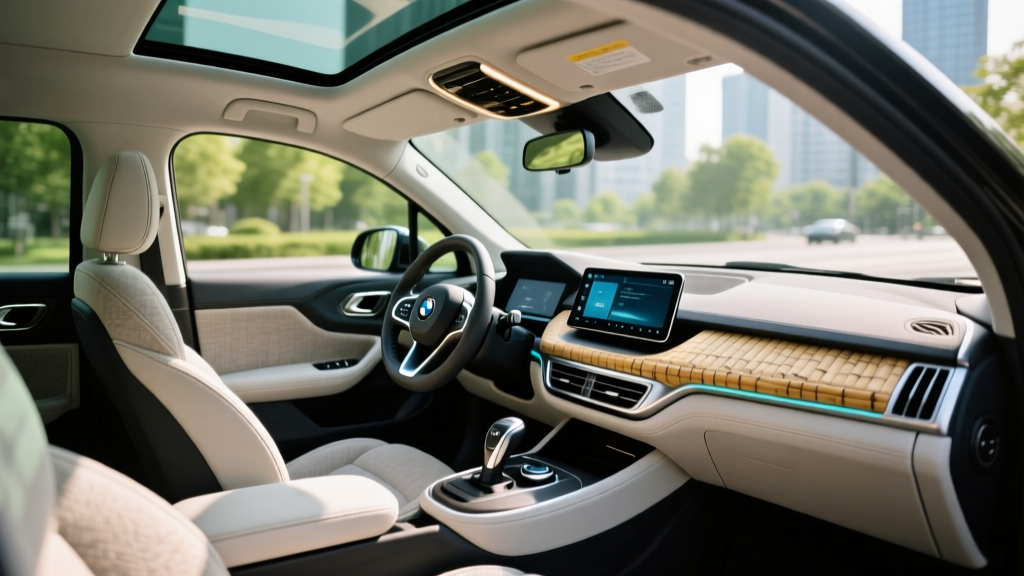
The BMW i3 was never a conventional electric car, and nowhere is that more obvious than inside the cabin. From its exposed carbon-fiber-reinforced plastic (CFRP) structure to its open-pore eucalyptus wood trim and recycled-material surfaces, the BMW i3 interior remains one of the most distinctive and forward-thinking cabin designs in the EV space — even years after the model's production run ended in 2022. If you're evaluating a used i3 on the pre-owned market, understanding what the interior actually offers in daily use — along with the car's real-world range, charging behavior, and ownership costs — is essential before signing paperwork.
This review covers the BMW i3 from the inside out: cabin materials, dimensions, technology, practicality, and how the full EV spec sheet holds up in 2026 for second-hand buyers.
The BMW i3 Interior: Materials, Layout, and Design Philosophy
BMW designed the i3 around what it called a "Life Module" — a passenger cell made from CFRP bonded to an aluminum "Drive Module" housing the battery and motor. That architecture freed designers from conventional constraints, and the cabin reflects it.
The dashboard is a two-tier, free-floating design with a slim band of sustainably sourced eucalyptus wood (on higher trims) or a kenaf-plant fiber composite on base models. There's no traditional center console tunnel, which creates a flat floor and an airy, open feeling between front passengers. The door panels are made from recycled plastic bottles, and the seat fabrics on models equipped with the Mega World or Giga World interior packages use wool blends and olive-leaf-tanned leather.
The result is a cabin that feels more like a modern loft than a subcompact hatchback. Even in 2026, the material quality and design intent hold up remarkably well against newer, more mainstream EVs.
Interior Trim Levels (Mega, Giga, Tera, Deka Worlds)
BMW offered the i3 with four interior "Worlds," each escalating in material richness:
- Mega World: Base cloth seats, kenaf dash trim, recycled-plastic accents.
- Giga World: Wool-and-olive-leather seats, eucalyptus wood dash, leather steering wheel.
- Tera World: Full olive-tanned leather, dark eucalyptus, textile accents.
- Deka World: (Final model years) Premium leather with unique stitching and dark wood trim.
If material sustainability matters to you, the Giga World and Tera World trims are the sweet spot — you get genuine natural materials without the full-leather environmental trade-off.
Cabin Space, Cargo, and Daily Practicality
The i3 is a subcompact, and that reality shows in the numbers. Here's what you're working with:
| Dimension | BMW i3 (2021–2022 Final Model Years) |
|---|---|
| Front headroom | 39.6 in |
| Front legroom | 40.5 in |
| Rear headroom | 37.2 in |
| Rear legroom | 31.9 in |
| Cargo (behind rear seats) | 15.1 cu ft |
| Cargo (seats folded) | 39.2 cu ft |
Front-seat comfort is excellent — the tall roofline and upright seating position create generous headroom and a commanding view. Rear seats are best suited for children or short-trip adult passengers; the 31.9 inches of legroom is tight by any standard. The rear-hinged "coach doors" (no B-pillar) make rear-seat entry easier than the numbers suggest, but they require you to open the front door first to access the rear — a quirk that can be annoying in tight parking spaces.
Cargo space at 15.1 cu ft is competitive with a Honda Fit and adequate for weekly groceries or two carry-on bags. Folding the 60/40 rear bench opens up 39.2 cu ft, enough for a bicycle with the front wheel removed. There is no frunk — the front compartment houses electronics and the optional range-extender engine on REx models.
Infotainment, Displays, and Driver-Assist Tech
The final-model-year i3 (2021–2022) came equipped with BMW's iDrive 6.0 system, displayed on a 10.25-inch touchscreen mounted atop the dash. The system supports wireless Apple CarPlay (a welcome feature in a car of this era), Bluetooth, and BMW's navigation suite. A 5.7-inch digital instrument cluster sits behind the steering wheel, showing speed, range, and power-consumption data.
Driver-assistance features on the i3 include:
- Active Driving Assistant (forward collision warning, automatic emergency braking, lane departure warning)
- Park Distance Control (front and rear sensors)
- Rear-view camera
- Adaptive cruise control (optional, with stop-and-go on later models)
Compared to a 2026 Hyundai Ioniq 5 or Tesla Model 3, the i3's tech suite feels dated — no over-the-air updates, no advanced highway-assist lane-centering, and no 360-degree camera. For a used-EV buyer prioritizing cabin character over cutting-edge tech, this is a manageable trade-off.
EPA Range, Battery Specs, and Real-World Efficiency
The BMW i3 went through several battery upgrades during its production run. The most common versions on the used market in 2026 are the 94 Ah (33 kWh) and 120 Ah (42.2 kWh) models. Here are the key specs for the final 120 Ah variant:
| Specification | BMW i3 120 Ah (2019–2022) |
|---|---|
| Usable battery capacity | 37.9 kWh (42.2 kWh gross) |
| Battery chemistry | NMC (Nickel Manganese Cobalt) — Samsung SDI cells |
| EPA estimated range (BEV) | 153 miles |
| EPA estimated range (REx) | 126 mi electric + 74 mi gas (200 mi combined) |
| MPGe (combined, BEV) | 113 MPGe |
| Energy consumption | 30 kWh/100 mi |
| Drivetrain | RWD (single rear motor) |
| Horsepower | 170 hp (125 kW) |
| 0–60 mph | 6.9 seconds |
| Battery warranty (original) | 8 years / 100,000 miles (capacity ≥ 70%) |
The REx (Range Extender) variant adds a 647cc two-cylinder BMW Motorrad gasoline engine that acts as a generator — it never drives the wheels directly. This extends total range to around 200 miles but adds weight, complexity, and fuel cost. REx models also have a slightly smaller usable battery (about 35 kWh) and lower EV-only range.
Charging Speed: DC Fast Charge and Home Level 2
Charging is where the i3's age shows most clearly. BMW equipped the i3 with a 50 kW CCS1 DC fast-charging capability — adequate for its era but slow by 2026 standards. Level 2 AC charging maxes out at 7.4 kW.
| Charging Level | Max Rate | Time / Miles Added |
|---|---|---|
| Level 1 (120V household) | ~1.4 kW | ~4–5 miles per hour |
| Level 2 (240V, 32A) | 7.4 kW | ~25 miles per hour; full charge in ~5.5 hours |
| DC Fast Charge (CCS1) | 50 kW (peak) | 10–80% in approximately 36 minutes |
A few important notes on the i3's charging behavior:
- Charge curve taper: The i3 sustains near-peak 50 kW up to roughly 50% SoC, then tapers significantly. Charging from 80–100% on DC is painfully slow — plan to charge to 80% and move on.
- No NACS compatibility: The i3 uses CCS1. Tesla Supercharger access requires a third-party CCS-to-NACS adapter (availability and compatibility vary — verify before purchasing).
- Preconditioning: The i3 supports battery preconditioning when a DC fast-charging destination is set in navigation, which helps optimize charge speed in cold weather. Always use this feature.
For daily driving, Level 2 home charging is the practical backbone. A full overnight charge from near-empty takes about 5–6 hours, which is fine for a car with 153 miles of range. If your daily commute is under 80 miles round-trip, the i3 recharges easily overnight on a standard 240V Level 2 unit.
Pricing on the Used Market and Federal Tax Credit Eligibility
BMW discontinued the i3 after the 2022 model year. In the U.S., all i3 purchases in 2026 are pre-owned. Here's what to expect:
| Model Variant | Typical Used Price (2026 Market) | Original MSRP (When New) |
|---|---|---|
| i3 BEV 94 Ah (2017–2018) | $14,000–$18,000 | $44,450–$47,800 |
| i3 BEV 120 Ah (2019–2022) | $19,000–$27,000 | $45,400–$52,500 |
| i3 REx 120 Ah (2019–2022) | $20,000–$28,000 | $48,300–$55,400 |
| i3s (sport, 120 Ah) | $22,000–$30,000 | $51,500–$56,000 |
Federal Used EV Tax Credit (§25E)
Because the i3 is purchased used, it does not qualify for the new-vehicle §30D credit. Instead, buyers may be eligible for the §25E Previously Owned Clean Vehicle Credit, which provides up to $4,000 (or 30% of the sale price, whichever is lower). Key requirements per the IRS:
- Sale price must be $25,000 or less
- Buyer adjusted gross income: ≤ $75,000 (single), ≤ $112,500 (head of household), ≤ $150,000 (joint)
- Vehicle must be at least 2 model years old
- Vehicle must have a battery capacity of at least 7 kWh (all i3 variants qualify)
- Credit can be transferred to the dealer at point of sale (as of 2024 rules)
- Buyer must not have claimed the used-EV credit in the prior 3 years
This means a 2019–2022 i3 120 Ah BEV priced at $24,000 could effectively cost $20,000 after the credit — an exceptional value for a premium-branded EV with a uniquely crafted interior. Consult a tax professional to confirm your eligibility.
Who Should Buy a Used BMW i3 in 2026?
- Your daily commute is under 80 miles round-trip and you have home Level 2 charging
- You value distinctive, sustainable interior design over mainstream styling
- You want a premium badge at a used-EV bargain price (especially with the §25E credit)
- You primarily drive in urban or suburban environments where the i3's tight turning radius and quick acceleration shine
- You regularly drive more than 120 miles between charges or take frequent road trips
- You need usable rear-seat space for adults or bulky child seats
- You want the latest driver-assist tech, over-the-air updates, or NACS Supercharger access
- You live in a region with extreme cold and lack garage parking (range loss is significant)
Pros and Cons at a Glance
- Interior materials and design remain best-in-class for the segment — sustainable, unique, premium
- Exceptional visibility and tight turning circle make it ideal for city driving
- Low used pricing + potential $4,000 §25E federal credit = strong value
- Lightweight CFRP construction delivers peppy acceleration (0–60 in 6.9s) despite modest power
- CFRP body means no rust — a genuine long-term ownership advantage
- 113 MPGe combined is efficient, keeping electricity costs low
- 153-mile EPA range limits highway and road-trip usability
- 50 kW DC fast charging is slow by 2026 standards (36 min for 10–80%)
- Rear seats are cramped; coach doors require front-door access
- No NACS port — Tesla Supercharger access is limited and adapter-dependent
- iDrive 6.0 lacks wireless Android Auto and modern OTA capabilities
- Tall, narrow tires are expensive to replace and limit wet-weather grip
Frequently Asked Questions
What is the real-world range of the BMW i3?
The EPA rates the 120 Ah BEV at 153 miles. In mixed real-world driving, expect 130–145 miles in mild weather. Highway driving at 70+ mph drops this to roughly 120–135 miles, and cold weather (below freezing) can reduce range to 100–115 miles. The REx model adds a gas generator for a combined ~200 miles of total range.
How fast does the BMW i3 charge?
On a 50 kW CCS1 DC fast charger, the i3 charges from 10–80% in approximately 36 minutes. At home on a 240V Level 2 charger (7.4 kW), a full charge takes about 5.5 hours, adding roughly 25 miles of range per hour. Level 1 (120V) trickle charging adds about 4–5 miles per hour.
Does the BMW i3 qualify for a federal tax credit in 2026?
Not the new-vehicle §30D credit — the i3 is discontinued. However, it may qualify for the §25E used-EV credit of up to $4,000 if the sale price is $25,000 or less and the buyer meets income limits ($75K single / $150K joint). Verify current rules at irs.gov and consult a tax professional.
Is the BMW i3 worth buying vs. competitors like the Chevy Bolt or Nissan Leaf?
If interior quality, design uniqueness, and urban driving dynamics are your priorities, the i3 is hard to beat at its used-market price. However, the Chevy Bolt EV offers 259 miles of EPA range and more cargo space for a similar used price. The Nissan Leaf Plus provides 226 miles but uses a CHAdeMO connector (a declining standard). If range and road-trip capability matter more than cabin character, the Bolt is the more practical choice.
How long will the i3 battery last?
BMW's original battery warranty covered 8 years/100,000 miles with at least 70% capacity retention. Real-world data from high-mileage i3 owners suggests NMC degradation of roughly 10–15% over the first 100,000 miles. A 2019 model with 60,000 miles should still offer roughly 130–140 miles of usable range. Battery replacement, if needed, runs approximately $10,000–$16,000 — a significant cost relative to the car's value.
Does the BMW i3 interior hold up over time?
Yes, and this is one of the i3's strongest selling points. The CFRP structure doesn't rust. The sustainable materials (eucalyptus wood, wool blends, recycled plastics) have proven durable in owner reports, with minimal wear on dash surfaces. Seat fabric on Mega World trims can show wear on bolsters after 80,000+ miles; leather-equipped Giga/Tera/Deka World interiors age more gracefully.
Sources: EPA Fuel Economy — BMW i3, IRS §25E Used Clean Vehicle Credit, BMW USA archived specifications.