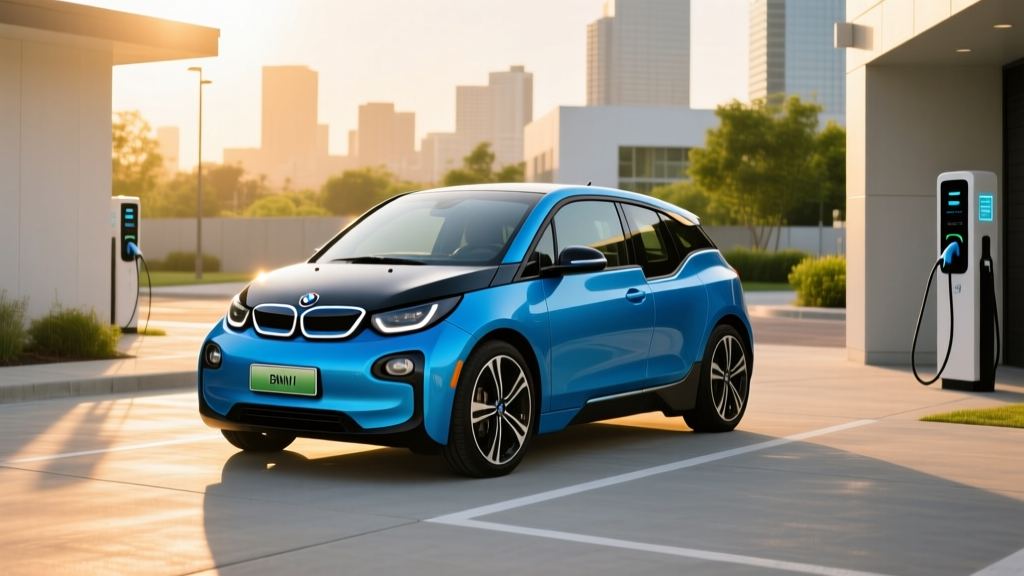
The BMW i3 was discontinued after the 2021 model year, but it remains one of the most distinctive compact electric vehicles on the used market. For 2026 buyers eyeing a pre-owned i3, the financial picture is dominated by one question: do BMW i3 incentives still apply, and how much can you actually save? This review maps out every relevant credit, rebate, and ownership cost so you can decide whether the i3 fits your budget and your commute.
Quick Verdict: Is the Used BMW i3 Worth It in 2026?
The BMW i3 is a compelling used-EV buy for urban commuters who prioritize quirky design, tight turning circles, and low running costs over highway range. With the federal used-EV tax credit (§25E) potentially knocking up to $4,000 off the purchase price, a well-maintained 2020–2021 i3 can land in the $14,000–$18,000 range after incentives. Its real-world limitations — modest DC fast-charge speed, CCS1 adapter dependency for non-Tesla networks, and a small back seat — mean it works best as a city runabout or second car, not a family hauler.
Real-World Range: What the EPA Sticker Doesn't Tell You
Real-World Expectation: ~120–135 miles on the highway at 70 mph; ~100–115 miles in freezing temperatures (below 32°F) with cabin heating. City driving with regen can stretch to 160+ miles.
The final-generation BMW i3 (2019–2021) uses a 42.2 kWh lithium-ion battery pack with Samsung SDI NMC (nickel-manganese-cobalt) cells. The EPA rates it at 153 miles combined. In our experience and aggregated owner data, highway driving at sustained speeds drops that figure by 12–18%, and cold weather compounds the loss. The i3 lacks a heat pump — it uses resistive cabin heating, which draws significant power from the traction battery in winter.
If your round-trip commute exceeds 100 miles in cold climates, the i3 will require midday charging or careful preconditioning. For sub-80-mile daily commutes, it handles the task with range to spare.
Battery, Charging Speed, and Efficiency
| Spec | 2021 BMW i3 (120 Ah) |
|---|---|
| Battery Capacity (usable) | 42.2 kWh |
| Battery Chemistry | NMC (Samsung SDI) |
| Max DC Fast Charge | 50 kW (CCS1) |
| 10–80% DC Fast Charge | ~45 minutes |
| Level 2 Charge Rate | 7.4 kW (~25 miles/hour) |
| Level 1 (120V) Charge Rate | ~1.4 kW (~5 miles/hour) |
| EPA Efficiency | 113 MPGe combined / 30 kWh/100mi |
The i3's 50 kW peak DC fast-charge rate was competitive in 2018 when the 120 Ah model launched, but it falls well behind modern rivals like the Hyundai Kona Electric (100 kW) or Chevrolet Bolt EV (55 kW sustained). On a 150 kW Electrify America station, the i3 will peak around 44–50 kW and taper noticeably above 60% state of charge. A 10–80% session takes roughly 45 minutes — adequate for a lunch stop, but not a quick top-up.
At home on a Level 2 charger (7.4 kW), the i3 replenishes from empty in about 6 hours. That 7.4 kW onboard charger is a strong point: many competitors from the same era, like the Nissan Leaf, were limited to 6.6 kW or even 3.3 kW.
Efficiency is a highlight. At 30 kWh per 100 miles, the i3 sips electricity — partly thanks to its lightweight carbon-fiber-reinforced plastic (CFRP) passenger cell and narrow, low-rolling-resistance tires. At $0.14/kWh (national average), fueling costs roughly $4.20 per 100 miles, compared to about $12–$14 for a 30 MPG gas car at $3.50/gallon.
Performance, Space, and Standout Tech
| Category | Figure |
|---|---|
| 0–60 mph | 6.9 seconds |
| Horsepower | 170 hp / 184 lb-ft torque |
| Drivetrain | Rear-wheel drive (single motor) |
| Cargo Volume (rear seats up) | 15.1 cu ft |
| Cargo Volume (rear seats folded) | 36.0 cu ft |
| Rear Legroom | 31.9 inches |
| Front Legroom | 40.5 inches |
| Curb Weight | ~2,961 lbs |
The i3's 170 hp electric motor delivers brisk city acceleration — 0–60 in 6.9 seconds feels lively in a car this light. The rear-wheel-drive layout and ultra-tight 32.8-foot turning circle make it a joy in parking structures and narrow streets.
Interior space is the trade-off. The rear seats accommodate adults only on short trips — 31.9 inches of legroom is tight. Cargo capacity at 15.1 cu ft behind the rear seats is comparable to a Honda Fit, and the tall, flat load floor is practical for groceries or a stroller. Fold the rear seats and 36.0 cu ft opens up, though the load area is narrow.
Standout tech includes BMW's iDrive 6 infotainment (10.25-inch display, wireless Apple CarPlay on 2019+ models, navigation with range-aware routing), and the available Driving Assistant Plus package (adaptive cruise control, lane-keeping assist, traffic jam assist — all SAE Level 2, requiring driver supervision). The CFRP construction and suicide-hinged rear doors ("coach doors") remain unique in the segment. Notable drawbacks: no Android Auto (Apple CarPlay only), a firm ride on the 19-inch wheels, and the absence of a heat pump.
BMW i3 Incentives: Federal, State, and Utility Breakdown
The new-vehicle federal tax credit (§30D) no longer applies to the BMW i3 because it is out of production. However, used buyers may qualify for the Used Clean Vehicle Credit (§25E), which provides up to $4,000 or 30% of the sale price (whichever is less).
- Vehicle price cap: Sale price must be $25,000 or less
- Vehicle age: Must be at least 2 model years old (any i3 qualifies)
- Buyer income caps: AGI ≤ $75,000 (single), $112,500 (head of household), $150,000 (joint)
- Dealer requirement: Must purchase from a licensed dealer (private-party sales excluded)
- First transfer: The vehicle's first qualified sale must have occurred after 2022; subsequent resales still qualify
- Credit amount: 30% of sale price, up to $4,000 maximum
- Point-of-sale transfer: Available — the dealer can apply the credit as a down-payment reduction at purchase
For a 2021 BMW i3 purchased from a dealer at $18,500, the §25E credit would be $4,000 (30% of $18,500 = $5,550, but capped at $4,000). Your effective cost: $14,500. Verify current rules on IRS.gov, as income thresholds and dealer registration requirements can shift.
| Scenario | Sale Price | §25E Credit | Effective Cost |
|---|---|---|---|
| 2019 i3 (higher mileage) | $14,000 | $4,000 | $10,000 |
| 2020 i3 (avg mileage) | $16,500 | $4,000 | $12,500 |
| 2021 i3 (low mileage) | $18,500 | $4,000 | $14,500 |
| 2021 i3 w/ Range Extender | $20,000 | $4,000 | $16,000 |
State and utility incentives vary widely and change frequently. Some states (e.g., California's CVRP, Colorado's innovative motor vehicle credits, Massachusetts' MOR-EV) offer additional used-EV rebates ranging from $1,000 to $5,000. Many utility companies also offer $250–$1,000 rebates for home Level 2 charger installation. Check your state's energy office and your utility's EV program page for current offers — these stack with the federal credit in most cases.
Warranty and Long-Term Battery Health
BMW's original warranty package for the i3 included:
- Battery warranty: 8 years / 100,000 miles (capacity retention below 70% triggers a claim)
- Powertrain warranty: 4 years / 50,000 miles
- Bumper-to-bumper: 4 years / 50,000 miles
For a 2021 model, the battery warranty remains valid through January 2029 or 100,000 miles — a significant safety net for a used purchase. Real-world degradation data from owner communities shows most 42.2 kWh i3 packs retain 88–94% capacity after 5 years and 50,000 miles. The NMC chemistry holds up well under moderate use, though frequent DC fast-charging and sustained 100% SoC storage accelerate wear.
Out-of-warranty battery replacement is expensive — roughly $12,000–$16,000 for the 42.2 kWh pack — but statistically rare at current mileage levels. Request a battery health report (State of Health / SoH) from any dealer before purchasing, and consider a third-party OBD2 tool like the BMW-specific BimmerLink app for independent verification.
BMW i3 vs. Key Used-EV Competitors
| Spec | 2021 BMW i3 | 2021 Chevy Bolt EV | 2021 Hyundai Kona Electric |
|---|---|---|---|
| EPA Range | 153 mi | 259 mi | 258 mi |
| Battery (kWh) | 42.2 | 65.0 | 64.0 |
| DC Fast Charge (kW) | 50 | 55 | 75 |
| 10–80% Time | ~45 min | ~45 min | ~47 min |
| 0–60 mph | 6.9 sec | 6.5 sec | 6.4 sec |
| Cargo (rear up) | 15.1 cu ft | 16.9 cu ft | 19.2 cu ft |
| Used Price (2026 est.) | $14K–$19K | $15K–$20K | $16K–$21K |
| §25E Eligible | Yes (≤$25K) | Yes (≤$25K) | Yes (≤$25K) |
- Your daily commute is under 80 miles round-trip
- You value premium interior materials and unique design
- You want the lightest, most agile city EV available used
- You primarily drive in urban environments with tight parking
- You need 250+ miles of range for longer trips
- You regularly carry rear-seat passengers
- You want more cargo space for family hauling
- You frequently road-trip and need faster DC charging headroom
Pros and Cons
- Up to $4,000 federal used-EV credit brings effective price under $15K
- Ultra-efficient: 113 MPGe / 30 kWh per 100 miles keeps fueling costs tiny
- Carbon-fiber construction = lightweight, corrosion-resistant, and unique
- Tight 32.8-ft turning circle and nimble city handling
- 7.4 kW Level 2 charger replenishes overnight in ~6 hours
- BMW battery warranty extends through 2029 on 2021 models
- 153-mile EPA range limits road-trip utility
- 50 kW DC fast charging is slow by 2026 standards
- Rear seats are cramped; cargo space is modest
- No heat pump — cold-weather range loss is significant
- Apple CarPlay only (no Android Auto)
- CCS1 connector may require adapters at newer NACS-only stations
Frequently Asked Questions
Does the BMW i3 qualify for the $7,500 federal EV tax credit?
No. The $7,500 credit (§30D) applies only to new vehicles, and the BMW i3 was discontinued after 2021. However, the i3 does qualify for the Used Clean Vehicle Credit (§25E), which provides up to $4,000 or 30% of the sale price (whichever is less) for eligible buyers purchasing from a licensed dealer at or below $25,000.
What is the real-world range of the BMW i3?
The EPA rates the 2021 i3 at 153 miles combined. In real-world driving, expect 120–135 miles at highway speeds and as little as 100–115 miles in freezing weather. City driving with regenerative braking can push range past 160 miles in mild conditions.
How fast does the BMW i3 charge at home and on DC fast chargers?
On a Level 2 home charger (7.4 kW), the i3 gains about 25 miles of range per hour, fully charging in roughly 6 hours. On DC fast chargers, it peaks at 50 kW and takes about 45 minutes for a 10–80% session — functional but slower than modern rivals.
Is the BMW i3 a good used EV buy in 2026?
For urban commuters with home charging and sub-80-mile daily drives, the i3 is an excellent value after the §25E credit, with low running costs, premium build quality, and remaining battery warranty. It's less suited for frequent road trippers, families needing rear-seat space, or drivers in extreme cold climates without garage parking.
What are the biggest drawbacks of the BMW i3?
The primary limitations are its 153-mile EPA range (reduced further in cold or highway driving), relatively slow 50 kW DC fast charging, cramped rear seats, and lack of Android Auto. The NACS/CCS charging connector transition also means some newer charging stations may require an adapter.
How much does a used BMW i3 cost after incentives?
Depending on model year and mileage, a used 2019–2021 BMW i3 typically sells for $14,000–$20,000 from dealers. After the $4,000 §25E credit, effective prices range from roughly $10,000 to $16,000, making it one of the most affordable premium-brand EVs on the used market.
Sources: EPA Fuel Economy – 2021 BMW i3, IRS Used Clean Vehicle Credit (§25E), BMW USA press archives.