Quick Verdict: The I01 i3 in 2026
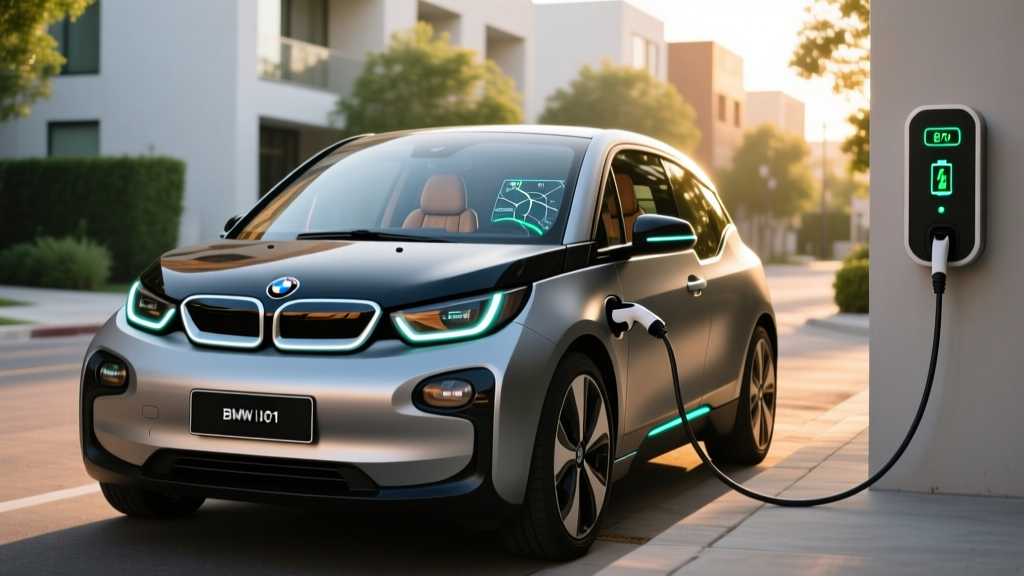
The BMW i3 (I01 generation, 2014–2021) remains one of the most distinctive used electric vehicles on the market. Built on a carbon-fiber-reinforced plastic (CFRP) passenger cell with an aluminum chassis, the i3 pioneered lightweight EV construction that still holds up. For 2026 used-car shoppers, the late-model 120 Ah variant (2019–2021) with its 42.2 kWh battery offers a genuine 153-mile EPA range, making it a compelling urban commuter at depreciated prices between $14,000 and $22,000.
But the i3 is not a do-everything EV. Its narrow rear doors, limited cargo volume, and 50 kW DC fast-charge ceiling mean it excels as a city runabout and falls short as a primary family hauler or road-trip vehicle. If you understand what it is—and what it isn't—the I01 i3 can be one of the smartest used EV buys available today.
EPA vs. Real-World Range
EPA Estimated Range: 153 miles (120 Ah model, 2019–2021)
Real-World Expectation: 120–135 miles at sustained highway speeds (70+ mph); 140–155 miles in mixed city driving with regenerative braking. In freezing temperatures (below 32°F / 0°C), expect 95–115 miles due to cabin heating load and increased battery resistance. The i3's heat pump (optional on earlier models, standard on later trims) mitigates cold-weather loss compared to resistive-heater EVs, but a 20–30% range reduction in deep winter is realistic.
REx Range Extender: Models equipped with the optional 647cc two-cylinder gasoline range extender add approximately 80–100 miles of gasoline-powered driving once the battery depletes to its hold threshold (~6–7% state of charge). This effectively eliminates range anxiety for longer trips, though at the cost of fuel economy around 35–39 MPG combined and the complexity of maintaining an internal combustion engine.
Spec Table: BMW i3 (I01) 120 Ah at a Glance
| Specification | BMW i3 120 Ah (2019–2021) |
|---|---|
| EPA Range (BEV) | 153 miles |
| EPA Range (REx) | 126 mi EV + ~80 mi gas |
| Battery Capacity (Usable) | 42.2 kWh (37.9 kWh usable, NMC chemistry) |
| MPGe (Combined) | 113 MPGe (BEV) |
| Efficiency | 30 kWh / 100 mi |
| DC Fast Charge (Max) | 50 kW (CCS Combo 2) |
| 10–80% DC Charge Time | ~42 minutes |
| Level 2 Charge Rate | 7.4 kW (AC, single-phase) |
| Level 2 Full Charge Time | ~5.5 hours (0–100%) |
| Motor Output | 170 hp (125 kW) / 184 lb-ft torque |
| 0–60 mph | 6.9 seconds |
| Drivetrain | Rear-wheel drive (single motor) |
| Cargo Volume | 15.1 cu ft (rear seats up); 36.0 cu ft (folded) |
| Rear Legroom | 31.9 inches |
| Battery Warranty (Original) | 8 years / 100,000 miles (70% capacity retention) |
| Original MSRP (2021) | $45,445 (base BEV) – $52,595 (REx) |
| Used Price Range (2026) | $14,000–$22,000 depending on mileage/condition |
Battery Chemistry, Degradation & Longevity
The I01 i3's 120 Ah battery pack uses Samsung SDI NMC (nickel-manganese-cobalt) pouch cells arranged in 8 modules of 12 cells each. NMC chemistry offers higher energy density than LFP (lithium iron phosphate), which was critical for packaging 42.2 kWh into the i3's compact underfloor space. The trade-off: NMC is more sensitive to sustained high state-of-charge and extreme heat, meaning long-term degradation management matters more than with LFP packs.
Degradation data: Real-world owner reports and fleet data suggest the 120 Ah pack retains approximately 85–90% of original capacity after 5 years / 60,000 miles under normal use. BMW's battery warranty guarantees 70% capacity retention for 8 years or 100,000 miles. Most 2019–2021 models in 2026 will still fall within this warranty window, making a pre-purchase battery health check (via OBD-II diagnostic or BMW dealer scan) essential.
Replacement cost: Out-of-warranty pack replacement runs $12,000–$16,000 at a BMW dealer, though third-party refurbishment shops offer module-level repair for $3,000–$6,000 depending on the number of degraded cells. The modular design (8 separate modules) makes partial repair feasible, unlike some competitors with monolithic packs.
Charging: Speeds, Connectors & Home Setup
The i3's charging capabilities reflect its 2014–2021 engineering era. It is competent for overnight home charging but limited for DC fast charging compared to modern 150–350 kW-capable EVs.
Charging Speeds
| Level | Power | Connector | Rate |
|---|---|---|---|
| Level 1 (120V) | 1.4 kW | J1772 | ~5 miles/hour |
| Level 2 (240V) | 7.4 kW | J1772 | ~25 miles/hour |
| DC Fast Charge | 50 kW peak | CCS Combo 2 (or CHAdeMO on early models) | ~100 miles in 30 min; 10–80% in ~42 min |
Charging curve reality: The i3's 50 kW peak rate holds from roughly 0–60% state of charge, then tapers to ~30 kW through 80%, and drops further to ~15 kW from 80–100%. This taper is typical for NMC packs with passive thermal management but means the advertised 50 kW is a peak, not a sustained average. On a road trip, plan for 40–45 minute stops to reach 80%, then drive approximately 100–120 miles before the next stop.
Home charging recommendation: A 32-amp or 40-amp Level 2 home charger (such as a ChargePoint Home Flex or Emporia Level 2) delivers the i3's maximum 7.4 kW AC rate, providing a full overnight charge in roughly 5.5 hours. Installation typically costs $500–$1,500 depending on panel proximity and whether a 240V circuit already exists. The i3's onboard charger is single-phase only; three-phase AC charging (available in European markets) does not apply to US models.
Connector Compatibility Note
US-market i3 models use CCS Combo 2 for DC fast charging (2015+). Early 2014 models may have CHAdeMO. Neither uses NACS (Tesla's connector). If you primarily use Tesla Superchargers, you'll need a CCS-to-NACS adapter (available from third-party manufacturers for ~$200–$300), though compatibility with non-Tesla vehicles on Supercharger networks varies by station and adapter certification. For reliable charging, stick to Electrify America, EVgo, and ChargePoint DC stations with native CCS connectors.
Performance, Efficiency & Driving Dynamics
The i3's 170 hp synchronous electric motor drives the rear wheels through a single-speed reduction gear. The 0–60 mph time of 6.9 seconds feels quicker than the number suggests, thanks to instant torque delivery (184 lb-ft available from 0 RPM) and the car's remarkably low curb weight of approximately 2,900 lbs (BEV). For context, that's 500–800 lbs lighter than most contemporary compact EVs.
Efficiency: The EPA rates the 120 Ah i3 at 113 MPGe combined (30 kWh/100 mi), which translates to roughly $0.04–$0.06 per mile at average US residential electricity rates ($0.13–$0.17/kWh). Compare this to a 30 MPG gasoline car at $3.50/gallon ($0.12/mile), and the i3 cuts per-mile fuel cost by more than half. Annual fuel savings of $800–$1,200 are realistic for a 12,000-mile/year commuter.
Driving character: The i3's skinny 155/70R19 tires and tall, narrow body prioritize low rolling resistance and urban maneuverability over cornering grip. The 32-foot turning circle is exceptional for city driving. Highway stability is adequate but not confidence-inspiring above 75 mph, and crosswinds are more noticeable than in wider, lower vehicles. The i3 is a brilliant city car and a competent highway cruiser, but it is not a performance EV.
Regenerative braking: The i3 was an early pioneer of one-pedal driving. Lifting off the accelerator engages aggressive regen (up to 50 kW of recuperation), allowing most city driving without touching the brake pedal. This maximizes efficiency and reduces brake wear—many i3 owners report original brake pads at 80,000+ miles.
Pricing, Tax Credits & Total Ownership Cost
As a discontinued model (production ended July 2021), the i3 is only available as a used vehicle in 2026. This has significant implications for tax credit eligibility.
Federal Used EV Tax Credit (§25E)
Under the current IRS §25E used clean vehicle credit, the i3 may qualify for up to $4,000 or 30% of the sale price (whichever is lower) when purchased from a licensed dealer. Eligibility requirements:
- Sale price cap: Vehicle must sell for $25,000 or less (most used i3s qualify)
- Buyer income limits: AGI ≤ $75,000 single / $112,500 head of household / $150,000 joint
- Model year requirement: Vehicle must be at least 2 model years old (all i3s qualify)
- Dealer reporting: Sale must be reported to IRS by the dealer at point of sale
- Battery capacity: Minimum 7 kWh (i3's 42.2 kWh easily qualifies)
- First transfer: Credit applies only on the first qualified resale after August 16, 2022
Important caveat: The §25E credit is non-refundable, meaning it can only reduce your tax liability to zero—it cannot generate a refund beyond taxes owed. Additionally, the "first transfer" rule means an i3 that has already been sold with the credit claimed once cannot generate the credit again for a subsequent buyer. Verify with the dealer and your tax professional before relying on this credit.
| Scenario | Used i3 Price | §25E Credit | Effective Cost |
|---|---|---|---|
| 2019 i3 BEV, 45k mi | $16,500 | $4,000 (30% = $4,950, capped at $4,000) | ~$12,500 |
| 2020 i3 REx, 35k mi | $19,000 | $4,000 | ~$15,000 |
| 2021 i3s BEV, 20k mi | $22,000 | $4,000 | ~$18,000 |
5-Year Ownership Cost Estimate
Compared to a similarly priced used gasoline compact (e.g., 2019 Honda Civic, ~$16,000), the i3 saves significantly on fuel and maintenance over five years:
- Fuel/Electricity: ~$2,400 (i3) vs. ~$7,000 (Civic at 30 MPG, $3.50/gal, 12k mi/yr) — savings: $4,600
- Maintenance: ~$800 (i3, no oil changes, minimal brake wear) vs. ~$2,500 (Civic) — savings: $1,700
- Insurance: ~$1,200/yr (i3) vs. ~$1,000/yr (Civic) — additional cost: $1,000
- Depreciation: i3 depreciation has largely plateaued; expect ~$2,000–$3,000 loss over 5 years from current used prices
- Net 5-year savings vs. gas compact: approximately $4,000–$5,500
Interior, Tech & Practicality
The i3's interior is genuinely unique. BMW used renewable materials extensively: eucalyptus wood dashboard trim, recycled plastic and natural fiber door panels, and available wool-blend upholstery. The result is an airy, Scandinavian-feeling cabin that stands apart from conventional automotive interiors.
Infotainment: The 2019–2021 models feature BMW's iDrive 6.0 system with a 10.25-inch center display, wireless Apple CarPlay (added for 2019), and available navigation with real-time charging station routing. The system is responsive and logical, though it lacks the large touchscreens and over-the-air update capabilities of newer EVs.
Driver assistance: The i3 offers SAE Level 1–2 driver assists, including available adaptive cruise control with stop-and-go, lane departure warning, and parking assistant. These are basic by 2026 standards—no lane centering, no hands-free highway driving. The driver must remain fully engaged at all times.
Practicality limitations:
- Rear-hinged "coach" rear doors require the front doors to be open first, making rear-seat access awkward in tight parking spaces
- Rear legroom (31.9 inches) is tight for adults on longer trips
- Cargo volume (15.1 cu ft behind rear seats) is comparable to a subcompact hatchback—adequate for groceries, not for large items
- No front trunk (frunk)—the space under the hood houses the motor and electronics
- Towing capacity: Not rated for towing
Pros
- Exceptional energy efficiency (113 MPGe / 30 kWh/100mi)
- Lightweight CFRP construction—unique in the used EV market
- Tight turning circle (32 ft) ideal for city driving
- Strong one-pedal regen reduces brake wear dramatically
- Low used prices ($14k–$22k) with potential $4,000 §25E credit
- Premium interior materials and build quality
- Modular battery allows module-level repair vs. full replacement
Cons
- 50 kW DC fast charge is slow by 2026 standards
- 153-mile EPA range limits road-trip practicality
- Coach doors are impractical in tight spaces
- Rear seat and cargo space are cramped
- Narrow tires compromise wet/snow traction
- No NACS connector; Supercharger access requires adapter
- REx model adds ICE maintenance complexity
- Driver-assist tech is basic (Level 1–2 only)
Who Should Buy the BMW i3 (I01)?
Best suited for:
- Urban commuters with home charging and a daily round-trip under 80 miles
- Second-car households needing an efficient runabout for errands and local driving
- Eco-conscious buyers who value the i3's sustainable materials and lightweight engineering
- Budget EV shoppers wanting premium-badge quality at sub-$20,000 used prices
Not ideal for:
- Families needing regular rear-seat access or large cargo capacity
- Frequent road-trippers who need 250+ mile range and 150 kW+ charging
- Drivers in regions with sparse CCS charging infrastructure
- Those wanting the latest driver-assist technology or OTA updates
Frequently Asked Questions
What is the real-world range of the BMW i3 120 Ah?
The EPA rates it at 153 miles, but expect 120–135 miles at highway speeds, 140–155 in city driving, and 95–115 miles in freezing weather. The REx model adds 80–100 miles of gasoline range after battery depletion.
How fast does the i3 charge at home and on DC fast chargers?
At home on a 7.4 kW Level 2 charger, the i3 adds about 25 miles per hour, fully charging in ~5.5 hours. On a 50 kW DC fast charger, it reaches 10–80% in approximately 42 minutes, though the charge rate tapers significantly above 60% state of charge.
Does the BMW i3 qualify for the federal EV tax credit in 2026?
As a used vehicle, the i3 may qualify for the §25E used clean vehicle credit of up to $4,000 (or 30% of sale price, whichever is lower). Requirements include a sale price under $25,000, buyer AGI within income limits ($75k single / $150k joint), purchase from a licensed dealer, and the credit must not have been previously claimed on that specific vehicle's first qualified resale. Consult a tax professional for your specific eligibility.
Is the BMW i3 worth buying vs. a used Nissan LEAF or Chevrolet Bolt EV?
It depends on your priorities. The i3 offers superior build quality, a unique carbon-fiber structure, and better efficiency than the LEAF. However, the Chevrolet Bolt EV provides 259 miles of EPA range and a larger interior for similar used prices. The LEAF Plus offers 212 miles but uses a CHAdeMO connector (declining infrastructure) and lacks active battery thermal management. Choose the i3 for city driving and premium feel; choose the Bolt EV for range and practicality.
How long will the i3 battery last?
BMW's original battery warranty covers 8 years / 100,000 miles with a 70% capacity retention threshold. Real-world data suggests the 120 Ah NMC pack retains 85–90% capacity at 5 years / 60,000 miles under normal use. With proper care (avoiding sustained 100% or 0% state of charge, minimizing DC fast charging in extreme heat), many packs should last 150,000+ miles before significant degradation.
Can I charge the i3 at Tesla Superchargers?
Not natively. The i3 uses a CCS Combo 2 connector. Some Tesla Supercharger stations are opening to non-Tesla vehicles via the Magic Dock adapter or third-party CCS-to-NACS adapters, but availability is inconsistent. For reliable charging, use Electrify America, EVgo, or ChargePoint networks with native CCS connectors.
What are the biggest maintenance concerns on a used i3?
The electric drivetrain is largely maintenance-free. Key concerns include: (1) 12V auxiliary battery replacement every 4–6 years (~$300–$500), (2) tire replacement—the unusual 155/70R19 size is expensive and limits brand options ($200–$300/tire), (3) REx models require standard ICE maintenance (oil changes, spark plugs, fuel system) on the range extender, and (4) coolant system checks for the battery thermal management loop.