Quick Answer: Is the BMW i3 Electric Still Worth Buying?
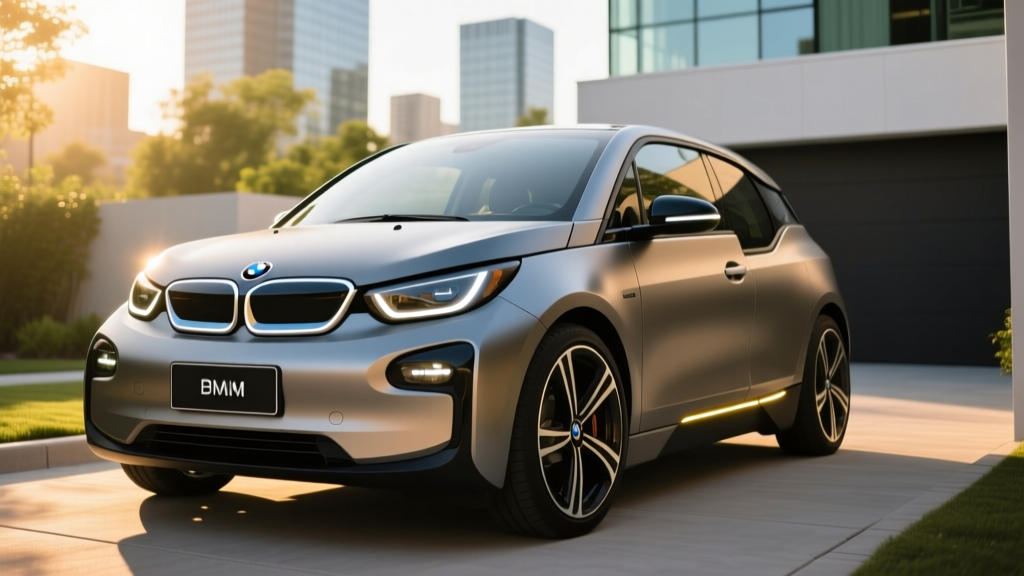
The BMW i3 electric was discontinued after the 2021 model year, but it remains a viable used EV in 2026 for urban commuters who can charge at home. Expect to pay $12,000–$22,000 on the used market depending on model year and mileage. The later 120 Ah models (2019–2021) offer an EPA-estimated 153 miles of range from a 42.2 kWh battery — enough for daily city driving but limited for highway road trips. The i3 qualifies for the up-to-$4,000 used EV tax credit under IRS §25E if you meet income caps and the sale price is under $25,000. It's best suited as a second car or urban runabout, not a primary long-distance vehicle.
BMW i3 Electric: Specs and Real-World Range
BMW produced the i3 from 2014 through 2021 across three battery generations. Understanding which generation you're looking at is critical because range and charging capability differ substantially.
| Spec | 60 Ah (2014–2016) | 94 Ah (2017–2018) | 120 Ah (2019–2021) |
|---|---|---|---|
| Battery (usable kWh) | 18.8 kWh | 27.2 kWh | 42.2 kWh |
| Chemistry | NMC (Samsung SDI) | NMC (Samsung SDI) | NMC (Samsung SDI) |
| EPA Range (BEV) | 81 mi | 114 mi | 153 mi |
| Real-World Range (mixed) | 60–75 mi | 85–100 mi | 120–140 mi |
| Motor Output | 170 hp / 184 lb-ft | 170 hp / 184 lb-ft | 170 hp / 184 lb-ft |
| 0–60 mph | 7.0 sec | 7.0 sec | 6.9 sec |
| DC Fast Charge (max kW) | 50 kW (CCS) | 50 kW (CCS) | 50 kW (CCS) |
| 10–80% DC Charge Time | ~25 min | ~35 min | ~42 min |
| Level 2 Charge Rate | 7.4 kW | 7.4 kW | 7.4 kW |
| EPA Efficiency (MPGe) | 124 MPGe | 111 MPGe | 113 MPGe |
| Connector | CCS1 / J1772 | CCS1 / J1772 | CCS1 / J1772 |
Real-World Range Reality Check
The EPA rates the 120 Ah i3 at 153 miles, but real-world results depend heavily on conditions. In 65°F city driving with regenerative braking set to max, owners consistently report 135–145 miles. At sustained highway speeds of 70–75 mph, expect 110–125 miles. In freezing temperatures (below 32°F), the i3 lacks a heat pump — it uses resistive cabin heating — so range drops to 90–110 miles on the 120 Ah model. The earlier 60 Ah models are essentially city-only vehicles in winter, often delivering under 55 miles per charge.
The i3's 50 kW DC fast-charging cap is its biggest limitation by 2026 standards. While modern EVs like the Hyundai Ioniq 5 or Tesla Model 3 charge at 150–250 kW, the i3 tops out at 50 kW. That means a 10–80% session on the 120 Ah model takes roughly 42 minutes — acceptable for occasional road trips but noticeably slow compared to current EVs. The charge curve is relatively flat to about 60% SoC, then tapers progressively. You won't see sustained 50 kW above roughly 70% state of charge.
Used Pricing and the §25E Used EV Tax Credit
As of early 2026, used BMW i3 pricing breaks down roughly by generation:
- 60 Ah (2014–2016): $8,000–$13,000 depending on mileage and condition
- 94 Ah (2017–2018): $12,000–$17,000
- 120 Ah (2019–2021): $16,000–$22,000
- i3s (sport variant, 2018–2021): $18,000–$25,000
The IRS §25E used clean vehicle credit allows eligible buyers to claim 30% of the sale price, up to $4,000, on a used EV purchased from a dealer. To qualify:
- Sale price: Must be $25,000 or less (most i3s qualify)
- Buyer income caps: AGI ≤ $75,000 single / $112,500 head of household / $150,000 joint
- Vehicle age: Must be at least 2 model years old (all i3s qualify)
- Dealer requirement: Must purchase from a licensed dealer (not private party)
- Transfer option: Credit can be transferred to the dealer at point of sale as an immediate price reduction
On a $18,000 120 Ah i3, the full $4,000 credit brings your effective cost to $14,000 — making it one of the most affordable entry points into EV ownership in 2026.
BMW i3 Electric vs. Gas Car and Modern EVs
How does a used i3 stack up against keeping a gas car or buying a newer, more expensive EV? Here's a five-year cost comparison assuming 12,000 miles per year, $3.50/gallon gas, and $0.14/kWh home electricity.
| Cost Category | Used BMW i3 120 Ah | Used Gas Sedan (30 MPG) | New 2026 EV (avg $38K) |
|---|---|---|---|
| Purchase Price (after credits) | $14,000 | $14,000 | $30,500 |
| Fuel / Electricity (5 yrs) | $2,520 | $7,000 | $2,520 |
| Maintenance (5 yrs) | $1,800 | $3,500 | $1,500 |
| Insurance (5 yrs, avg) | $6,500 | $5,500 | $7,200 |
| Estimated Depreciation | $4,000 | $5,000 | $10,000 |
| Total 5-Year Cost | $28,820 | $35,000 | $51,720 |
| Cost Per Mile | $0.48 | $0.58 | $0.86 |
The used i3 wins on total cost of ownership primarily because of its low purchase price (after the used EV credit), minimal maintenance needs, and cheap home charging. The savings over a gas sedan total roughly $6,200 over five years, or about $1,240 per year. Against a new EV, the i3 saves dramatically on purchase price and depreciation — though you sacrifice range, charging speed, and modern driver-assist features.
For context on efficiency, the 120 Ah i3 achieves roughly 113 MPGe combined per EPA data on fueleconomy.gov, consuming about 30 kWh per 100 miles. That's slightly less efficient than a Tesla Model 3 RWD (~26 kWh/100mi) but comparable to other compact EVs.
Charging at Home and on the Road
The i3 uses a CCS1 connector for DC fast charging and a standard J1772 inlet for Level 1 and Level 2 AC charging. It does not have a NACS (Tesla-style) port, though CCS-to-NACS adapters are becoming available for use at Tesla Superchargers that support non-Tesla vehicles.
| Level | Power (kW) | Miles Added per Hour | Equipment Needed |
|---|---|---|---|
| Level 1 (120V outlet) | ~1.4 kW | ~5 mi/hr | Included portable cord |
| Level 2 (240V, 32A) | 7.4 kW | ~25 mi/hr | Home wallbox or public L2 |
| DC Fast Charge | 50 kW max | ~150 mi/hr (peak) | Public CCS station |
A full Level 2 home charge from empty to 100% on the 120 Ah model takes roughly 6 hours. For most owners plugging in overnight, this is more than adequate. Level 1 charging from a standard 120V outlet is painfully slow — roughly 30 hours for a full charge — and is only practical as a trickle top-up if you drive less than 20 miles per day.
Home Level 2 charger installation typically costs $800–$2,000 total (equipment + electrician + permit) if your electrical panel has capacity. If you need a panel upgrade from 100A to 200A service, add $1,500–$3,000. Factor this into your i3 purchase budget.
On the road, the 50 kW DC fast-charging cap means the i3 is not a great road-trip car. Plan for 40–45 minute charging stops every 90–100 miles on the highway. Networks like Electrify America and EVgo support CCS charging, but you'll be watching newer EVs pull in, charge to 80% in 18 minutes, and leave while you're still waiting.
Common Misconceptions About the BMW i3
| Myth | Fact |
|---|---|
| "The i3's carbon-fiber body is expensive to repair." | The CFRP (carbon-fiber-reinforced plastic) passenger cell is extremely strong and rarely needs repair in minor collisions. Body panel replacements (which are mostly plastic or aluminum) are straightforward. Major structural damage is rare but can be costly — the same is true for any unibody vehicle. |
| "The battery will need expensive replacement soon." | BMW's NMC cells in the i3 have proven durable. Data from high-mileage owners shows 10–15% degradation at 80,000–100,000 miles on the 120 Ah models. BMW provided an 8-year/100,000-mile battery warranty (8 years/80,000 miles in some states). Some early 60 Ah models have seen more degradation. A full battery replacement runs $8,000–$14,000, but most used i3s still have meaningful capacity remaining. |
| "The range-extender (REx) version gives unlimited range." | The REx models include a tiny 0.65L two-cylinder gasoline engine that acts as a generator, adding roughly 60–80 miles of extended range. However, the REx engine is loud, the gas tank holds only 2.4 gallons, and highway performance in range-extender mode is sluggish. It's a safety net, not a primary driving mode. REx models also have slightly less cargo space and added mechanical complexity. |
| "You can't take the i3 on road trips at all." | You can, but it requires patience and planning. With CCS DC fast charging, you can add ~100 miles in 30 minutes on the 120 Ah model. Apps like PlugShare and A Better Routeplanner work fine for i3 trip planning. It's just slower and more stop-heavy than a 250+ mile EV. |
| "The i3 doesn't qualify for any tax credits anymore." | While the i3 does not qualify for the new-vehicle §30D credit (it's discontinued), it does qualify for the §25E used EV credit — up to $4,000 — if purchased from a dealer at or below $25,000 and you meet income requirements. |
Real-World Ownership: What to Expect
The i3's unique construction — a carbon-fiber passenger cell on an aluminum chassis — makes it remarkably light at roughly 2,800–3,000 lbs. That lightness translates to exceptional city efficiency and nimble handling in urban environments. The tall, narrow tires (155/70 R19) minimize rolling resistance but limit grip in aggressive cornering. Replacement tires are a specialty size and cost $180–$280 each.
Maintenance is minimal compared to a gas car. There's no engine oil, no transmission fluid, no spark plugs, no exhaust system. Brake pads last well past 80,000 miles thanks to aggressive regenerative braking. The cabin air filter, brake fluid, and cabin heater are the primary service items. Budget $300–$500 per year for routine maintenance.
Insurance tends to run slightly higher than a comparable gas compact car — roughly $1,200–$1,500 per year for a typical driver, depending on your state and driving record. Some insurers offer EV-specific discounts.
Cold weather is the i3's Achilles heel. Without a heat pump, cabin heating draws directly from the traction battery, and the battery's own performance drops in freezing temperatures. Preconditioning the car while still plugged in (using the BMW Connected app or iDrive timer) is essential in winter. This warms both the cabin and the battery using grid power rather than battery power, preserving your range.
Interior and tech hold up well. The i3's cabin uses sustainable materials (recycled plastics, eucalyptus wood, wool blends) that have aged better than expected. The iDrive infotainment system in 2019–2021 models supports Apple CarPlay (wireless) and has a usable 10.25-inch display. Earlier models have smaller screens and no CarPlay. None of the i3 models support Android Auto natively.
Decision Framework: Should You Buy a BMW i3 Electric?
Buy the BMW i3 if:
- Your daily commute is under 60 miles round-trip
- You have access to Level 2 home charging (or can install it)
- You want the cheapest possible entry into EV ownership (under $15K after tax credit)
- You need a second car for errands and commuting, not a primary road-trip vehicle
- You live in a mild-to-moderate climate (or can accept winter range loss)
- You value unique design, easy parking, and excellent city efficiency
Look elsewhere if:
- You regularly drive more than 100 miles per day
- You rely exclusively on public DC fast charging (50 kW is painfully slow by 2026 standards)
- You live in a region with harsh winters and need reliable 150+ mile range year-round
- You want modern Level 2 driver-assist features like adaptive cruise with lane centering (the i3 only offers basic cruise control and lane-departure warning)
- You need seating for more than four adults or significant cargo space (the i3 has 15.1 cu ft behind the rear seats)
- You want NACS compatibility for seamless Tesla Supercharger access without an adapter
If the i3's range limitations are a dealbreaker but you still want an affordable used EV, consider the Chevrolet Bolt EV (238–259 miles EPA, used prices $14,000–$20,000) or the Hyundai Kona Electric (258 miles EPA, used $17,000–$23,000). Both offer substantially more range and faster DC charging, though at a slightly higher used price point.
Frequently Asked Questions
What is the real-world range of the BMW i3 120 Ah?
In moderate temperatures with mixed city/highway driving, expect 120–140 miles. Pure city driving with regenerative braking can push toward 145 miles. Highway-only driving at 70+ mph drops to 110–125 miles. In freezing weather, plan for 90–110 miles. Always precondition in cold weather while plugged in to maximize usable range.
How long does the BMW i3 battery last?
Real-world data from high-mileage i3 owners shows NMC battery degradation of approximately 10–15% after 80,000–100,000 miles on the 120 Ah generation. BMW's battery warranty covers 8 years/100,000 miles against dropping below 70% capacity. Many 2014–2016 (60 Ah) models have seen 20–25% degradation by now, so prioritize the 94 Ah or 120 Ah versions when buying used. Request a battery health diagnostic from a BMW dealer before purchase.
Can I charge the BMW i3 at Tesla Superchargers?
Not natively. The i3 uses a CCS1 connector, while Tesla Superchargers use NACS. As Tesla opens more Supercharger locations to non-Tesla EVs via their "Open Supercharging" program, you may be able to use a CCS-to-NACS adapter at select stations. However, this is still limited in availability. Your primary DC fast-charging networks will be Electrify America, EVgo, and ChargePoint.
Is the BMW i3 REx (range extender) worth it?
The REx adds a small gasoline generator that extends total range by roughly 60–80 miles once the battery is depleted. It provides peace of mind for occasional longer trips but adds weight, mechanical complexity, and maintenance (oil changes for the generator engine). The gas tank holds only 2.4 gallons, and highway performance in REx mode is noticeably sluggish. For most urban buyers, the pure BEV 120 Ah model is the better choice — simpler, lighter, and cheaper to maintain.
Does the BMW i3 qualify for the federal EV tax credit?
Not the new-vehicle §30D credit, since the i3 is discontinued. However, it does qualify for the IRS §25E used clean vehicle credit — up to $4,000 (30% of sale price) — when purchased from a licensed dealer at $25,000 or less. Income caps apply: $75K single, $150K joint. The credit can be transferred to the dealer at point of sale for an immediate price reduction. Check current IRS rules before purchasing, as credit provisions may change.
What should I inspect before buying a used BMW i3?
Request a battery State of Health (SoH) report from a BMW dealer — this tells you what percentage of original capacity remains. Check for any outstanding recalls (early models had a few related to the charging system and 12V battery). Inspect the tire condition (specialty 19-inch tires are expensive to replace). Test all regenerative braking modes. Verify the charging cord and adapter are included. If considering a REx model, ensure the generator engine starts and runs smoothly.