The BMW i3 in 2026: Urban EV Icon or Outdated Relic?
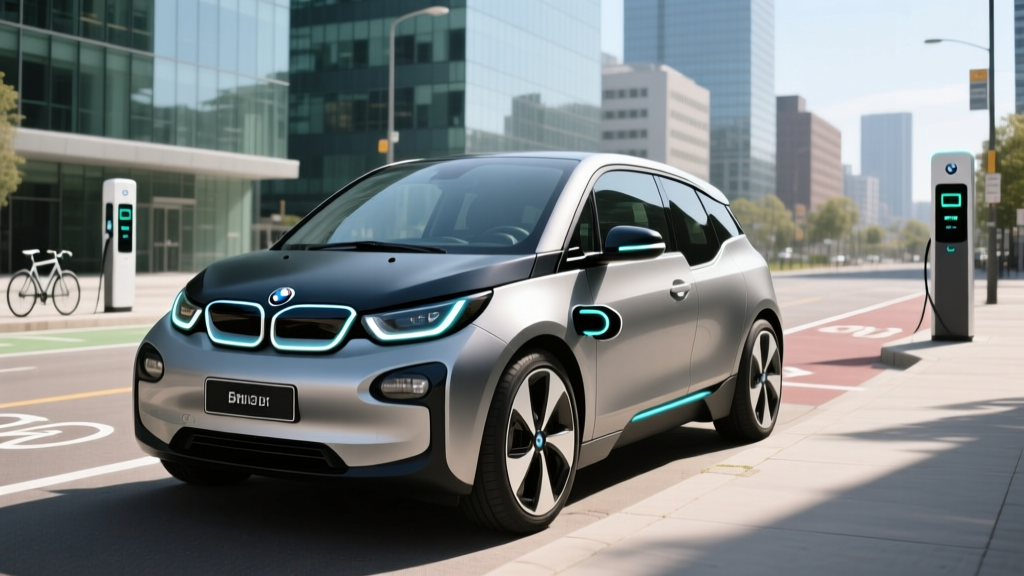
If you're researching the BMW i3 city car in 2026, you're likely looking for a compact, nimble electric vehicle optimized for urban life. The i3, with its carbon-fiber-reinforced plastic (CFRP) chassis and quirky coach-door design, remains one of the most distinctive EVs ever built. But here's the critical context: BMW ended i3 production in July 2022. That means every i3 you'll find today is a used vehicle — no new 2026 models exist, and none are announced.
This review examines the final-generation i3 (2019–2022 model years with the 120 Ah battery) through a 2026 ownership lens: What does real-world range look like on a 5–7-year-old battery? How do charging speeds compare to modern competitors? And does the used-EV tax credit make this a compelling buy?
Real-World Range: What the EPA Sticker Doesn't Tell You
The final-generation BMW i3 (120 Ah) carries a 42.2 kWh gross battery (37.9 kWh usable), using Samsung SDI NMC (nickel manganese cobalt) cells. The EPA rated this model at 153 miles of combined range when new.
Range Reality Check
EPA (new): 153 miles combined
Real-world city driving (2026, healthy battery): ~130–145 miles in mild weather, benefiting from regenerative braking and low-speed efficiency.
Highway (70 mph sustained): ~105–120 miles. The i3's tall, narrow profile creates aerodynamic drag that punishes efficiency above 65 mph.
Cold weather (below 32°F): Expect 25–35% range loss, dropping to ~90–110 miles. The i3 lacks a heat pump (resistive cabin heating draws heavily from the pack).
Degradation factor: A 2019–2022 i3 in 2026 has aged 4–7 years. Expect 8–15% capacity loss depending on climate and charging habits, further reducing real-world range.
For context, the i3's city range is competitive with a base Nissan Leaf (149 miles EPA) but falls well short of a Chevrolet Bolt EV (259 miles). If your daily round-trip commute exceeds 80 miles, the i3 requires careful planning — especially in winter.
Battery, Charging Speed & Infrastructure Compatibility
Understanding the i3's charging profile is essential for 2026 buyers, especially since public charging infrastructure has shifted heavily toward NACS (Tesla's connector) and higher-power CCS stations.
| Charging Level | Power / Rate | Time / Miles Added | Connector |
|---|---|---|---|
| Level 1 (120V household) | ~1.4 kW | ~3–4 miles per hour; 0–100% in ~28 hours | J1772 |
| Level 2 (240V home/public) | 7.4 kW (single-phase, 32A) | ~22 miles per hour; 0–100% in ~5.5 hours | J1772 |
| DC Fast Charge (CCS Combo) | 50 kW peak | 10–80% in ~35–40 minutes | CCS1 (J1772 combo) |
Key charging caveats for 2026:
- 50 kW DC fast charging is slow by modern standards. Contemporary EVs like the Hyundai Ioniq 5 peak at 240 kW, achieving 10–80% in ~18 minutes. The i3's 50 kW ceiling means longer highway stop waits.
- Charging curve taper: The i3 sustains ~44–47 kW up to roughly 55% state of charge, then tapers to ~30 kW by 70%, and ~12 kW above 85%. Plan DC sessions for 10–80% to avoid the slow tail.
- No NACS native support. As BMW transitions to NACS for its 2025+ models, the i3's CCS1 port means you'll need adapters for Tesla Supercharger access (BMW has not officially enabled Supercharger compatibility for the i3).
- Preconditioning: The i3 allows battery preconditioning via the iDrive navigation system when a DC fast charger is set as your destination. This warms the pack for optimal charge acceptance — critical in cold climates.
For home charging, a Level 2 wallbox (7.4 kW) fully replenishes the i3 overnight. Most owners report 20–25 miles of range added per hour on Level 2, which is ample for city-car duty.
Performance, Efficiency & Driving Dynamics
| Specification | BMW i3 120 Ah (2019–2022) |
|---|---|
| Drivetrain | Rear-wheel drive (RWD), single-speed |
| Motor Output | 170 hp (125 kW), 184 lb-ft torque |
| 0–60 mph | 6.9 seconds |
| Top Speed | 93 mph (electronically limited) |
| Battery (gross / usable) | 42.2 kWh / 37.9 kWh |
| Battery Chemistry | NMC (Samsung SDI) |
| EPA Range | 153 miles |
| EPA Efficiency | 113 MPGe combined (30 kWh/100 mi) |
| Curb Weight | ~2,950 lbs |
| Turning Circle | 32.3 feet (exceptionally tight) |
The i3's 170 hp electric motor delivers brisk city acceleration — 0–30 mph feels punchy thanks to instant torque and low weight. The 6.9-second 0–60 time is adequate for merging, though highway passing above 65 mph feels strained compared to a 300+ hp Tesla Model 3 or Hyundai Ioniq 5.
Where the i3 genuinely excels is urban maneuverability. The 32.3-foot turning circle is tighter than a Mini Cooper's, and the thin, tall tires (155/70 R19) minimize rolling resistance while enabling sharp low-speed turns. One-pedal driving is strong — the i3's regenerative braking can bring the car to a complete stop without touching the brake pedal, which is ideal for stop-and-go traffic.
Efficiency is a highlight: 113 MPGe combined (30 kWh per 100 miles) makes the i3 one of the most energy-efficient EVs ever sold in the US. For comparison, the Chevrolet Bolt EV achieves 120 MPGe combined, while the Tesla Model 3 RWD sits at 132 MPGe. At the 2026 national average electricity rate of ~$0.16/kWh (EIA data), charging the i3 costs roughly $0.048 per mile — about one-third the per-mile fuel cost of a 30 mpg gas car.
Interior, Cargo Space & Technology
The i3's interior is unlike any other BMW. Sustainable materials dominate: eucalyptus wood dash trim, recycled-plastic textiles, and optional wool-blend upholstery. The cabin feels airy thanks to large windows and the absence of a B-pillar (the rear-hinged coach doors open wide for access).
Passenger and cargo dimensions:
- Front headroom: 39.6 inches (excellent for a subcompact)
- Front legroom: 40.5 inches
- Rear headroom: 37.8 inches
- Rear legroom: 31.9 inches (tight for adults over 6 feet)
- Cargo volume (rear seats up): 15.1 cubic feet
- Cargo volume (rear seats folded): 36.0 cubic feet
- No front trunk (frunk)
The cargo area is practical for groceries and small luggage, but the high load floor (the battery sits underneath) and narrow opening limit larger items. A Chevrolet Bolt EV offers 57 cu ft with seats folded — significantly more versatility.
Infotainment and tech (final-generation models):
- 10.25-inch iDrive 6.0 touchscreen with rotary controller
- Apple CarPlay (wired; wireless on 2021–2022 models)
- No Android Auto (a notable omission for 2026 expectations)
- Navigation with real-time traffic and DC fast-charger routing
- Harman Kardon premium audio (optional)
Driver assistance (ADAS):
- Active Cruise Control with stop-and-go
- Lane Departure Warning (not lane-keeping assist)
- Frontal Collision Warning with City Collision Mitigation (automatic emergency braking)
- Park Distance Control (front and rear sensors)
- No highway lane-centering, no hands-free driving — this is a basic SAE Level 1 system, far below modern Level 2 suites like BMW's own Driving Assistant Professional.
Pricing, Tax Credits & Ownership Costs in 2026
Since the i3 is discontinued, pricing depends entirely on the used market. Here's what 2026 buyers should expect:
| Model Year / Trim | Original MSRP | 2026 Used Market (est.) | Federal Used-EV Credit (§25E) |
|---|---|---|---|
| 2019 i3 120 Ah | $45,445 | $17,000–$21,000 | Up to $4,000 (30% of sale price, max $4,000) |
| 2020 i3 120 Ah | $45,445 | $19,000–$23,000 | Up to $4,000 |
| 2021 i3 120 Ah | $45,445 | $21,000–$26,000 | Up to $4,000 |
| 2022 i3 120 Ah (final year) | $45,445 | $24,000–$29,000 | Up to $4,000 |
| i3s (sport trim, any year) | $48,845 | $20,000–$31,000 | Up to $4,000 |
Federal used-EV tax credit (§25E) eligibility for the i3:
- The vehicle must be at least 2 model years old (all i3s qualify).
- Sale price must be $25,000 or less to qualify for the full $4,000 credit. Models priced above $25,000 are ineligible.
- Buyer income caps apply: $75,000 single / $112,500 head of household / $150,000 joint filers (modified AGI).
- The vehicle must be purchased from a licensed dealer (private-party sales do not qualify).
- The credit can be transferred to the dealer at point of sale as an immediate price reduction.
- Full details at IRS.gov §25E.
Warranty status in 2026:
BMW's original battery warranty covers 8 years/100,000 miles against capacity loss below 70%. For a 2019 i3, this warranty expires in 2027; for a 2022 model, it extends to 2030. Before purchasing, request a battery State of Health (SoH) report from a BMW dealer — this is critical for assessing remaining capacity and warranty coverage.
Pros, Cons & Who Should Buy the BMW i3
Pros
- Exceptional city maneuverability (32.3-ft turning circle, one-pedal driving)
- Outstanding energy efficiency (113 MPGe, ~$0.05/mile)
- Unique, sustainable interior materials and airy cabin feel
- Strong regenerative braking ideal for stop-and-go traffic
- CFRP chassis is lightweight and corrosion-resistant
- Eligible for up to $4,000 federal used-EV credit
- Distinctive design — nothing else looks like it
Cons
- Limited range (153 mi EPA; ~90–110 mi in cold weather)
- Slow DC fast charging (50 kW peak; 35–40 min 10–80%)
- Discontinued — no new models, limited dealer support trajectory
- No Android Auto; aging iDrive 6.0 infotainment
- Minimal driver-assist features (no lane centering, no hands-free)
- Narrow rear seats and modest cargo space (36 cu ft max)
- Unconventional tire size (155/70 R19) — expensive to replace
- CCS1 connector may require adapters for growing NACS networks
Who the BMW i3 city car suits best:
- Ideal: Urban commuters with home Level 2 charging, daily drives under 60 miles, and a second vehicle for road trips. The i3 rewards owners who value efficiency, unique design, and parking-lot agility.
- Not ideal: Single-vehicle households needing highway range, families requiring rear-seat space, or drivers in extreme cold climates without garage parking. Road-trippers will find the 50 kW charging and 153-mile range frustrating on longer routes.
BMW i3 vs. Key 2026 Competitors
Shopping the used i3 means cross-shopping other compact EVs. Here's how it stacks up:
- vs. Chevrolet Bolt EV (used 2020–2023): The Bolt offers 259 miles EPA, 55 kW DC fast charging, and 57 cu ft of cargo space. It's the more practical, longer-range choice — but less distinctive and less premium inside. Used Bolts often fall in the same $18,000–$25,000 range.
- vs. Nissan Leaf (used 2019–2023): The Leaf SV Plus delivers 226 miles EPA and 100 kW DC fast charging, but uses the CHAdeMO connector (a declining standard in 2026). The i3's CCS connector has broader long-term infrastructure support.
- vs. Mini Cooper SE (used 2020–2024): The Mini SE shares BMW's EV powertrain DNA but offers only 114 miles EPA and 50 kW DC charging. It's even more city-focused than the i3, with a firmer ride and less cargo space. Choose the Mini for style; choose the i3 for efficiency and cabin room.
- vs. Hyundai Kona Electric (used 2020–2023): The Kona Electric provides 258 miles EPA and 100 kW DC fast charging in a similarly compact package. It's the strongest all-around competitor for buyers who want range and charging speed without stepping up to a larger vehicle.
FAQ: Common BMW i3 City Car Questions
What is the real-world range of the BMW i3 in 2026?
Expect 130–145 miles in mild city driving, 105–120 miles on the highway, and 90–110 miles in freezing temperatures. A 5–7-year-old battery will have lost 8–15% of original capacity, so adjust expectations accordingly. Always request a battery SoH report before purchase.
How fast does the BMW i3 charge?
On a Level 2 home charger (7.4 kW), the i3 adds ~22 miles per hour and fully charges in about 5.5 hours. On a DC fast charger, it peaks at 50 kW, reaching 10–80% in approximately 35–40 minutes. This is significantly slower than modern EVs that charge at 150–350 kW.
Does the BMW i3 qualify for the federal EV tax credit?
As a used vehicle, the i3 is eligible for the §25E used clean-vehicle credit — up to $4,000 or 30% of the sale price, whichever is less. The vehicle must sell for $25,000 or less, be purchased from a dealer, and the buyer must meet income caps ($75K single / $150K joint). It does not qualify for the §30D new-vehicle credit since it's no longer manufactured. Verify current rules at IRS.gov.
Is the BMW i3 worth buying in 2026 vs. competitors?
The i3 is worth buying if you prioritize urban efficiency, distinctive design, and a premium cabin at a used-EV price point. However, if you need range over 200 miles, fast DC charging, or modern driver-assist features, a used Chevrolet Bolt EV, Hyundai Kona Electric, or even a base Tesla Model 3 will serve you better. The i3 is a specialist, not a generalist.
What are the biggest maintenance concerns for a used i3?
Key items: battery degradation (request SoH data), the range-extender engine on REx models (requires oil changes and fuel-system maintenance), the uncommon 155/70 R19 tires ($200–$300 each), and potential AC compressor wear. BMW's 8-year/100,000-mile battery warranty still covers many 2019–2022 models through 2027–2030.
Can I charge the BMW i3 at Tesla Superchargers?
Not natively. The i3 uses a CCS1 (J1772 Combo) connector, while Tesla Superchargers use NACS. As of 2026, BMW has not enabled Supercharger access for the i3 through an adapter program (unlike newer BMW EVs). You'll rely on Electrify America, EVgo, ChargePoint, and other CCS-compatible networks for DC fast charging.