The BMW i3 Battery in 2026: What Every Owner and Buyer Needs to Know
The BMW i3 was a pioneer — one of the first mass-market EVs built on a dedicated carbon-fiber platform with a focus on urban efficiency. Though BMW discontinued the i3 after the 2021 model year, thousands remain on the road and on the used market in 2026. For current owners approaching 100,000 miles and prospective used-EV buyers, the single most important question centers on the BMW i3 battery: How much capacity has it lost? What does replacement cost? And what real-world range can you actually expect from a car that left the factory five or more years ago?
This guide covers the i3's battery specifications, chemistry, degradation patterns observed across model years, DC fast-charging and Level 2 charging performance, real-world range reconciliation against EPA estimates, and the economics of ownership — including whether the i3 qualifies for the federal used-EV tax credit under IRS §25E.
Battery Specifications and Chemistry
The BMW i3 went through three distinct battery generations during its production run (2014–2021). Understanding which pack your car has is critical to evaluating its remaining range and value.
| Generation | Model Years | Cell Format | Total Capacity | Usable Capacity | Chemistry | EPA Range (BEV) |
|---|---|---|---|---|---|---|
| 60 Ah (Gen 1) | 2014–2016 | Prismatic | 22 kWh | ~18.8 kWh | NMC (Samsung SDI) | 81 mi |
| 94 Ah (Gen 2) | 2017–2018 | Prismatic | 33 kWh | ~27.2 kWh | NMC (Samsung SDI) | 114 mi |
| 120 Ah (Gen 3) | 2019–2021 | Prismatic | 42.2 kWh | ~37.9 kWh | NMC (Samsung SDI) | 153 mi |
All i3 packs use NMC (nickel manganese cobalt) lithium-ion chemistry supplied by Samsung SDI in prismatic cell format. NMC offers strong energy density — important given the i3's compact under-floor battery tray — but it is more susceptible to calendar degradation than LFP (lithium iron phosphate). BMW engineered a thermal management system with active liquid cooling and heating, which helps moderate temperature extremes and slows degradation compared to passively cooled packs.
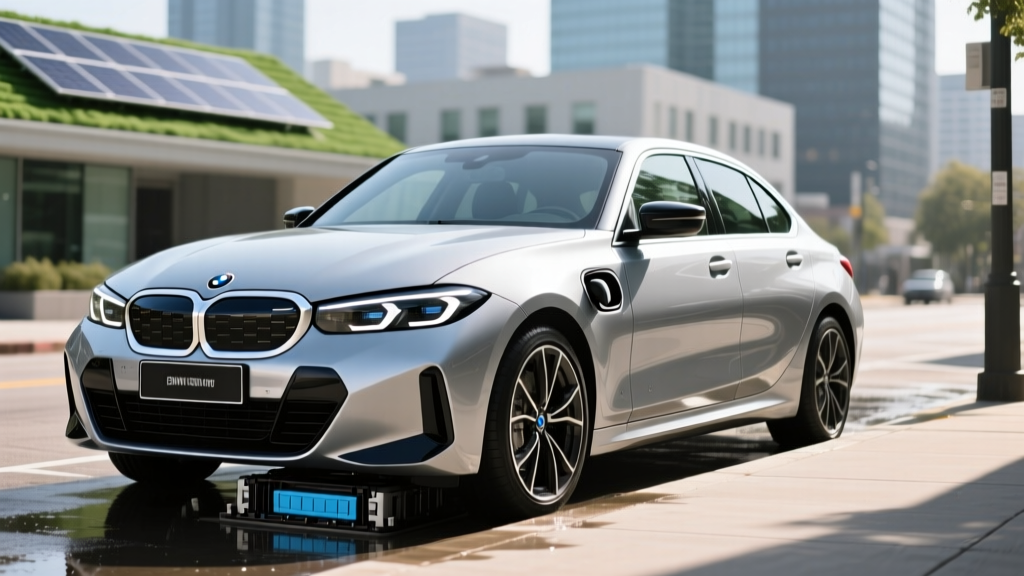
One key detail: BMW designed the i3's battery tray to be serviceable at the module level. The pack contains eight modules (in the 60 Ah and 94 Ah versions) or twelve modules (120 Ah). Individual modules can be replaced rather than swapping the entire pack — a significant cost advantage that we'll explore below.
EPA Estimated: 153 miles (BEV model)
Real-World Expectation: 130–145 miles in mixed city/highway driving at moderate temperatures (60–80°F). Highway-only driving at 70+ mph reduces range to approximately 110–125 miles due to the i3's boxy aerodynamics (Cd ~0.29). In cold weather (below 32°F), expect 20–30% range loss, dropping effective range to 95–120 miles without preconditioning.
REx (Range Extender) models: The two-cylinder gasoline engine adds approximately 70–80 miles of extended range after battery depletion, but the EPA combined MPGe drops when the engine engages.
Battery Degradation: What the Data Shows
NMC batteries degrade through two mechanisms: calendar aging (time and temperature) and cycle aging (charge/discharge use). For a 2019–2021 i3 120 Ah in 2026, calendar age alone means 5–7 years on the pack. Here's what owners and independent testers have documented:
- 60 Ah (2014–2016): Average State of Health (SoH) in 2026 is 70–82%, depending on climate and charging habits. A pack originally delivering 81 EPA miles may now provide 55–65 real-world miles.
- 94 Ah (2017–2018): Average SoH of 78–88%. Original 114-mile EPA range translates to roughly 85–100 real-world miles today.
- 120 Ah (2019–2021): Average SoH of 85–94%. The larger pack has aged more gracefully, with most cars still delivering 125–145 real-world miles.
Several factors accelerate i3 battery degradation:
- Frequent DC fast charging: The i3's relatively small battery means DC sessions push higher C-rates, generating more heat per cell.
- Hot climates: Cars in Arizona, Texas, and Southern California show 3–5% more degradation than Pacific Northwest counterparts.
- Consistently charging to 100%: NMC chemistry prefers a daily ceiling of 80–90%. BMW's iDrive lets you set a charge limit — use it.
- Deep discharges: Regularly driving below 10% SoH stresses the cells.
Checking SoH before buying: You can read the i3's battery health via the hidden "Service Menu" in iDrive (hold the menu button for ~10 seconds) or use an OBD-II dongle with apps like BimmerCode or the BMW-specific "Battery Life" readout. A SoH reading above 85% on a 120 Ah model is considered healthy for 2026.
Charging Speeds: DC Fast, Level 2, and Level 1
The i3's charging capabilities reflect its era. It's adequate for urban routines but falls short of modern 200+ kW DC fast-charging standards. Here's the breakdown:
| Charge Level | 60 Ah (2014–16) | 94 Ah (2017–18) | 120 Ah (2019–21) |
|---|---|---|---|
| Level 1 (120V, 12A) | ~1.4 kW / 5 mi/hr | ~1.4 kW / 5 mi/hr | ~1.4 kW / 5 mi/hr |
| Level 2 (240V, 32A) | 7.4 kW / ~25 mi/hr | 7.4 kW / ~25 mi/hr | 7.4 kW / ~25 mi/hr |
| DC Fast (CCS) | 50 kW peak | 50 kW peak | 50 kW peak |
| DC 10–80% Time | ~25–30 min | ~35–40 min | ~40–45 min |
A few important notes on i3 charging in 2026:
CCS connector: The i3 uses the CCS1 (Combined Charging System) standard for DC fast charging. With the industry-wide shift to NACS (Tesla's connector), CCS remains widely available at Electrify America, EVgo, and ChargePoint stations, but new infrastructure increasingly favors NACS. CCS adapters for NACS stations are available but add a step.
Charge curve taper: The i3 peaks at 50 kW only between roughly 10–50% SoC. Above 60%, the rate drops significantly — often to 20–25 kW — making the final 20% disproportionately slow. Plan your DC stops to charge from 10% to 80% and move on rather than waiting for a full charge.
Level 2 home charging: At 7.4 kW, a full charge from empty takes about 5 hours (120 Ah model). For most owners, plugging in overnight at home covers daily driving needs easily. A 240V / 40A circuit with a quality Level 2 EVSE (such as the ChargePoint Home Flex or Emporia Level 2) is the recommended home setup.
Performance, Efficiency, and Practicality
The i3 was never about performance numbers — it was about proving that a purpose-built EV could serve as a compelling urban runabout. Still, its specs hold up surprisingly well for city driving.
| Specification | Value |
|---|---|
| Motor | Single rear-mounted electric motor (RWD) |
| Horsepower | 170 hp |
| Torque | 184 lb-ft |
| 0–60 mph | 6.9 seconds |
| EPA Range | 153 miles |
| EPA Efficiency | 113 MPGe combined (30 kWh/100 mi) |
| Battery (Usable) | 37.9 kWh, NMC |
| Cargo Volume | 15.1 cu ft (rear seats up) / 37.2 cu ft (folded) |
| Rear Legroom | 31.9 inches |
| Curb Weight | ~2,974 lbs |
| Turning Circle | 32.3 feet |
Driving character: The i3's 170 hp and instant electric torque make it genuinely quick off the line — 0–30 mph feels punchier than the 6.9-second 0–60 suggests. The narrow, tall tires (155/70 R19) prioritize low rolling resistance over grip, so cornering is best described as "enthusiastic commuter" rather than "sports car." The carbon-fiber-reinforced plastic (CFRP) passenger cell keeps weight remarkably low for an EV, contributing to the i3's excellent efficiency of 30 kWh/100 miles.
Cargo and space: The i3's 15.1 cu ft trunk is competitive with subcompact hatchbacks, and the rear seats fold nearly flat for 37.2 cu ft. However, the rear-hinged "coach doors" require the front doors to be open before rear passengers can exit — a quirk that frustrates some families. Rear legroom is tight at 31.9 inches; this is strictly a two-adult-plus-two-children car.
Battery Replacement Costs and Options
If your i3's battery has degraded beyond acceptable levels — or if a cell failure occurs outside warranty — here's what replacement looks like in 2026:
- Full pack replacement (BMW dealer): $14,000–$18,000 installed. This is often uneconomical relative to the car's value ($12,000–$20,000 on the used market).
- Module-level repair (independent EV shop): $2,000–$5,000 depending on how many modules need replacement. Because the i3's pack is module-serviceable, this is a viable option. Several independent BMW EV specialists now offer this service.
- Used/remanufactured pack: $6,000–$10,000 from salvage or remanufactured suppliers. Availability varies, and warranty coverage is typically 1–2 years.
BMW's battery warranty: The original warranty covers 8 years / 100,000 miles against defects and capacity loss below 70% of original capacity. For 2014–2018 models, this warranty has expired or is expiring in 2026. For 2019–2021 models, warranty coverage extends through 2027–2029, which is an important consideration for used buyers.
Pricing, Tax Credits, and Ownership Economics
The BMW i3 is no longer sold new. In 2026, all transactions are on the used market, where prices have settled into an affordable range:
| Model Year / Trim | Typical Price Range | Federal Used-EV Credit (§25E) | Effective Price After Credit |
|---|---|---|---|
| 2014–2016 i3 60 Ah BEV | $8,000–$12,000 | Up to $4,000 (30% of sale price) | $5,000–$9,000 |
| 2017–2018 i3 94 Ah BEV | $11,000–$16,000 | Up to $4,000 | $8,000–$13,000 |
| 2019–2021 i3 120 Ah BEV | $15,000–$22,000 | Up to $4,000 | $12,000–$19,000 |
| 2019–2021 i3 120 Ah REx | $14,000–$20,000 | Up to $4,000 | $11,000–$17,000 |
Federal used-EV tax credit (IRS §25E): Unlike the new-vehicle §30D credit, the used-EV credit offers 30% of the sale price, up to $4,000, for qualified used EVs purchased from a dealer. Key eligibility requirements per IRS guidelines:
- Sale price must be $25,000 or less
- Buyer's adjusted gross income must not exceed $75,000 (single) / $112,500 (head of household) / $150,000 (joint)
- Vehicle must be at least two model years old
- Must purchase from a licensed dealer (private-party sales do not qualify)
- Buyer cannot have claimed the used-EV credit in the prior three years
- Vehicle must be used primarily in the United States
For most i3 models on the used market in 2026, the sale price is well under the $25,000 cap, making the credit accessible — provided the buyer meets income requirements and purchases through a dealer. The credit is non-refundable (it can reduce your tax liability to zero but won't generate a refund beyond that). Consult a tax professional for your specific situation.
Pros, Cons, and Who the i3 Suits Best
Pros
- Exceptionally efficient — 113 MPGe combined, 30 kWh/100 mi
- Lightweight CFRP construction gives agile urban handling
- Module-serviceable battery reduces replacement cost
- Tight 32.3-ft turning circle — ideal for city parking
- Unique, distinctive design with sustainable interior materials
- Affordable used entry point, especially with §25E credit
- Strong remaining warranty on 2019–2021 models
Cons
- Limited range — even 120 Ah models top out at 153 mi EPA
- 50 kW DC fast charging is slow by 2026 standards
- Rear coach doors are impractical for car seats and tight spaces
- Tight rear legroom (31.9 in) limits adult passengers
- CCS connector may require adapters at newer NACS stations
- No longer in production — parts availability may tighten long-term
- Range Extender engine adds maintenance complexity (REx models)
Ideal for: Urban commuters with home charging who drive fewer than 80 miles round-trip daily, want an affordable second EV or city car, and value efficiency and unique design over range and cargo space. The 120 Ah model (2019–2021) is the best pick for usable range and remaining warranty.
Not ideal for: Families needing rear-seat space for car seats, frequent highway road-trippers (the 50 kW charge rate and 153-mile range make long trips tedious), or anyone in a cold climate without garage parking and preconditioning capability.
Frequently Asked Questions
What is the real-world range of the BMW i3 in 2026?
For the 120 Ah model (2019–2021) with typical battery degradation of 6–15%, expect 125–145 miles in mixed driving, 110–125 miles on the highway, and 95–120 miles in cold weather. The older 60 Ah models may deliver as little as 55–65 real-world miles today.
How fast does the BMW i3 charge at home and on DC fast chargers?
At home on a 240V Level 2 charger, the i3 charges at 7.4 kW, adding roughly 25 miles of range per hour — a full charge takes about 5 hours for the 120 Ah model. On DC fast chargers, it peaks at 50 kW, with a 10–80% session taking 40–45 minutes (120 Ah). Charge speed tapers significantly above 60% SoC.
Does the BMW i3 qualify for the federal EV tax credit?
The i3 does not qualify for the new-vehicle §30D credit (it's no longer sold new). However, it can qualify for the IRS §25E used-EV credit — up to $4,000 or 30% of the sale price (whichever is less) — if purchased from a dealer for $25,000 or less, and if the buyer meets income thresholds ($75K single / $150K joint). Confirm eligibility with a tax professional.
How much does a BMW i3 battery replacement cost?
A full dealer replacement runs $14,000–$18,000, which often exceeds the car's value. However, the i3's module-serviceable design allows independent shops to replace individual failed modules for $2,000–$5,000. Used/remanufactured packs cost $6,000–$10,000. Check your battery warranty status before paying out of pocket — 2019–2021 models may still be covered under BMW's 8-year/100,000-mile battery warranty.
Is the BMW i3 worth buying in 2026 vs. competitors?
The i3 is worth considering if you want an affordable, efficient, and unique urban EV and can accept its range and charging limitations. Compared to a used Chevrolet Bolt EV (238-mile range, faster DC charging) or a used Nissan Leaf (150-mile range in SV/SL trims, but passive air cooling and CHAdeMO connector), the i3 offers better build quality and efficiency but less range and slower charging. The 120 Ah model with remaining warranty is the strongest value proposition.
What should I check before buying a used BMW i3?
Request the battery State of Health (SoH) reading — above 85% is healthy for a 120 Ah pack. Verify remaining battery warranty coverage (8 years from in-service date). Check for any software updates BMW may have issued. Test the DC fast-charge port with a CCS station to confirm it functions. If considering a REx model, check the two-cylinder engine's maintenance history — it requires oil changes like any gasoline engine.