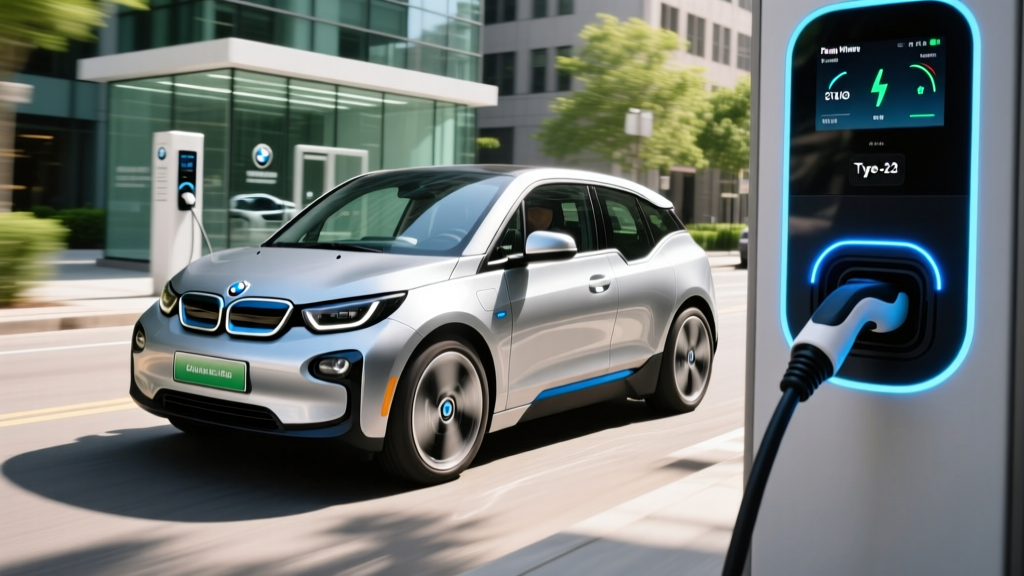
The BMW i3 occupies a unique space in the electric vehicle landscape: a purpose-built urban EV wrapped in a carbon-fiber body with a driving character that punches well above its price point. While BMW discontinued the i3 for the U.S. market after the 2021 model year, the used EV market in 2026 is flush with well-maintained examples, and interest in the "BMW i3 auto" driving experience remains strong among city commuters and second-car shoppers. This review covers the final-generation i3 (120 Ah battery) with full specs, real-world range data, charging expectations, and whether it still makes sense as a daily driver in 2026.
BMW i3 Key Specifications at a Glance
| Specification | 2021 BMW i3 (120 Ah) | 2021 BMW i3s (120 Ah) |
|---|---|---|
| EPA Range | 153 miles | 153 miles |
| Battery (Usable) | 37.9 kWh (NMC) | 37.9 kWh (NMC) |
| Gross Battery | 42.2 kWh | 42.2 kWh |
| Horsepower | 170 hp / 184 lb-ft | 184 hp / 199 lb-ft |
| 0–60 mph | 6.9 seconds | 6.2 seconds |
| Drivetrain | RWD (single motor) | RWD (single motor) |
| MPGe (Combined) | 113 MPGe | 107 MPGe |
| kWh/100 mi | 30 kWh/100 mi | 31 kWh/100 mi |
| DC Fast Charge (Peak) | 50 kW (CCS) | 50 kW (CCS) |
| Level 2 Charge Rate | 7.4 kW (32A) | 7.4 kW (32A) |
| Cargo Volume | 15.1 cu ft (rear seats up) | 15.1 cu ft |
| Base MSRP (when new) | $44,450 | $47,650 |
| Battery Warranty | 8 years / 100,000 miles | 8 years / 100,000 miles |
Real-World Range: What the EPA Number Doesn't Tell You
The 153-mile EPA rating for the 120 Ah i3 was competitive in 2021, but in 2026 it sits below most new EVs. That said, for its intended use case — urban commuting and errands — the i3's range is entirely adequate for most drivers covering 30–50 miles round-trip daily.
The i3's efficiency is genuinely impressive. At 30 kWh/100 miles (combined), it sips electrons thanks to its lightweight carbon-fiber-reinforced plastic (CFRP) passenger cell and narrow, low-rolling-resistance tires (155/70 R19). According to fueleconomy.gov, the i3 achieves 113 MPGe combined — one of the highest efficiency ratings of any EV sold in the U.S.
However, efficiency comes with trade-offs. The skinny tires and light weight mean the i3 struggles with highway stability in crosswinds, and range drops sharply above 70 mph. Cold-weather range loss is significant: the i3 uses a resistance heater rather than a heat pump, drawing 3–5 kW from the battery to warm the cabin. In our experience, winter range in the 20–30°F range regularly falls to 65–75% of the EPA sticker, putting real-world winter range around 100–115 miles.
The i3's 42.2 kWh gross battery (37.9 kWh usable) uses Samsung SDI NMC (nickel manganese cobalt) cells arranged in 8 modules of 12 cells each. BMW provides a generous thermal buffer — roughly 4.3 kWh — which helps mitigate degradation but limits usable capacity. After 5+ years on the road, most 120 Ah i3 owners report State of Health (SoH) readings between 85–92%, which is solid for NMC chemistry with active thermal management.
Charging Speed: DC Fast, Level 2, and Level 1
The i3's charging capabilities reflect its era. While it won't compete with modern 800V architecture EVs, it charges respectably for a 42 kWh battery.
| Charging Level | Power | Time (10–80%) | Miles Added per Hour |
|---|---|---|---|
| Level 1 (120V, 12A) | ~1.4 kW | N/A (overnight only) | ~5 mi/hr |
| Level 2 (240V, 32A) | 7.4 kW | ~4.5 hours (0–100%) | ~25 mi/hr |
| DC Fast Charge (CCS) | 50 kW peak | ~35 minutes (10–80%) | ~100 mi/hr (peak) |
The 50 kW DC fast-charging peak is the i3's biggest limitation for road trips. The charge curve is relatively flat up to about 60% SoC, then tapers significantly above 80%. A 10–80% session takes approximately 35 minutes at a 50 kW CCS station — acceptable for a quick meal stop but noticeably slower than the 18–20 minute sessions modern EVs deliver at 150–350 kW chargers.
For home charging, the 7.4 kW onboard charger is the sweet spot. A full charge from near-empty takes about 5.5 hours on a 32A Level 2 circuit, meaning overnight charging easily tops up the battery. Most i3 owners find that plugging in nightly on a home Level 2 charger keeps the car between 20–80% SoC — the healthiest range for NMC batteries.
One note for 2026 buyers: the i3 uses the CCS1 connector for DC fast charging. With the industry shift toward NACS (Tesla's connector), CCS remains widely supported at Electrify America, EVgo, and ChargePoint stations, but new NACS-only chargers could limit future compatibility without an adapter.
BMW i3 Auto Mode and Driving Dynamics
The "auto" in BMW i3 auto refers to the vehicle's automatic single-speed transmission and its driving mode system. The i3 offers three driving modes: Comfort, Eco Pro, and Eco Pro+. In Comfort mode, the i3 delivers its full 170 hp (184 hp in the i3s) with responsive throttle mapping. Eco Pro softens throttle response and limits HVAC power to extend range, while Eco Pro+ further caps top speed at 56 mph and shuts off climate control entirely — useful only in emergencies.
The i3's single-speed reduction gear (ratio 9.665:1) means there are no shifts — just seamless, instant torque from 0 rpm. This is the "auto" experience EV drivers love: linear, silent acceleration with no gear hunting. The rear-mounted electric motor drives the rear wheels, giving the i3 a playful, tail-happy character that's unusual in the EV space.
The i3s variant adds a sport suspension (10mm lower), wider 175/60 R20 tires, and a limited-slip differential for improved cornering grip. The 0–60 mph time drops to 6.2 seconds — quick enough for confident highway merging.
Driver-assist technology in the final-generation i3 includes Active Driving Assistant (forward collision warning, automatic emergency braking, lane departure warning) and optional Adaptive Cruise Control with stop-and-go. This is SAE Level 1 assistance — the driver remains fully responsible at all times. There is no hands-free or "self-driving" capability.
Pricing, Tax Credits, and Used Market Value in 2026
Since the BMW i3 is no longer sold new in the U.S., 2026 buyers are shopping the used market. Here's what to expect:
| Model | Original MSRP | Typical Used Price (2026) | Federal Used EV Credit (§25E) | Effective Price |
|---|---|---|---|---|
| 2019–2021 i3 (120 Ah) | $44,450–$48,000 | $18,000–$26,000 | Up to $4,000 | $14,000–$22,000 |
| 2019–2021 i3s (120 Ah) | $47,650–$52,000 | $20,000–$28,000 | Up to $4,000 | $16,000–$24,000 |
The federal Used Clean Vehicle Credit (IRS §25E) offers up to $4,000 (or 30% of the sale price, whichever is less) for qualifying used EVs purchased from a dealer. Key requirements per the IRS:
- Sale price must be $25,000 or less
- Buyer income caps: $75,000 single / $112,500 head of household / $150,000 joint (modified AGI)
- Vehicle must be at least 2 model years old
- Must purchase from a licensed dealer (private-party sales excluded)
- Credit is non-refundable — you must have tax liability to claim it
- Can only be claimed once per VIN (check vehicle history)
At typical 2026 used prices, many i3 120 Ah models qualify for the full $4,000 credit, making effective prices as low as $14,000–$18,000 for a well-equipped example. This positions the i3 as one of the most affordable ways into a premium-brand EV with carbon-fiber construction and genuine city-car practicality.
The §30D new-vehicle credit no longer applies since the i3 is discontinued. Buyers should consult a tax professional to confirm eligibility, as individual circumstances vary.
Interior, Cargo, and Daily Practicality
The i3's interior is unlike anything else in BMW's lineup. The dashboard uses eucalyptus wood trim and recycled plastic fiber panels, giving it a Scandinavian-modern aesthetic. The freestanding 10.25-inch iDrive infotainment display runs BMW's iDrive 6 system — functional but dated compared to 2026 interfaces. Apple CarPlay is supported (wired), but Android Auto was never offered on the i3.
Space is the i3's biggest compromise:
- Front legroom: 40.5 inches — generous for most adults
- Rear legroom: 31.9 inches — tight for anyone over 5'8"
- Cargo (rear seats up): 15.1 cu ft — comparable to a Mini Cooper
- Cargo (rear seats folded): 39.2 cu ft — adequate for grocery runs or a weekend bag for two
- Rear doors: Rear-hinged "coach doors" require the front door to open first — awkward in tight parking spots
The rear seats fold in a 50/50 split, and the cargo floor is relatively flat. However, the tall load-in height and narrow opening limit what you can carry. This is strictly a 2-person daily car with occasional rear-seat duty for children or short-trip passengers.
Pros and Cons: The Honest Assessment
Pros
- Exceptional efficiency: 113 MPGe, 30 kWh/100 mi
- Lightweight CFRP construction — unique in the EV market
- Tight turning circle (32.3 ft) — ideal for city parking
- Playful RWD handling with instant torque
- Strong used-market value with up to $4,000 federal credit
- Distinctive design that still turns heads
- BMW build quality and 8-year/100,000-mile battery warranty (transferable)
Cons
- 153-mile EPA range limits road-trip practicality
- 50 kW DC fast charging is slow by 2026 standards
- No heat pump — significant cold-weather range loss
- Rear coach doors are impractical in tight spaces
- No Android Auto support
- Narrow tires compromise wet-weather grip
- Limited dealer support as BMW shifts EV focus to i4/iX
- CCS connector may need adapter as NACS expands
Who Should Buy the BMW i3 in 2026?
Choose the BMW i3 if:
- You commute 30–50 miles round-trip and charge at home nightly
- You want a premium second car for city errands and solo driving
- You value efficiency and low operating costs over range and cargo space
- You live in a mild climate (or accept winter range trade-offs)
- You want to spend under $20,000 after tax credits on a well-built EV
Look elsewhere if:
- You need 200+ miles of range for regular road trips
- You frequently carry rear-seat passengers or bulky cargo
- You rely on public DC fast charging and want sub-20-minute sessions
- You live in a region with harsh winters and no garage charging
Compared to key alternatives on the used market — the Chevrolet Bolt EV (259 mi EPA, but FWD and less engaging), the Nissan Leaf Plus (226 mi EPA, but CHAdeMO and passive battery cooling), and the Hyundai Kona Electric (258 mi EPA, FWD) — the i3 sacrifices range for driving character, build quality, and efficiency. If range is your top priority, the Bolt or Kona wins. If driving engagement and urban agility matter more, the i3 has no equal at this price point.
Frequently Asked Questions
What is the real-world range of the BMW i3?
The EPA rates the 120 Ah i3 at 153 miles. Real-world mixed driving yields 130–145 miles. Highway driving at 70+ mph drops range to 110–120 miles. Cold weather (below 32°F) can reduce range to 95–115 miles due to resistance cabin heating and battery performance reduction.
How fast does the BMW i3 charge at home and on DC fast chargers?
On a 240V Level 2 home charger (32A), the i3 charges at 7.4 kW, adding roughly 25 miles of range per hour. A full charge takes about 5.5 hours. On a 50 kW DC fast charger (CCS), a 10–80% session takes approximately 35 minutes. The charge curve tapers significantly above 80% SoC.
Does the BMW i3 qualify for any federal tax credit in 2026?
The i3 is no longer sold new, so the §30D new-vehicle credit does not apply. However, used i3 models purchased from a licensed dealer for $25,000 or less may qualify for the IRS §25E Used Clean Vehicle Credit of up to $4,000, subject to buyer income limits ($75K single / $150K joint) and the requirement that the credit hasn't been previously claimed on that VIN. Consult a tax professional for your specific situation.
Is the BMW i3 worth buying versus a Chevy Bolt or Nissan Leaf?
It depends on your priorities. The Bolt EV offers 259 miles of EPA range and more cargo space, making it more versatile. The Leaf Plus offers 226 miles but uses CHAdeMO (a declining standard) and lacks active battery thermal management. The i3 wins on efficiency (113 MPGe), driving dynamics (RWD, lightweight), build quality, and urban practicality. If you need range above all, buy the Bolt. If you want a premium city car, the i3 is more rewarding.
What is the BMW i3's battery warranty, and is it transferable?
BMW covers the i3's high-voltage battery for 8 years or 100,000 miles (whichever comes first) against defects and capacity loss below 70% of original capacity. This warranty is fully transferable to subsequent owners. For a 2021 model, coverage extends through 2029. Given that most 120 Ah i3 batteries show 85–92% State of Health after 5 years, warranty claims have been relatively rare.
Does the BMW i3 have self-driving or Autopilot capabilities?
No. The i3 offers SAE Level 1 driver assistance: forward collision warning, automatic emergency braking, lane departure warning, and optional adaptive cruise control with stop-and-go. The driver must remain fully engaged at all times. There is no hands-free, lane-centering, or "self-driving" system available on any i3 model year.
Can I charge a BMW i3 at Tesla Superchargers?
Not natively. The i3 uses the CCS1 connector. As of 2026, some Tesla Supercharger stations have been opened to non-Tesla EVs via the Tesla app (using the built-in CCS cable at those stalls), but availability varies by location. A third-party CCS-to-NACS adapter may be an option in the future, but verify compatibility before purchasing one.
The BMW i3 remains a compelling used EV buy in 2026 for the right driver. Its combination of carbon-fiber construction, best-in-class efficiency, and playful rear-wheel-drive dynamics make it an enthusiast's city car — one that rewards short-commute owners with low operating costs and a driving experience that modern, heavier EVs can't replicate. Just go in with eyes open about the 153-mile range, 50 kW charging ceiling, and snug rear quarters.