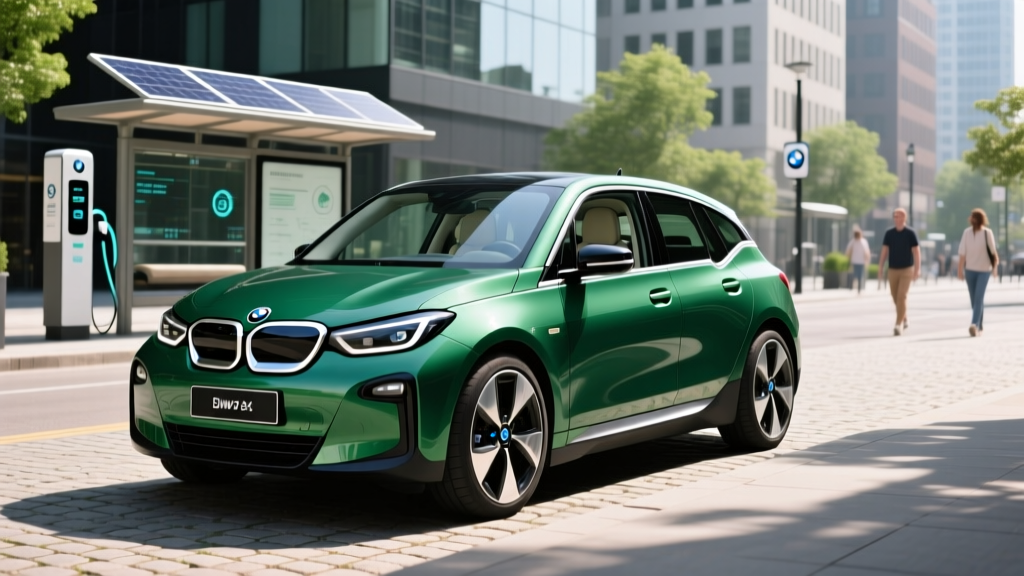
The BMW i3 ended production in July 2022 after an eight-year run that produced over 250,000 units worldwide. Yet in early 2026, search interest and used-market inquiries for the BMW i3 are surging again. The BMW i3 2026 trending reason is not a new model — it is a convergence of falling used prices, the §25E used clean vehicle credit, and a growing appreciation for the i3's radical sustainability engineering in an era of bloated, 5,000-pound electric crossovers.
If you are considering a used BMW i3 in 2026, this guide covers everything you need to know about real-world range, charging limitations, battery longevity, and whether this pioneer EV still earns a spot in your garage.
Why the BMW i3 Is Trending Again in 2026
Three factors are driving renewed interest in the i3:
- Used-EV tax credit eligibility. The IRS §25E credit allows qualifying buyers to claim up to $4,000 (or 30% of the sale price, whichever is lower) on a used EV priced at $25,000 or less. Many 2018–2021 i3 models now fall squarely in this window at dealerships.
- Urban practicality in a market of oversized EVs. With most new EVs exceeding 4,500 pounds and 190 inches in length, the i3's 157-inch footprint and 19-foot turning circle are attracting city dwellers frustrated by parking and maneuvering modern electric SUVs.
- Build quality and material innovation. The i3's carbon-fiber-reinforced plastic (CFRP) passenger cell, recycled interior materials, and BMW-grade fit and finish have aged remarkably well compared to contemporaries like the first-generation Nissan Leaf.
BMW has not announced any plans to revive the i3 nameplate as of early 2026. The BMW Group press portal has not issued any statements regarding a successor. This is a used-market story, not a new-vehicle launch.
Battery, Range, and Real-World Efficiency
The BMW i3 went through three battery generations during its production run. If you are shopping in 2026, identifying which battery a specific used i3 carries is the single most important factor in your purchase decision.
| Model Years | Battery (Gross / Usable) | Chemistry | EPA Range (BEV) | Notes |
|---|---|---|---|---|
| 2014–2016 | 22 kWh / 18.8 kWh | NMC (Samsung SDI) | 81 mi | Avoid for daily use |
| 2017–2018 | 33 kWh / 27.2 kWh | NMC (Samsung SDI) | 114 mi | Minimum viable daily driver |
| 2019–2022 | 42.2 kWh / 37.9 kWh | NMC (Samsung SDI) | 153 mi | Best option for most buyers |
The EPA rates the final-generation i3 at 153 miles combined. In real-world driving, expect:
- City/commute (mild weather): 145–160 mi — the i3 excels here with strong regen and low mass
- Highway (70 mph, mild weather): 115–130 mi — the tall, narrow profile creates drag at speed
- Cold weather (below 32°F, mixed driving): 95–115 mi — the i3 lacks a heat pump, relying on resistive cabin heating that draws heavily from the pack
The i3's ~2,900-pound curb weight helps it punch above its EPA estimate in stop-and-go driving, but its aerodynamic limitations show on open roads.
Efficiency: The 42.2 kWh model achieves 113 MPGe combined (per fueleconomy.gov), translating to roughly 30 kWh per 100 miles. That is competitive with far newer EVs and a testament to the i3's lightweight construction.
Range Extender (REx) models: Some i3s were sold with a 647cc two-cylinder gasoline generator that kicks in when the battery drops to roughly 6% state of charge. The REx adds approximately 80–90 miles of extended range but requires gasoline, adds ~250 pounds, and introduces maintenance complexity (oil changes, fuel system). REx models also face reduced cargo space and may complicate §25E credit eligibility — verify with a tax professional.
Charging Speeds: DC Fast and Home Level 2
The i3's charging capabilities reflect its 2013-era engineering. This is where the most significant ownership compromises emerge.
| Charging Level | Max Power | Connector | Rate / Time |
|---|---|---|---|
| Level 1 (120V household) | ~1.3 kW | J1772 | ~4 mi/hr; full charge in ~30+ hr |
| Level 2 (240V home/public) | 7.4 kW (single-phase) | J1772 | ~25 mi/hr; full charge in ~5.5 hr |
| DC Fast Charge (CCS) | 50 kW peak | CCS1 (or CHAdeMO on early models) | 10–80% in ~35 min; ~90 mi added in 30 min |
Key charging realities for 2026 buyers:
- 50 kW DC fast charging is slow by modern standards. Most 2025–2026 EVs accept 150–350 kW on DC. The i3's 50 kW cap means a 30-minute stop adds roughly 90 miles — adequate for occasional road trips but a meaningful limitation for frequent highway travel.
- Connector check is essential. Early i3s (2014–2016) may have CHAdeMO DC ports. Models from 2017 onward typically have CCS1. Many newer public chargers only offer CCS and NACS. Verify the connector type on any used i3 before purchase.
- No NACS compatibility. The i3 cannot natively use Tesla Superchargers. A CCS-to-NACS adapter may work at some Superchargers equipped with Magic Dock, but this is not guaranteed across the network.
- Level 2 home charging is adequate. At 7.4 kW, an overnight charge on a home Level 2 station fully replenishes the 42.2 kWh pack in about 5.5 hours — perfectly fine for daily commuting.
Charge curve note: The i3's 50 kW peak rate is sustained from roughly 5% to 55% state of charge, then tapers progressively. Expect 50–80% to take nearly as long as 10–50%. Plan fast-charge stops accordingly.
Performance and Driving Dynamics
The i3 was never positioned as a performance EV, but its rear-mounted electric motor and carbon-fiber chassis deliver a surprisingly engaging drive.
| Spec | Value |
|---|---|
| Motor | Single rear-mounted AC synchronous |
| Horsepower | 170 hp (125 kW) |
| Torque | 184 lb-ft |
| 0–60 mph | 6.9 seconds |
| Drivetrain | Rear-wheel drive (RWD) |
| Top Speed | 93 mph (electronically limited) |
| Curb Weight | ~2,900 lbs |
| Turning Circle | 32.3 ft (curb-to-curb) |
The i3's instant torque and sub-3,000-pound weight make it feel quicker than its 6.9-second 0–60 time suggests, especially in city traffic. The narrow 155/70R19 tires prioritize low rolling resistance over grip, and the tall body generates noticeable lean in aggressive cornering. The steering is quick and direct — a BMW hallmark — but the ride quality on the run-flat tires can be firm over broken pavement.
One-pedal driving: The i3 offers strong regenerative braking that enables genuine one-pedal driving in most urban conditions. Lifting off the accelerator decelerates the car briskly, often eliminating the need to touch the brake pedal in stop-and-go traffic.
Interior Space, Cargo, and Practicality
The i3's packaging is unconventional. Its "coach doors" (rear-hinged back doors) require the front doors to be open before rear passengers can exit — a quirk that frustrates some owners and delights others.
| Measurement | Value |
|---|---|
| Overall Length | 157.5 in |
| Wheelbase | 101.2 in |
| Front Legroom | 40.5 in |
| Rear Legroom | 31.9 in |
| Cargo (rear seats up) | 15.1 cu ft |
| Cargo (rear seats folded) | 39.2 cu ft |
| Seating Capacity | 4 passengers |
The interior materials are a highlight: eucalyptus wood trim, recycled polyester upholstery, and kenaf-fiber door panels give the cabin a distinctive, sustainability-forward character that no mainstream 2026 EV replicates. The 10.25-inch infotainment screen runs BMW's iDrive system, which remains one of the more intuitive interfaces in the industry, though it lacks wireless Apple CarPlay/Android Auto on earlier model years (wireless CarPlay was added for 2019+).
Practicality limitations: The rear seats are best suited for children or short trips. The 15.1 cu ft cargo area is comparable to a subcompact hatchback, and there is no front trunk (frunk). If you need to regularly carry four adults or significant cargo, the i3 is not your vehicle.
Pricing, Tax Credits, and Ownership Costs
Since the BMW i3 is only available as a used vehicle in 2026, pricing depends on model year, mileage, battery generation, and condition.
| Model Year Range | Battery | Typical Used Price | §25E Credit Potential | Effective Price After Credit |
|---|---|---|---|---|
| 2014–2016 | 22 kWh | $8,000–$12,000 | Up to $2,400–$3,600 | $5,600–$9,600 |
| 2017–2018 | 33 kWh | $12,000–$16,000 | Up to $3,600–$4,000 | $8,000–$12,400 |
| 2019–2022 | 42.2 kWh | $17,000–$25,000 | Up to $4,000 | $13,000–$21,000 |
Federal §25E Used Clean Vehicle Credit rules (per IRS.gov):
- Credit equals 30% of the sale price, up to $4,000 maximum
- Sale price must be $25,000 or less
- Vehicle must be at least two model years old
- Buyer income caps: $75,000 single / $112,500 head of household / $150,000 married filing jointly
- Must purchase from a licensed dealer (private-party sales do not qualify)
- Credit is non-refundable — it can reduce your tax liability to zero but will not generate a refund beyond that
- The same vehicle can only have the §25E credit claimed once every three years
Important caveat: Some i3 REx (range extender) models may face scrutiny under §25E eligibility rules regarding battery capacity thresholds. Always verify VIN eligibility with the dealer and consult a tax professional before relying on the credit.
Ongoing ownership costs:
- Insurance: Typically $900–$1,400/year depending on market and driver profile — moderate for an EV
- Maintenance: Minimal — brake pads last 80,000+ miles due to regen, no oil changes (BEV), cabin air filter every 2 years. Budget $300–$500/year
- Electricity: At $0.15/kWh national average, a full charge costs ~$5.70. Annual fuel cost for 12,000 miles: ~$540
- Tires: The 155/70R19 Bridgestone Ecopia run-flats are specialty items costing $200–$280 each. Replacement intervals are 25,000–40,000 miles
Battery Longevity, Warranty, and Replacement
The i3's Samsung SDI NMC cells have proven durable. Data from European and North American fleets shows typical degradation of 10–15% after 8 years and 80,000 miles for the 42.2 kWh model. Some early 22 kWh models from 2014–2015 have shown 20–30% degradation, which is expected given the smaller pack's higher cycle count for equivalent mileage.
Original battery warranty: BMW provided 8 years / 100,000 miles of battery coverage, guaranteeing at least 70% of original capacity. For a 2019 model purchased in 2026, some factory battery warranty may still remain — verify with BMW using the VIN.
Battery replacement cost: If the pack falls below the 70% threshold outside warranty, replacement costs range from $10,000 to $16,000 including labor, depending on battery generation and parts availability. BMW has maintained parts support for the i3, but availability may tighten as the fleet ages.
Battery care tips for used i3 buyers:
- Avoid routinely charging to 100% for daily use — set charge limit to 80–85% when possible
- Minimize DC fast charging to road trips; rely on Level 2 for daily charging
- Precondition the cabin while plugged in to reduce cold-weather battery strain
- Request a battery state-of-health (SoH) report from a BMW dealer before purchase
Technology, Safety, and Driver Assists
The i3's technology suite reflects its 2013–2022 production window. It is functional but dated compared to 2026 EVs.
Infotainment: 10.25-inch display, BMW iDrive 6.0 (later model years), navigation, Bluetooth, USB. Wireless Apple CarPlay is standard on 2019+ models; Android Auto was not offered on any i3 model year.
Driver assists:
- Active Driving Assistant (available): Forward collision warning, city collision mitigation, lane departure warning
- Park Distance Control (front and rear sensors)
- Rearview camera (standard on later models)
- No adaptive cruise control, no lane-keeping assist, no semi-autonomous driving features
The BMW i3 offers no Level 2 driver-assist capability. Forward collision warning and lane departure warning are Level 0 (warning-only) or Level 1 (single-axis intervention) features. The driver is fully responsible for all steering, braking, and acceleration at all times.
Safety ratings: The i3 received a 4-star overall rating from NHTSA and was an IIHS Top Safety Pick in certain model years. The CFRP passenger cell provides excellent structural rigidity. However, the i3's small size means less crash-energy absorption in collisions with larger vehicles — a physics reality worth considering if you frequently share roads with trucks and SUVs.
Pros, Cons, and Verdict
Pros
- Extremely low used prices after §25E credit ($13K–$21K for 42.2 kWh models)
- Lightweight, efficient, and fun in city driving
- Unique sustainable materials and build quality
- Strong one-pedal regen for urban commuting
- Tight turning circle for easy parking
- Low running costs (~$540/year electricity)
- CFRP structure resists corrosion
Cons
- 153-mile max EPA range (42.2 kWh) — inadequate for road trips
- 50 kW DC fast charging is painfully slow by 2026 standards
- Only seats 4; rear space is tight
- No modern driver-assist features (no adaptive cruise, no lane-keeping)
- No Android Auto support on any model year
- Specialty run-flat tires are expensive
- No heat pump — cold-weather range drops significantly
- Parts availability may tighten as fleet ages
Who Should Buy the BMW i3 in 2026?
Decision Framework
Choose the BMW i3 if:
- You need a second car for city commuting and errands under 60 miles round-trip
- You have reliable home Level 2 charging access
- You value unique design, sustainability credentials, and BMW build quality on a budget
- Your household already has a longer-range vehicle for road trips
- You qualify for the §25E used-EV credit
Look elsewhere if:
- This will be your only vehicle and you drive more than 100 miles daily
- You need to regularly carry more than two adults
- You frequently take highway road trips exceeding 150 miles
- You want modern driver-assist technology (adaptive cruise, lane-keeping)
- You live in a region with harsh winters and no garage charging
Key competitors to cross-shop:
- Used Chevrolet Bolt EV (2017–2023): 238–259 mi EPA range, 55 kW DC charging, more cargo space, similar price range after §25E credit. The Bolt is the practical alternative if range is your priority.
- Used Nissan Leaf Plus (2019–2023): 212 mi EPA range, CHAdeMO DC charging (a growing liability as CCS dominates), more interior space.
- Used Hyundai Kona Electric (2019–2023): 258 mi EPA range, better DC charging, crossover practicality, slightly higher used prices.
Frequently Asked Questions
What is the real-world range of the BMW i3?
The 42.2 kWh model (2019–2022) is EPA-rated at 153 miles combined. Real-world results range from ~160 miles in warm city driving to ~95 miles in cold highway conditions. The 33 kWh model (2017–2018) delivers roughly 100–115 real-world miles; the 22 kWh model (2014–2016) manages 65–85 miles depending on conditions.
How fast does the BMW i3 charge?
On DC fast charging, the i3 peaks at 50 kW, achieving a 10–80% charge in approximately 35 minutes. On a 240V Level 2 home charger, it accepts 7.4 kW, adding roughly 25 miles per hour and fully charging in about 5.5 hours. Level 1 (120V) charging is impractical for daily use, requiring 30+ hours for a full charge.
How much does a used BMW i3 cost after tax credits?
A 2019–2022 i3 with the 42.2 kWh battery typically sells for $17,000–$25,000 at dealers. After the §25E used-EV credit (up to $4,000 for income-qualified buyers), effective prices range from $13,000 to $21,000. Earlier 33 kWh models can drop to $8,000–$12,400 after the credit.
Does the BMW i3 qualify for the federal EV tax credit?
The i3 is no longer eligible for the §30D new-vehicle credit (production ended in 2022). However, it may qualify for the §25E used clean vehicle credit — up to $4,000 or 30% of the sale price — if purchased from a licensed dealer for $25,000 or less and the buyer meets income thresholds ($75K single / $150K joint). Verify eligibility at IRS.gov and with a tax professional.
Is the BMW i3 worth buying vs. competitors in 2026?
The i3 is worth buying if your priority is an affordable, efficient, well-built city EV with unique character. If range and road-trip capability matter more, the used Chevrolet Bolt EV (259 mi EPA, similar pricing after credits) is a more practical choice. The i3 wins on urban driving dynamics, build quality, and parking ease; it loses on range, charging speed, and rear-seat practicality.
How long will the BMW i3 battery last?
Data suggests the 42.2 kWh NMC pack retains 85–90% capacity after 8 years of typical use. BMW's original 8-year/100,000-mile battery warranty guarantees at least 70% capacity. Out-of-warranty replacement costs $10,000–$16,000. Request a state-of-health report before purchasing any used i3.