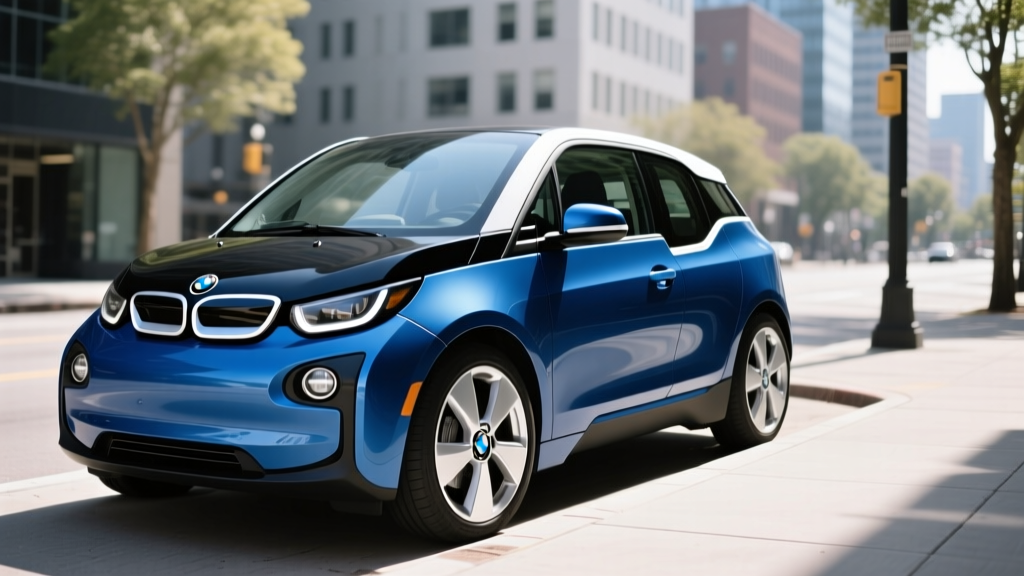
The BMW i3 remains one of the most distinctive electric vehicles ever built. With its carbon-fiber-reinforced plastic (CFRP) passenger cell, skinny low-rolling-resistance tires, and optional gasoline range extender, it was a radical departure from conventional car design when it launched for the 2014 model year. BMW ended global production in July 2022, but the i3 has a thriving second life on the used EV market — and buyers still search for the BMW i3 0-60 mph time, real-world range, and charging practicality before signing on the dotted line.
This guide covers the full production run (2014–2021 U.S. model years) with exact specs, real-world range expectations, charging data, and ownership economics from a 2026 used-EV perspective. Whether you're eyeing an early 60 Ah model or the final 120 Ah version, here's everything you need to decide.
BMW i3 Performance: 0-60 MPH and Powertrain Specs
The BMW i3 is a rear-wheel-drive, single-motor EV built on BMW's "LifeDrive" architecture — an aluminum chassis (Drive module) bonded to a CFRP passenger cell (Life module). This construction keeps curb weight around 2,780–3,011 lbs depending on model year and battery pack, giving the modest electric motor a lively feel in city driving.
Here's the performance breakdown across all three battery generations sold in the U.S.:
| Generation | Model Years | Motor Output | Torque | 0-60 mph | Top Speed | Drivetrain |
|---|---|---|---|---|---|---|
| 60 Ah (22 kWh) | 2014–2016 | 170 hp (125 kW) | 184 lb-ft | 7.0 sec | 93 mph | RWD |
| 94 Ah (33 kWh) | 2017–2018 | 170 hp (125 kW) | 184 lb-ft | 7.0 sec | 93 mph | RWD |
| 120 Ah (42 kWh) | 2019–2021 | 170 hp (125 kW) | 184 lb-ft | 6.9 sec | 93 mph | RWD |
The BMW i3 0-60 mph time of approximately 6.9–7.0 seconds holds steady across all BEV generations because the motor output never changed — BMW only increased battery capacity. The instant electric torque (available from 0 RPM) makes the i3 feel quicker than the stopwatch suggests, particularly in the 0–30 mph urban sprint where it genuinely hustles. At highway speeds above 60 mph, acceleration tapers noticeably, and the electronic limiter at 93 mph reflects the car's urban-commuter mission.
The i3s ("sport") variant, available from 2018–2021, bumped output to 184 hp and 199 lb-ft of torque, dropping the 0-60 time to 6.8 seconds. It also added wider 175/55R20 tires (vs. the standard 155/70R19), a sport suspension with a 0.4-inch lower ride height, and a tapered roller bearing on the motor shaft for smoother high-RPM delivery. The difference is measurable but modest — the i3s is a handling upgrade more than a straight-line rocket.
Real-World Range: What the EPA Sticker Doesn't Tell You
The i3's range evolved dramatically across its production run as BMW increased battery cell capacity. Here are the official EPA estimates paired with what owners actually experience:
- 60 Ah (2014–2016): EPA 81 miles (later revised to 72 mi for 2016). Real-world: 60–75 mi highway, 50–60 mi in cold weather.
- 94 Ah (2017–2018): EPA 114 miles. Real-world: 95–105 mi highway, 75–85 mi in cold weather.
- 120 Ah (2019–2021): EPA 153 miles. Real-world: 130–145 mi highway, 100–120 mi in cold weather.
The i3's tall, narrow body creates more aerodynamic drag at highway speeds than its EPA combined-cycle test suggests. Expect a 10–15% reduction on sustained 70+ mph drives and 20–35% loss in freezing temperatures (the i3 lacks a heat pump, relying on resistive cabin heating that draws heavily from the traction battery).
The 120 Ah model's 42.2 kWh gross battery (approximately 37.9 kWh usable) uses Samsung SDI NMC (nickel manganese cobalt) prismatic cells — the same chemistry as the earlier packs but with higher energy-density cathode formulations. All i3 packs include active liquid thermal management, which helps moderate degradation but doesn't precondition the battery for DC fast charging the way modern EVs do.
For the range-extended (REx) models — available across all generations with a 647cc two-cylinder BMW motorcycle engine — the EPA-rated electric-only range was slightly lower due to the ~265-lb weight penalty of the engine and fuel tank. The 120 Ah REx carried an EPA rating of 126 miles electric + 74 miles on gasoline (200 miles total). In practice, the REx engine kicks in around 6–7% state of charge to maintain a buffer, so usable electric range is slightly less than the BEV equivalent.
Charging Speeds: DC Fast Charge and Home Level 2
Charging is where the i3 shows its age most clearly by 2026 standards. Every i3 uses a CCS1 (Combo 1) connector for DC fast charging and a J1772 inlet for AC Level 1 and Level 2 charging. There is no NACS (Tesla) compatibility without a third-party adapter.
| Charge Type | 60 Ah (22 kWh) | 94 Ah (33 kWh) | 120 Ah (42 kWh) |
|---|---|---|---|
| Level 1 (120V / 12A) | ~1.4 kW — ~5 mi/hr | ~1.4 kW — ~5 mi/hr | ~1.4 kW — ~5 mi/hr |
| Level 2 (240V / 32A onboard) | 7.4 kW — ~25 mi/hr | 7.4 kW — ~25 mi/hr | 7.4 kW — ~25 mi/hr |
| DC Fast Charge (CCS) | ~47 kW peak | ~47 kW peak | ~50 kW peak |
| DC 10–80% Time | ~25 min | ~35 min | ~38 min |
| Level 2 Full Charge (0–100%) | ~3 hours | ~4.5 hours | ~5.5 hours |
The i3's onboard charger is limited to 7.4 kW (single-phase, 32 amps), which is adequate for overnight home charging but below the 11.5 kW offered by some contemporaries. On a 240V Level 2 home charger — the kind a licensed electrician would install on a 40-amp circuit — you'll add roughly 25 miles of range per hour of charging. A full overnight session easily replenishes even the 120 Ah pack.
DC fast charging peaks around 50 kW on the 120 Ah model, but the charge curve tapers significantly above 60% state of charge. The 10–80% sprint takes approximately 38 minutes on a 50+ kW CCS charger — slow by 2026 standards where competitors like the Hyundai Ioniq 5 or Tesla Model 3 can hit 10–80% in 18–25 minutes. The i3 also lacks battery preconditioning for fast charging, meaning cold-soaked packs will charge even slower until the cells warm up through use.
For used buyers: verify that the CCS DC fast-charge port was included on any i3 you're considering. BMW offered DC fast charging as an optional extra (~$750) on 2014–2016 models, and some early base cars were sold without it. From 2017 onward, CCS was standard on all U.S.-spec i3s.
Efficiency: MPGe and Running Costs
The BMW i3's lightweight construction makes it one of the most energy-efficient EVs ever sold in the U.S. According to fueleconomy.gov, the efficiency ratings are:
| Model | MPGe (Combined) | kWh/100 mi | Annual Fuel Cost* |
|---|---|---|---|
| 60 Ah BEV (2014–2016) | 124 MPGe | 27 kWh | ~$550 |
| 94 Ah BEV (2017–2018) | 111 MPGe | 30 kWh | ~$600 |
| 120 Ah BEV (2019–2021) | 113 MPGe | 30 kWh | ~$600 |
| 120 Ah REx (2019–2021) | 100 MPGe (elec) / 31 MPG (gas) | 34 kWh (elec) | ~$750 (mixed) |
*Based on $0.14/kWh national average and 15,000 miles/year. Your electricity rate will vary — check your utility's EV time-of-use plan for the best rates.
At 27–30 kWh per 100 miles, the i3 sips electrons at a rate that makes even modern efficient EVs like the Tesla Model 3 (26 kWh/100 mi) look only marginally better. This efficiency is a direct result of the car's ~2,800-lb curb weight and aggressive regenerative braking — the i3 pioneered strong single-pedal driving, with regen strong enough to bring the car to a complete stop without touching the friction brakes.
Interior, Cargo, and Practicality
The i3's cabin was designed as a loft-like urban space, with sustainable materials like eucalyptus wood trim, kenaf plant-fiber door panels, and recycled-plastic upholstery. The result is genuinely distinctive, though not without compromises.
Key dimensions (all model years):
- Seating: 4 passengers (two individual rear seats, not a bench)
- Front headroom: 39.6 inches
- Front legroom: 40.5 inches
- Rear headroom: 37.8 inches
- Rear legroom: 31.9 inches (tight for adults over 5'10")
- Cargo behind rear seats: 15.1 cu ft
- Cargo with rear seats folded: 39.2 cu ft
- Frunk: None (the front "trunk" houses the 12V battery, washer fluid, and charging cables)
The rear-hinged "coach doors" (freestyle doors) require the front doors to be open before the rear doors can swing open — a quirk that's charming until you're loading car seats in a rainstorm. The tall roofline provides excellent headroom, and the flat floor (no transmission tunnel) makes the cabin feel airy. Visibility is outstanding thanks to the thin A-pillars and upright glasshouse.
The 15.1 cu ft cargo area is competitive with a Honda Fit but falls short of crossover-shaped EVs. With the rear seats folded, 39.2 cu ft is enough for a week's groceries or two carry-on suitcases, but the load floor isn't flat — there's a noticeable step where the seats fold.
Tech, Driver Assists, and Standout Features
The i3's technology suite reflects its 2013–2021 development era. Later models (2019–2021) received BMW's iDrive 6.0 infotainment system with a 10.25-inch touchscreen, wireless Apple CarPlay (added for 2018), and a navigation system with real-time range mapping. Earlier models used iDrive 4.x or 5.x with smaller 6.5- or 8.8-inch displays.
Available driver-assist features:
- Active Cruise Control (ACC) with stop-and-go
- Forward Collision Warning with City Collision Mitigation (automatic emergency braking)
- Lane Departure Warning (no lane-keeping assist)
- Park Distance Control (front/rear sensors)
- Park Assist (semi-automatic parallel parking)
Notably absent: blind-spot monitoring, rear cross-traffic alert, and any form of lane-centering or semi-autonomous highway driving. The i3's driver assists are firmly SAE Level 1 — basic warnings and interventions, not hands-free or eyes-off driving aids.
The i3's most distinctive tech feature is its CFRP construction, which gives the car exceptional structural rigidity at low weight. The exposed carbon-fiber trim visible when you open the doors is both a design statement and a conversation starter. The optional Range Extender (REx) — a 34-hp twin-cylinder gasoline engine — acts as a series-hybrid generator, maintaining battery charge without mechanically driving the wheels. This gives the REx a unique "never stranded" appeal for range-anxious buyers.
Used Pricing, Tax Credits, and Ownership Costs
Since the BMW i3 is no longer manufactured, new purchases are not possible, and the federal §30D new-EV tax credit does not apply. However, the Used Clean Vehicle Credit (§25E) may be available for qualified buyers purchasing from a licensed dealer:
- Credit amount: 30% of sale price, up to $4,000 maximum
- Vehicle sale price must be $25,000 or less
- Vehicle must be at least 2 model years old (all i3s qualify)
- Buyer income caps: $75,000 single / $112,500 head of household / $150,000 joint (MAGI)
- Must purchase from a licensed dealer (private-party sales excluded)
- Credit is non-refundable but can be transferred to the dealer as a point-of-sale discount
- Can only be claimed once per vehicle (check VIN history at irs.gov)
Typical used BMW i3 pricing (early 2026 market):
| Model | Mileage Range | Price Range | After $4,000 Credit |
|---|---|---|---|
| 60 Ah BEV (2014–2016) | 50k–90k mi | $8,500–$13,000 | $4,500–$9,000 |
| 94 Ah BEV (2017–2018) | 35k–70k mi | $13,000–$18,000 | $9,000–$14,000 |
| 120 Ah BEV (2019–2021) | 15k–50k mi | $18,000–$25,000 | $14,000–$21,000 |
| 120 Ah REx (2019–2021) | 15k–50k mi | $19,000–$25,000 | $15,000–$21,000 |
Prices vary significantly by condition, mileage, battery state of health (SoH), and regional demand. Always request a battery health report before purchasing.
Battery and powertrain warranty: BMW's original high-voltage battery warranty covers 8 years / 100,000 miles against defects and excessive capacity loss (below 70% of original capacity). For 2014–2016 models, this warranty expired in 2022–2024. For 2019–2021 models, factory battery coverage may still be active through 2027–2029 — a significant value consideration. The powertrain (electric motor, power electronics) carries the same 8-year/100,000-mile warranty.
Out-of-warranty battery replacement costs have historically been quoted at $12,000–$16,000 for the full pack, though individual module replacement (the i3 pack uses 8 modules) can be done for $1,500–$2,500 per module at independent EV shops. Real-world degradation data from high-mileage i3 owners shows approximately 10–15% capacity loss at 80,000–100,000 miles — better than many expected, thanks to the conservative buffer and liquid thermal management.
BMW i3 vs. Key Used EV Competitors
At these price points, the i3 competes with several other popular used EVs. Here's how it stacks up:
| Spec | BMW i3 120 Ah (2019–2021) | Nissan Leaf SV Plus (2019–2021) | Chevrolet Bolt EV (2020–2022) | Tesla Model 3 SR+ (2019–2020) |
|---|---|---|---|---|
| EPA Range | 153 mi | 215 mi | 259 mi | 250 mi |
| Battery (usable) | 37.9 kWh | 62 kWh | 65 kWh | 50 kWh |
| 0-60 mph | 6.9 sec | 6.5 sec | 6.5 sec | 5.3 sec |
| DC Fast Charge Peak | 50 kW (CCS) | 100 kW (CHAdeMO) | 55 kW (CCS) | 170 kW (NACS) |
| 10–80% DC Time | ~38 min | ~40 min | ~45 min | ~25 min |
| Cargo (seats up) | 15.1 cu ft | 23.6 cu ft | 16.9 cu ft | 15 cu ft (trunk) |
| Thermal Mgmt | Liquid | Passive air | Liquid | Liquid |
| Used Price (est.) | $18k–$25k | $14k–$20k | $15k–$22k | $18k–$25k |
The i3 trades range and cargo space for efficiency, build quality, and urban maneuverability (its 32.3-foot turning circle is tighter than a Mini Cooper). The Nissan Leaf offers more range and cargo room but lacks active battery thermal management, making it vulnerable to rapid degradation in hot climates and charge-rate throttling ("Rapidgate") on repeated DC fast charges. The Bolt EV is the range-per-dollar champion but has slower DC charging and was subject to a major battery recall (verify recall completion on any used Bolt). The Model 3 wins on range, charging speed, and Supercharger network access, but used examples at this price tend to have higher mileage and the panel-gap quality doesn't match BMW's.
- Best-in-class energy efficiency (27–30 kWh/100 mi)
- Short EPA range (153 mi max) limits road-trip utility
- Slow DC fast charging (50 kW peak, 38 min 10–80%)
- Coach doors are impractical for car seats and tight parking
- Rear seat legroom is tight; only seats 4
- No frunk; minimal small-item storage
- CCS was optional on 2014–2016 models — verify before buying
- No heat pump — cold-weather range loss is significant
- Limited driver-assist features vs. modern EVs
Who Should Buy the BMW i3?
Choose the BMW i3 if: You need a premium city commuter with a sub-40-mile daily round trip, value distinctive design and build quality, have reliable home Level 2 charging, and want a lightweight, efficient EV with low running costs. The REx variant is ideal if you occasionally need 150+ mile range but don't want to commit to a larger, more expensive EV.
Look elsewhere if: You regularly drive 100+ miles one way, need seating for five, depend on fast public DC charging for road trips, or live in a very cold climate without a garage. The Bolt EV, Leaf Plus, or a used Model 3 will serve those needs better.
The i3 is a specialist tool, not a general-purpose family EV. As a second car, urban commuter, or weekend errand-runner with home charging, it excels — the combination of efficiency, build quality, and low used pricing makes it one of the best value-per-mile EVs on the market. As a primary vehicle for a family that road-trips or commutes long distances, its range and charging limitations become real friction points.
Frequently Asked Questions
What is the BMW i3 0-60 mph time?
The standard BMW i3 (all BEV generations) accelerates from 0-60 mph in approximately 6.9–7.0 seconds. The sportier i3s variant (2018–2021) achieves 0-60 in 6.8 seconds thanks to its 184 hp motor. Instant electric torque makes the car feel quicker than these numbers suggest in city driving.
How much does a used BMW i3 cost in 2026?
Used BMW i3 pricing ranges from approximately $8,500 for a high-mileage 60 Ah model to $25,000 for a low-mileage 120 Ah or REx model. The §25E used-EV tax credit can reduce the effective price by up to $4,000 for income-qualified buyers purchasing from a licensed dealer at a sale price of $25,000 or less.
Does the BMW i3 qualify for any tax credits?
The i3 does not qualify for the §30D new-EV credit (production ended in 2022). However, it may qualify for the §25E Used Clean Vehicle Credit — worth 30% of the sale price up to $4,000 — if purchased from a dealer for $25,000 or less by a buyer meeting IRS income caps. Verify eligibility details at irs.gov and confirm the vehicle's credit hasn't been previously claimed.
How long does the BMW i3 battery last?
Real-world data from high-mileage i3 owners shows approximately 10–15% capacity loss at 80,000–100,000 miles. BMW's original battery warranty (8 years/100,000 miles, 70% capacity retention) has expired for 2014–2016 models but may still be active for 2019–2021 models. The liquid-cooled NMC pack has demonstrated better longevity than the passively cooled Nissan Leaf battery.
Can the BMW i3 use Tesla Superchargers?
No — the BMW i3 uses a CCS1 connector, which is not natively compatible with Tesla's NACS Supercharger network. While adapters exist for some CCS-to-NACS scenarios, BMW has not validated the i3 for Supercharger use, and the i3's relatively slow 50 kW DC charge rate means it would occupy a Supercharger stall longer than most vehicles. Plan to use Electrify America, EVgo, ChargePoint, or other CCS-compatible networks.
Is the BMW i3 REx a good choice?
The Range Extender (REx) adds a 34-hp gasoline generator that maintains battery charge without driving the wheels, extending total range to approximately 200 miles (126 electric + 74 gasoline). It's an excellent solution for buyers who want EV commuting most days but need occasional longer range without relying on sparse CCS infrastructure. The trade-offs are added weight (~265 lbs), slightly lower electric range, and gasoline engine maintenance (oil changes, spark plugs). The REx is particularly popular in regions with charging deserts or extreme cold.