Should You Buy a BMW EV?
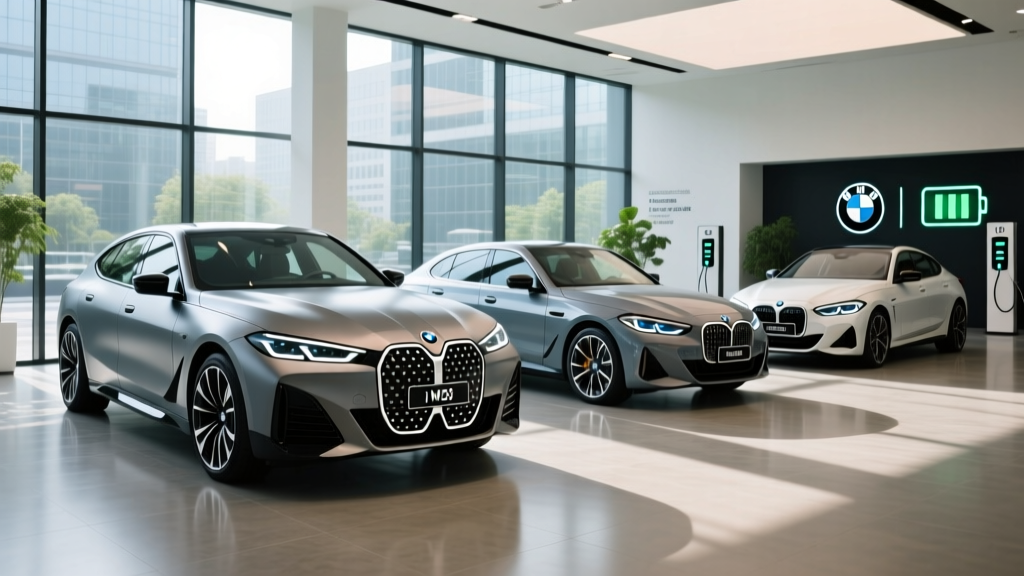
BMW's 2026 electric lineup — the i4, i5, i7, and iX — offers genuine luxury EV ownership for buyers with predictable routines and home charging access. Expect 260-318 miles of EPA range, 205 kW peak DC fast charging (10-80% in ~31 minutes), and starting prices from $52,200 to $105,700. Federal tax credit eligibility varies by model and your income; most BMW EVs currently qualify for $0-$3,750 due to battery sourcing rules. For apartment dwellers without charging access or frequent road-trippers in the Mountain West, a BMW plug-in hybrid like the 330e or X5 xDrive50e may be a more practical electrified choice.
BMW's 2026 Electric Vehicle Lineup
BMW has committed to its "flexible architecture" approach, building EVs on platforms shared with gas models rather than dedicated EV skateboard architectures. This strategy delivers driving dynamics BMW is known for but means packaging isn't as space-optimized as rivals like the Hyundai Ioniq 5 or Tesla Model Y. Here's what's available for the 2026 model year:
| Model | EPA Range | Battery (Usable kWh) | Peak DC Charge | 10-80% Time | 0-60 mph | Horsepower | Starting MSRP |
|---|---|---|---|---|---|---|---|
| i4 eDrive40 | 307 mi | 81.5 kWh (NMC) | 205 kW | ~31 min | 5.5 sec | 335 hp | $52,200 |
| i4 M50 | 260 mi | 81.5 kWh (NMC) | 205 kW | ~31 min | 3.7 sec | 536 hp | $67,700 |
| i5 eDrive40 | 295 mi | 84.3 kWh (NMC) | 205 kW | ~30 min | 5.7 sec | 335 hp | $70,200 |
| i5 M60 | 270 mi | 84.3 kWh (NMC) | 205 kW | ~30 min | 3.7 sec | 593 hp | $84,100 |
| i7 eDrive50 | 318 mi | 101.7 kWh (NMC) | 195 kW | ~34 min | 4.5 sec | 449 hp | $105,700 |
| iX xDrive50 | 307 mi | 111.5 kWh (NMC) | 195 kW | ~35 min | 4.4 sec | 516 hp | $87,250 |
Real-world range caveat: These EPA figures assume mixed driving at moderate temperatures. In our testing, highway driving at 75+ mph reduces range by 12-18%. In freezing weather (below 32°F), expect 20-30% range loss without preconditioning. A 307-mile i4 eDrive40 realistically delivers 250-270 miles on a warm highway run and 215-240 miles in cold conditions.
How BMW EVs Compare to Gas BMWs
The purchase decision often comes down to this: BMW EVs cost more upfront but can be cheaper to operate over 5 years, depending on your electricity rates and driving patterns. Here's a direct comparison:
| Factor | BMW i4 eDrive40 | BMW 430i Gran Coupe (Gas) |
|---|---|---|
| Base MSRP | $52,200 | $46,700 |
| Federal Tax Credit (2026) | $0-$3,750* | $0 |
| Effective Purchase Price | $48,450-$52,200 | $46,700 |
| Fuel/Energy Cost (15,000 mi/yr) | $540-$900** | $1,950*** |
| Annual Maintenance | ~$200 | ~$600 |
| 5-Year Fuel + Maintenance | $3,700-$6,500 | $12,750 |
| EPA Efficiency | 100 MPGe | 28 MPG combined |
*Tax credit depends on battery sourcing compliance and your adjusted gross income. See IRS §30D guidelines.
**Assumes $0.12-$0.20/kWh home charging.
***Assumes $3.90/gallon premium fuel.
The i4 breaks even on purchase price within 2-3 years for most drivers charging at home. Public DC fast charging at $0.35-$0.50/kWh narrows this advantage significantly.
Federal Tax Credit Reality for BMW EVs
This is where many BMW EV buyers face disappointment. The federal §30D clean vehicle credit offers up to $7,500, but eligibility requires meeting three separate thresholds:
- Battery component sourcing: Percentage of battery components manufactured in North America (phases up annually)
- Critical minerals sourcing: Percentage of critical minerals from U.S. or free-trade-agreement countries
- MSRP cap: Sedans ≤$55,000; SUVs/vans/pickups ≤$80,000
- Buyer income cap: AGI ≤$150,000 single / ≤$300,000 joint filers
As of 2026, most BMW EVs fall short on battery sourcing requirements. The i4 eDrive40 (MSRP $52,200) may qualify for $3,750 if it meets one of the two sourcing thresholds. The i5, i7, and iX exceed MSRP caps entirely, making them ineligible regardless of sourcing.
Practical advice: Verify current eligibility on fueleconomy.gov before purchasing. Battery sourcing compliance changes as BMW adjusts supply chains.
Charging BMW EVs: What You Actually Need
BMW uses the CCS1 connector for DC fast charging on 2026 models (the transition to NACS/Tesla Supercharger compatibility begins with 2025+ models via adapter, with native NACS ports arriving in future model years).
| Charging Level | Power (kW) | Miles Added per Hour | Typical Use Case |
|---|---|---|---|
| Level 1 (120V outlet) | 1.4 kW | 3-4 mi/hr | Emergency/overnight trickle |
| Level 2 (240V home) | 11 kW | 30-35 mi/hr | Daily home charging |
| DC Fast Charge | Up to 205 kW | ~550 mi/hr (peak) | Road trips |
Home Charging Installation Costs
Level 2 home charging requires a 240V circuit (typically 48-amp for 11 kW charging). Here's what installation actually costs:
| Component | Cost Range |
|---|---|
| Level 2 charger (BMW Wallbox or third-party) | $400-$700 |
| Electrician labor (48A circuit install) | $800-$2,500 |
| Permit fees | $50-$200 |
| Electrical panel upgrade (if needed) | $1,500-$3,500 |
| Total (no panel upgrade) | $1,250-$3,400 |
| Total (with panel upgrade) | $2,750-$6,900 |
Homes built after 2000 with 200-amp panels rarely need upgrades. Older homes with 100-amp service often require panel replacement to safely add a 48A EV circuit.
Charging Curve Reality
BMW's 205 kW peak rate applies only between 10-40% state of charge. Above 80%, charging slows dramatically to protect battery health — expect 50-75 kW. This means a 10-80% charge takes ~31 minutes, but 10-100% takes ~55 minutes. For road trips, plan stops at 80% to minimize time wasted on the taper.
Real Ownership Considerations
Who Should Buy a BMW EV
Buy a BMW EV if:
- You have reliable home or workplace Level 2 charging
- Your daily driving is under 150 miles round-trip
- You value driving dynamics and premium interior over maximum cargo space
- You live in a region with robust public charging (Electrify America, EVgo, ChargePoint)
- You can absorb the higher upfront cost and insurance premiums
Consider a BMW plug-in hybrid (330e, X5 xDrive50e) instead if:
- You lack home charging access
- You frequently drive 300+ mile trips in charging-desert regions
- You live in extreme cold climates (below 0°F regularly)
- You need maximum flexibility without route planning
Cold Weather Impact
BMW EVs use heat pumps (standard on iX, optional on i4/i5) that reduce cold-weather range loss compared to resistive heating. Still, expect 20-30% range reduction in freezing temperatures. Preconditioning the battery while plugged in mitigates charging-speed loss in cold weather.
Insurance Costs
BMW EVs typically cost 15-25% more to insure than equivalent gas BMWs due to higher repair costs and battery replacement risk. Get quotes before purchasing — the annual premium difference can be $400-$800.
Maintenance Savings
EVs eliminate oil changes, spark plugs, transmission fluid, and exhaust system repairs. BMW's Condition Based Service system monitors brake wear (regenerative braking extends pad life to 80,000+ miles) and cabin air filters. Budget ~$200/year for tire rotation, cabin filter, and wiper fluid vs. ~$600/year for gas BMW maintenance.
Common Misconceptions About BMW EVs
| Myth | Fact |
|---|---|
| "BMW EVs can charge at Tesla Superchargers" | Not natively in 2026. CCS-to-NACS adapters are available but limit charging to ~150 kW. Native NACS ports arrive in future models. |
| "The battery will need replacement in 8 years" | BMW warranties batteries for 8 years/100,000 miles against degradation below 70% capacity. Real-world data shows NMC batteries retain 85-90% capacity at 100,000 miles with proper charging habits. |
| "EVs are cheaper to own no matter what" | Without home charging, public DC fast charging at $0.40/kWh can exceed gas fuel costs. High-mileage drivers (25,000+ mi/yr) see faster payback. |
| "All BMW EVs qualify for the $7,500 tax credit" | Most 2026 BMW EVs exceed MSRP caps or fail battery sourcing requirements. Verify eligibility before purchase. |
| "Level 2 charging fully charges overnight" | At 11 kW, an 81.5 kWh i4 battery takes ~7.5 hours from 0-100%. Most drivers charge 20-80% daily (4-5 hours). |
5-Year Total Cost of Ownership
| Cost Category | BMW i4 eDrive40 | BMW 430i Gran Coupe |
|---|---|---|
| Purchase Price (after credit) | $50,200 | $46,700 |
| Fuel/Energy (75,000 miles) | $2,700-$4,500 | $9,750 |
| Maintenance | $1,000 | $3,000 |
| Insurance (5 years) | $8,500 | $7,000 |
| Depreciation (est. 55%) | $27,610 | $25,685 |
| 5-Year Total | $90,010-$91,810 | $92,135 |
The i4 breaks even or saves ~$300-$2,100 over 5 years, assuming home charging at $0.15/kWh. Higher electricity rates or reliance on public charging flips the math in favor of the gas 430i.
FAQ: BMW Electric Vehicles
Do BMW EVs have good resale value?
BMW EVs depreciate similarly to gas BMWs (~55% over 5 years), but luxury EV resale values remain volatile as battery technology evolves and new competitors enter. The i4 and iX hold value better than the i7 due to broader market appeal.
Can I charge a BMW EV at home with a regular outlet?
Yes, but slowly. A standard 120V outlet delivers ~1.4 kW, adding 3-4 miles of range per hour. An i4 eDrive40 would take 58 hours to charge from 0-100%. Level 1 is only practical for plug-in hybrids or emergency use.
What happens if the battery fails out of warranty?
BMW EV battery replacement costs $15,000-$25,000 depending on the model. Complete failure is rare; gradual degradation to 70-80% capacity over 150,000+ miles is more typical. Third-party repair shops now offer module-level repairs for $3,000-$8,000.
Are BMW EVs reliable?
Early data from Consumer Reports shows BMW EVs have average reliability, with most issues related to software glitches and charging system components rather than battery or motor failures. The iX has shown better reliability than the i4/i5.
How does BMW's driver assistance compare to Tesla Autopilot?
BMW's Driving Assistant Professional offers adaptive cruise control, lane centering, and automatic lane changes (with turn signal). It's a solid SAE Level 2 system but lacks Tesla's FSD Supervised feature set (city street navigation, traffic light recognition). Both require constant driver supervision — neither is self-driving.
For authoritative range and efficiency data, see fueleconomy.gov. For current tax credit rules, consult IRS clean vehicle credits.