The BMW EV Purchase Credit Landscape in October 2026
If you're researching a BMW EV purchase credit in October, you're likely weighing the i4, i5, or iX against their gas-powered counterparts — and trying to figure out whether the federal tax credit actually applies to the model and trim you want. The short answer: it depends on your income, the vehicle's MSRP, and where BMW sources its battery minerals. The longer answer requires unpacking IRS §30D rules as they stand in 2026, because the credit is far from automatic.
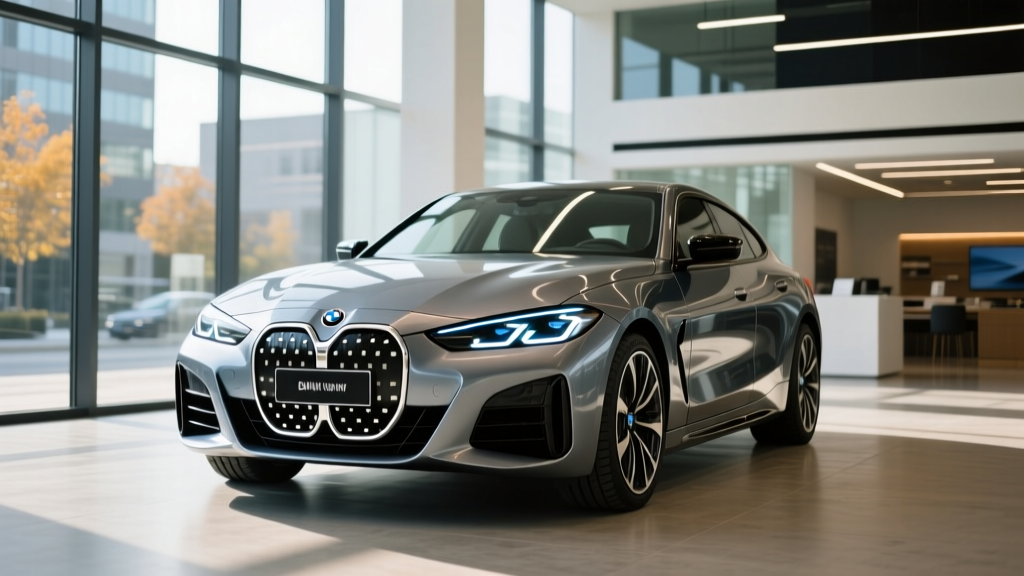
BMW's current U.S. EV lineup includes the i4 Gran Coupe (starting around $52,200), the i5 sedan (starting around $66,800), and the iX SUV (starting around $87,200). Each sits in a different position relative to the federal credit's MSRP caps and battery-sourcing requirements. Let's map out exactly what's available, what you'll actually spend over five years, and where the real savings — and real costs — land.
Federal §30D Tax Credit: Do You Qualify for a BMW EV?
The federal EV tax credit under IRS §30D offers up to $7,500, split into two halves: $3,750 for meeting critical-minerals sourcing requirements and $3,750 for battery-component manufacturing requirements. As of October 2026, both prongs have tightened considerably compared to the rules in 2023–2024, with nearly all battery minerals and components required to come from the U.S. or free-trade-agreement partners, and zero tolerance for foreign entities of concern (FEOC) in the supply chain.
§30D Eligibility Checklist for BMW EVs (2026)
- Buyer income caps: Modified adjusted gross income (MAGI) must not exceed $150,000 (single), $225,000 (head of household), or $300,000 (married filing jointly) in the year of delivery or the prior year — whichever is lower.
- Vehicle MSRP caps: Sedans and coupes (i4, i5) must have an MSRP at or below $55,000. SUVs, trucks, and vans (iX) must be at or below $80,000. Options and packages push the MSRP higher — the i4 M50 at ~$68,000 exceeds the sedan cap entirely.
- Battery sourcing: Both critical-mineral and battery-component thresholds must be met for the full $7,500. BMW sources cells from CATL and Samsung SDI; qualifying status varies by model year and production batch.
- Point-of-sale transfer: Since 2024, you can transfer the credit to the dealer at purchase, reducing your out-of-pocket cost immediately rather than waiting for a tax refund. This is optional — you can still claim it on your return.
- Final assembly: Vehicle must undergo final assembly in North America. The BMW iX is built in Dingolfing, Germany, which disqualifies it from §30D entirely. The i4 and i5 are also built in Germany.
This last point is critical and often overlooked: as of October 2026, no BMW EV qualifies for the §30D new-vehicle credit because none undergo final assembly in North America. BMW manufactures its EVs at plants in Germany (Dingolfing and Munich). This means the $7,500 federal credit that benefits Ford, GM, Tesla, and Hyundai buyers is not available on any new BMW EV — regardless of your income or the vehicle's price.
However, BMW EVs may qualify under the commercial vehicle credit (§45W), which some dealers have structured through leasing. When you lease a BMW EV, the lessor (BMW Financial Services) is the legal purchaser and may pass the commercial credit benefit to you as a reduced lease payment. This "lease loophole" has been a known workaround, though the IRS has signaled increased scrutiny. Always confirm with your dealer whether a lease includes a pass-through credit and get it in writing. See the IRS clean vehicle credit page for the latest guidance.
State, Local, and Utility Incentives: Where You Live Matters
With the federal §30D credit unavailable on BMW EVs due to assembly location, state and utility incentives become proportionally more important. These vary enormously by jurisdiction:
Notable State and Utility EV Incentives (2026)
- California: The Clean Vehicle Rebate Project (CVRP) and utility rebates (PG&E, SCE, SDG&E) can stack to $2,000–$7,000+ depending on income and utility territory. CARB's Clean Cars 4 All program offers additional funds for lower-income buyers trading in older gas vehicles.
- Colorado: State tax credit of up to $5,000 for EVs with MSRP under $80,000 (i4 qualifies; iX may not at higher trims). Utilities like Xcel Energy offer additional rebates for home charger installation.
- New York: The Drive Clean Rebate offers up to $2,000 at point of sale, income-tiered. ConEdison and National Grid offer charger rebates.
- Utility charger rebates (nationwide): Many utilities offer $300–$1,500 rebates for Level 2 home charger purchase and installation, sometimes requiring a dedicated 240V circuit. Check your local utility's EV program page.
State incentive amounts change frequently and have budget caps. Always verify current availability with your state energy office and utility before relying on these figures in your purchase math.
5-Year Total Cost of Ownership: BMW i4 vs. Gas BMW 4 Series
To ground the purchase decision in real numbers, here's a five-year TCO comparison between the 2026 BMW i4 eDrive40 and the gas-powered 2026 BMW 430i Gran Coupe. Both are rear-wheel-drive, similarly equipped luxury sport coupes.
| Cost Category | BMW i4 eDrive40 (EV) | BMW 430i Gran Coupe (Gas) |
|---|---|---|
| Base MSRP | $52,200 | $49,900 |
| Federal tax credit (§30D) | $0 (German assembly) | N/A |
| Estimated state/utility incentives | -$2,000 (varies) | $0 |
| Destination + delivery | $995 | $995 |
| Home Level 2 charger install | $1,200 (avg) | $0 |
| Fuel/energy (60,000 mi) | $3,960 (home L2, $0.15/kWh, 3.0 mi/kWh) | $7,500 (30 MPG combined, $3.75/gal) |
| Maintenance (5 yr / 60k mi) | $1,800 | $3,600 |
| Insurance (5 yr avg) | $11,500 | $9,500 |
| Depreciation (est. 5 yr) | $24,000 (~46%) | $19,000 (~38%) |
| Total 5-Year Cost | $73,655 | $71,495 |
The i4 costs roughly $2,160 more over five years in this scenario, driven primarily by steeper depreciation and higher insurance premiums. The fuel and maintenance savings — about $5,340 combined — partially offset the higher purchase price and insurance burden. If you live in a state with a robust EV rebate (Colorado's $5,000 credit, for example), the i4 flips to a net savings of around $2,800. If you're in a state with no EV incentives, the gas 430i wins on pure economics.
What Drives the Depreciation Gap?
EV depreciation has been volatile since 2022, when Tesla's aggressive price cuts reset used-EV values across the board. By 2026, the market has stabilized somewhat, but luxury EVs still tend to lose value faster than their gas counterparts. Battery health uncertainty in the used market, rapid tech obsolescence (faster-charging newer models), and a smaller pool of used-EV buyers all contribute. The i4 retains roughly 54% of its value after five years, compared to about 62% for the 430i, based on current residual-value forecasts.
Charging vs. Gas: The Per-Mile Math That Matters
The single largest ownership advantage for the i4 is energy cost — but only if you charge at home. Here's the breakdown:
| Scenario | Cost Per Mile | Annual Cost (12,000 mi) |
|---|---|---|
| i4 — Home L2 ($0.15/kWh, 3.0 mi/kWh) | $0.050 | $600 |
| i4 — Home L2 ($0.25/kWh, high-cost utility) | $0.083 | $1,000 |
| i4 — DC fast charging ($0.40/kWh avg) | $0.133 | $1,600 |
| 430i — Gas (30 MPG, $3.75/gal) | $0.125 | $1,500 |
| 430i — Gas (30 MPG, $4.50/gal) | $0.150 | $1,800 |
At a national-average residential electricity rate of $0.15–$0.17/kWh, the i4 costs roughly 5–6 cents per mile to fuel at home — less than half the cost of the 430i. The BMW i4 eDrive40 achieves an EPA-rated 84 MPGe combined, with a real-world efficiency of about 3.0–3.3 miles per kWh depending on driving style and climate. Its 83.9 kWh battery pack (usable capacity) delivers an EPA range of 307 miles; expect roughly 260–280 miles in mixed highway driving and potentially 220–240 miles in sustained cold weather below freezing.
The economics flip if you rely exclusively on DC fast charging at public stations. At $0.35–$0.48/kWh (typical Electrify America and EVgo rates in 2026), your per-mile cost can exceed that of the gas 430i. Home charging access is the single most important variable in EV ownership economics.
On the charging hardware side, the i4 supports up to 200 kW DC fast charging on CCS1 (or NACS with an adapter on newer builds), reaching a 10–80% state of charge in approximately 31 minutes. Level 2 charging at 11 kW (the i4's onboard charger maximum) adds about 33 miles of range per hour, meaning a full overnight charge from 20% to 100% takes roughly 7–8 hours on a 48-amp home charger.
Maintenance Savings: Where the i4 Clearly Wins
The i4's electric powertrain eliminates the maintenance items that define gas-car ownership costs:
| Maintenance Item | i4 (EV) | 430i (Gas) |
|---|---|---|
| Oil changes (every 10k mi) | $0 | $900–$1,200 |
| Brake pad replacement | $0–$300 (regen extends life 2–3x) | $800–$1,200 |
| Transmission fluid | $0 (single-speed reduction gear) | $250–$400 |
| Spark plugs | $0 | $400–$600 |
| Engine air filter | $0 | $100–$150 |
| Cabin air filter | $150–$200 | $150–$200 |
| Tire rotation/replacement | $1,200–$1,600 (EVs wear tires ~20% faster due to weight/torque) | $1,000–$1,400 |
| Coolant flush | $200 (battery thermal system) | $200 |
| Total Est. Maintenance | $1,550–$2,100 | $3,600–$5,150 |
The i4 saves roughly $1,800–$3,000 in maintenance over five years. Regenerative braking is the biggest single saver: by using the electric motor to decelerate, the friction brakes see dramatically less use, with many EV owners reporting original brake pads at 80,000+ miles. The trade-off is slightly higher tire wear — the i4's 4,600-lb curb weight and instant torque accelerate tire degradation compared to the lighter 430i.
BMW's new-vehicle limited warranty covers 4 years/50,000 miles, and the high-voltage battery is warranted for 8 years/100,000 miles against defects and capacity loss below 70% of original capacity. BMW's battery uses NMC (nickel-manganese-cobalt) chemistry, which offers strong energy density but requires careful thermal management to minimize long-term degradation.
Insurance Reality: Yes, It Costs More
Insuring the BMW i4 typically costs 15–25% more than insuring the 430i. Average annual premiums for the i4 run $2,100–$2,500 depending on your state, driving record, and coverage level, versus $1,700–$2,100 for the 430i. Over five years, that's an additional $1,500–$2,500 in insurance costs.
The reasons are structural, not arbitrary:
- Higher repair costs: EV battery packs, power electronics, and specialized high-voltage wiring require certified technicians and OEM parts. Even minor collision damage near the battery enclosure can trigger expensive diagnostics.
- Total-loss thresholds: Insurers are more likely to declare an EV a total loss if the battery sustains any damage, because battery replacement costs ($15,000–$25,000 for an i4 pack) can exceed the vehicle's residual value.
- Higher vehicle value: The i4's higher MSRP means higher comprehensive and collision payouts.
- Limited repair network: Fewer body shops have BMW high-voltage certification, which can extend repair times and increase rental-car costs for insurers.
Some insurers (Geico, Progressive, State Farm) now offer specific EV policies with bundled home-charger coverage. It's worth shopping at least three quotes before purchase — the spread between insurers on EVs is wider than on gas cars.
Depreciation and Resale Value: The Honest Picture
EV depreciation has been the most volatile variable in ownership economics over the past four years. After severe drops in 2023–2024 (driven by Tesla price cuts and an oversupply of off-lease EVs), the used-EV market has stabilized in 2025–2026. However, luxury EVs still depreciate faster than mainstream models.
For the BMW i4, projected five-year depreciation sits at approximately 44–48%, compared to 36–40% for the gas 430i. The iX fares worse, losing an estimated 50–55% over five years due to its higher starting price and the luxury-SUV segment's steep depreciation curves.
Factors working against EV residuals include:
- Battery health uncertainty: Used buyers discount EVs because they can't easily assess remaining battery capacity. BMW's battery warranty is transferable, which helps.
- Technology pace: Newer EVs charge faster and offer more range, making 3–5-year-old models feel dated more quickly than gas cars.
- MSRP resets: If BMW reduces i4 pricing (as Tesla did repeatedly in 2023), used values fall in tandem.
Leasing can mitigate depreciation risk — you're insulated from resale-value swings, and if BMW Financial passes through a commercial credit benefit, the effective monthly cost can be competitive. For buyers planning to keep the i4 for 8–10 years, depreciation matters less because you'll use the vehicle through its steepest decline and into its long tail.
Frequently Asked Questions
Does any BMW EV qualify for the $7,500 federal tax credit in October 2026?
No. BMW manufactures its EVs (i4, i5, iX) in Germany, and §30D requires final assembly in North America. However, leasing through BMW Financial Services may allow the dealer to apply a commercial-vehicle credit (§45W) benefit to your lease terms. Confirm this directly with the dealer and in writing.
How much does it really cost to own a BMW i4 over 5 years?
Based on our analysis, approximately $73,000–$75,000 over five years and 60,000 miles, including purchase, energy, insurance, maintenance, and depreciation. This is roughly $2,000–$3,000 more than the gas 430i in states without EV incentives, but can be $2,000–$5,000 less in states with strong rebates (Colorado, California).
How much do I save on fuel and maintenance with the i4?
Combined fuel and maintenance savings run approximately $5,000–$5,500 over five years and 60,000 miles, assuming home Level 2 charging at $0.15/kWh. If you rely on public DC fast charging, fuel savings shrink to about $1,500–$2,000.
Are BMW EVs more expensive to insure?
Yes, typically 15–25% more than equivalent gas BMWs. Expect to pay $2,100–$2,500 annually for the i4 versus $1,700–$2,100 for the 430i. Shop multiple insurers and ask about EV-specific policies.
How well does the BMW i4 hold its value?
The i4 retains approximately 52–56% of its MSRP after five years, which is lower than the gas 430i (~60–64%). Leasing can shield you from depreciation risk. Long-term owners (8+ years) are less affected because the vehicle's utility value outweighs its resale value.
What's the real-world range of the BMW i4 eDrive40?
The EPA rates the i4 eDrive40 at 307 miles. In real-world mixed driving, expect 260–280 miles. In cold weather (below 32°F) or sustained highway driving above 75 mph, plan for 220–250 miles. The i4's 83.9 kWh NMC battery and heat pump help mitigate cold-weather losses, but physics still applies.
Should I buy or lease a BMW EV in 2026?
Given the §30D ineligibility for purchase and the potential lease-loophole benefit via §45W, leasing is often the more cost-effective path for BMW EVs in 2026. Leasing also protects you from depreciation risk and lets you upgrade to newer, faster-charging models every 3–4 years. If you prefer ownership and plan to keep the car 8+ years, buying still makes sense — just don't count on the federal credit.
Sources: IRS §30D Clean Vehicle Credit, U.S. Department of Energy / fueleconomy.gov, BMW USA product specifications.