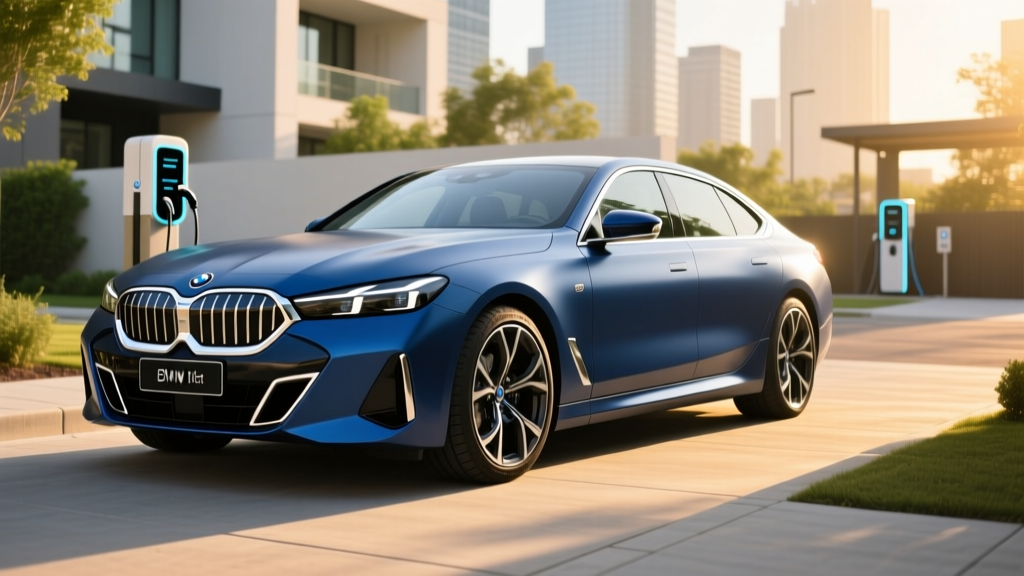
Why BMW EV Lease Deals Are Dominating the Conversation in 2026
If you've been watching BMW's electrified lineup, you've likely noticed aggressive lease offers on the i4, iX, and i7. There's a structural reason: BMW Financial Services can capture the federal §30D tax credit on leased vehicles and pass the savings to you as a capitalized-cost reduction — even if you wouldn't qualify for the credit on a purchase due to income limits or battery-sourcing rules. This "lease loophole" (technically a commercial-credit pass-through under §45W) has made BMW EV lease deals some of the most compelling in the luxury segment.
But a low monthly payment doesn't tell the whole story. This guide breaks down the real 5-year total cost of ownership (TCO) for BMW's core EV models, the exact tax-credit mechanics at play, and the insurance, charging, and depreciation factors that determine whether a BMW EV lease actually saves you money versus a gas-powered 3 Series or X5.
2026 BMW EV Lease vs. Buy: 5-Year TCO Snapshot (i4 eDrive40)
| Cost Category | Lease (36 months, then return) | Purchase (financed 60 months) |
|---|---|---|
| Monthly payment (est.) | $649/mo × 36 = $23,364 | $875/mo × 60 = $52,500 |
| Down / cap-cost reduction | $4,500 (incl. $7,500 credit pass-through) | $7,500 down |
| Federal tax credit benefit | $7,500 applied at signing (commercial credit) | $7,500 (if eligible via §30D point-of-sale) |
| Charging (5 yrs, 12K mi/yr) | $3,600 (home L2 + public DC mix) | $3,600 |
| Insurance (5 yrs avg.) | $14,500 ($2,900/yr avg.) | $14,500 |
| Maintenance (5 yrs) | $1,800 (included svc during lease, then paid) | $2,200 |
| Disposition / residual risk | $350 disposition fee at return | Resale value ~$27,000–$32,000 at yr 5 |
| Net 5-yr cost | ~$30,114 (3 yrs of driving, no equity) | ~$49,800 net of resale (you own the car) |
Estimates based on 2026 i4 eDrive40 MSRP ~$57,900, 12,000 mi/yr, $0.14/kWh home charging, national avg. insurance. Your actuals will vary by state, driving profile, and dealer.
The Federal Tax Credit: How It Works on a BMW Lease vs. Purchase
The most important thing to understand about BMW EV lease deals is the credit mechanism. When you purchase an EV, you claim the §30D Clean Vehicle Credit on your personal tax return (or take it at point of sale). When you lease, the leasing company (BMW Financial Services) technically owns the vehicle and can claim the commercial clean vehicle credit under §45W — then pass the benefit to you as a cap-cost reduction.
§30D Purchase Credit — Eligibility Requirements (2026)
- Income caps: AGI ≤ $150K single / $225K head of household / $300K joint
- MSRP caps: ≤ $80,000 for SUVs, pickups, vans; ≤ $55,000 for sedans (i4 qualifies; iX and i7 may exceed cap depending on trim)
- Battery sourcing: Critical minerals and battery components must meet escalating domestic/free-trade-agreement percentages (per IRS guidance)
- Point-of-sale transfer: You can apply the credit as a down-payment reduction at the dealer, rather than waiting for a tax refund
- Assembly: Vehicle must undergo final assembly in North America (all current BMW i-models sold in the U.S. qualify)
The lease advantage? BMW Financial Services' §45W commercial credit has no buyer income cap and no MSRP cap. This means high-income buyers who are phased out of §30D, or buyers looking at the iX xDrive50 (MSRP ~$87,000, above the $80K SUV cap), can still receive the equivalent $7,500 benefit through a lease. Always confirm with your dealer that BMW is passing the full credit as a cap-cost reduction — it's standard practice but worth verifying in writing.
State, Local & Utility Incentives — Vary Widely by Region
Federal credits are only part of the picture. Depending on your location, you may also qualify for:
- California: CVRP rebate (income-dependent, up to $7,000 for qualifying buyers) plus utility incentives
- Colorado: State EV tax credit up to $5,000 (as of 2026, subject to legislative renewal)
- New York: Drive Clean Rebate up to $2,000 (point-of-sale)
- Utility rebates: Many utilities offer $500–$1,500 for Level 2 home charger installation, plus off-peak charging rates that can cut your $/kWh by 40–60%
Check your state energy office and local utility for current programs — these change frequently and often have funding caps. Consult a tax professional for eligibility on state credits.
Charging vs. Gas: The Per-Mile Cost Reality for BMW EVs
Let's run concrete numbers. The 2026 BMW i4 eDrive40 has an EPA-estimated efficiency of 3.1 mi/kWh (roughly 106 MPGe combined per fueleconomy.gov). A comparable gas BMW 330i averages about 30 MPG combined.
| Metric | BMW i4 eDrive40 (EV) | BMW 330i (Gas) |
|---|---|---|
| Energy source | Electricity | Premium unleaded (91+ octane) |
| Efficiency | 3.1 mi/kWh (106 MPGe) | 30 MPG combined |
| Fuel cost assumption | $0.14/kWh (home L2 avg.) / $0.45/kWh (public DC avg.) | $4.20/gal premium |
| Cost per mile (home charging) | $0.045/mi | — |
| Cost per mile (public DC fast) | $0.145/mi | — |
| Cost per mile (gas) | — | $0.140/mi |
| Annual cost (12,000 mi, 80% home / 20% public) | $782/yr | $1,680/yr |
| 5-year fuel/energy cost | $3,910 | $8,400 |
Assumes 80% home Level 2 charging at $0.14/kWh national avg., 20% public DC fast charging at $0.45/kWh. Gas price based on AAA national avg. for premium as of early 2026. Your rates vary — time-of-use plans can drop home charging to $0.08–$0.10/kWh, widening the gap further.
The takeaway: if you charge primarily at home, the i4 costs roughly $0.045/mi vs. $0.14/mi for gas — a savings of about $900/year. Over a 5-year ownership cycle, that's approximately $4,500 in energy savings. But if you rely heavily on public DC fast charging (common for apartment dwellers or frequent road-trippers), the per-mile cost nearly matches premium gas. Home charging access is the single biggest variable in EV ownership economics.
BMW i4 and iX Charging Specs You Need to Know
The 2026 i4 uses an 84 kWh usable battery pack (NMC chemistry). On a DC fast charger, it peaks at 205 kW, achieving a 10–80% charge in approximately 31 minutes (per BMW). However, the charge curve tapers significantly above 80% — expect a full 10–100% session to take closer to 48 minutes. On a Level 2 home charger at 11 kW (48A, 240V), a full charge takes about 8.25 hours. The EPA range is 307 miles for the eDrive40; in real-world highway driving at 70°F, expect ~265–280 miles, and ~220–240 miles in freezing conditions (EVs lose 15–30% range in sub-32°F weather due to cabin heating and battery resistance).
The 2026 iX xDrive50 carries a larger 111.5 kWh usable pack, peaks at 200 kW DC (10–80% in ~34 min), and delivers an EPA-estimated 324 miles of range. Real-world highway: ~275–295 miles.
Maintenance Savings: Where EVs Genuinely Cost Less
BMW's EVs eliminate several recurring maintenance items that gas cars require. The i4 and iX have no engine oil, no spark plugs, no transmission fluid (single-speed reduction gear), no exhaust system, and no emissions equipment. Regenerative braking significantly extends pad and rotor life — many EV owners report original brake pads lasting 80,000+ miles.
| Maintenance Item | BMW i4 (EV) | BMW 330i (Gas) |
|---|---|---|
| Oil changes | None | $150–$200 × 5 = $750–$1,000 over 5 yrs |
| Brake pads/rotors | $0–$400 (regen extends life) | $800–$1,500 over 60K mi |
| Transmission fluid | None (single-speed) | $200–$400 (if applicable) |
| Air filters (engine) | None | $50–$100 per replacement |
| Coolant flush | Every ~60K mi ($150) | Every ~60K mi ($150) |
| Cabin air filter | Every 20K mi ($80) | Every 20K mi ($80) |
| Tire rotation/replacement | Same or slightly higher (EVs are heavier, more torque) | Standard |
| Est. 5-yr maintenance total | $1,800–$2,400 | $3,200–$4,500 |
EV tire wear is a real cost factor — the i4 weighs ~4,770 lbs (about 600 lbs more than a 330i), and instant torque accelerates tread wear. Budget for a tire set replacement around 35,000–45,000 miles (~$1,200–$1,800 for a set of EV-rated touring tires).
Net maintenance savings over 5 years: roughly $1,000–$2,100 in the EV's favor. Meaningful, but not transformative on its own — the real savings come from the energy-cost delta discussed above.
Insurance: The Cost Category Where EVs Typically Lose
This is where honest accounting matters. EV insurance premiums are typically 15–25% higher than comparable gas vehicles, and BMW's luxury EVs are no exception. Based on 2026 national averages:
- BMW i4 eDrive40: ~$2,700–$3,200/year (full coverage, good driver, 35-year-old profile)
- BMW 330i: ~$2,100–$2,600/year (same profile)
- BMW iX xDrive50: ~$3,100–$3,800/year
- BMW X5 xDrive40i (gas): ~$2,400–$2,900/year
Why the premium? Three factors drive higher EV insurance costs:
- Higher repair costs: EV battery packs, power electronics, and specialized crash structures are expensive to replace. Even minor collision damage near the battery can trigger a full-pack replacement ($15,000–$25,000 for BMW's packs), which insurers price in.
- Higher vehicle MSRP: Insurance follows replacement value. An i4 starts at ~$57,900 vs. a 330i at ~$46,000.
- Specialized labor: High-voltage system repairs require certified EV technicians, and the labor pool is still smaller than conventional auto repair, driving up shop rates.
Over 5 years, the insurance premium gap costs you roughly $3,000–$5,000 more for the EV. This partially offsets your fuel and maintenance savings. Always get a personalized insurance quote before signing a lease or purchase — rates vary enormously by ZIP code, driving record, and insurer. Some companies (like Progressive and State Farm) have started offering EV-specific discounts that can narrow the gap.
Depreciation & Resale Value: The Elephant in the Room
EV depreciation has been steeper than gas-car depreciation in recent years, driven by rapid battery-tech advancement, aggressive price competition (especially from Tesla), and consumer uncertainty about long-term battery health. According to iSeeCars and Kelley Blue Book data, luxury EVs have seen 3-year depreciation rates of 45–55%, compared to 35–45% for comparable gas luxury sedans.
For a 2026 BMW i4 eDrive40 at $57,900 MSRP, expect a 5-year resale value of approximately $24,000–$30,000 (roughly 42–52% retained). The iX, with its higher MSRP, faces similar percentage depreciation.
This is precisely why leasing can be advantageous for BMW EVs: you transfer the depreciation risk to BMW Financial Services. If residual values continue to soften due to new competition or battery-tech leaps, that's BMW's problem at lease-end, not yours. The $350 disposition fee is a small price to pay for that insulation.
However, BMW's battery warranty provides a floor of confidence: the high-voltage battery is warranted for 8 years / 100,000 miles against defects and capacity loss below 70% of original capacity (per BMW's warranty documentation). If you plan to own beyond the lease term, this warranty is a meaningful protection — but note that it covers capacity degradation, not cosmetic or non-battery issues.
Current BMW EV Lease Landscape: What's Available in 2026
Based on BMW Financial Services' published programs and dealer-reported offers in early 2026, here's a snapshot of the core lease offers. Note: lease terms, money factors, and cap-cost reductions change monthly and vary by region and credit tier.
| Model | MSRP (base) | EPA Range | Battery (usable) | DC Peak kW | 10–80% Time | Typical Lease (36 mo, 10K mi/yr) |
|---|---|---|---|---|---|---|
| i4 eDrive40 | $57,900 | 307 mi | 84 kWh (NMC) | 205 kW | ~31 min | ~$599–$679/mo, $4,500 due at signing |
| i4 M50 | $69,700 | 270 mi | 84 kWh (NMC) | 205 kW | ~31 min | ~$749–$849/mo, $5,000 due at signing |
| iX xDrive50 | $87,250 | 324 mi | 111.5 kWh (NMC) | 200 kW | ~34 min | ~$899–$1,049/mo, $5,500 due at signing |
| i7 eDrive50 | $120,195 | 318 mi | 105.7 kWh (NMC) | 195 kW | ~34 min | ~$1,399–$1,599/mo, $7,500 due at signing |
Lease figures are estimates based on reported dealer programs and BMW FS Tier 1 credit. The $7,500 commercial credit pass-through is typically applied as a cap-cost reduction, lowering monthly payments. Verify current offers with your local BMW dealer — programs change monthly.