Quick Answer: Does BMW Make an Electric Truck?
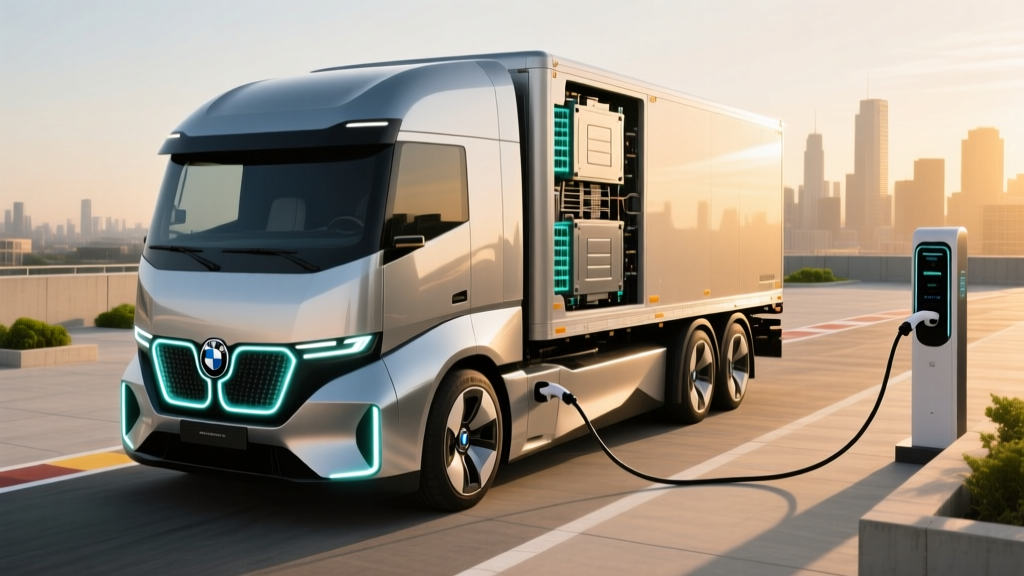
As of early 2026, BMW does not sell an electric truck in the United States. BMW's current U.S. lineup includes no pickup truck of any kind — electric or otherwise. However, BMW has confirmed it is developing a body-on-frame electric pickup truck (internally referenced under the Neue Klasse platform expansion) expected to arrive in the U.S. market for the 2027 or 2028 model year. Until then, buyers searching for a "BMW electric truck" will need to consider BMW's existing electric SUVs (iX, iX3) or look at currently available electric trucks from Ford, Rivian, Chevrolet, and Tesla.
The search for a BMW electric truck reflects growing demand for premium electric pickups. BMW has watched rivals like the Rivian R1T, Tesla Cybertruck, and Ford F-150 Lightning carve out the high-end and mass-market electric truck segments, and the Munich-based automaker is preparing its answer. But "announced" is not "available," and buyers need clear facts before planning a purchase around a vehicle that doesn't yet exist on dealer lots.
What We Know About BMW's Upcoming Electric Pickup
BMW CEO Oliver Zipse confirmed in 2024 that the company is exploring a pickup truck built on its flexible Neue Klasse architecture. Key details confirmed or strongly reported so far:
- Platform: Neue Klasse (800-volt architecture, supporting next-gen cylindrical battery cells)
- Battery chemistry: Likely NMC (nickel manganese cobalt) with BMW's sixth-gen cylindrical cells — higher energy density than current prismatic cells
- Estimated battery capacity: 100–120 kWh usable (preliminary)
- Target EPA range: 300–350 miles (estimated, not certified)
- DC fast charging: Up to 350 kW peak on 800V architecture, 10–80% in approximately 20 minutes (projected)
- Drivetrain: Dual-motor AWD standard, possible tri-motor performance variant
- Target MSRP: $70,000–$90,000+ depending on trim (estimated)
- U.S. availability: 2027 or 2028 model year
⚠️ Preliminary Specs Warning: All figures above are estimates based on BMW's Neue Klasse platform capabilities and industry reporting. Final EPA range, pricing, battery capacity, and charging speeds will not be confirmed until BMW officially unveils the production vehicle. Do not make purchasing decisions based on projected numbers.
BMW Electric SUVs Available Now: The Closest Alternatives
If you want a BMW electric vehicle today and can work without a truck bed, BMW's current EV lineup offers compelling options. Here's how they stack up with exact specs:
| Spec | 2026 BMW iX xDrive50 | 2026 BMW iX M60 | 2026 BMW i4 eDrive40 |
|---|---|---|---|
| EPA Range | 324 miles | 296 miles | 307 miles |
| Battery (usable) | 105.2 kWh (NMC) | 105.2 kWh (NMC) | 81.5 kWh (NMC) |
| Peak DC Charge Rate | 195 kW | 195 kW | 205 kW |
| 10–80% DC Charge Time | ~34 min | ~34 min | ~31 min |
| Level 2 Charge Rate | 11 kW | 11 kW | 11 kW |
| Horsepower | 516 hp | 610 hp | 335 hp |
| 0–60 mph | 4.4 sec | 3.6 sec | 5.5 sec |
| Starting MSRP | $87,250 | $111,500 | $57,900 |
| Federal Tax Credit (§30D) | $0 (MSRP/income/sourcing limits) | $0 | Up to $7,500* |
| Battery Warranty | 8 yr / 100,000 mi | 8 yr / 100,000 mi | 8 yr / 100,000 mi |
*Tax credit eligibility depends on current-year IRS §30D rules including buyer income caps, battery component sourcing requirements, and MSRP limits ($55,000 for sedans, $80,000 for SUVs/trucks/vans). The i4 eDrive40 may qualify partially depending on battery sourcing compliance. Always verify with a tax professional.
Real-World Range Reality: The iX xDrive50's EPA rating of 324 miles is strong, but expect ~260–285 miles in sustained 75 mph highway driving and ~220–250 miles in sub-freezing winter conditions. BMW's thermal management system includes a heat pump (standard), which mitigates cold-weather losses better than resistive heating, but physics still applies.
EV Truck vs. Gas Truck: The Cost Comparison Buyers Need
Since a BMW electric truck isn't available yet, let's compare the electric truck segment against a comparable gas truck to model what a future BMW electric pickup's ownership economics might look like. We'll use the Rivian R1T Dual-Motor (the closest premium electric truck benchmark) versus the Ford F-150 Lariat 4x4 (3.5L EcoBoost):
| Cost Factor | Rivian R1T Dual-Motor (EV) | Ford F-150 Lariat 4x4 (Gas) |
|---|---|---|
| Starting MSRP | $71,700 | $62,500 |
| Federal Tax Credit (§30D) | Up to $7,500 (if eligible) | $0 |
| Effective Purchase Price | ~$64,200 | $62,500 |
| Fuel/Energy Cost per Mile | $0.04–$0.06 (home L2) / $0.12–$0.18 (DC fast) | $0.16–$0.20 (at $3.50/gal, 19 mpg combined) |
| Annual Fuel/Energy (12,000 mi) | $480–$720 (mostly home) | $1,920–$2,400 |
| Annual Maintenance | $300–$500 (no oil, fewer fluids) | $800–$1,200 |
| 5-Year Total Fuel + Maintenance | $3,900–$6,100 | $13,600–$18,000 |
| 5-Year Total Cost of Ownership | ~$68,100–$70,300 | ~$76,100–$80,500 |
Source: fueleconomy.gov for EPA data; electricity costs based on U.S. average of $0.16/kWh residential and $0.40–0.55/kWh public DC fast charging. Actual costs vary by state, utility rate, and driving pattern.
The takeaway: electric trucks carry a higher upfront cost but deliver substantial savings on fuel and maintenance over five years. A future BMW electric truck priced in the $75,000–$90,000 range would follow this same pattern — premium purchase price, lower running costs.
Real-World Ownership Considerations Before You Commit
Buying any electric truck — BMW's future model or a current competitor — requires honest assessment of your situation. Here's what first-time EV truck buyers consistently underestimate:
Home Charging Access Is Non-Negotiable for Most Owners
Public DC fast charging works for road trips, but 80–90% of EV charging happens at home. For a large-battery electric truck (100+ kWh), Level 1 charging (120V, ~1.4 kW) adds only about 3–4 miles per hour — meaning a full charge from 10% takes over 60 hours. You need a Level 2 home charger:
- Level 2 charger (240V, 48A/11.5 kW): Adds ~30–35 miles per hour; full charge in ~10 hours
- Installation cost: $800–$2,500 if your electrical panel has capacity; $3,000–$5,000+ if a panel upgrade (100A → 200A) is needed
- Circuit requirement: Dedicated 60A breaker for a 48A charger
If you live in an apartment, condo, or street-parking situation without reliable home charging access, an electric truck's convenience drops dramatically. Public DC fast charging a 100+ kWh battery regularly is expensive ($0.40–$0.55/kWh in many areas) and time-consuming.
Cold Weather Cuts Range — Plan for It
Battery chemistry is temperature-sensitive. In sustained sub-30°F conditions, expect 20–35% range reduction from the EPA sticker, depending on whether you use cabin heating aggressively and whether the vehicle has a heat pump. For a truck with a projected 320-mile EPA range, that means 210–255 real-world winter miles. If your daily commute plus errands exceed 150 miles in winter, range planning becomes critical.
Towing and Payload Slash Range Even Further
Electric trucks are capable tow rigs, but towing a 5,000-pound trailer can cut range by 40–55%. A 320-mile truck becomes a 145–190-mile truck under heavy tow load. This is physics, not a flaw — gas trucks also see major MPG drops while towing, but gas stations are more ubiquitous than DC fast chargers on rural towing routes.
Common Misconceptions About BMW Electric Trucks
| Myth | Fact |
|---|---|
| "BMW already sells an electric truck in the U.S." | BMW has no pickup truck in its U.S. lineup as of 2026. The electric truck is expected for 2027–2028. |
| "The BMW iX is basically a truck." | The iX is a unibody electric SUV with no truck bed, no body-on-frame construction, and limited towing capacity (~3,500 lbs). |
| "BMW's electric truck will qualify for the full $7,500 tax credit." | Tax credit eligibility under IRS §30D depends on battery sourcing, critical mineral requirements, MSRP caps ($80,000 for trucks), and buyer income limits. A $85,000+ BMW truck would likely exceed the MSRP cap. |
| "Electric trucks can't tow as much as gas trucks." | Electric trucks can match or exceed gas truck torque for towing, but range under tow load drops significantly. The F-150 Lightning tows up to 10,000 lbs; the Rivian R1T tows 11,000 lbs. |
| "I can charge an electric truck on a standard outlet overnight." | Level 1 (120V) charging adds ~3–4 miles per hour to a large truck battery. You'd need 60+ hours for a full charge. A Level 2 (240V) home charger is essential for daily use. |
Decision Framework: Should You Wait for BMW or Buy Now?
Wait for the BMW electric truck (2027–2028) if:
- You specifically want BMW's driving dynamics, interior quality, and brand cachet in a pickup
- Your current vehicle is functional for another 1–2 years
- You want 800V architecture with potentially 350 kW DC fast charging (faster than most current trucks)
- You don't need a truck bed for work or recreation in the immediate term
Buy a currently available electric truck now if:
- You need a truck bed for work, hauling, or outdoor recreation today
- You want to lock in current §30D tax credit eligibility before rules potentially tighten
- Your budget is under $70,000 (Ford F-150 Lightning XLT starts at ~$55,000)
- You want established service networks and real-world ownership data
Consider a BMW electric SUV (iX) now if:
- You want BMW electric today and don't actually need a truck bed
- You value a refined ride, premium interior, and strong real-world range
- You can accommodate the $87,000+ starting price and understand tax credit limitations
Current Electric Trucks You Can Actually Buy in 2026
Since the BMW electric truck remains forthcoming, here are the premium and mainstream electric trucks available now with key specs:
| Model | EPA Range | Battery (kWh) | Peak DC kW | 10–80% Time | Towing | Starting MSRP |
|---|---|---|---|---|---|---|
| Rivian R1T Dual-Motor | 352 mi | 106 kWh (NMC) | 200 kW | ~35 min | 11,000 lbs | $71,700 |
| Ford F-150 Lightning Ext. Range | 320 mi | 131 kWh (NMC) | 150 kW | ~41 min | 10,000 lbs | $59,995 |
| Chevrolet Silverado EV 4WT | 440 mi | 200 kWh (NMC) | 350 kW | ~25 min | 10,000 lbs | $57,900 |
| Tesla Cybertruck AWD | 340 mi | 123 kWh (NMC) | 250 kW | ~28 min | 11,000 lbs | $79,990 |
Source: fueleconomy.gov and manufacturer specifications. All figures for 2026 model year where available. Range and charging times vary by trim, wheel size, and conditions.
Frequently Asked Questions
When will the BMW electric truck be available in the U.S.?
BMW has not announced an exact on-sale date. Based on the company's Neue Klasse rollout timeline and industry reporting, a U.S. launch for the 2027 or 2028 model year is most likely. Reservations may open in late 2026 or 2027.
How much will a BMW electric truck cost?
No official pricing has been released. Given BMW's positioning and the premium electric truck market, expect a starting MSRP between $70,000 and $90,000, with performance variants potentially exceeding $100,000. At prices above $80,000, the vehicle would exceed the §30D tax credit MSRP cap for trucks.
Will BMW's electric truck use NACS or CCS charging?
BMW has committed to adopting the NACS (Tesla-style) connector for its North American vehicles starting with upcoming models. The electric truck is expected to ship with a native NACS port, granting access to Tesla Supercharger stations alongside other networks.
Does BMW make any trucks at all?
No. BMW has never produced a pickup truck for any market. The company's lineup consists of sedans, coupes, SUVs (SAVs/SAVs in BMW terminology), and convertibles. The upcoming electric pickup would be BMW's first truck ever.
What's the best electric truck I can buy right now?
It depends on your priorities. The Rivian R1T leads in refinement, off-road capability, and quad-motor performance options. The Ford F-150 Lightning offers the best value and familiarity for traditional truck buyers. The Chevrolet Silverado EV has the longest range and fastest charging. The Tesla Cybertruck offers the most polarizing design with strong performance and Supercharger access.
Is home charging installation worth it for an electric truck?
Yes — it's essentially mandatory for daily convenience. Budget $1,200–$2,500 for a quality Level 2 charger and standard installation. If your home's electrical panel needs upgrading from 100A to 200A service, add $2,000–$4,000. Over five years of ownership, home charging at an average rate of $0.16/kWh will save you $6,000–$9,000 compared to gasoline, easily justifying the installation cost.
Will the BMW electric truck qualify for the federal tax credit?
Uncertain. The IRS §30D credit requires the truck's MSRP to be under $80,000, the buyer's AGI to fall within income caps ($300,000 joint / $150,000 single), and the battery to meet critical mineral and component sourcing thresholds. BMW's German-built batteries may face sourcing challenges under current rules. Rules may also change before the truck launches. Consult a tax professional for your specific situation.