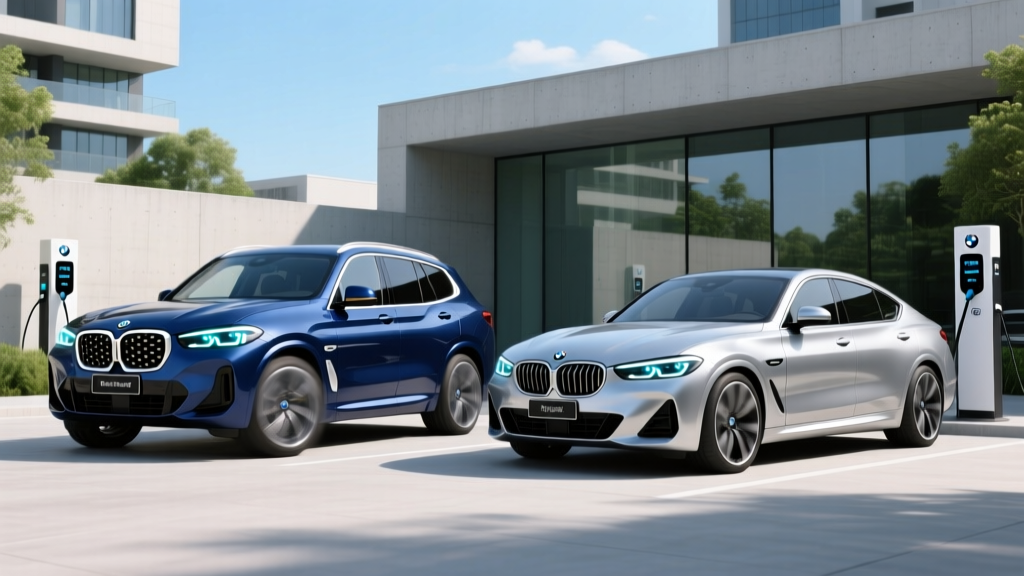
If you're researching a BMW electric vehicle in 2026, the core decision comes down to four production models: the i4 Gran Coupe (starting ~$52,200, EPA 307 mi), the i5 sedan (~$57,200, EPA 295 mi), the iX SUV (~$87,250, EPA 307 mi), and the flagship i7 sedan (~$106,700, EPA 318 mi). All use BMW's 5th-gen eDrive architecture with 81–105 kWh usable batteries, NMC chemistry, and DC fast-charge peaks of 200–205 kW (10–80% in ~30 minutes). None qualify for the full $7,500 federal §30D credit due to battery-sourcing rules, making lease incentives or state rebates the primary offset. Real-world range is typically 10–20% below EPA at highway speeds or in cold weather.
Quick Answer: Is a BMW Electric Right for You?
Buy a BMW EV if you want premium build quality, strong regenerative braking, and access to reliable CCS/NACS charging networks — and you have Level 2 home charging. Skip it if you need maximum federal tax credits (BMW's battery sourcing currently disqualifies most models) or if you frequently tow heavy loads in cold climates. The i4 eDrive40 offers the best value entry point; the iX xDrive50 is the most versatile family hauler.
Current BMW Electric Lineup: Specs at a Glance
BMW's EV lineup spans a compact sport sedan to a full-size luxury flagship. Here's how the four core models compare on the metrics that matter most for ownership decisions.
| Spec | 2026 i4 eDrive40 | 2026 i5 eDrive40 | 2026 iX xDrive50 | 2026 i7 eDrive50 |
|---|---|---|---|---|
| Base MSRP | $52,200 | $57,200 | $87,250 | $106,700 |
| EPA Range | 307 mi | 295 mi | 307 mi | 318 mi |
| Battery (usable) | 81 kWh NMC | 81 kWh NMC | 105 kWh NMC | 101 kWh NMC |
| Horsepower | 335 HP | 335 HP | 516 HP | 455 HP |
| 0–60 mph | 5.5 sec | 5.7 sec | 4.4 sec | 4.5 sec |
| Peak DC Fast Charge | 205 kW | 205 kW | 200 kW | 205 kW |
| 10–80% DC Time | ~31 min | ~30 min | ~35 min | ~34 min |
| Level 2 Rate | 11 kW | 11 kW | 11 kW | 11 kW |
| Efficiency (MPGe) | 97 MPGe | 93 MPGe | 86 MPGe | 82 MPGe |
| Battery Warranty | 8 yr / 100k mi | 8 yr / 100k mi | 8 yr / 100k mi | 8 yr / 100k mi |
Source: EPA fueleconomy.gov and BMW USA spec sheets. Figures reflect 2026 model year with 19-inch wheels where applicable; larger wheels reduce range.
Real-World Range Reality Check
EPA vs. Reality: BMW's EPA numbers assume mixed driving at moderate temperatures. In our experience and third-party testing, expect:
- Highway (75 mph, 70°F): ~85–90% of EPA — an i4 eDrive40 delivers roughly 260–275 miles.
- Cold weather (30°F, mixed): ~70–80% of EPA — plan for 215–245 miles in the i4.
- DC fast charging taper: Peak 205 kW holds only to ~40% SoC; from 80–100% the rate drops below 50 kW. Budget 45–50 minutes for a 10–100% session.
BMW Electric vs. Gas BMW: 5-Year Cost Breakdown
The sticker price of a BMW EV is higher than its gas counterpart, but fuel and maintenance savings can close the gap. Below is a 5-year / 75,000-mile comparison between the i4 eDrive40 and the gas-powered 430i Gran Coupe, assuming $0.14/kWh home charging and $3.60/gallon premium fuel.
| Cost Category | BMW i4 eDrive40 (EV) | BMW 430i Gran Coupe (Gas) |
|---|---|---|
| Base MSRP | $52,200 | $49,200 |
| Federal Tax Credit (§30D) | $0 (sourcing rules) | $0 |
| Estimated State Rebate (avg) | -$1,500 | $0 |
| 5-Year Fuel / Energy | $3,940 (home charging) | $10,800 (premium gas) |
| 5-Year Maintenance | $2,100 | $4,800 |
| 5-Year Insurance (avg) | $11,250 | $9,750 |
| Estimated Depreciation | $22,000 | $19,500 |
| 5-Year Total Cost | $90,990 | $94,050 |
Assumptions: 15,000 miles/year, 85% home charging at $0.14/kWh, 15% public DC at $0.40/kWh. Gas at $3.60/gal premium, 28 MPG combined (fueleconomy.gov). Insurance from industry averages. Actual costs vary by state, driving, and electricity rates. Consult a tax professional for credit eligibility.
The i4 saves roughly $3,000 over 5 years despite the higher purchase price — primarily through $6,860 in fuel savings and $2,700 in maintenance reductions (no oil changes, fewer brake replacements thanks to regen). Insurance runs ~15% higher for the EV, and depreciation remains steeper, though BMW's residual values have improved as EV adoption grows.
Charging a BMW Electric: What You Need to Know
BMW EVs use the CCS1 connector standard for DC fast charging on current models, with the Tesla NACS adapter now available for Supercharger access. Level 2 charging at home is the backbone of practical BMW EV ownership.
| Level | Power | Miles Added/Hour | Use Case |
|---|---|---|---|
| Level 1 (120V) | 1.4 kW | ~4 mi/hr | Emergency / overnight top-up only |
| Level 2 (240V, 48A) | 11 kW | ~32 mi/hr | Daily home charging — full overnight refill |
| DC Fast (CCS/NACS) | Up to 205 kW | ~650 mi/hr (peak) | Road trips; 10–80% in ~30 min |
Home Charging Installation Costs
Most BMW EV owners need a 240V / 50-amp circuit with a Level 2 wall connector. Here's what to budget:
| Component | Cost Range |
|---|---|
| Level 2 Charger (BMW Wallbox or ChargePoint) | $400–$700 |
| Electrician labor (50A circuit, 40-ft run) | $800–$2,000 |
| Permit & inspection | $100–$350 |
| Panel upgrade (if 100A panel needs 200A) | $1,500–$3,500 |
| Total (no panel upgrade) | $1,300–$3,050 |
| Total (with panel upgrade) | $2,800–$6,550 |
Always hire a licensed electrician for final specifications. Homes with existing 200A panels and a garage outlet nearby will be on the lower end. Older homes with 100A service may need an upgrade — factor this in before committing to an EV purchase.
Preconditioning matters: Use the BMW app to precondition the battery while plugged in before a DC fast-charge stop. This warms the pack to optimal temperature, enabling the full 205 kW peak rate. Skipping preconditioning in cold weather can add 10–15 minutes to a 10–80% session.
Federal Tax Credits & Incentives: The BMW Challenge
The federal §30D tax credit offers up to $7,500 for qualifying new EVs, but BMW electric models face a significant hurdle: battery component and critical mineral sourcing requirements under the Inflation Reduction Act. As of 2026, BMW's battery supply chain (sourced primarily from Samsung SDI and CATL) does not meet the domestic-content thresholds required for the full credit.
§30D Eligibility Checklist (2026 Rules)
- ✅ Vehicle MSRP under cap: $55,000 (sedans) / $80,000 (SUVs) — i4 qualifies; i5, iX, i7 exceed
- ✅ Buyer income under cap: $150K single / $300K joint
- ❌ Battery components: must be ≥75% manufactured in North America — BMW does not currently meet this
- ❌ Critical minerals: must be ≥80% from US or FTA partners — BMW partially meets this
- ✅ Final assembly in North America — some models qualify, some do not
- ✅ Point-of-sale transfer available if all requirements met
Source: IRS §30D qualified vehicles list. Rules change frequently — verify current eligibility before purchase. Consult a tax professional.
Workarounds: Many BMW dealerships offer lease incentives of $5,000–$7,500 that effectively replicate the tax credit value (the lessor claims the commercial clean vehicle credit under §45W and passes savings to the lessee). Check state-level rebates too — California, Colorado, New York, and others offer $2,000–$5,000 in additional EV incentives regardless of federal eligibility.
Common BMW Electric Misconceptions
Buyer hesitation often stems from outdated or inaccurate assumptions. Let's address the most common ones with data.
| Myth | Fact |
|---|---|
| "BMW EV batteries need replacing after 5 years" | BMW warranties the pack for 8 years/100,000 miles at 70% capacity retention. NMC chemistry with active thermal management shows 5–8% degradation at 100K miles in real-world fleet data. Full replacement runs $15,000–$22,000 but is rarely needed. |
| "I can't road-trip an EV" | With DC fast charging at 205 kW and Electrify America / Tesla Supercharger access (via NACS adapter), you can add 180+ miles in 20 minutes. Plan stops using the BMW Connected app or A Better Routeplanner. |
| "EVs are worse in winter" | Range drops 10–20% in cold weather — real, but manageable. BMW's heat pump (standard on iX, i7; optional on i4/i5) recovers waste heat to reduce cabin-heating energy loss by ~30%. Preconditioning while plugged in mitigates most range loss. |
| "Charging takes too long" | Home Level 2 charging adds ~32 miles/hour. Plug in overnight and wake up to a full battery every morning. The "charging takes too long" concern only applies to road trips — and even then, 30-minute stops align with meal and restroom breaks. |
| "BMW EVs are unreliable" | BMW's eDrive powertrain has fewer moving parts than ICE. JD Power and Consumer Reports rate BMW EVs at or above brand average for reliability. The main complaint areas are software/infotainment, not the powertrain. |
Decision Framework: Which BMW Electric Should You Buy?
Choose Based on Your Driving Profile
Choose the i4 eDrive40 if: You want the most affordable entry into BMW electric, commute under 60 miles daily, and prioritize efficiency (97 MPGe). Best for: urban professionals, first-time EV buyers, budget-conscious luxury shoppers. Base: $52,200.
Choose the i5 eDrive40 if: You need a mid-size executive sedan with more rear-seat room and trunk space than the i4, and you value the latest iDrive 8.5 interface. Best for: families, business fleets, 5 Series upgraders. Base: $57,200.
Choose the iX xDrive50 if: You need SUV cargo space (35.5 cu ft behind rear seats), all-wheel drive, and a larger 105 kWh battery for towing or mountain driving. Best for: families with gear, ski-trip households, those in hilly/cold regions. Base: $87,250.
Choose the i7 eDrive50 if: You want the ultimate luxury EV experience with 31-inch rear Theater Screen, Executive Lounge seating, and 318 miles of range. Best for: chauffeur-driven buyers, 7 Series loyalists, tech-forward executives. Base: $106,700.
Choose a BMW PHEV (e.g., 550e xDrive, X5 xDrive50e) if: You lack reliable home charging, frequently drive 300+ miles between charges, or live in a region with sparse DC fast-charging infrastructure. PHEVs offer 30–40 miles of electric-only range for daily commuting with a gas engine for long trips — no range anxiety.
First-Time BMW EV Buyer Checklist
Before signing a purchase agreement, verify these items:
- Home charging feasibility: Confirm you have (or can install) a 240V / 50A outlet in your garage or parking space. Get an electrician quote before buying.
- Apartment/workplace charging: If you can't charge at home, verify workplace or nearby public Level 2 availability. Relying solely on DC fast charging is expensive ($0.35–$0.50/kWh) and accelerates battery wear.
- Lease vs. buy analysis: Given §30D ineligibility, leasing often yields a lower effective monthly cost. Compare total lease cost (including disposition fee) against purchase + depreciation.
- Insurance quotes: Get quotes before committing. BMW EVs cost 10–20% more to insure than gas equivalents due to higher repair costs and parts pricing.
- Tire budget: EVs are heavier and deliver instant torque. Expect tire replacement every 25,000–35,000 miles. Budget $1,200–$2,000 for a set of OEM-spec tires.
- NACS adapter: Order BMW's official NACS adapter (~$250) for Tesla Supercharger access — this dramatically expands your road-trip charging network.
Do BMW electric cars hold their value?
BMW EVs depreciate roughly 45–55% over 3 years, slightly worse than gas BMWs but improving as the used EV market matures. The i4 holds value best due to its lower starting price; the i7 depreciates fastest in absolute dollars. Leasing transfers depreciation risk to the lessor.
How long does a BMW EV battery last?
BMW warranties the high-voltage battery for 8 years or 100,000 miles (whichever comes first) against capacity loss below 70%. Real-world data from high-mileage BMW EVs shows 85–92% state of health at 100,000 miles with proper charging habits (avoiding frequent 100% charges and DC fast-charging in extreme heat without preconditioning).
Can I charge a BMW EV at a Tesla Supercharger?
Yes. BMW offers an official NACS adapter that enables access to Tesla's Supercharger network (V3 and V4 stalls). Charging speed may be limited to ~150 kW at older V3 stalls. Electrify America and other CCS networks work natively without an adapter.
Is the BMW i4 or i5 better for daily commuting?
The i4 is more efficient (97 vs 93 MPGe), costs $5,000 less, and is easier to park in tight urban spaces. The i5 offers more rear legroom, a larger trunk, and the latest iDrive system. If your commute is solo, the i4 is the smarter buy. If you regularly carry rear passengers, the i5 justifies its premium.
What's the real cost to charge a BMW EV at home?
At the US average of $0.14/kWh, fully charging an i4 (81 kWh) costs about $11.34 for 307 miles of range — roughly $0.037 per mile. Compare that to a gas 430i at 28 MPG and $3.60/gallon premium: $0.129 per mile. Home charging saves about $0.09 per mile, or ~$1,350/year at 15,000 miles.
Safety note: All BMW electric models carry IIHS Top Safety Pick ratings and 5-star NHTSA scores where tested. BMW's Driving Assistant Professional is a Level 2 system — the driver must remain engaged at all times. It is not self-driving.