Quick Verdict: The BMW Electric iX at a Glance
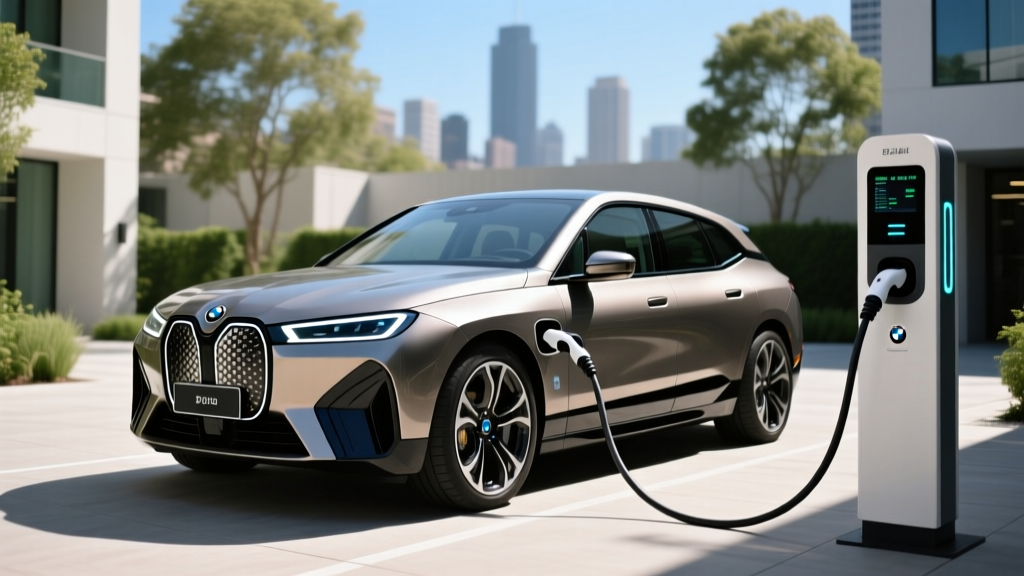
The BMW iX remains one of the most refined luxury electric SUVs on the market heading into the 2026 model year. Built on BMW's dedicated EV architecture with a fifth-generation eDrive powertrain, the iX delivers a compelling mix of long-range capability, rapid DC fast charging, and a cabin that punches well above its segment in material quality. But at a starting price north of $87,000, buyers need to understand exactly what they're getting — from real-world range expectations to the nuances of federal tax credit eligibility — before signing on the dotted line.
This review breaks down the 2026 BMW electric iX lineup with the data-driven precision EV buyers need: exact EPA range figures, battery chemistry details, charging curves, and a clear-eyed look at where it wins and where it falls short against rivals like the Mercedes-Benz EQE SUV, Audi Q8 e-tron, and Tesla Model X.
| Spec | iX xDrive50 | iX M60 |
|---|---|---|
| EPA Range | 307–324 mi | 288–296 mi |
| Battery (Usable) | ~105.2 kWh (NMC) | ~105.2 kWh (NMC) |
| Drivetrain | Dual-motor AWD | Dual-motor AWD |
| Horsepower | 516 hp | 610 hp |
| 0–60 mph | 4.4 sec | 3.6 sec |
| Max DC Charge Rate | 195 kW | 195 kW |
| 10–80% DC Time | ~35 min | ~35 min |
| Level 2 Rate | 11 kW (~35 mi/hr) | 11 kW (~35 mi/hr) |
| MPGe (Combined) | 86 MPGe | 78 MPGe |
| Base MSRP | $87,250 | $111,500 |
| Battery Warranty | 8 yr / 100,000 mi | 8 yr / 100,000 mi |
Real-World Range vs. EPA Estimates
The EPA rates the 2026 BMW iX xDrive50 at up to 324 miles on the available 20-inch Aero wheels with the efficiency-oriented tire package, and 307 miles on the larger 21- and 22-inch wheel options. The performance-oriented M60 drops to 288–296 miles depending on wheel selection, per fueleconomy.gov.
EPA Sticker: 324 mi (xDrive50, 20" Aero) / 288 mi (M60, 22")
Expect in practice: ~270–290 mi on sustained highway driving at 70–75 mph; ~240–260 mi in cold weather (below 30°F) without preconditioning. City driving with regenerative braking can match or slightly exceed EPA figures.
Why the gap? The EPA test cycle includes significant low-speed and stop-and-go driving where regenerative braking recovers energy. On a flat 75-mph highway run, the iX xDrive50 typically consumes around 340–370 Wh/mi, translating to roughly 285–310 miles from its ~105.2 kWh usable battery. Cold weather adds a further 10–20% penalty due to cabin heating demand and increased battery internal resistance — though the iX's standard heat pump mitigates this better than resistance-heater-equipped rivals.
The key takeaway: if your typical one-way commute is under 120 miles or you road-trip 250 miles between charging stops, the iX xDrive50 has comfortable margin. If you regularly drive 300+ miles in a single stint through mountain passes in January, plan your stops conservatively.
Battery Chemistry, Capacity, and Degradation
The iX uses a lithium-ion pack with NMC (nickel manganese cobalt) chemistry — BMW's fifth-generation eDrive battery. Usable capacity is approximately 105.2 kWh (gross capacity is higher, with a software buffer protecting the cells from full 0% and 100% states of charge).
NMC offers higher energy density than LFP (lithium iron phosphate), which is why BMW can pack over 100 kWh into the iX's floor without compromising cabin space. The trade-off: NMC cells are more sensitive to sustained high states of charge and extreme temperatures. For daily driving, BMW recommends setting the charge limit to 80–90% and only charging to 100% before long road trips. Following this practice, owners can expect roughly 8–12% capacity loss over 100,000 miles based on industry-wide NMC degradation data.
BMW backs the high-voltage battery with an 8-year / 100,000-mile warranty covering defects and capacity loss below 70% of original capacity. The powertrain (eDrive motors, power electronics) carries the same 8-year/100,000-mile coverage. The basic vehicle warranty is 4 years / 50,000 miles, which is standard for BMW but shorter than Hyundai/Kia's 5-year/60,000-mile bumper-to-bumper.
Charging Speed: DC Fast Charging and Home Level 2
Charging performance is where the iX demonstrates its engineering maturity. The 400-volt architecture supports a peak DC fast-charge rate of 195 kW, and — critically — the iX sustains strong charge rates through the bulk of the curve rather than hitting a peak and immediately tapering.
| Charging Level | Power | Speed / Time | Connector |
|---|---|---|---|
| Level 1 (120V household) | ~1.4 kW | ~4 mi/hr | J1772 / NACS adapter |
| Level 2 (240V home/public) | 11 kW (max onboard) | ~35 mi/hr; full charge ~11 hr | J1772 / NACS adapter |
| DC Fast Charge | Peak 195 kW | 10–80% in ~35 min | CCS1 (NACS on 2025+ models) |
Charging curve reality: The iX pulls close to its 195 kW peak from roughly 10% to 30% state of charge, then steps down to ~150 kW through 50%, and further tapers above 70%. The 10–80% time of approximately 35 minutes is competitive with 400V rivals but trails 800V-architecture vehicles like the Hyundai Ioniq 5 (which achieves 10–80% in roughly 18 minutes at 350 kW chargers).
For home charging, the 11 kW onboard charger is a strong point — it's faster than the 9.6 kW chargers in many competitors. On a 48-amp Level 2 circuit (the most common home installation), you'll add roughly 35 miles of range per hour, meaning an overnight session from 20% to 80% takes about 7–8 hours. If your home electrical panel supports a 60-amp circuit, you can push closer to the full 11 kW.
BMW transitioned the iX to the NACS (North American Charging Standard) port starting with the 2025 model year, giving native access to Tesla's Supercharger network — a significant practical advantage over CCS-only vehicles. CCS adapters are available for legacy Electrify America and other CCS stations.
Performance, Drivetrain, and Driving Dynamics
Both iX trims use a dual-motor all-wheel-drive layout with BMW's eDrive system. The xDrive50 produces 516 horsepower and rockets to 60 mph in 4.4 seconds — genuinely quick for a 5,600-pound SUV. The M60 bumps output to 610 hp and drops the 0–60 time to 3.6 seconds, entering sports-sedan territory.
What sets the iX apart dynamically is not straight-line speed alone but chassis sophistication. The available air suspension with adaptive dampers delivers a genuinely plush ride on rough pavement while tightening up convincingly in Sport mode. The steering is precise if slightly light, and the low center of gravity (battery pack under the floor) keeps body roll well-controlled. This is the rare electric SUV that feels engineered rather than merely assembled.
Regenerative braking offers multiple modes: adaptive (which uses radar and navigation data to modulate regen based on traffic and upcoming stops), high (near one-pedal driving), and low (coasting). The adaptive mode is particularly well-implemented and reduces brake pedal use significantly in mixed driving.
Pricing, Trim Levels, and Federal Tax Credit Eligibility
The 2026 BMW iX lineup starts at $87,250 for the xDrive50 and $111,500 for the M60, including destination. A well-optioned xDrive50 with the Premium Package, Driving Assistance Professional, and 21-inch wheels typically lands between $95,000 and $102,000 before incentives.
| Trim | Base MSRP | As-Tested Range | §30D Credit Eligible? |
|---|---|---|---|
| iX xDrive50 | $87,250 | $95,000–$102,000 | Unlikely (see below) |
| iX M60 | $111,500 | $118,000–$130,000 | No (exceeds MSRP cap) |
Federal tax credit reality check: Under IRS §30D rules, the new clean vehicle credit has a $80,000 MSRP cap for SUVs. The iX xDrive50's base MSRP of $87,250 exceeds this threshold, meaning it does not qualify for the $7,500 federal tax credit. The M60 is even further above the cap. Additionally, the credit requires the buyer's adjusted gross income to fall below $300,000 (joint filers), $225,000 (head of household), or $150,000 (single), and the vehicle's battery must meet critical-mineral and battery-component sourcing requirements that shift annually. Always verify current rules at irs.gov and consult a tax professional before relying on credit eligibility.
The iX may qualify for certain state-level incentives depending on your jurisdiction — California, Colorado, and several northeastern states offer additional rebates that are not subject to the federal MSRP cap. Check your state's energy office or DMV for current programs.
Interior, Cargo Space, and Technology
The iX cabin is a genuine differentiator in the luxury EV SUV segment. BMW uses a mix of sustainably sourced materials — recycled plastics, FSC-certified wood, and olive-leaf-tanned leather — that feel premium without the traditional luxury-car ostentation. The curved display panel houses a 14.9-inch infotainment touchscreen running BMW's iDrive 8.5 system alongside a 12.3-inch digital instrument cluster.
Cargo and passenger dimensions:
- Cargo volume (behind 2nd row): 35.5 cu ft
- Cargo volume (2nd row folded): 77.9 cu ft
- Rear legroom: 38.9 inches
- Front headroom: 40.2 inches (panoramic roof reduces this slightly)
The iX seats five comfortably, with a flat floor (no transmission tunnel) making the rear middle seat genuinely usable for adults. However, there is no third-row option and no front trunk (frunk) — the space under the hood houses HVAC and power electronics. For buyers needing three rows, the Tesla Model X or Rivian R1S remain the electric alternatives.
Standout tech features:
- Driving Assistance Professional: BMW's Level 2 driver-assist suite with highway hands-off capability up to 85 mph (on divided highways with driver monitoring). This is SAE Level 2 — the driver must remain attentive and ready to resume control.
- Parking Assistant Professional: Remote-controlled parking via smartphone for tight garages.
- Harman Kardon or Bowers & Wilkins audio: The optional B&W Diamond Surround system (36 speakers, 1,615 watts) is among the best factory audio systems available in any vehicle.
- Sky Lounge panoramic roof: Electrochromic glass that adjusts tint electronically.
BMW's Driving Assistance Professional is an SAE Level 2 system. It provides hands-off highway driving on qualifying divided roads, but the driver must continuously monitor the road and be prepared to take over immediately. It is not autonomous driving and does not handle construction zones, unmapped roads, or complex urban intersections without driver input.
How the BMW iX Stacks Up Against Competitors
| Attribute | BMW iX xDrive50 | Mercedes EQE 350+ SUV | Audi Q8 e-tron | Tesla Model X LR |
|---|---|---|---|---|
| EPA Range | 324 mi | 305 mi | 285 mi | 335 mi |
| Peak DC Charge | 195 kW | 170 kW | 170 kW | 250 kW |
| 10–80% Time | ~35 min | ~32 min | ~31 min | ~27 min |
| 0–60 mph | 4.4 sec | 6.4 sec | 5.5 sec | 3.8 sec |
| Base MSRP | $87,250 | $78,050 | $75,595 | $79,990 |
| Cargo (rear seats up) | 35.5 cu ft | 14.0 cu ft | 28.5 cu ft | 44.1 cu ft (+ frunk) |
| §30D Eligible | No (MSRP cap) | No (MSRP cap) | No (MSRP cap) | No (MSRP cap) |
The iX wins on interior quality, rear-seat space, and overall driving refinement. It loses to the Tesla Model X on range, charging speed, cargo volume (Model X offers a frunk and optional third row), and price. The Mercedes EQE SUV is less practical with surprisingly limited cargo space. The Audi Q8 e-tron is the value pick in this group but trails on range.
Pros
- Best-in-class interior materials and build quality
- 324-mile EPA range (xDrive50) is competitive
- 195 kW DC charging with a flat, usable charge curve
- 11 kW onboard L2 charger exceeds most rivals
- Air suspension delivers exceptional ride comfort
- NACS port for native Supercharger access (2025+)
- Spacious, flat-floor rear seat for 3 adults
Cons
- $87,250+ starting price — no federal tax credit
- No frunk — under-hood space is occupied
- No third-row option
- 400V architecture limits peak DC vs. 800V rivals
- iDrive 8.5 has a learning curve; no physical climate knobs
- M60's 288-mile range is modest for a $111K vehicle
- Insurance premiums run 15–25% above segment average
Who Should Buy the BMW Electric iX?
Choose the BMW iX if: You prioritize cabin quality and ride refinement above all else, need a comfortable 5-seat SUV with strong range for road trips, have home Level 2 charging, and your budget accommodates $90K–$105K without relying on federal tax credits.
Look elsewhere if: You need a third row (Rivian R1S, Tesla Model X), want the fastest possible DC charging (Hyundai Ioniq 5, Kia EV6, Porsche Macan EV with 800V), need the most cargo space for the dollar (Model X), or require federal tax credit eligibility to make the math work.
Best use cases: The iX excels as a daily luxury commuter with road-trip capability. Its 324-mile range and ~35-minute DC stops make 500-mile days manageable with a single 30-minute break. For families with two or fewer children who value a whisper-quiet, tech-forward cabin, the iX is arguably the best-executed luxury electric SUV available. Towing is rated at 2,500 pounds — adequate for a small utility trailer or a pair of dirt bikes, but not for a camper or boat.
Frequently Asked Questions
What is the real-world range of the BMW electric iX?
The EPA rates the xDrive50 at up to 324 miles. In real-world highway driving at 70–75 mph, expect 270–290 miles. Cold weather (below 30°F) can reduce that to 240–260 miles without preconditioning. City driving with regenerative braking may match or slightly exceed the EPA estimate.
How fast does the BMW iX charge?
On a DC fast charger, the iX peaks at 195 kW and charges from 10% to 80% in approximately 35 minutes. At home on a 240V Level 2 charger, the 11 kW onboard charger adds about 35 miles of range per hour, fully replenishing the battery in roughly 11 hours from empty.
Does the BMW iX qualify for the federal EV tax credit?
No. The iX xDrive50's base MSRP of $87,250 exceeds the IRS §30D SUV cap of $80,000. The M60 at $111,500 is even further above the threshold. State-level incentives may still apply depending on your jurisdiction. Always check current rules at irs.gov.
Is the BMW iX worth buying over the Tesla Model X or Audi Q8 e-tron?
If interior quality, ride comfort, and build refinement are your top priorities, the iX is the strongest choice in the segment. If you need more cargo space, a frunk, a third row, or faster DC charging at a lower price, the Tesla Model X is more practical. The Audi Q8 e-tron offers the lowest entry price but sacrifices range.
What battery chemistry does the BMW iX use?
The iX uses NMC (nickel manganese cobalt) lithium-ion cells in its ~105.2 kWh usable battery pack. NMC provides high energy density but benefits from daily charge limits of 80–90% to maximize long-term longevity. The battery is warranted for 8 years or 100,000 miles against capacity loss below 70%.
Does the BMW iX have a frunk?
No. The space under the hood is occupied by HVAC components, power electronics, and the washer fluid reservoir. All cargo must go in the rear compartment (35.5 cu ft behind the second row, 77.9 cu ft with seats folded).