Quick Verdict: The Electric Gran Coupe That Drives Like a BMW First
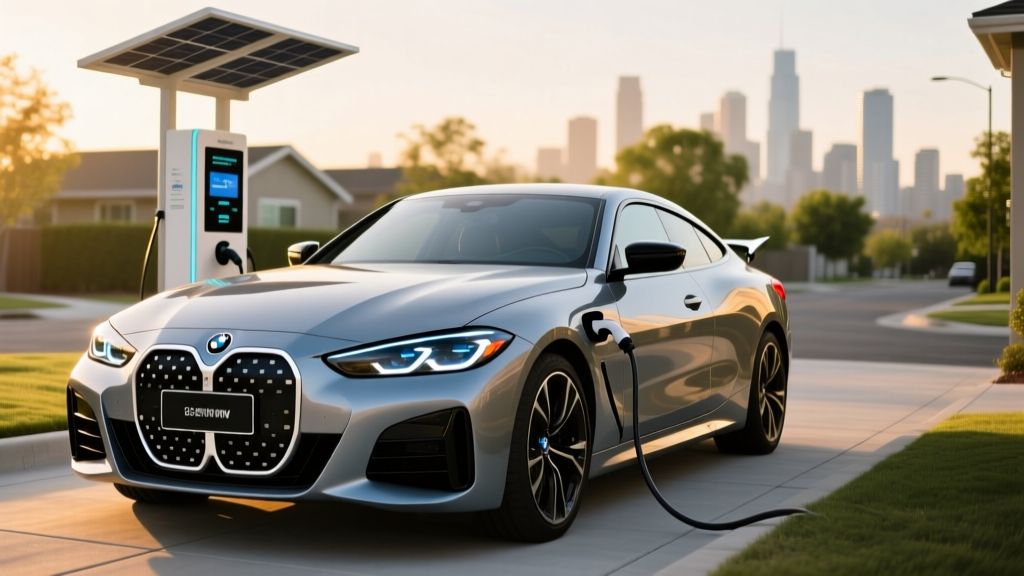
The BMW i4 has always occupied a specific niche: the electric sedan for buyers who refuse to sit in a crossover. For 2026, BMW has refreshed the i4 with a revised front fascia, updated iDrive 8.5 software, and slightly improved efficiency across the lineup. The result is an electric gran coupe that delivers genuine driving engagement alongside practical range and charging speeds that make road-tripping viable.
With three trims — the rear-wheel-drive eDrive40, the dual-motor all-wheel-drive xDrive40, and the performance-flagship M50 — the i4 lineup covers everything from efficiency-focused commuting to 593-hp canyon carving. But it's not without trade-offs. The sloping roofline cuts into rear headroom and cargo space, the platform shares its bones with the gas-powered 4 Series Gran Coupe (meaning no frunk and a transmission tunnel hump in the rear floor), and the starting price remains a barrier even after potential tax incentives.
Here's every number you need to decide whether the 2026 BMW electric i4 belongs on your shortlist.
Range, Efficiency, and Battery Specs
| Trim | Battery (Usable kWh) | Chemistry | EPA Range | Combined MPGe | kWh/100 mi |
|---|---|---|---|---|---|
| eDrive40 | 81.5 | NMC (Gen5) | 307 mi | 97 MPGe | 35 |
| xDrive40 | 81.5 | NMC (Gen5) | 287 mi | 91 MPGe | 37 |
| M50 | 81.5 | NMC (Gen5) | 269 mi | 84 MPGe | 40 |
All three trims share BMW's fifth-generation high-voltage battery pack with 81.5 kWh of usable capacity (approximately 83.9 kWh gross). The pack uses nickel-manganese-cobalt (NMC) prismatic cells supplied by CATL and Samsung SDI — not the LFP chemistry you'll find in some Tesla and Rivian base models. NMC offers higher energy density, which helps the i4 fit a large pack into a sedan floorpan without excessive weight, but it does mean BMW recommends limiting daily charge to 80–90% to maximize long-term battery health.
The eDrive40's single rear motor and lighter curb weight (approximately 4,682 lbs) give it the range crown at 307 miles EPA. The dual-motor xDrive40 sacrifices 20 miles for all-weather traction, while the M50's 593 hp and stickier tires drop the figure to 269 miles.
The EPA sticker on the eDrive40 says 307 miles, but plan for ~250–270 miles on a sustained highway trip at 70–75 mph in moderate temperatures. Electric sedans lose efficiency to aerodynamic drag at highway speeds more noticeably than in stop-and-go city driving, where regenerative braking recovers energy. In winter conditions (below 32°F), expect a 15–25% reduction, bringing real-world highway range down to roughly 200–230 miles on the eDrive40. The i4 does include a heat pump as standard equipment, which helps mitigate cabin-heating energy draw compared to resistive heaters. Source: fueleconomy.gov.
Charging Speed: DC Fast, Level 2, and the Curve
Charging speed is where BMW's Gen5 powertrain shows its engineering maturity. The i4's electrical architecture supports a peak DC fast-charge rate of 205 kW, which is competitive with the Hyundai Ioniq 6 (up to 240 kW peak but a smaller battery) and comfortably ahead of the Tesla Model 3 Long Range (approximately 170 kW peak on CCS adapters).
| Charging Level | Connector | Max Rate | Speed / Time |
|---|---|---|---|
| Level 1 (120V) | J1772 | 1.4 kW | ~4 mi/hr added |
| Level 2 (240V, 48A) | J1772 | 11.5 kW | ~30–33 mi/hr; 0–100% in ~8.5 hrs |
| DC Fast Charge | CCS1 | 205 kW peak | 10–80% in ~31 minutes |
Understanding the charge curve: The 205 kW figure is a peak, not a sustained rate. In real-world DC fast charging, the i4 will ramp up to approximately 195–205 kW between roughly 10–30% state of charge (SoC), then progressively taper. By 60% SoC, you'll see approximately 130–140 kW; by 80%, the rate drops to around 70–80 kW. This is why the 10–80% time of 31 minutes is the meaningful metric — it accounts for the taper. Charging from 80–100% on DC adds another 25–30 minutes and is rarely worth the wait on a road trip.
For home Level 2 charging, BMW includes an 11.5 kW onboard charger. On a properly installed 48-amp, 240-volt NEMA 14-50 or hardwired circuit, you'll add roughly 30–33 miles of range per hour. A full overnight charge from 10% to 100% takes about 8.5 hours — easily handled while you sleep. BMW's Wallbox home charger is available as an accessory, but any quality Level 2 unit (ChargePoint Home Flex, Emporia Level 2, Tesla Universal Wall Connector with J1772 adapter) will work.
Preconditioning the battery is critical for achieving peak DC charge rates. Use the iDrive navigation to route to a DC fast charger, and the car will automatically warm the battery to its optimal charging temperature window (roughly 25–35°C). Without preconditioning — for example, if you pull into a charger with a cold-soaked battery in winter — your peak charge rate may be limited to 80–120 kW until the pack warms up.
Performance: 0–60, Horsepower, and Drivetrain
| Trim | Drivetrain | Horsepower | Torque (lb-ft) | 0–60 mph | Top Speed |
|---|---|---|---|---|---|
| eDrive40 | RWD (single motor) | 335 hp | 317 | 5.5 sec | 118 mph |
| xDrive40 | AWD (dual motor) | 396 hp | 443 | 4.6 sec | 130 mph |
| M50 | AWD (dual motor) | 593 hp | 586 | 3.7 sec | 140 mph |
The eDrive40's 335 hp from a single rear-mounted motor is more than adequate for daily driving and highway merging. BMW's electric motors deliver peak torque from 0 RPM, so the sensation of acceleration is immediate and linear — no waiting for turbo spool or transmission downshifts. The rear-biased weight distribution (approximately 50.5/49.5 front/rear) gives the eDrive40 a classic BMW feel through corners, and the low center of gravity from the floor-mounted battery keeps body roll minimal.
The xDrive40 adds a front-axle motor for all-wheel drive, which is valuable in snow-belt states. The system defaults to rear-drive operation under light loads for efficiency and engages the front motor on demand. The M50 is the performance flagship — its 593 hp and Launch Control mode deliver supercar-rivaling acceleration in a four-door sedan. However, the M50's firmer adaptive suspension and low-profile tires trade some ride comfort for that capability.
All trims feature BMW's adaptive regenerative braking, which adjusts regen intensity based on traffic ahead (using radar and camera data) or can be set manually. One-pedal driving is available but not as aggressive as in some competitors — BMW deliberately tuned the regen to feel more like engine braking than a hard stop, which suits the brand's driving dynamics philosophy.
Pricing, Trims, and Federal Tax Credit Eligibility
| Trim | Base MSRP | As-Tested (Typical Options) |
|---|---|---|
| eDrive40 | $52,575 | $58,000–$62,000 |
| xDrive40 | $56,575 | $63,000–$67,000 |
| M50 | $69,475 | $76,000–$82,000 |
All prices include BMW's $995 destination charge. The eDrive40 and xDrive40 are attractively priced for the luxury electric sedan segment, undercutting the Mercedes EQB and rivaling the Audi A6 e-tron on value. The M50 competes more directly with the Tesla Model 3 Performance and the Polestar 2 BST.
The BMW i4 is assembled in Munich, Germany. As of the current IRS §30D guidelines, the new clean vehicle credit of up to $7,500 requires final assembly in North America. The BMW i4 does not meet this requirement and does not qualify for the federal new-EV tax credit.
However, if you lease the i4 through BMW Financial Services, the leasing company (as the vehicle owner) may qualify for the commercial clean vehicle credit under §45W, and BMW has historically passed this savings through as a lease credit — often $7,500 applied to the lease. This "lease loophole" has been a common path for buyers of imported EVs. Confirm current lease incentive availability with your local BMW dealer, as programs change quarterly.
Additional requirements for any §30D credit (relevant if rules change or for other models): buyer adjusted gross income caps ($150K single / $300K joint), MSRP caps ($55K for sedans), and critical mineral + battery component sourcing thresholds that tighten annually.
Interior Space, Cargo, and Practicality
The i4 is built on BMW's CLAR platform, which it shares with the 4 Series Gran Coupe. This gives it a premium, driver-focused cabin with high-quality materials — Vernasca leatherette is standard, with genuine leather and Alcantara options — but it also means the EV adaptation has compromises versus a dedicated EV skateboard platform.
| Measurement | Specification |
|---|---|
| Front Legroom | 42.1 in |
| Rear Legroom | 34.7 in |
| Front Headroom | 39.1 in |
| Rear Headroom | 36.6 in |
| Cargo (Rear Seats Up) | 16.6 cu ft |
| Cargo (Rear Seats Folded) | 45.6 cu ft |
| Frunk (Front Trunk) | None |
The rear seat is the i4's most significant practicality limitation. The sloping roofline reduces rear headroom to 36.6 inches — adults over 6 feet will notice their hair brushing the headliner. The rear floor also has a noticeable center tunnel hump (a carryover from the ICE platform's exhaust routing), which makes the middle rear seat essentially unusable for anything beyond a child. If you regularly carry rear-seat passengers, the Hyundai Ioniq 6 (38.4 in rear headroom) or even the Tesla Model 3 (37.6 in) offer more space.
Cargo volume at 16.6 cu ft is adequate for a week's groceries or two carry-on suitcases, and the liftback-style hatch (the entire rear glass lifts) makes loading bulky items easier than a traditional trunk. But there's no frunk — the space under the hood houses the power electronics and HVAC components — so total storage is less than a Tesla Model 3 (23 cu ft combined trunk + frunk).
Technology, Infotainment, and Driver Assistance
The 2026 i4 features BMW's Curved Display: a 12.3-inch digital instrument cluster merged with a 14.9-inch central touchscreen running iDrive 8.5. The system is one of the better luxury-automotive infotainment platforms — responsive, logically menu-structured, and supporting wireless Apple CarPlay and Android Auto. BMW has restored some physical controls for 2026, including a volume knob and climate shortcut buttons, addressing a common complaint about touchscreen-only interfaces.
Driver assistance is handled by BMW's Driving Assistant Professional package (standard on M50, optional on eDrive40/xDrive40 at approximately $1,700). This includes:
- Adaptive cruise control with stop-and-go
- Lane centering and lane-keeping assist
- Automatic emergency braking with pedestrian detection
- Highway Assistant (hands-free driving at up to 85 mph on divided highways — driver must keep eyes on the road)
- Parking Assistant Plus with surround-view camera and automated parking
BMW's Highway Assistant is an SAE Level 2 driver-assistance system. It controls steering, acceleration, and braking under specific conditions, but the driver must remain fully engaged and supervising at all times. This is not autonomous or self-driving capability. Hands-free operation is permitted on mapped divided highways, but eye monitoring via the driver-facing camera will alert you — and eventually disengage the system — if you look away from the road.
Standout tech features:
- BMW Digital Key Plus (UWB-based phone-as-key, works with iPhone and compatible Android devices)
- Augmented-view navigation overlay on the instrument cluster
- Over-the-air (OTA) software updates for powertrain, infotainment, and ADAS
- Harman Kardon 17-speaker surround sound (standard on xDrive40 and M50)
- IconicSounds Electric — synthetic driving sounds composed by Hans Zimmer (can be disabled)
Notable drawbacks:
- No frunk reduces total cargo versatility
- Rear-seat space is tight for taller passengers
- Highway Assistant requires the $1,700 Driving Assistant Pro package on lower trims
- BMW's subscription model for some features (heated seats, heated steering wheel) continues to frustrate owners — though BMW has walked back some of the most controversial paywalled items for 2026
Warranty and Ownership Costs
| Coverage Type | Term |
|---|---|
| Limited Vehicle Warranty | 4 years / 50,000 miles |
| High-Voltage Battery | 8 years / 100,000 miles (retains ≥70% capacity) |
| Powertrain (Electric Motors) | 8 years / 100,000 miles |
| Corrosion Perforation | 12 years / unlimited miles |
| Roadside Assistance | 4 years / unlimited miles |
BMW's high-voltage battery warranty guarantees that the pack will retain at least 70% of its original capacity over 8 years or 100,000 miles. This is industry-standard — matching Tesla, Hyundai, and Ford — though some competitors like Rivian offer 8 years/175,000 miles. If your battery degrades below 70% within the warranty period, BMW will repair or replace it to bring capacity back above the threshold.
For a 5-year ownership estimate on the eDrive40 (assuming 12,000 miles/year, home charging at $0.14/kWh national average, and no major repairs under warranty):
- Electricity cost: ~$2,940 total (2,100 kWh/year × $0.14 × 5 years)
- Maintenance: ~$800–$1,200 total (cabin air filter, brake fluid check, tire rotation — no oil changes, no spark plugs)
- Insurance: ~$12,000–$15,000 total (luxury EV premiums run 15–25% higher than equivalent ICE sedans; get quotes before purchasing)
- Estimated 5-year total operating cost: ~$15,700–$19,100
Compared to a gas-powered BMW 430i Gran Coupe (255 hp, 29 MPG combined), you'd spend approximately $9,500–$11,000 on gasoline over the same period at $3.50/gallon. The electricity savings of roughly $6,500–$8,000 over five years help offset the i4's higher purchase price, though insurance premiums narrow the gap.
Who the BMW i4 Suits Best
Choose the BMW i4 eDrive40 if: You want a premium electric sedan with genuine driving dynamics, 300+ miles of range, and you primarily drive solo or with one passenger. It's ideal for commuters with home Level 2 charging who take occasional road trips and value a refined, quiet cabin.
Choose the xDrive40 if: You live in a snow-belt state or frequently drive on wet/mountain roads and need all-wheel-drive confidence. The 20-mile range trade-off for dual-motor AWD is worthwhile in these conditions.
Choose the M50 if: Performance is a priority and you want a daily-drivable sedan that can hit 60 mph in 3.7 seconds while still offering 269 miles of range. You accept higher insurance costs and faster tire wear as the cost of that capability.
Look elsewhere if: You need generous rear-seat space for adults (consider the Hyundai Ioniq 6, BMW i5, or Tesla Model S), you want a frunk for extra storage (Tesla Model 3, Ford Mustang Mach-E), or you require the full $7,500 federal tax credit on a purchase rather than a lease.
Pros and Cons at a Glance
Pros
- 307-mile EPA range (eDrive40) is competitive in class
- 205 kW DC fast charging with 10–80% in 31 minutes
- Excellent driving dynamics — low center of gravity, balanced chassis
- Premium interior materials and build quality
- iDrive 8.5 is responsive and well-organized
- Standard heat pump for cold-weather efficiency
- Quiet cabin at highway speeds
- Lease path to $7,500 commercial credit savings
Cons
- No federal purchase credit (assembled in Germany)
- No frunk — total cargo less than dedicated-EV rivals
- Tight rear headroom and legroom for taller adults
- Rear floor tunnel hump compromises middle seat
- Driving Assistant Pro package is a $1,700 upcharge on lower trims
- Insurance premiums run higher than ICE equivalents
- Regen braking not aggressive enough for true one-pedal driving
- Subscription-based features remain controversial
Frequently Asked Questions
What is the real-world range of the BMW electric i4?
The eDrive40 achieves 307 miles EPA, but expect approximately 250–270 miles on a sustained highway trip at 70–75 mph in mild weather, and roughly 200–230 miles in freezing temperatures. The M50's real-world highway range drops to approximately 215–230 miles in moderate conditions. City driving with regenerative braking can match or slightly exceed EPA estimates.
How fast does the BMW i4 charge at home and on the road?
On a DC fast charger, the i4 peaks at 205 kW and charges from 10–80% in approximately 31 minutes. At home on a Level 2 charger (240V, 48A), it charges at up to 11.5 kW, adding roughly 30–33 miles of range per hour. A full overnight charge takes about 8.5 hours. Level 1 (standard 120V outlet) adds only about 4 miles per hour — useful for topping off, not for daily charging from low SoC.
Does the BMW i4 qualify for the federal EV tax credit?
No — not for a direct purchase. The i4 is assembled in Munich, Germany, and the IRS §30D credit requires North American final assembly. However, leasing through BMW Financial Services may allow you to benefit from the commercial clean vehicle credit (§45W), which BMW has historically passed through as a ~$7,500 lease incentive. Always confirm current program details with your dealer and consult a tax professional. See IRS.gov for current rules.
Is the BMW i4 worth buying versus the Tesla Model 3 or Hyundai Ioniq 6?
It depends on your priorities. The i4 offers superior interior materials, a quieter cabin, and more traditional driving dynamics than the Model 3, but the Tesla has a frunk, more rear headroom, access to the Supercharger network (though BMW's CCS-compatible charging is increasingly viable via Electrify America and other networks), and qualifies for the full $7,500 federal credit on purchase. The Ioniq 6 offers more rear-seat space, faster peak DC charging (240 kW), and a lower starting price, but its interior materials don't match BMW's luxury standard. If premium build quality and driving engagement are your top criteria, the i4 justifies its price.
How long will the BMW i4 battery last?
BMW warranties the high-voltage battery for 8 years/100,000 miles at ≥70% capacity retention. Based on NMC chemistry degradation data from similar BMW Gen5 packs (iX, i7), owners can expect approximately 10–15% capacity loss over the first 100,000 miles under normal use. To maximize longevity, BMW recommends setting daily charge limits to 80–90% and only charging to 100% before long trips. With proper care, the pack should remain functional well beyond 150,000 miles, though with progressively reduced range.
Can the BMW i4 tow?
The i4 is not rated for towing by BMW. If you need an electric vehicle with towing capability, look at the Ford Mustang Mach-E (up to 3,000 lbs with the California Route 1 package), the Rivian R1S, or the BMW iX (up to 3,500 lbs).