The Quick Answer on BMW Electric Motorcycles
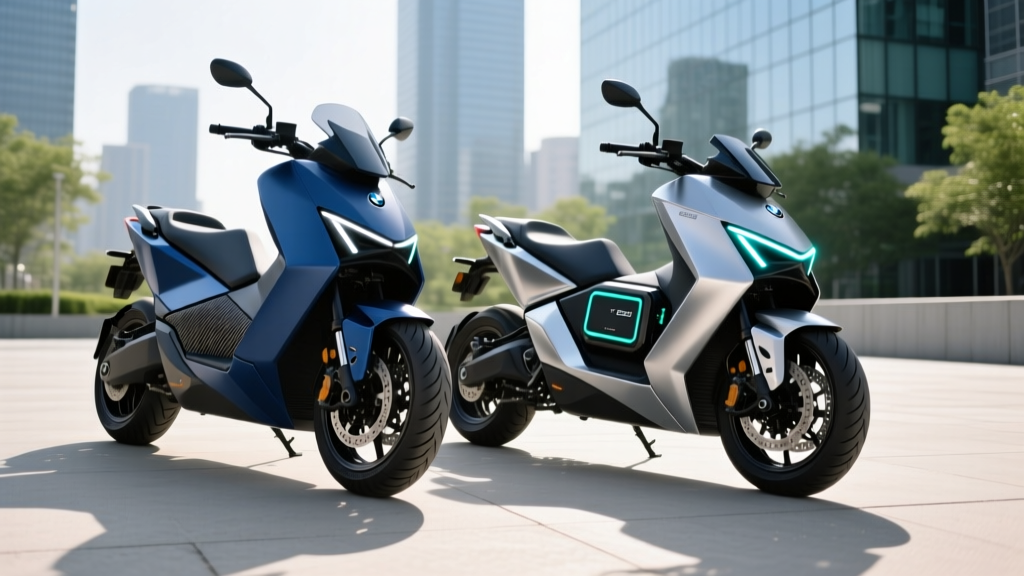
As of 2026, BMW Motorrad sells two fully electric motorcycles in the U.S.: the CE 04 (scooter-style commuter, ~80-mile real-world range, starting around $12,495) and the CE 02 (lighter urban runabout, ~55-mile real-world range, starting around $8,695). Both use fixed lithium-ion batteries charged via Level 1 (120V household outlet) or optional Level 2 (240V), with no DC fast-charging capability. They are strictly urban and suburban machines — not highway tourers — and they do not qualify for the federal §30D EV tax credit, which applies to four-wheeled vehicles only. If your daily round-trip commute is under 50 miles and you have access to a standard outlet or 240V plug at home, a BMW electric motorcycle can eliminate fuel stops and cut running costs dramatically. If you need interstate range or weekend touring capability, these bikes are not the right tool.
What BMW Electric Motorcycles Are Available in 2026?
BMW Motorrad's electric two-wheeler lineup currently consists of two production models, plus a concept signaling future direction:
| Spec | BMW CE 04 | BMW CE 02 |
|---|---|---|
| Vehicle Class | Electric scooter (maxi) | Electric parkour/urban bike |
| Battery Capacity (usable) | 8.5 kWh (NMC) | ~2.0 kWh (NMC) |
| Claimed City Range | ~80 mi (WMTC urban cycle) | ~55 mi (WMTC urban cycle) |
| Real-World Mixed Range | 55–70 mi | 35–45 mi |
| Motor Output (peak) | 42 hp (31 kW) | ~4 hp continuous / ~15 hp peak |
| 0–30 mph | 2.6 seconds | ~3.0 seconds |
| Top Speed | 75 mph | ~56 mph |
| Level 1 Charge (120V, ~1.3 kW) | 0–100% in ~4 hr 20 min | 0–100% in ~1 hr 40 min |
| Level 2 Charge (240V, optional) | 0–80% in ~1 hr 20 min (6.5 kW onboard) | 0–100% in ~1 hr (2.3 kW onboard) |
| DC Fast Charging | Not available | Not available |
| Curb Weight | 509 lb | ~265 lb |
| Base MSRP (2026) | $12,495 | $8,695 |
| Warranty | 3 years / 36,000 mi (battery: 5 yr / 60,000 mi) | 3 years / 36,000 mi |
Real-world range caveat: BMW's published range figures use the WMTC urban cycle, which favors low-speed stop-and-go riding. In mixed riding — including 45-mph boulevards, hill climbs, or cold weather (below 50°F) — expect the CE 04 to deliver 55–70 miles and the CE 02 to deliver 35–45 miles. Highway-pace riding at 65+ mph will compress range further, by roughly 25–35% versus the urban sticker figure. Cold weather alone can reduce lithium-ion range by 15–25% due to increased internal resistance and cabin-heating loads (the CE 04 offers heated grips and an optional heated seat).
BMW Electric Motorcycles vs. Gas-Powered Equivalents
The natural comparison for the CE 04 is BMW's own C 400 GT gasoline maxi-scooter or competitors like the Honda ADV350. For the CE 02, think of it as competing with 125cc–150cc gas urban bikes. Here's how the numbers stack up:
| Factor | BMW CE 04 (Electric) | Gas Maxi-Scooter (~350cc) |
|---|---|---|
| Base MSRP | $12,495 | $8,700–$9,500 |
| Fuel/Energy Cost per Mile | $0.014 (at $0.16/kWh) | $0.065 (at 65 mpg, $4.20/gal) |
| Annual Fuel/Energy (4,000 mi/yr) | ~$56 | ~$260 |
| Annual Oil Changes | $0 (none needed) | $60–$100 |
| Brake Wear (regen extends pad life) | Lower (regen handles most deceleration) | Standard replacement cycle |
| Drive Belt/Chain Maintenance | Belt drive, low maintenance | CVT belt replacement ~$300–$500 every 12k–15k mi |
| Estimated Annual Running Cost | ~$80–$120 | ~$450–$600 |
| 5-Year Running Cost | ~$400–$600 | ~$2,250–$3,000 |
The math: The CE 04's ~$3,500 price premium over a gas equivalent pays back in roughly 7–9 years at 4,000 miles per year through fuel and maintenance savings alone. If you ride more — say 6,000–8,000 miles annually — the payback shortens to 4–5 years. Factor in the convenience of never visiting a gas station and home charging from any standard 120V outlet, and the ownership experience shifts decisively for daily commuters.
Charging at Home: What You Actually Need
Unlike electric cars, BMW's electric motorcycles do not require a dedicated Level 2 home charger to be practical. Here's the realistic breakdown:
Level 1 Charging (Standard 120V Outlet)
Both the CE 04 and CE 02 ship with a Level 1 charging cable that plugs into any standard household outlet. For the CE 04, a full 0–100% charge takes about 4 hours and 20 minutes at ~1.3 kW. For the CE 02, a full charge takes roughly 1 hour 40 minutes. This is sufficient for most commuters: plug in when you get home, and the bike is fully topped up by morning.
Level 2 Charging (240V — Optional Upgrade)
The CE 04 offers an optional onboard charger upgrade enabling Level 2 charging at up to 6.5 kW, cutting a 0–80% charge to approximately 1 hour 20 minutes. This requires a 240V outlet — the same type used for an electric dryer or a Level 2 EV car charger. Installation by a licensed electrician typically runs $500–$1,500 depending on panel capacity and wiring distance. The CE 02's smaller battery makes Level 2 less critical, but a 240V connection will still cut charge times roughly in half.
Common Misconceptions About BMW Electric Motorcycles
| Myth | Fact |
|---|---|
| "They qualify for the $7,500 federal EV tax credit." | The IRS §30D credit applies only to four-wheeled vehicles with at least four wheels and a GVWR under 14,000 lbs. Motorcycles do not qualify. Some states (notably California via CVRP) offer separate two-wheeler rebates — check your state's energy office. |
| "The range is too low to be useful." | The average U.S. one-way commute is ~16 miles (U.S. Census Bureau). The CE 04's 55–70 real-world miles covers a 30-mile round trip with ample reserve. These bikes are designed for urban commuting, not highway touring. |
| "You need to install an expensive home charger." | Both models charge fully overnight on a standard 120V outlet. Level 2 is optional and only necessary if you need faster turnaround between rides. |
| "Electric motorcycles have no power." | The CE 04's 42 hp and 2.6-second 0–30 mph time make it quicker off the line than most gas scooters in its class. Electric motors deliver peak torque from zero RPM. |
| "The battery will need replacing in a few years." | BMW warranties the CE 04 battery for 5 years / 60,000 miles with a capacity retention guarantee (typically 70% minimum state of health). NMC chemistry in a motorcycle application — with relatively low cycle depth per ride — should last well beyond the warranty period. |
Real-World Ownership: Who Should Buy One?
Electric motorcycles are not universally practical. The decision hinges on your riding pattern, climate, and charging access. Here's a concrete framework:
Decision Framework: Is a BMW Electric Motorcycle Right for You?
Choose the BMW CE 04 if:
- Your daily round-trip commute is under 50 miles (city/suburban speeds under 50 mph)
- You have a garage, carport, or dedicated parking spot with access to a 120V or 240V outlet
- You primarily ride for commuting and errands, not weekend touring
- You want to eliminate gas stops and reduce running costs
- You value silent, vibration-free operation in stop-and-go traffic
- Budget allows $12,500+ before options (the Avantgarde package adds ~$1,200)
Choose the BMW CE 02 if:
- Your daily riding is under 30 miles round-trip
- You want a lightweight, easy-to-handle electric bike (265 lb vs. 509 lb for the CE 04)
- You're a newer rider looking for an approachable entry point
- Storage space is tight — the CE 02 is significantly more compact
Do NOT buy either if:
- Your commute includes sustained highway riding above 65 mph (range drops sharply)
- You live in a region with harsh winters and plan to ride year-round (cold saps 15–25% of range, and motorcycle riding in sub-30°F weather carries safety concerns independent of powertrain)
- You have no access to any electrical outlet where you park
- You need to carry a passenger regularly (the CE 04 can, but the CE 02 is a single-rider machine)
- You expect to tour or ride 100+ mile days — this requires a gas motorcycle or an electric car
Total Cost of Ownership: 5-Year Breakdown
| Cost Category | BMW CE 04 | Gas 350cc Scooter |
|---|---|---|
| Purchase Price (base MSRP) | $12,495 | $9,000 |
| Federal Tax Credit | $0 (motorcycles excluded from §30D) | $0 |
| State Rebates (varies — e.g., CA) | Possible $500–$1,000 (check state programs) | $0 |
| Home Charging Setup (Level 1) | $0 (included cable, standard outlet) | N/A |
| Energy/Fuel (5 years, 20,000 mi total) | ~$280 (at $0.16/kWh, ~35 Wh/mi) | ~$1,300 (at 65 mpg, $4.20/gal) |
| Maintenance (oil, filters, belts) | ~$300 (brake fluid, tires, cabin filter) | ~$1,200 (oil, CVT belt, filters, spark plug) |
| Insurance (estimated annual avg) | ~$1,800 (5 yr: $9,000) | ~$1,500 (5 yr: $7,500) |
| Tires (5 years) | ~$600 (2 sets) | ~$600 (2 sets) |
| Estimated 5-Year Total | ~$21,675–$22,675 | ~$19,600 |
Key takeaway: Over five years at moderate mileage, the CE 04 costs roughly $2,000–$3,000 more than a gas equivalent, primarily due to the higher purchase price. The gap narrows significantly at higher annual mileage (6,000+ miles/year), and the convenience of home charging plus zero emissions in urban environments is the intangible value proposition. Insurance tends to be slightly higher for the CE 04 due to its MSRP and limited repair-network familiarity — get quotes before purchasing.
What First-Time Electric Motorcycle Buyers Should Know
If you're coming from a gas motorcycle or scooter, the transition to electric involves a few practical adjustments:
- Regenerative braking changes your riding style. The CE 04 offers adjustable regen levels. At maximum, you can ride "one-handed" in city traffic — rolling off the throttle slows the bike significantly, often eliminating the need to reach for the brake lever. This takes about a week to internalize.
- There is no engine heat in traffic. Gas scooters radiate substantial heat at stoplights. The CE 04 runs cool, which is a comfort advantage in summer but means you won't feel the bike warming you in cold weather — dress accordingly.
- Silence requires extra awareness. Pedestrians and drivers do not hear you approaching. Use your horn proactively in parking lots and crosswalks.
- Range planning is simple but non-negotiable. Unlike a gas bike where you can carry a spare fuel can, a depleted electric motorcycle requires a tow or a long wait at an outlet. Know your route distance and keep a 15–20% buffer.
- Battery care basics: For daily use, charging to 80–90% is fine. Avoid leaving the battery at 100% for extended periods (days) in hot weather, and avoid letting it sit at 0% for any length of time. BMW's battery management system includes buffers to protect against extreme states, but mindful charging extends long-term health.
Frequently Asked Questions
Does BMW make a full-size electric motorcycle for highway riding?
Not yet. BMW Motorrad has shown concepts (notably the Vision DC Roadster and the CE 04-based design studies) hinting at a larger electric motorcycle, but as of 2026, no production highway-capable electric motorcycle has been announced with firm specs or a release date. The CE 04 and CE 02 remain urban-focused machines.
Can I charge a BMW electric motorcycle at a public EV charging station?
No. Public DC fast chargers (Electrify America, EVgo, Tesla Superchargers) use connectors (CCS, NACS, CHAdeMO) designed for four-wheeled vehicles. BMW's electric motorcycles charge exclusively via AC — either a standard 120V household plug or a 240V Level 2 connection using the bike's onboard charger. You cannot plug into a public DC fast charger.
What happens if the battery degrades over time?
Lithium-ion batteries lose capacity gradually. BMW warrants the CE 04 battery for 5 years / 60,000 miles, guaranteeing it will retain a specified minimum percentage of original capacity (typically 70% state of health). In practice, motorcycle batteries experience shallower discharge cycles than car batteries (you're using 40–60% of capacity per ride, not 80–90%), which generally slows degradation. Out-of-warranty battery replacement, if ever needed, is estimated at $3,000–$5,000 based on current parts pricing — a significant cost to factor into long-term ownership.
Are BMW electric motorcycles street-legal in all 50 states?
Yes. Both the CE 04 and CE 02 are fully DOT-compliant, street-legal motorcycles (or motor-driven cycles, depending on state classification for the CE 02) that can be registered, insured, and plated like any other motorcycle. A standard motorcycle endorsement (or scooter license, depending on your state's classification) is required to ride them on public roads.
How do BMW electric motorcycles compare to the Zero SR/S or Energica Eva?
Zero Motorcycles (SR/S, SR/F) and Energica (Eva Ribelle) offer full-size, highway-capable electric motorcycles with 100+ mile real-world range and DC fast-charging capability — but at significantly higher prices ($20,000–$30,000+). The BMW CE 04 occupies a different niche: it's a commuter scooter at half the price, with lower range and no highway pretensions. If you need highway capability, Zero and Energica are the relevant competitors. If you want an urban commuter, the CE 04 has no direct electric rival with BMW's build quality and dealer network.
Is the BMW CE 04 worth the premium over a gas scooter?
It depends on your priorities. If you value near-zero running costs, silent operation, instant torque in city traffic, and never visiting a gas station — and your commute fits within the range envelope — the CE 04 delivers a genuinely superior daily commuting experience. If you need highway versatility, longer range, or a lower upfront price, a gas maxi-scooter like BMW's own C 400 GT remains the more practical choice at roughly $3,500 less.