What Does a BMW All-Electric Vehicle Really Cost to Own?
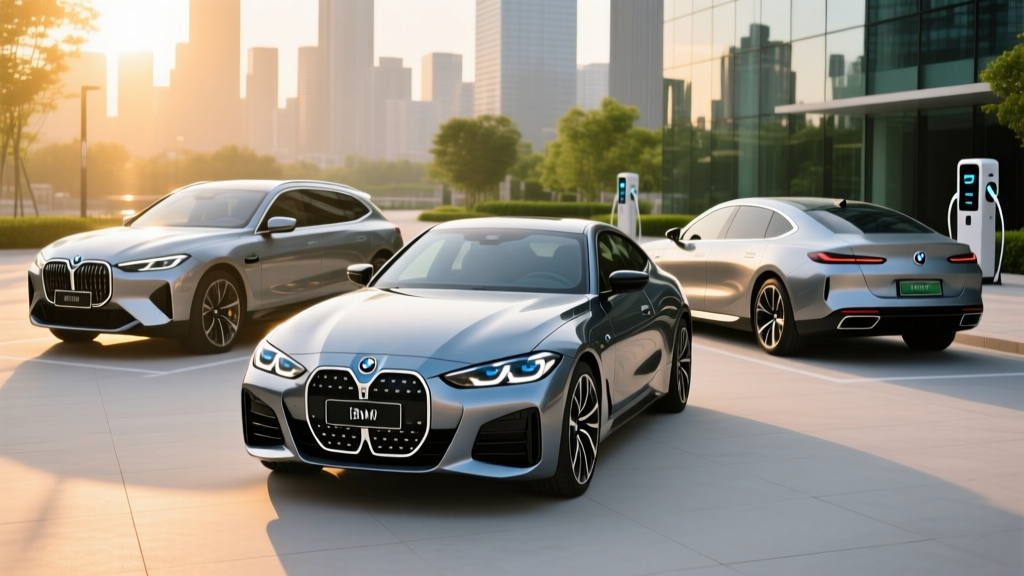
BMW's electric lineup has expanded to cover sedans, SUVs, and luxury flagships, but the sticker price is only the opening move. The real question for buyers researching BMW all-electric cost is what happens after you drive off the lot: How much will charging, insurance, maintenance, and depreciation actually cost over five years? And do any of these models still qualify for federal incentives?
We ran the numbers on BMW's three core EVs for the 2026 model year — the i4 Gran Coupe, the iX SUV, and the i7 luxury sedan — using EPA efficiency data, real-world charging costs, current insurance averages, and IRS §30D tax credit rules. The results challenge some common assumptions about luxury EV ownership.
| Spec | 2026 BMW i4 eDrive40 | 2026 BMW iX xDrive50 | 2026 BMW i7 eDrive50 |
|---|---|---|---|
| Base MSRP | $57,900 | $87,250 | $105,700 |
| Battery (usable) | 81.5 kWh (NMC) | 105.2 kWh (NMC) | 101.7 kWh (NMC) |
| EPA Range | 307 mi | 324 mi | 318 mi |
| Real-World Range (highway/cold) | ~255–275 mi | ~270–290 mi | ~260–280 mi |
| Efficiency (MPGe) | 109 MPGe combined | 86 MPGe combined | 82 MPGe combined |
| Peak DC Fast Charge | 205 kW | 195 kW | 195 kW |
| 10–80% DC Charge Time | ~31 min | ~35 min | ~34 min |
| Level 2 Charge Rate | 11 kW | 11 kW | 11 kW |
| 0–60 mph | 5.5 sec | 4.4 sec | 4.5 sec |
| Horsepower | 335 hp | 516 hp | 455 hp |
| Battery/Powertrain Warranty | 8 yr / 100,000 mi | 8 yr / 100,000 mi | 8 yr / 100,000 mi |
Real-World Range Reality: EPA estimates assume mixed driving at moderate temperatures. Expect 10–15% range reduction at sustained highway speeds (75+ mph) and 20–30% loss in sub-freezing weather. BMW's thermal management and available heat pump (standard on iX, optional on i4) help mitigate cold-weather losses but don't eliminate them.
5-Year Total Cost of Ownership: The Full Breakdown
Total cost of ownership (TCO) captures everything: purchase price, fuel (electricity), insurance, maintenance, and depreciation. We modeled five years and 75,000 miles for each vehicle, assuming 15,000 miles/year and 85% home Level 2 charging at the U.S. residential average of $0.17/kWh, with 15% public DC fast charging at an average of $0.40/kWh.
| Cost Category | BMW i4 eDrive40 | BMW iX xDrive50 | BMW i7 eDrive50 |
|---|---|---|---|
| Purchase Price (base MSRP) | $57,900 | $87,250 | $105,700 |
| Federal Tax Credit (§30D) | –$7,500* | –$7,500* | $0 (MSRP cap) |
| Effective Purchase Price | $50,400 | $79,750 | $105,700 |
| 5-Year Charging Cost | $5,480 | $7,210 | $7,530 |
| 5-Year Insurance | $12,750 | $16,200 | $19,500 |
| 5-Year Maintenance | $1,850 | $2,100 | $2,250 |
| Estimated 5-Year Depreciation | $22,400 | $38,500 | $52,800 |
| 5-Year TCO | $92,880 | $143,760 | $187,780 |
| Cost Per Mile | $1.24/mi | $1.92/mi | $2.50/mi |
*Tax credit eligibility depends on buyer income, battery sourcing, and MSRP caps — see the eligibility section below. The i7 sedan exceeds the §30D MSRP cap and does not qualify.
Federal Tax Credit: Does Your BMW Qualify Under §30D?
The IRS §30D Clean Vehicle Credit offers up to $7,500 for qualifying new EVs, and since 2024, buyers can transfer the credit to the dealer as a point-of-sale discount — effectively reducing the purchase price at signing rather than waiting for a tax refund. But eligibility is layered with requirements that disqualify many luxury vehicles and higher-income buyers.
§30D Eligibility Checklist (2026 Rules):
- MSRP Cap: Sedans and wagons must be under $55,000; SUVs, trucks, and vans under $80,000. The BMW i4 (sedan at $57,900 base) exceeds the sedan cap on most trims. The iX (SUV at $87,250) exceeds the SUV cap. Only base i4 configurations with dealer discounts below $55K may qualify.
- Buyer Income Limits: Modified adjusted gross income (MAGI) must not exceed $150,000 (single), $225,000 (head of household), or $300,000 (married filing jointly).
- Battery Sourcing: The $7,500 credit splits into two halves — $3,750 for critical minerals and $3,750 for battery components. Each half has escalating domestic/free-trade-partner sourcing thresholds. Vehicles using battery components from a "foreign entity of concern" (FEOC) are disqualified entirely.
- Final Assembly: Vehicle must undergo final assembly in North America. BMW i4 and iX are assembled in Germany — this alone may disqualify them unless specific leasing structures (§45W commercial credit passthrough) apply.
- Point-of-Sale Transfer: If eligible, you can assign the credit to the dealer for an immediate price reduction, but you must still meet income requirements and attest to eligibility at signing.
Important: BMW's U.S. EV lineup is primarily manufactured in Germany (Dingolfing and Munich plants). Under current §30D final-assembly rules, this means most BMW EVs do not qualify for the federal purchase credit. However, leasing a BMW EV may allow the lessor (BMW Financial Services) to claim the commercial clean vehicle credit under §45W and pass savings to you as a reduced lease payment. Always confirm current eligibility with your dealer and consult IRS §30D guidance or a tax professional before relying on credit assumptions.
State and Local Incentives
Federal credit limitations don't tell the whole story. Many states and utilities offer their own rebates that stack on top:
- California: Up to $2,000–$7,000 via the Clean Fuel Reward and CVRP (income-dependent)
- Colorado: $5,000 state tax credit for new EVs (no MSRP cap)
- New York: Up to $2,000 via the Drive Clean Rebate
- Utility rebates: Many electric utilities (PG&E, ConEdison, Xcel Energy) offer $500–$1,500 rebates for EV purchase or home charger installation
These vary by jurisdiction, income, and utility territory. Check your state energy office and local utility for current programs.
Charging vs. Gas: The Per-Mile Cost Math
The strongest ongoing cost advantage for a BMW EV comes at the charger. Here's how electricity costs compare to premium gasoline for a similarly sized BMW gas vehicle.
| Vehicle | Energy Source | Efficiency | Cost Per Unit | Cost Per Mile |
|---|---|---|---|---|
| BMW i4 eDrive40 | Electricity (home L2) | 32 kWh/100 mi | $0.17/kWh | $0.054/mi |
| BMW i4 eDrive40 | Electricity (public DCFC) | 32 kWh/100 mi | $0.40/kWh | $0.128/mi |
| BMW iX xDrive50 | Electricity (home L2) | 41 kWh/100 mi | $0.17/kWh | $0.070/mi |
| BMW iX xDrive50 | Electricity (public DCFC) | 41 kWh/100 mi | $0.40/kWh | $0.164/mi |
| BMW 430i Gran Coupe (gas) | Premium gasoline | 28 MPG combined | $4.20/gal | $0.150/mi |
| BMW X5 xDrive40i (gas) | Premium gasoline | 23 MPG combined | $4.20/gal | $0.183/mi |
At 15,000 miles/year with 85% home charging, the i4 costs roughly $810/year to fuel versus $2,250/year for a gas 430i — a savings of about $1,440 annually. The iX saves roughly $1,700/year versus a gas X5. Over five years, fuel savings alone can reach $7,200–$8,500.
But this math depends heavily on your electricity rate. If you pay $0.25/kWh or rely predominantly on public DC fast charging, the gap narrows significantly. Install a home Level 2 charger and charge overnight on a time-of-use plan to maximize savings.
Maintenance Savings: Fewer Parts, Lower Bills
BMW EVs eliminate the maintenance items that plague internal-combustion ownership: no oil changes, no spark plugs, no timing chains, no transmission fluid, no exhaust system. Regenerative braking dramatically reduces brake pad wear — many EV owners report original brake pads lasting 80,000+ miles.
| Maintenance Item | Gas BMW (5-yr est.) | BMW EV (5-yr est.) |
|---|---|---|
| Oil changes (synthetic) | $1,200–$1,500 | $0 |
| Brake pad replacement | $800–$1,200 | $0–$300 |
| Transmission fluid | $300–$500 | $0 |
| Engine air filter | $150–$250 | $0 |
| Cabin air filter | $200–$300 | $200–$300 |
| Tire rotation/replacement | $2,400–$3,000 | $2,600–$3,200 |
| Coolant/brake fluid service | $400–$600 | $200–$400 |
| 5-Year Total | $5,450–$7,350 | $3,000–$4,200 |
The one maintenance area where EVs cost more is tires. BMW EVs are heavy (the iX xDrive50 weighs 5,660 lbs) and deliver instant torque, which accelerates tire wear. Expect to replace tires every 25,000–35,000 miles rather than the 40,000–50,000 typical for gas counterparts. Budget for premium EV-rated tires (Michelin Pilot Sport EV, Hankook iON) at $250–$400 per tire.
BMW includes 3 years/36,000 miles of complimentary scheduled maintenance on all new models, which covers the initial ownership period for both EV and gas vehicles.
Insurance Costs: The Premium EV Surcharge
Insurance is where BMW EV ownership consistently costs more than equivalent gas models. According to industry data, EVs carry insurance premiums 15–25% higher than their gas counterparts for several reasons:
- Higher repair costs: Battery pack damage, even minor, often triggers total replacement rather than repair. BMW's NMC battery packs cost $15,000–$25,000 to replace.
- Specialized labor: High-voltage system repairs require certified EV technicians, which are scarcer and more expensive.
- Higher vehicle values: The i7's $105,700 MSRP means higher collision and comprehensive premiums.
- Sensor and camera density: BMW's ADAS suite (driving assistant professional) includes radar, lidar-ready architecture, and multiple cameras — a minor fender-bender can cost $3,000–$5,000 in sensor recalibration alone.
Average annual insurance costs for BMW EVs (based on a 40-year-old driver with clean record, 100/300/100 liability):
- i4 eDrive40: $2,550/year (vs. ~$2,100 for gas 430i)
- iX xDrive50: $3,240/year (vs. ~$2,600 for gas X5)
- i7 eDrive50: $3,900/year (vs. ~$3,200 for gas 740i)
Shop quotes from multiple insurers — some (like GEICO and Progressive) have narrowed the EV surcharge, while others still price aggressively. Bundling home and auto or increasing deductibles can offset 10–15% of the premium.
Depreciation and Resale Value: What Your BMW EV Will Be Worth
Depreciation is the single largest cost in any vehicle ownership cycle, and EVs have experienced steeper depreciation than gas vehicles in recent years. According to iSeeCars and Kelley Blue Book data, luxury EVs have depreciated 45–55% over five years, compared to 35–45% for luxury gas vehicles.
BMW EVs specifically have faced headwinds from:
- Rapid technology iteration: Newer models with faster charging and longer range make 3-year-old EVs feel outdated.
- Tesla price cuts: Aggressive Tesla pricing in 2023–2024 forced used-EV values downward across the segment.
- Battery health uncertainty: Used buyers discount EVs due to uncertainty about remaining battery capacity and replacement cost.
- Luxury segment dynamics: High-end luxury vehicles (especially the i7) depreciate faster regardless of powertrain.
Estimated 5-year depreciation (75,000 miles):
- i4 eDrive40: ~40–45% ($22,400–$25,500 retained loss)
- iX xDrive50: ~43–48% ($37,500–$41,900)
- i7 eDrive50: ~48–55% ($50,700–$58,100)
The i4 holds value best thanks to its lower entry price and broader buyer pool. The i7 suffers the worst depreciation — a pattern consistent with all luxury flagship sedans, electric or not. BMW's 8-year/100,000-mile battery warranty (covering capacity below 70% of original) provides some used-buyer confidence.
Is a BMW EV Worth the Total Cost?
Choose the BMW i4 if: You want the most cost-effective entry into BMW's electric lineup, can charge at home, and live in a state with additional incentives that offset the federal credit limitation. At ~$1.24/mile all-in, it's competitive with a gas 4 Series when you factor in fuel and maintenance savings.
Choose the BMW iX if: You need SUV practicality, value the 324-mile EPA range and 195 kW fast-charging capability, and prioritize the driving experience over minimizing depreciation. The iX offers the best balance of range, space, and technology in BMW's EV lineup.
Choose the BMW i7 if: Budget is secondary to luxury, you want flagship-level refinement with silent electric propulsion, and you accept that depreciation will be the dominant ownership cost. The i7 competes with the Mercedes EQS and Porsche Taycan in a segment where cost-per-mile is rarely the purchase driver.
Consider leasing any BMW EV if: The §45W commercial credit passthrough via BMW Financial Services can reduce your effective monthly payment by $500–$750/month — often making a lease significantly cheaper than purchasing when federal purchase credit eligibility is blocked by the assembly-location requirement.
Frequently Asked Questions
How much does it really cost to own a BMW EV over 5 years?
Between $92,880 (i4) and $187,780 (i7) over five years and 75,000 miles, including purchase, charging, insurance, maintenance, and depreciation. The i4 works out to roughly $1.24 per mile all-in, while the i7 costs about $2.50 per mile. Depreciation and insurance are the two largest cost drivers — not electricity.
Do I qualify for the federal tax credit on a BMW electric vehicle?
Likely not for a purchase. BMW's EVs are assembled in Germany, and the §30D credit requires North American final assembly. Additionally, the i4 sedan exceeds the $55,000 MSRP cap on most trims, and the iX exceeds the $80,000 SUV cap. However, leasing a BMW EV may allow the leasing company to claim the §45W commercial credit and pass savings through as a lower lease payment. Verify current rules at IRS.gov.
How much do I save on fuel and maintenance with a BMW EV?
Expect to save $1,400–$1,700 per year on fuel versus an equivalent gas BMW (assuming $0.17/kWh home charging and $4.20/gallon premium gas). Maintenance savings run $500–$800 per year thanks to eliminated oil changes, reduced brake wear from regenerative braking, and fewer mechanical components. Combined five-year savings: $9,500–$12,500.
Are BMW electric vehicles more expensive to insure?
Yes, typically 15–25% more than gas equivalents. Higher repair costs for battery and sensor damage, limited EV-certified body shops, and elevated vehicle values all contribute. Average annual premiums range from $2,550 (i4) to $3,900 (i7). Compare quotes from at least three insurers before purchase.
How well do BMW EVs hold their value?
Below average for the luxury segment. Expect 40–55% depreciation over five years depending on model, with the i4 retaining value best and the i7 worst. Battery health uncertainty, rapid EV technology advances, and Tesla-driven price compression have depressed used EV values. BMW's 8-year/100,000-mile battery warranty provides a floor of buyer confidence.
What's the real-world range of a BMW EV versus the EPA sticker?
Expect 10–15% below EPA at highway speeds and 20–30% below in cold weather (below 32°F). The i4's 307-mile EPA rating translates to roughly 255–275 miles in mixed real-world driving. Preconditioning the battery (using the iDrive navigation-to-charger feature) recovers some range by warming the pack before fast charging.
Does BMW's warranty cover battery degradation?
Yes. BMW covers the high-voltage battery for 8 years or 100,000 miles against defects and excessive capacity loss (below 70% of original). If your battery falls below this threshold within the warranty period, BMW will repair or replace it at no cost. Based on current NMC chemistry data, most BMW EV batteries retain 85–92% capacity at 100,000 miles under normal use.